

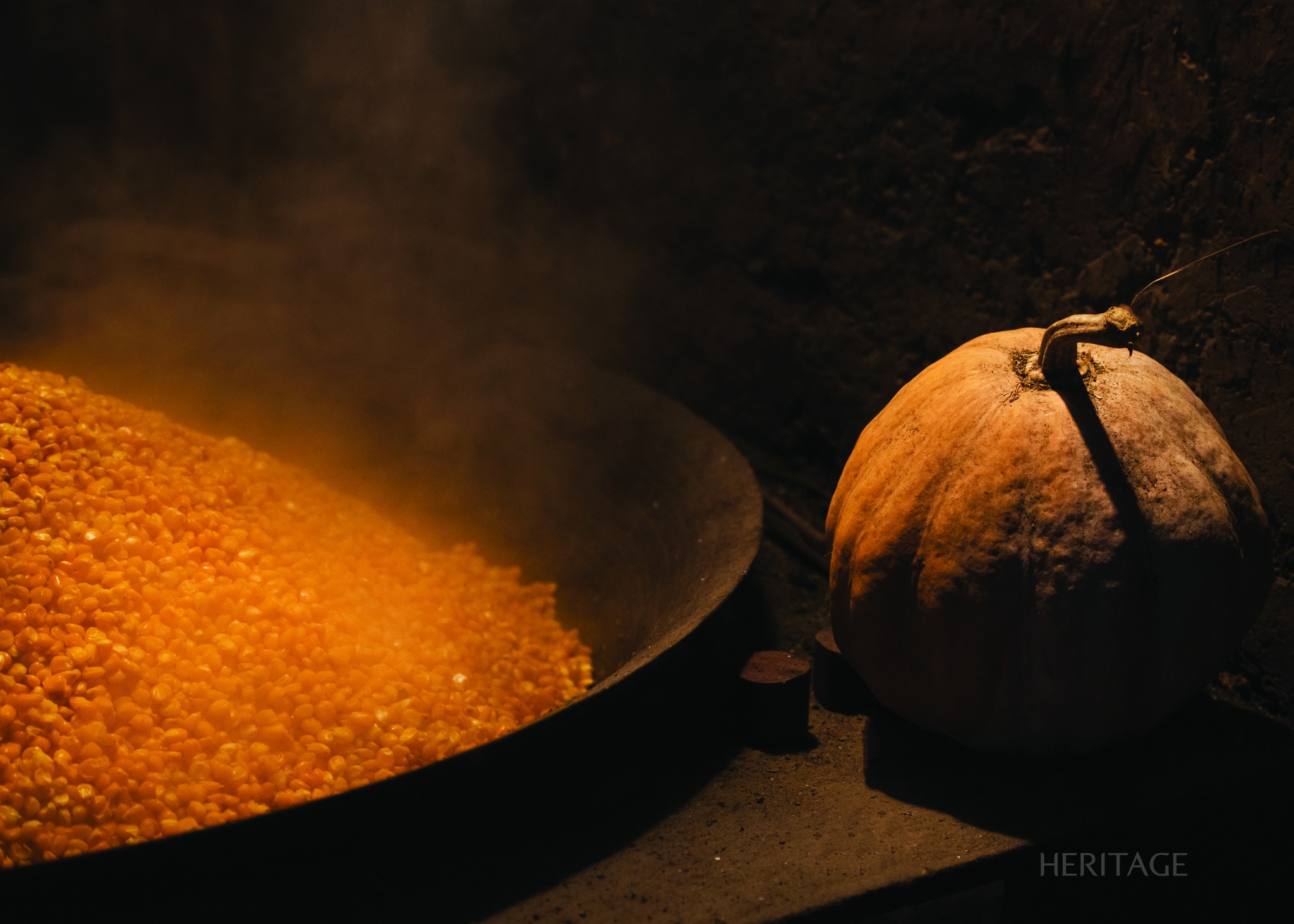
In the white plateau of Bac Ha, there is a folk song that goes:
"When you go there, remember the Trung Do slope."
When you leave, remember to try Bac Ha corn wine."
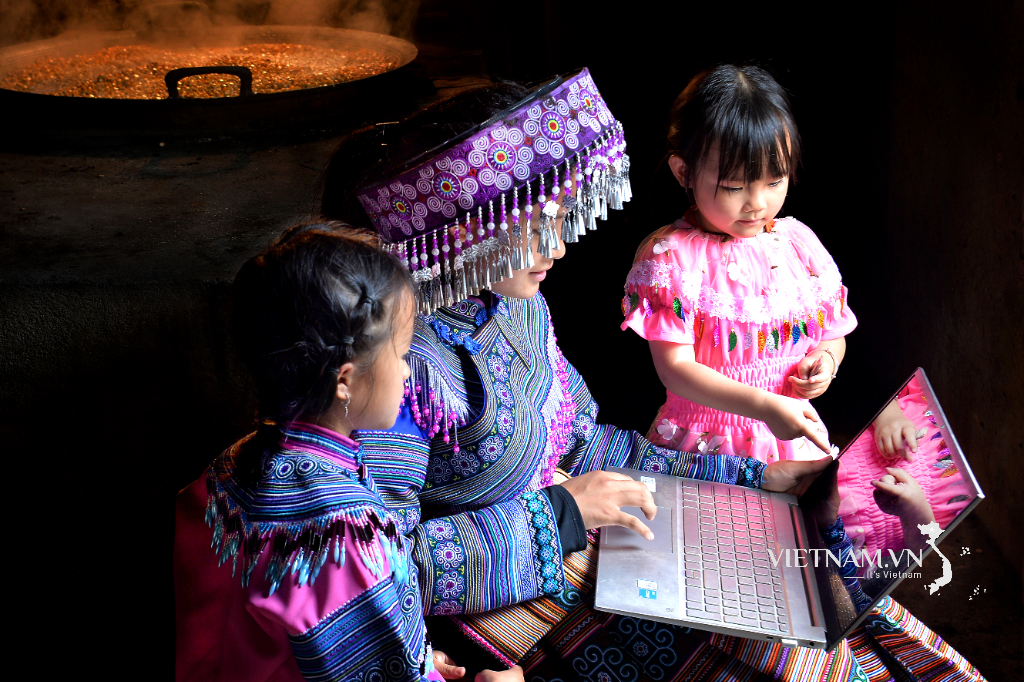
The famous and delicious drink often mentioned is corn wine from Ban Pho – a commune in Bac Ha district, Lao Cai province. This corn wine is brewed according to the secret recipe of the Mong people there. Tourists visiting Ban Pho will have the opportunity to learn from families preserving the traditional craft and experience the wine-making process alongside the Mong people.
The main ingredient for this renowned highland beverage is yellow corn – an ancient, indigenous variety grown on high mountain slopes. After 6 or 7 months enduring wind, frost, rain, and sunshine, the corn ripens to a golden yellow and plump, at which point the locals begin harvesting. The corn cobs are sun-dried and then stored in the attic above the kitchen to be used in making liquor. However, the most special aspect of Bac Ha corn liquor is the yeast used for fermentation, which has a beautiful name – "hong mi." This yeast is made from the seeds of a small, black plant, similar to millet, grown interspersed in the corn fields or under the Tam Hoa plum trees. September and October are the harvest season for "hong mi," and the locals cut the flowers and dry them to make the yeast. As for the water used to make the liquor, they painstakingly collect water from cliffs, mountain streams, or springs flowing from caves to create a pure, fragrant, and unique flavor.
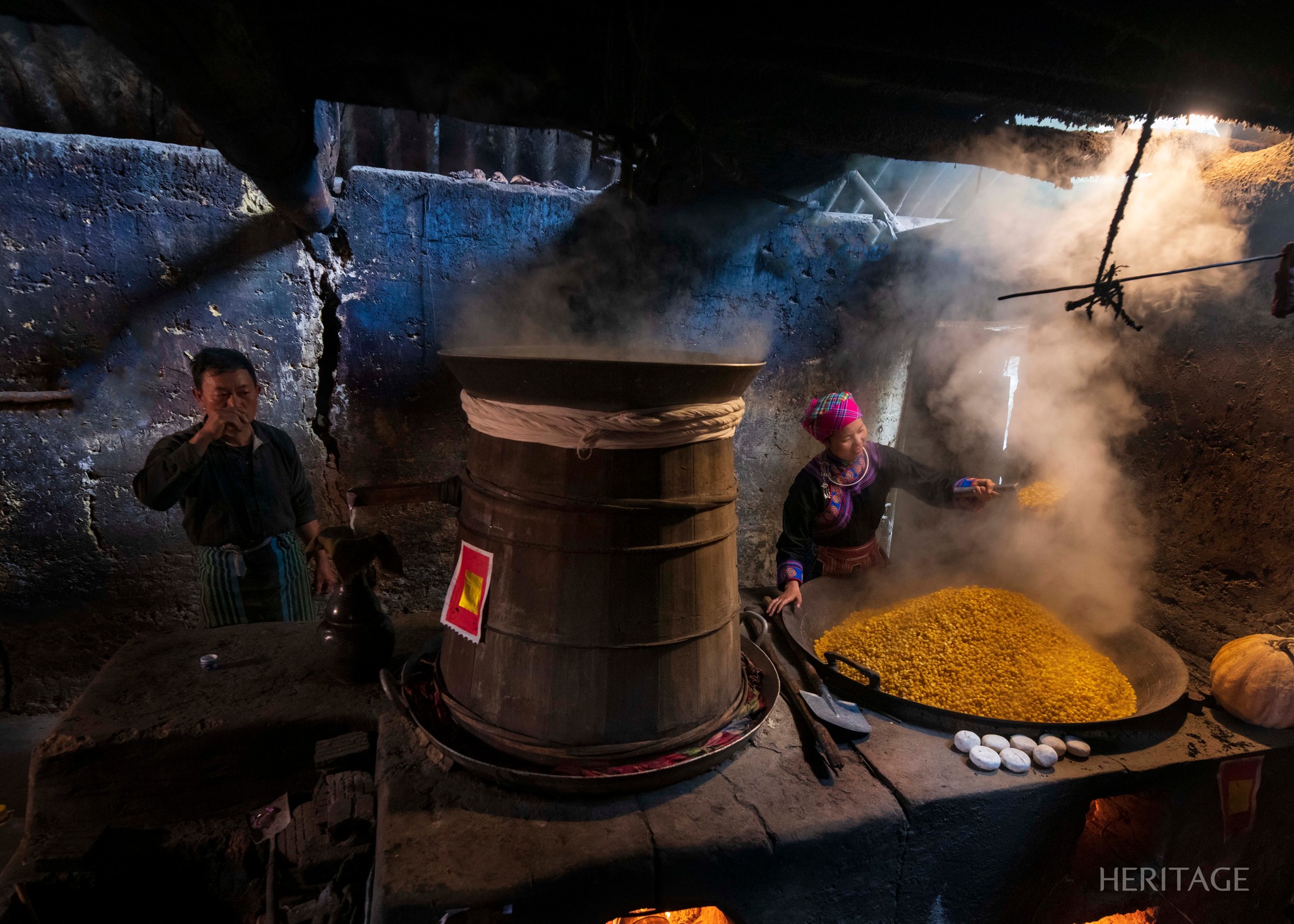
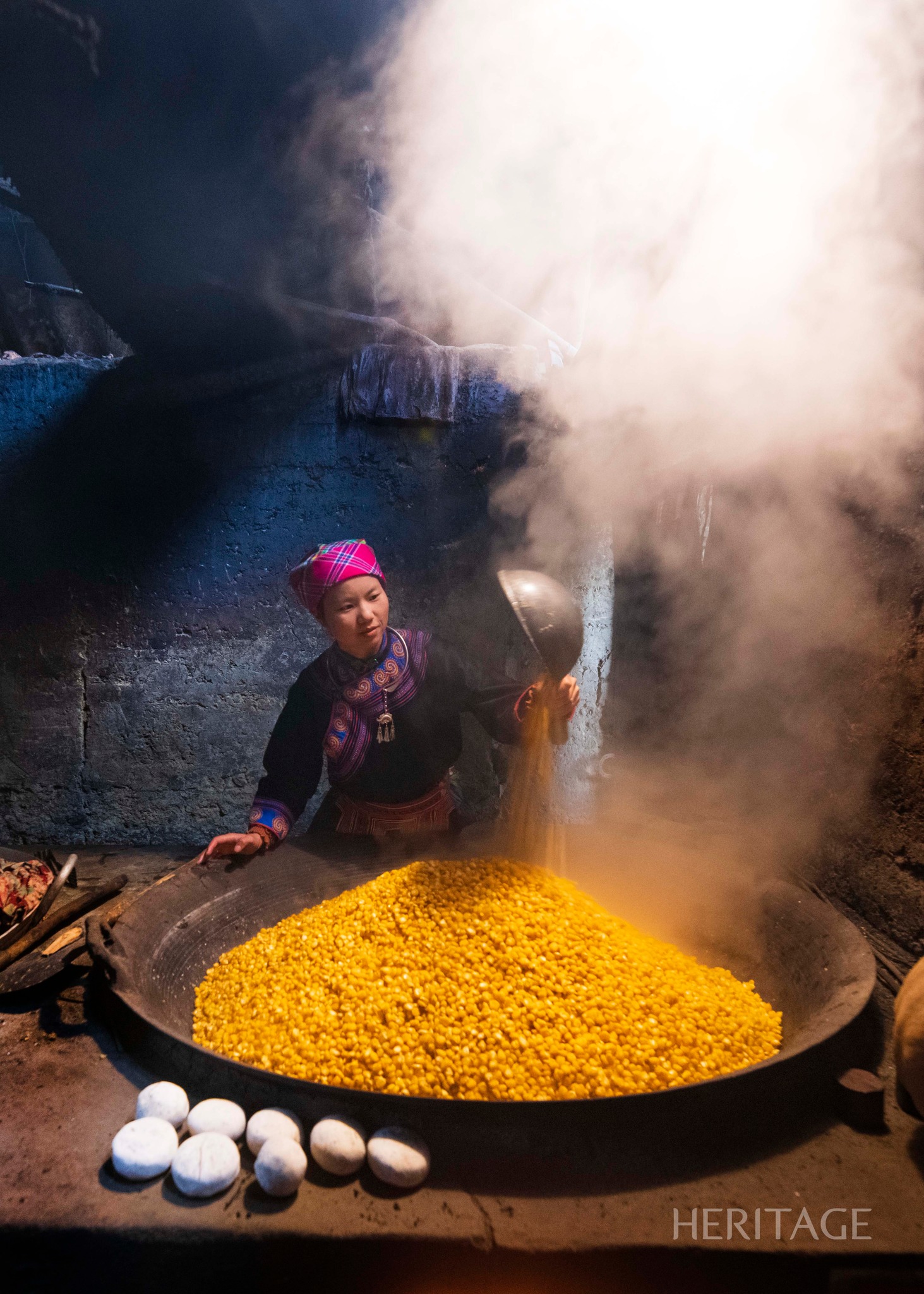
The first step in the distillation process is boiling the yellow corn kernels, which have been separated and washed, for about 20-24 hours. A large pot is placed over a charcoal fire, burning slowly enough to keep the corn simmering gently. The person tending the pot constantly stirs the corn and adds water. When all the kernels have boiled, they are removed and dried on a tray or basket, left to cool before being mixed with yeast. The yeast preparation and fermentation are also very important. Red millet seeds are ground in a stone mortar, filtered to obtain the powder, kneaded with water, and shaped into cakes. The yeast cakes are placed on straw and dried in a well-ventilated area with little sunlight. When the yeast dries and turns white, it is ready. Once the corn has cooled, the yeast cakes are crumbled into powder and sprinkled over the corn, then mixed thoroughly at a ratio of 3 yeast balls to 10 kg of corn. The corn mixed with yeast is then placed in wooden barrels in a cool, airy place for about 5-7 days to ferment.
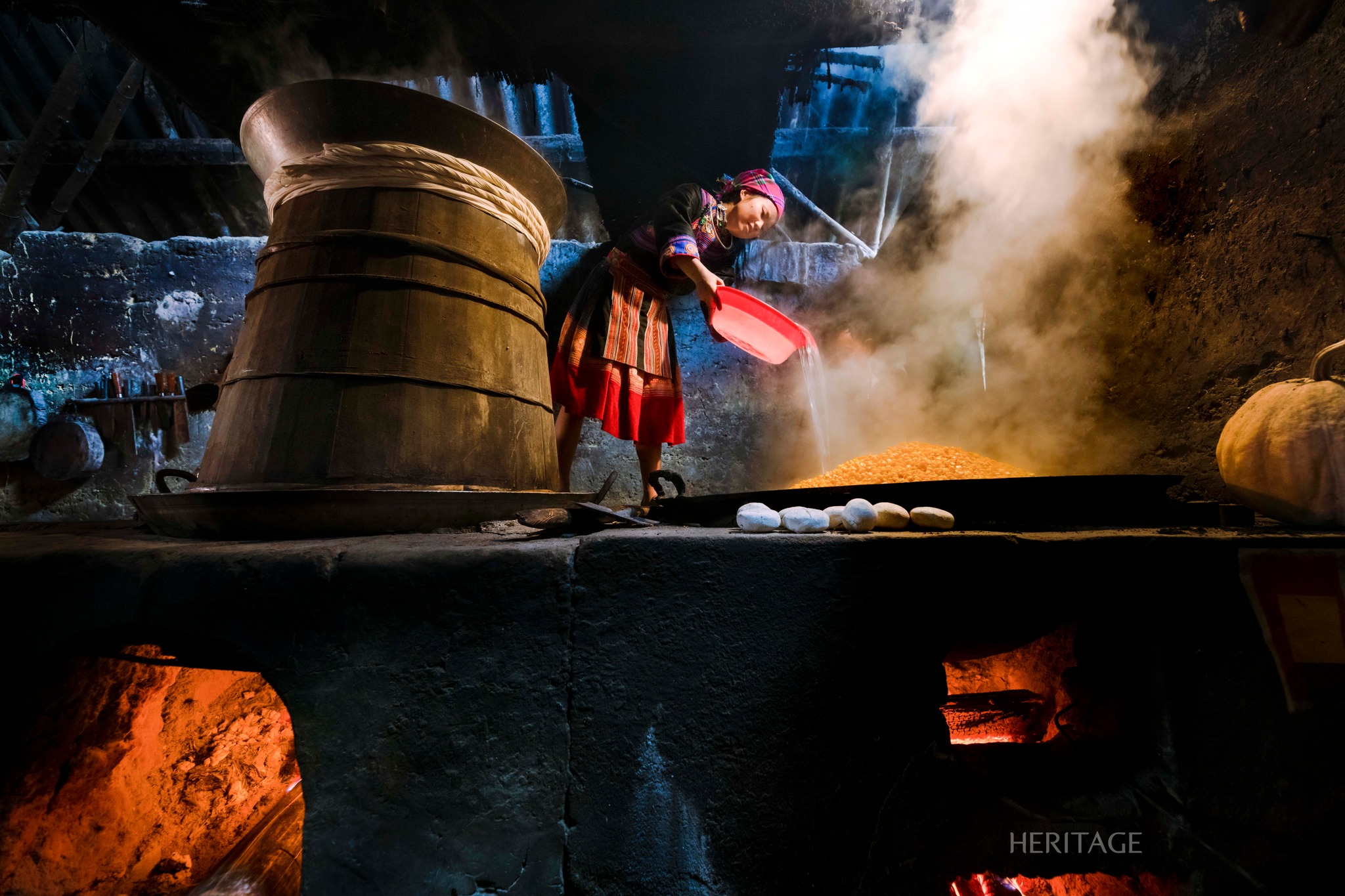
After that, the corn mixed with yeast is placed in a pot and sealed tightly to begin the water bath distillation process. The pot used for distillation is made of pine or cypress wood to produce fragrant liquor. A large cast-iron pan filled with water is placed on a wood-fired stove, a bamboo mat is placed on top, and then the wooden pot is placed on the mat. After about 30 minutes, the concentrated liquid begins to flow out through the bamboo tube connected to the wooden pot and is poured directly into earthenware jars. These jars are stored in the kitchen to help the liquor retain its original flavor.
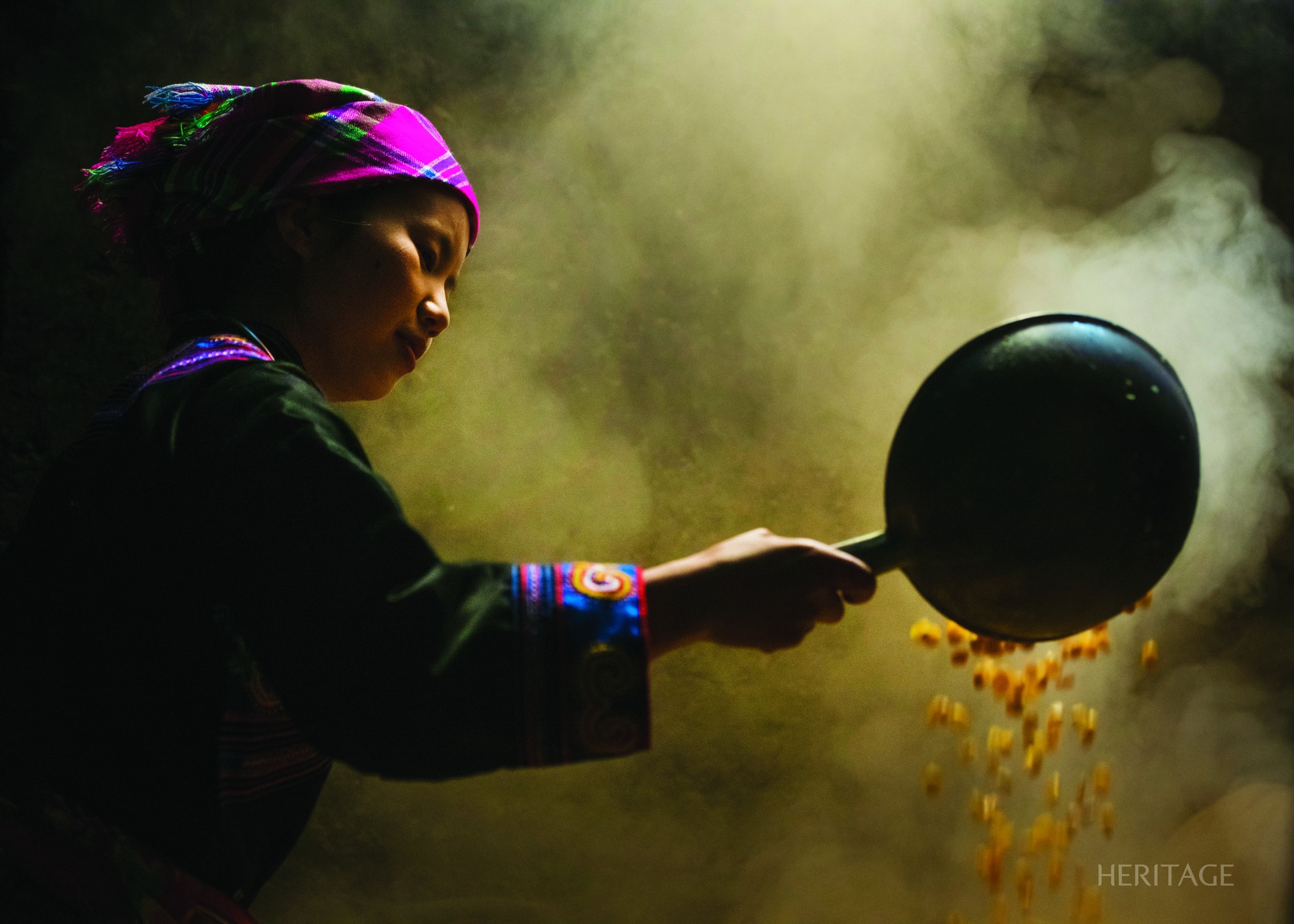
Besides special ingredients, the experience and attention to detail of the distiller are crucial factors determining the quality of the product.
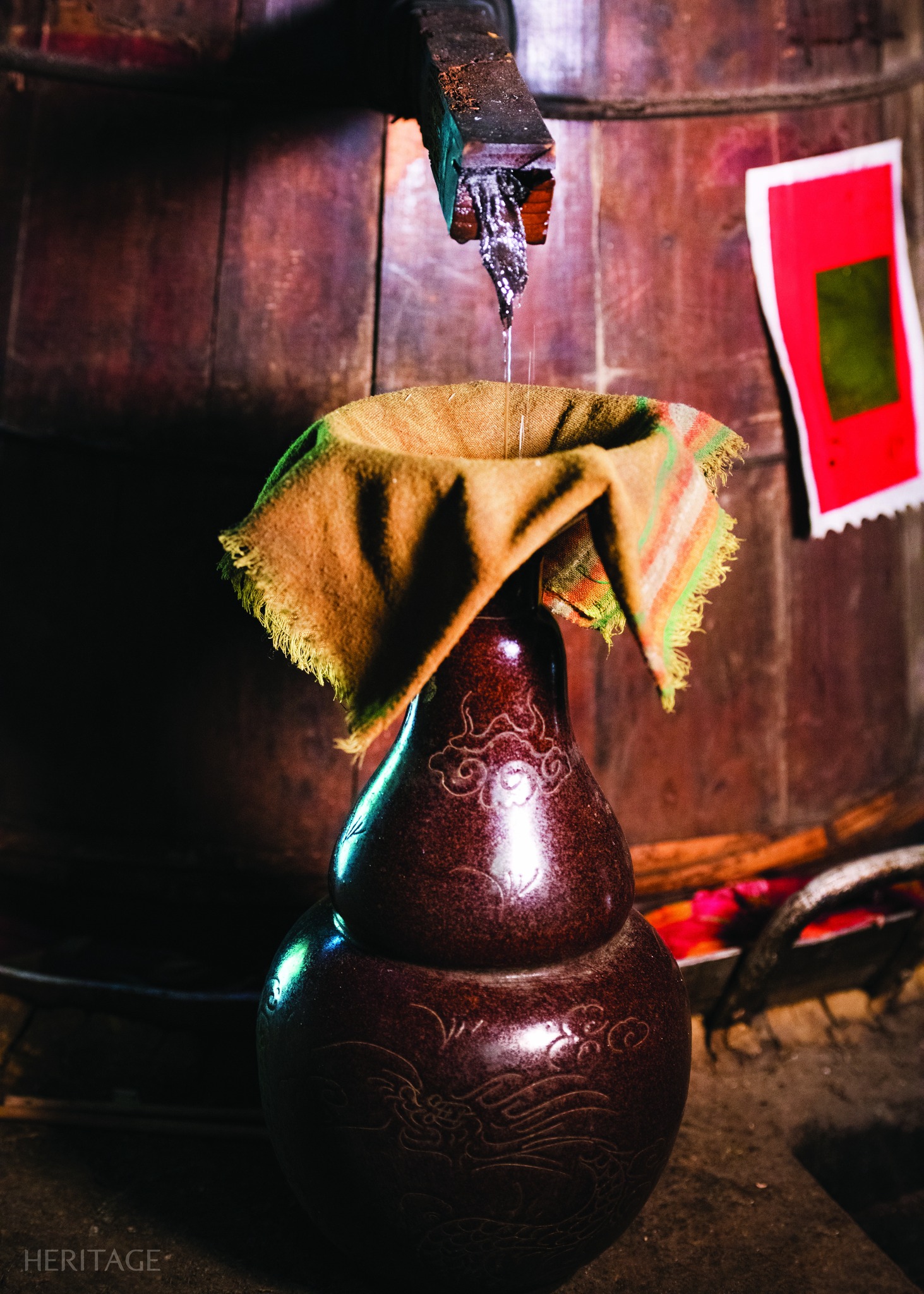
To produce a liquor that is not overly sour, has a clear, spring-like color, a rich aroma, and a subtly sweet taste, the Hmong people in Ban Pho have spent many years accumulating valuable experience.

![[Image] A night of light, many layers of message](https://vphoto.vietnam.vn/thumb/1200x675/vietnam/resource/IMAGE/2026/03/10/1773158812907_hoa-nhac9-jpg.webp)






































































Comment (0)