


From July 1, 2025, in accordance with the Central Government's policy on restructuring provinces and cities and implementing a two-tiered local government system, the City People's Committee has advised the City People's Council to adjust and consolidate the public investment plan (medium-term period 2021-2025 and 2025) as stipulated in Decree No. 125/2025/ND-CP dated June 11, 2025.
Specifically, following the abolition of the district level, expenditure tasks previously under the district level will be transferred to the provincial level for continued implementation; this will avoid disruptions in project implementation and delays in the disbursement of capital plans for 2025, as directed by the Prime Minister .
At the same time, this was also consistent with the practical situation in the city because at that time, the communes and wards were newly established, their operational structures were not yet fully developed, and they did not have revenue sources or budgets at the commune level, so they could not receive expenditure tasks transferred from the old district level.
After nearly six months of implementing the two-tiered government system, the operation of commune-level governments has improved and is gradually reaching a stable state.
According to the City People's Committee, in the 2026 public investment plan and the entire 2026-2030 period, the city will maximize the decentralization of authority to the People's Committees at the commune and ward levels, allocating (through decentralization) local budget public investment funds to communes and wards to carry out investment expenditure tasks in their respective areas.
Specifically, according to the capital allocation plan for 2026, the total allocated capital for 93 communes and wards accounts for approximately 30% of the total local budget, equivalent to over 4,000 billion VND. Currently, the projected capital allocation for many communes and wards is already larger than the amount allocated to a single district (formerly).
According to the assessment, in the coming period, the communes and wards will basically have all the necessary conditions to receive the handover of management and implement projects previously approved by the former district level (including balancing the expenditure tasks of the district-level budget).
Therefore, in the near future, the authorities will transfer and adjust the investment expenditure tasks under the former district-level budget for unfinished public investment projects previously managed and approved by the former district level to the communes and wards for implementation, instead of leaving them under the city's management and budgeting responsibility as is currently the case.
Based on the medium-term and annual public investment funds allocated by the city, the People's Committees of communes and wards are responsible for balancing the entire budget from the former district level for public investment projects located within their respective areas (projects located in two or more communes/wards will be managed and implemented by the city).
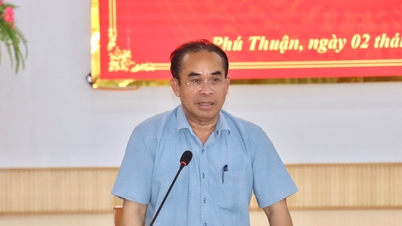
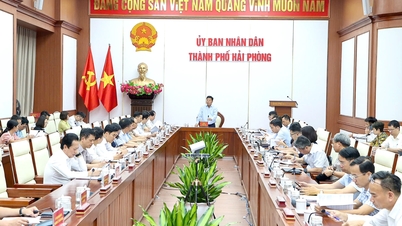
At the recently concluded 5th session of the 10th City People's Council, the Standing Vice Chairman of the City People's Committee, Ho Ky Minh, stated that there will be two models regarding the establishment of project management boards at the commune and ward levels.
Specifically, communes and wards that meet the criteria in terms of scale, project resources, and cost-balancing capacity can establish a project management board. Those communes and wards that do not meet the criteria will have their functions and responsibilities supplemented by the public service delivery center.
In fact, transferring the project groups from the old district level back to the new communes and wards for management is consistent with the original situation and aligns with the direction of strengthening decentralization and delegation of power, enabling communes to proactively manage and continue implementing unfinished projects in their areas according to the approved schedule and objectives.
At the same time, this long-term adjustment will help reduce the management and operational pressure on the city, especially on the city's specialized management boards, as has been the case recently.
Source: https://baodanang.vn/se-chuyen-tiep-du-an-cap-co-so-3316428.html

![[Photo] General Secretary and President To Lam presides over a meeting on preparations for the review of one year of operation of the three-tiered government system.](https://vphoto.vietnam.vn/thumb/1200x675/vietnam/resource/IMAGE/2026/06/02/1780391821195_a1-bnd-4595-9717-jpg.webp)


















































































Comment (0)