According to experts, along with sufficiently strong sanctions, a comprehensive set of solutions is needed to address the root causes of violations.
Strong sanctions to ensure discipline.
The Ministry of Education and Training is seeking feedback on a draft Decree regulating administrative penalties in the field of education, which includes many new points aimed at strengthening the effectiveness of state management and restoring order in educational activities.
One of the issues that has received much attention is the regulations on penalties for extracurricular tutoring. According to the draft, teachers who are currently teaching regular classes but provide extra tutoring for a fee to the same students they are assigned to teach may be fined from 10 to 20 million VND.
In addition, organizations that conduct extracurricular tutoring activities for a fee without meeting business registration requirements may be fined from 30 to 50 million VND.
The draft also stipulates various penalties for violations in the management of tutoring activities, such as failing to fully disclose information, organizing tutoring for the wrong target group, exceeding the prescribed time limit, cutting back on core curriculum content to include in tutoring, exploiting relationships with teachers for personal gain, or continuing to organize tutoring after being ordered to cease.
In addition to fines, several supplementary forms of punishment have been proposed, such as suspending tutoring activities for 1 to 12 months depending on the severity of the violation; forcing the cessation of illegal activities; refunding illegally collected fees; returning any illegal profits; and ensuring the legitimate rights of students.
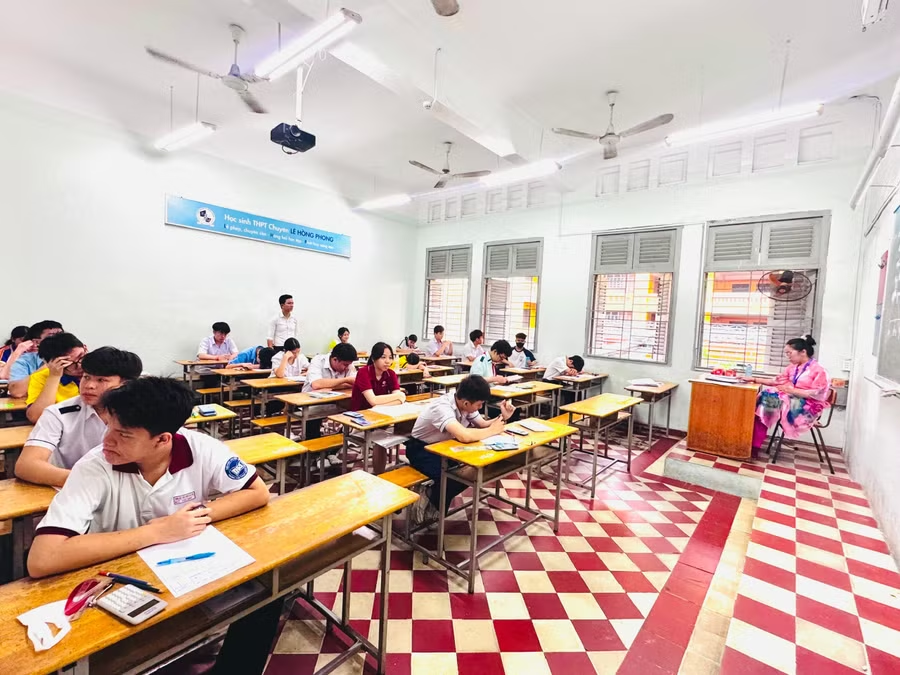
In addition to tightening the management of tutoring, the draft also strengthens sanctions for violations in student admissions, exam organization, information disclosure, and educational quality assurance.
For continuing education institutions, failure to disclose or disclosing inaccurate or false information regarding quality assurance conditions, educational programs, teaching staff, facilities, tuition fees, other charges, or training partnerships may result in fines ranging from 10 to 20 million VND.
At the university level, many violations are proposed to have increased penalties of up to 100 million VND, especially cases of organizing training without meeting the necessary conditions, exceeding enrollment quotas, or continuing training during a suspension period.
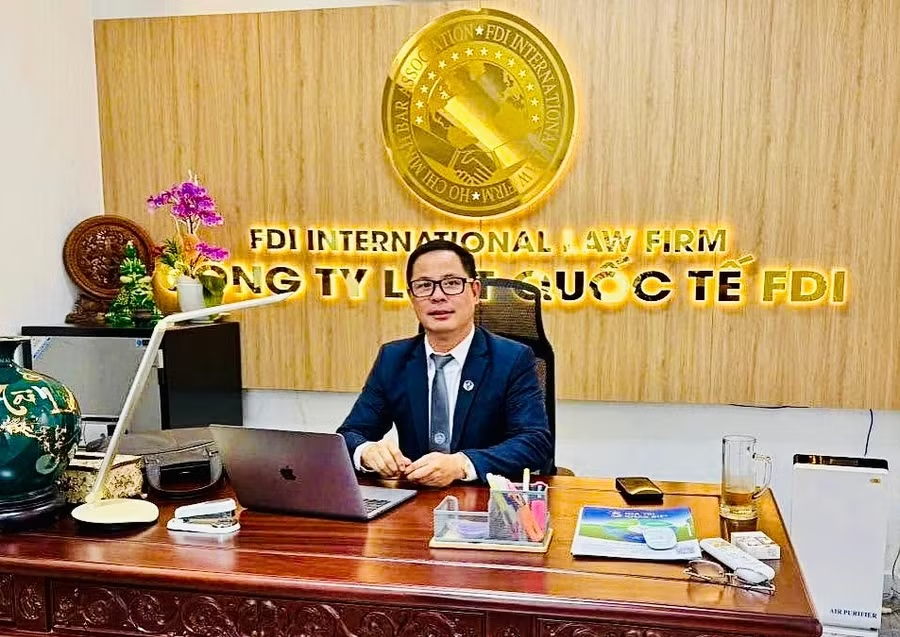
According to Lawyer Hoang Van Quang, Director of FDI International Law Firm, Ho Chi Minh City Bar Association, establishing a clear legal framework to regulate tutoring, student recruitment, examinations, and information disclosure is an essential requirement in the current context.
He argued that education is a special field, not only related to the people's right to education but also directly impacting public trust and the quality of the national workforce. Therefore, adding regulations on penalties is necessary to ensure transparency and fairness in educational activities.
However, when formulating policies, tutoring should be viewed as a complex social phenomenon, not simply an administrative violation, according to lawyer Quang.



"Currently, tutoring is not simply a consequence of the commercialization of education, but also a product of increasing exam pressure, parents' expectations for their children's academic results, and the difficult living conditions of a segment of teachers. If these factors are not fully considered, policies may be correct in form but difficult to achieve real effectiveness," lawyer Hoang Van Quang analyzed.
Punishment must be accompanied by fundamental solutions.
Commenting on the proposal to fine teachers between 10 and 20 million VND for tutoring their own students, lawyer Hoang Van Quang believes that this fine is necessary in principle to prevent conflicts of interest.
According to him, when a teacher simultaneously performs teaching and student assessment duties in the classroom and directly collects money from those same students outside of class hours, it could, in principle, lead to deviations from the norm, affecting the fairness and transparency of the educational environment.
However, it is important to note that the draft currently imposes the same level of penalties for acts that are fundamentally very different in nature.
According to lawyers, it is necessary to clearly distinguish between the act of abusing one's teaching position to coerce, manipulate, or pressure students into taking extra classes and the case where parents voluntarily seek out a teacher because of their professional reputation and the desire for their child to receive more support in their studies.
"If we don't clearly categorize the behavior, ignore the voluntary element and the actual needs of society, it's easy to create the feeling that the policy is placing all the responsibility on teachers' shoulders, while failing to address the root of the problem," he said.
According to Master of Law - Lawyer Hoang Van Quang, in reality, the biggest difficulty in handling violations does not lie in determining whether or not tutoring activities are taking place, but in clarifying the nature of the relationship between teachers and students.
Nowadays, tutoring is no longer limited to home or centers but has shifted to many forms such as online learning through digital platforms or organized under the guise of clubs or skills classes. Therefore, proving that teachers are teaching regular classes, students are participating in tutoring, or that tuition fees have been incurred is not a major obstacle.
"More importantly, it's crucial to determine whether supplementary tutoring stems from the legitimate needs of the learners or is the result of influence, guidance, or pressure from the teachers' professional positions. Without quantifying this factor using clear legal criteria, handling the issue can easily become subjective or overly reliant on one-sided feedback," the lawyer stated.
To ensure objective disciplinary action and minimize complaints, according to Mr. Quang, the management agency needs to shift from the mindset of "punishing anyone who provides extra tutoring" to "punishing only those who abuse their position for personal gain."
Accordingly, it is necessary to consider multiple factors simultaneously, such as whether or not core curriculum content is being cut short to make way for supplementary teaching; whether or not there is any suggestion or pressure to force students to attend supplementary classes; whether or not there is discrimination in testing and evaluation between students who attend supplementary classes and those who do not; or whether there is any illicit financial connection or a profit-driven organizational model.



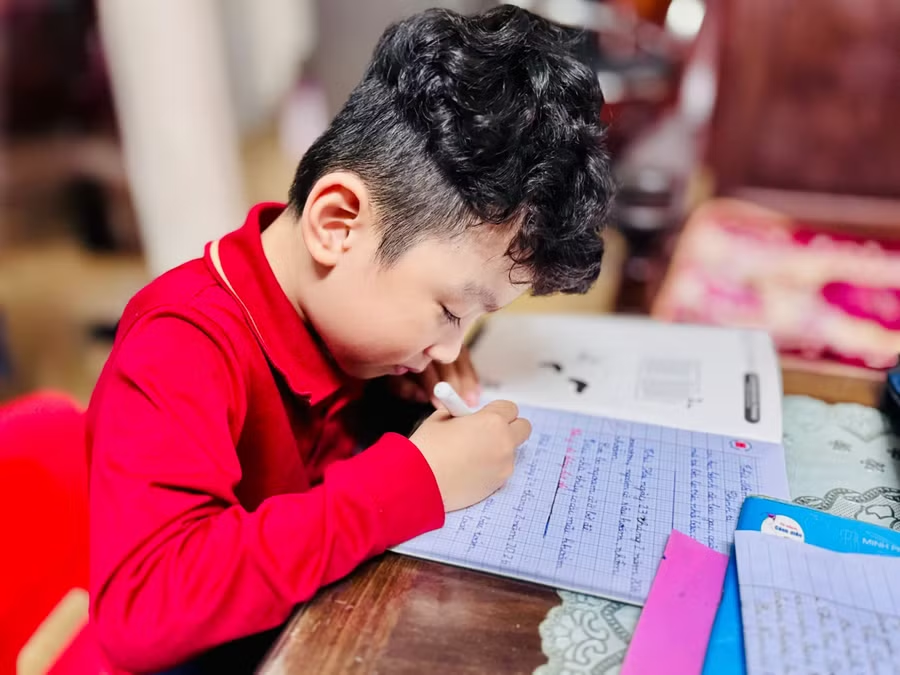
Lawyer Quang further shared that administrative penalties are merely a post-inspection measure and are unlikely to address the root causes of violations without comprehensive solutions.
He argued that it is necessary to improve teachers' salaries and income so that they can make a living from their profession; improve the quality of regular teaching to reduce the need for extra tutoring; continue reforming examinations and admissions to reduce pressure on grades; increase transparency in managing extra tutoring activities, publicly disclose information on tuition fees, teaching staff, enrollment quotas, and enhance the accountability of heads of educational institutions.
From a practical perspective, Ms. Lai Le Gia Han, a teacher at Simple English Language Center, believes that strengthening penalties is necessary to build a transparent tutoring environment, creating fairness between legally operating establishments and those that operate spontaneously or intentionally violate regulations.
Ms. Han stated that, along with increased inspections and enforcement, the management agency also needs to provide specific guidance to help teachers and educational institutions easily implement regulations correctly, while ensuring legitimate teaching activities that meet the legitimate learning needs of students.
"A policy that is implemented effectively must strike a balance between discipline and the conditions for its execution. Punishment is necessary to maintain discipline, but it is also crucial to remove the pressures that create incentives for violations. If there are only sanctions without fundamental solutions, the effectiveness of management will be difficult to sustain," lawyer Hoang Van Quang emphasized.
Source: https://giaoducthoidai.vn/siet-chat-de-lap-lai-ky-cuong-giao-duc-post783328.html