Unforeseen events
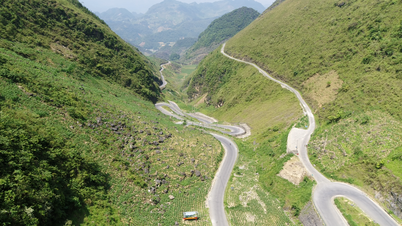
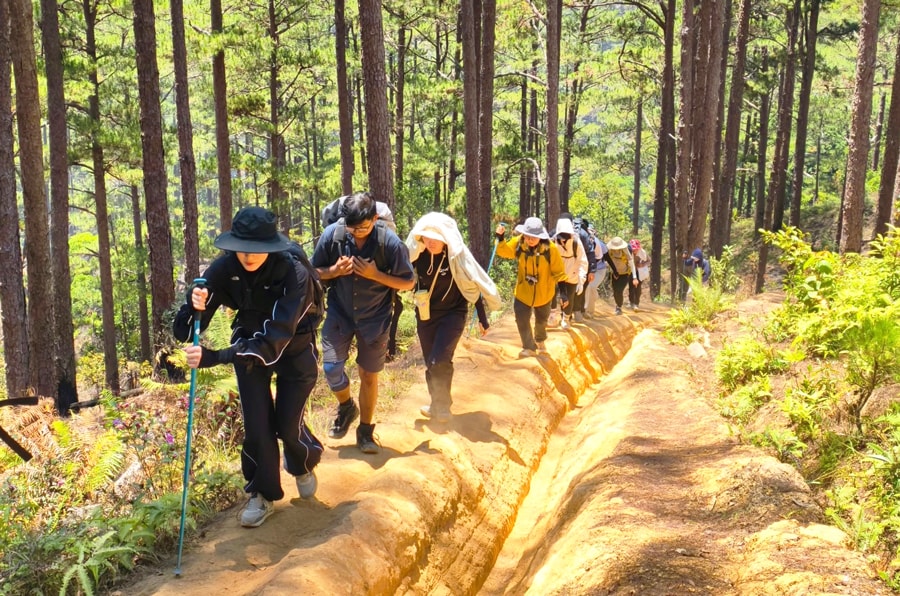
Thanks to the reach and connectivity of social media, in recent years, many previously pristine and little-known trekking routes have become attractive destinations, drawing tourists to explore them . However, before embarking on a long mountain climbing and trekking trip, not everyone is well-prepared physically, equipped with sufficient knowledge, skills, and necessary equipment, especially in challenging terrain and complex weather conditions. This has led to numerous accidents while exploring mountains, forests, and caves.
For example, on April 19, 2026, a 19-year-old male student got lost while trekking in the Tam Dao mountain area (Phu Tho province). Authorities mobilized over 100 people to search for him and found him conscious but exhausted after more than 36 hours of being out of contact. Prior to that, on March 8, 2026, at the Ba Den Mountain National Tourist Area (Tay Ninh province), a tourist slipped and fell on a steep slope, breaking his collarbone and rendering him unable to move independently. Fortunately, the victim was quickly reached by rescue teams and transported to the hospital in time.
According to Dinh Hoang, founder of To Ong Adventure (a company specializing in organizing trekking tours): “Vietnam has three-quarters of its area covered by mountains, stretching from North to South with completely different ecosystems. The northern mountainous provinces have high mountains, the central region has caves, and the southern region has mangrove forests. Therefore, tourists need to thoroughly research the terrain and climate before visiting any area.”
It's especially important to note that Vietnamese forests are characterized by steep hills, dense foliage, and are heavily fragmented by rocky mountain ranges, creating numerous valleys and ravines that pose potential dangers and make it very easy to get lost. In my experience with mountain climbing, besides necessary communication equipment, it's essential to always have a local person with you – someone knowledgeable about the forest, who lives near it, and considers it their home.


Raising participants' awareness
Following unfortunate incidents, many trekkers have been shocked to realize they had previously trekked in the mountains and forests with a complacent attitude, without thorough preparation. Some, after a few trekking trips, confidently formed groups and set off without professional guides or registration with local authorities. Others, despite knowing about bad weather, still set off with a "lucky" mentality, only to have their trekking photos taken during the rainy season receive a "storm of reactions" from netizens for their actions of "risking their lives on a trip."
Ms. Chu Bich Van (Ha Dong ward, Hanoi ) said: “In my previous Fansipan trekking group, some members didn't train physically before the trip, and as a result, they couldn't climb after less than a day, forcing the group to arrange for someone to take them back. Such ‘backpackers’ not only endanger themselves but also affect everyone around them. I think it's very necessary to raise awareness and responsibility among everyone participating in trekking. Instead of just climbing mountains to “follow trends” or “show off on social media,” we need to experience nature while strictly adhering to the instructions of authorities and tour organizers, as well as complying with environmental protection regulations, to protect ourselves and others.”
Sharing this view, Dinh Hoang, founder of To Ong Adventure, said that most people get lost due to overconfidence, insufficient preparation, and lack of knowledge. When lost, they often panic, become tired, and lose energy, leading to misjudgments and accidents. "If an accident occurs, it will have many consequences, such as requiring local authorities to mobilize more personnel, wasting time and money on rescue and recovery efforts, impacting the environment, and potentially even closing the trekking route, affecting the livelihoods of local people and future tourist groups," Dinh Hoang stated.
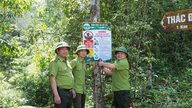
In response to this situation, many localities have begun to tighten management of mountain climbing activities in areas with complex terrain or within special-use forests and protected forests. To ensure the safety of tourists and protect the forest ecosystem, recently, at popular destinations for young people such as Tam Dao (Phu Tho province), Bat Xat (Lao Cai province), Chu Yang Sin (Dak Lak province), and Nui Chua - Phuoc Binh (Khanh Hoa province), notices have been issued strictly prohibiting the unauthorized organization of mountain climbing, trekking, and hiking activities without prior registration with the forest owners. At the same time, people are advised against engaging in spontaneous trekking activities before officially opening the routes due to the potential safety risks.
Legally, Government Decree No. 146/2026/ND-CP dated May 6, 2026, on administrative penalties in the field of forestry, clearly stipulates the penalties. According to Article 11 on the illegal use of forest environment, organizing tours or trips within the forest without the forest owner's permission will result in a fine of 4-6 million VND, while organizing tourism services or business activities within the forest without the forest owner's permission, or organizing resorts or recreational activities within the strictly protected zone of a special-use forest, will incur a fine of 6-10 million VND.



Trekking and hiking are activities that offer many health benefits, experiences, and a connection with nature. However, for this type of tourism to develop sustainably, coordinated efforts are needed between management agencies, businesses, and participants. Only when safety is prioritized will these exploration journeys truly become memorable experiences instead of risky adventures.
Source: https://hanoimoi.vn/siet-chat-hoat-dong-leo-nui-tu-phat-khong-danh-doi-an-toan-lay-trai-nghiem-1207986.html



![[Photo] Strengthening character and expertise: Intense training for artillery soldiers.](https://vphoto.vietnam.vn/thumb/1200x675/vietnam/resource/IMAGE/2026/06/30/1782815602541_lu-368-1875-4571-jpg.webp)