

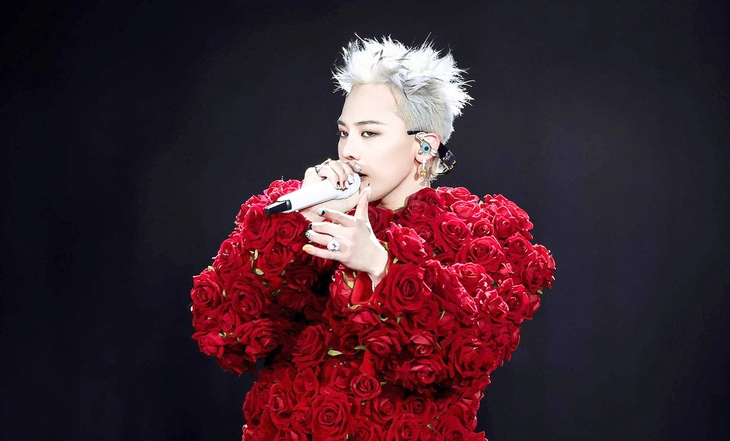
G-Dragon sparks controversy over his live singing ability - Photo: @candyinuheart
Superman emerges after God's death; Superman is outside the realm of good and evil because he creates his own moral ideology; Superman constantly overcomes weakness and takes control of his own destiny.
G-Dragon chose Übermensch for his first solo studio album in 12 years since Coup d'Etat and 7 years after Made, his last studio album with Big Bang. And perhaps this was the right time for him to choose that concept.
Fans of new idols sometimes say: G-Dragon's time is over.
But as Nietzsche wrote about Übermensch in *The Joyous Science *: "Live dangerously! Build your fortresses on the slopes of Mount Vesuvius."
Vesuvius is a volcano. The implication of that saying is: greatness cannot be built in a safe place, but must be built in a place full of hardship.
Just when people thought Big Bang's era was over, "we only ever see the new members laughing, never hear the old ones crying," G-Dragon returned with unparalleled power and dominance – a superhero with complete control over the game.
At the beginning of Übermensch , G-Dragon reunites with two former Big Bang members, Daesung and Taeyoung, and the first line is: "You say things have changed. The show still has to go on." You say the era of Big Bang is over?
G-Dragon knows this better than anyone else.
But at the same time, he also affirmed: "The glorious days are still alive." The sharp, pounding electric guitar sounds assault our ears, heralding the return of an icon. And an icon is not subject to the laws of time.
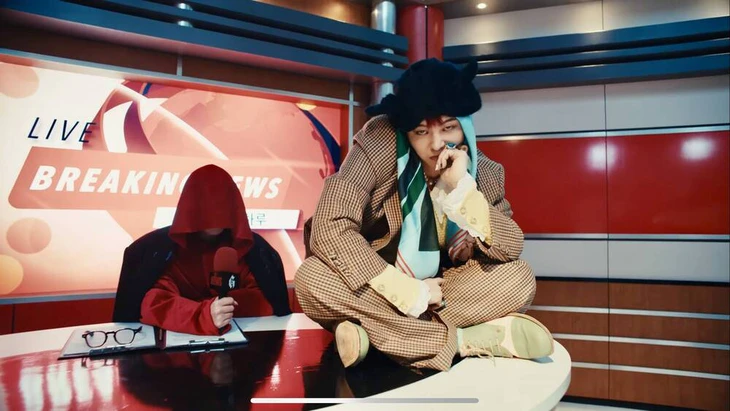
G-Dragon's Power - Photo: Galaxy Corporation
From the powerful beats asserting unwavering authority in Power to the catchy funk that perfectly matches the amusement park metaphor of fame and the thrilling Ferris wheel of wealth in Gyro-Drop, from a ballad based on nostalgic piano melodies in Drama to Bonamana, built on acoustic guitar and harp melodies along with G-Dragon's conversational vocals, telling a secret love story full of forbidden love, transcending moral boundaries.
The rest of Übermensch proves that the glory days are still alive and well, and this is not just a musical gift for fans of a "retired" idol.
Not many recent solo albums by young K-pop idols are as rich in soundscape and offer such a complete experience as G-Dragon's.
From a pop-rock track like "Take Me," reminiscent of Big Bang's classic " Haru Haru ," to "Too Bad," which is playful, free-spirited, fashionable, and distinctly G-Dragon. This primordial blend is also inseparable from an Übermensch , as interpreted by Nietzsche; according to him, how could a person who does not possess this primordial essence give birth to a dancing star?
If Übermensch had been released during Big Bang's peak of fame, it wouldn't be worth talking about as much as it is now. At a time when he was universally recognized as the "king of K-pop," it was only natural for G-Dragon to use Nietzsche's ideas to express his life philosophy; who would dare question his status?
But it is at this moment, having gone through the most difficult periods, the greatest doubts, the saddest moments of an idol's life, when the title Übermensch is no longer taken for granted, that he still makes us wholeheartedly acknowledge that in this K-pop world, only he has the stature to call himself Übermensch , that it will be a firm recognition.
Once again, as Nietzsche wrote: "He who has a reason to live can endure any hardship." If G-Dragon isn't a superhero, then who is?
Source: https://tuoitre.vn/sieu-nhan-g-dragon-20250401094356183.htm




































































Comment (0)