

In the trend of shifting from natural exploitation to active aquaculture, the closed-loop, mudless eel farming model is showing clear effectiveness, creating stable livelihoods while contributing to reducing pressure on natural aquatic resources.
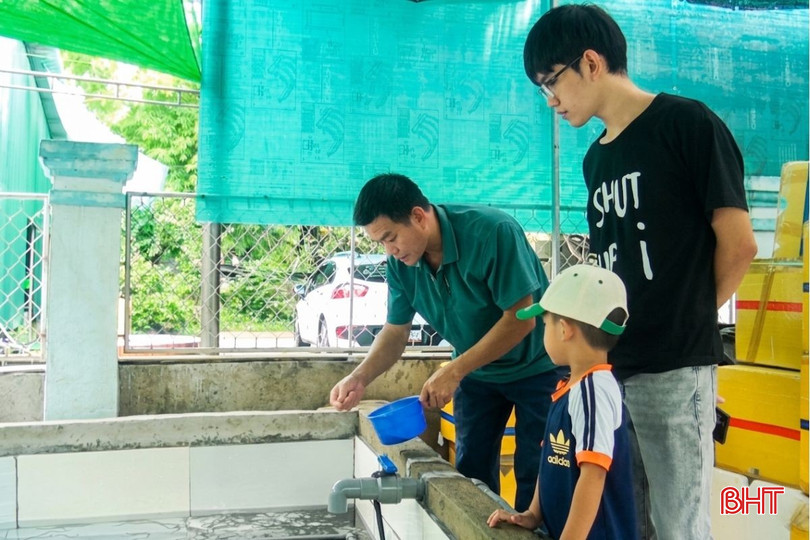
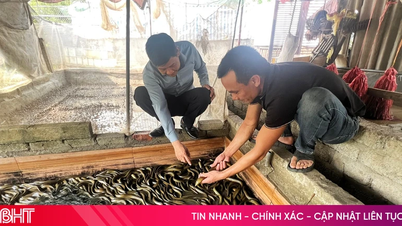
In Truong Luu commune, Mr. Nguyen Van Truong is one of the pioneers pursuing this path. In 2020, he started with the first pairs of parent eels, gradually domesticating them and perfecting the egg incubation process in a controlled environment. As a result, the hatching rate is high, and the offspring are healthy and have good resistance.
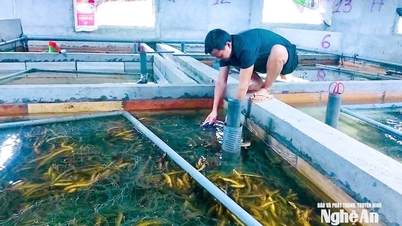
Starting from a small scale, his facility has now expanded to 27 breeding tanks covering an area of approximately 300m², including separate areas for commercial farming, breeding, and nursery. Each year, the facility supplies an average of 7 tons of market-sized eels and about 600,000 juveniles, generating revenue exceeding 1 billion VND. He is also willing to share and transfer his techniques to other households in need.
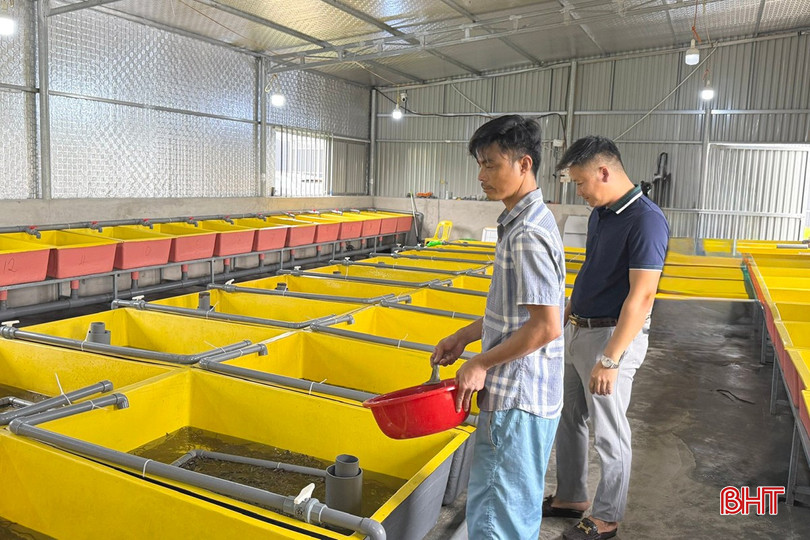
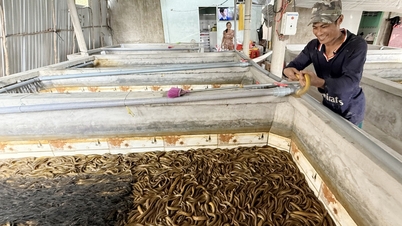
Aiming to develop a systematic, large-scale eel farming model, Mr. Dang Van Cuong - owner of Thinh Phat eel breeding farm (Tran Phu ward) - has invested in more than 100 breeding tanks. A highlight of the facility is its inter-provincial production process: parent eels are selected in Vinh Long, and after hatching, they are transported to Ha Tinh for further domestication and breeding.
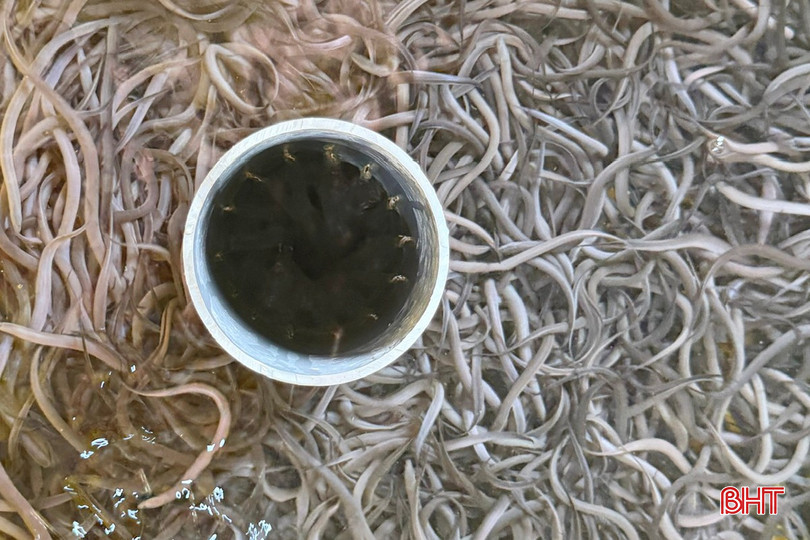
Behind those figures lies a tightly controlled technical process, where each step requires precision and experience from the breeder. The nursery stage plays a crucial role, determining 80% of the success of the entire eel fry production process. When the eel larvae reach 25-30 days old and are about 5 cm in size, they can be transferred to nursery tanks at a density of 500-800 individuals/m². The eels need to be fed 0.5 mm pellets with a protein content of 40-42%, at a rate of about 1% of their body weight; and regularly supplemented with vitamins, minerals, and probiotics to increase their resistance.
Mr. Ho Phong Lai, a technical officer at Thinh Phat eel breeding farm, said: "Due to their preference for clean environments, water changes need to be strictly implemented: about 30 minutes before feeding and about 2 hours after the eels have finished eating. In addition, farmers need to closely monitor weather conditions and the health of the eels to promptly detect and address any unusual signs."
Based on local observations, Mr. Le Quang Nghiem, Deputy Head of the Economic , Infrastructure and Urban Planning Department of Tran Phu Ward People's Committee, stated: "Eel breeding production brings clear economic benefits. This is a suitable livestock for the conditions of many localities, especially for households with limited land area but who want to develop in an intensive, high-quality manner."
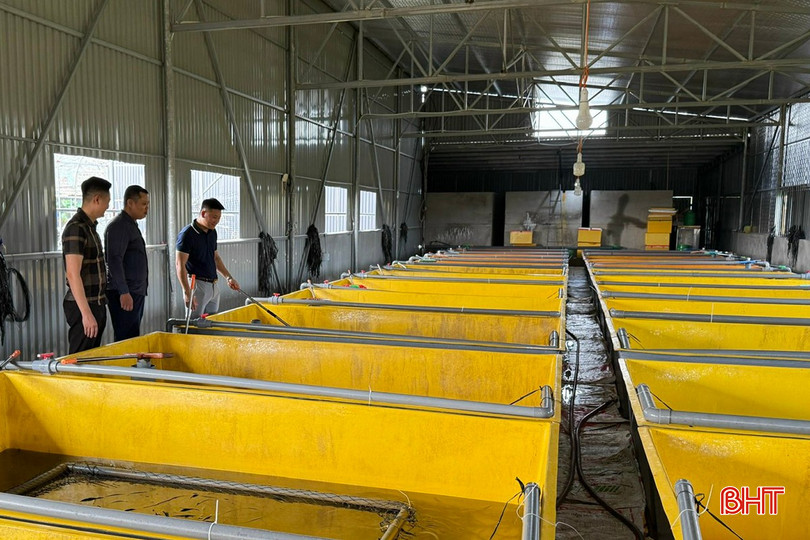
Mastering breeding technology and farming processes is a key factor in helping people confidently expand large-scale mudless eel farming models. This approach not only brings economic benefits but also contributes to reducing natural resource exploitation and moving towards sustainable agricultural development.
Source: https://baohatinh.vn/sinh-ke-ben-vung-tu-san-xuat-luon-giong-post309791.html














































































Comment (0)