



The community art project "Threads of Time," initiated by embroidery artist Pham Ngoc Tram, has contributed to bringing traditional Vietnamese hand embroidery back to life, making it more vibrant and accessible to young people.
A graduate of the Vietnam Fine Arts University, Pham Ngoc Tram has over 15 years of experience researching, restoring traditional embroidery techniques, and practicing her own creations. Her exploration and application of knowledge about silk, natural dyes, and other materials has helped her expand her expressive abilities and shape her personal style.
Pham Ngoc Tram's work goes beyond mere craftsmanship; it affirms hand embroidery as a visual art form in contemporary art. Besides her personal activities, Tram regularly organizes and teaches embroidery workshops both domestically and internationally, contributing to the dissemination of knowledge about traditional embroidery and gradually bringing hand embroidery techniques to a wider international creative space.
Drawing on her expertise and passion for the nation's traditional culture, artist Pham Ngoc Tram initiated the "Thread of Time" project, embarking on a journey to collect and systematize the memories of embroidery and sewing in old Hanoi homes. The program is implemented in collaboration with the People's Committee of Cua Nam Ward and Trung Vuong Secondary School. Through hand embroidery techniques, this initiative encourages the community to share stories connected to urban memories and heritage, while also promoting the tradition of educating Hanoi girls through creative experiential activities, gradually building Trung Vuong-Dong Khanh School into a cultural and heritage education hub.
The project's opening activity took place at Trung Vuong Junior High School with a talk about embroidery art during the Indochina era and the story of Dong Khanh Girls' School. The setting of a traditional girls' vocational school was recreated, allowing participants to directly experience embroidery and sewing as part of the girls' education program.
Following the launch event, the project encouraged the community to share mementos and memories related to embroidery and sewing, laying the foundation for the next stage. The items submitted to the project have become increasingly diverse: handkerchiefs, sewing kits, patched-up garments, pillowcases embroidered with birds… all containing the diligence and love of the craft. These mementos have become pieces of Hanoi's life through various historical periods.
Throughout her research and practice, Pham Ngoc Tram has always prioritized community connection. In the series of activities celebrating the Lunar New Year 2026, the program "New Spring Colors for Old Clothes" attracted a large number of young people, along with grandmothers and mothers, to participate. Many children learned to thread needles, sew, embroider, and mend sweaters for the first time under the guidance of artist Pham Ngoc Tram.
Through each simple step, memories of the shirt from the subsidy era embroidered with flowers by mother or the trousers with the embroidered patches sewn by grandmother are recalled with great emotion. These intergenerational stories not only convey cultural values and family affection but also demonstrate the enduring vitality of traditional embroidery techniques in modern life.
Through each story, the role of women in educating their children, preserving family traditions, and safeguarding urban memories is vividly portrayed. In addition, the accessories created by young people, bearing their personal touches such as incense pouches and embroidered handkerchiefs, demonstrate the versatile application of hand embroidery in contemporary life. The workshop not only opened a space for sharing memories of Hanoi within each family but also contributed to fostering an awareness of repairing, recycling, reusing, and appreciating the value of everyday objects.
Hand embroidery is not just a skill, but also a way to express emotions and connect generations. In the home economics program taught to female students at Dong Khanh School, embroidery and sewing symbolized meticulousness, care, and love for family. Through each stitch, generations of Hanoi women have passed down to their children and grandchildren how to mend clothes, sew scarves, and preserve family traditions—values that were once just memories but are now revived through delicate yet enduring threads.
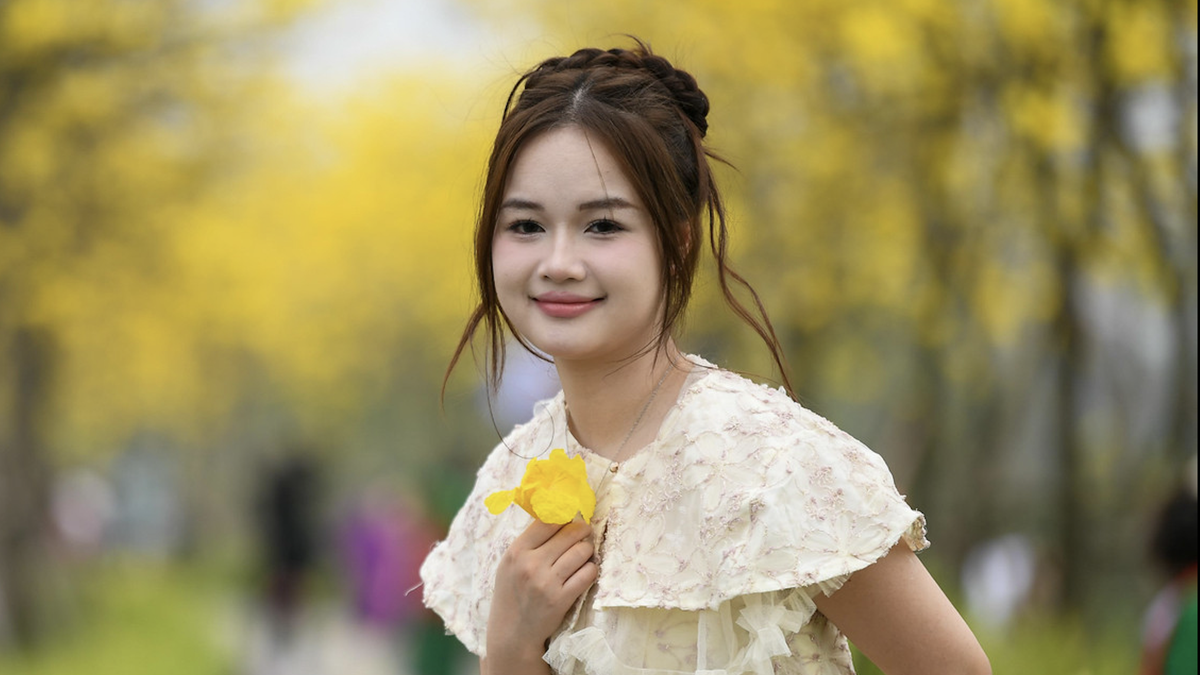
Artist Pham Ngoc Tram
Sharing her thoughts on the "Threads of Time" project, artist Pham Ngoc Tram said: Hand embroidery is not just a skill, but also a way to express emotions and connect generations. In the home economics program taught to Dong Khanh girls, embroidery and sewing symbolize meticulousness, care, and love for family. Through each stitch, many generations of Hanoi women have passed down to their children and grandchildren how to mend clothes, sew scarves, and preserve family traditions—values that were once just memories are now recalled through delicate yet enduring threads.
Continuing the project's journey, artist Pham Ngoc Tram will join cultural researchers, artists, teachers, and others to discuss solutions for applying art to heritage education and community engagement. The collected materials and contributions to the "Thread of Time" project will be compiled and developed into content for a community exhibition scheduled to be held in March at Trung Vuong Secondary School.
The exhibition space will showcase embroidered artifacts, images, and documents shared by the community, along with images, stories, and multimedia artwork. After the event, all data will be digitized, forming an archive for research and presentation at various cultural spaces both domestically and internationally. This approach contributes to expanding public access while affirming the position of traditional Vietnamese embroidery art.
Source: https://nhandan.vn/soi-chi-thoi-gian-ket-noi-ky-uc-do-thi-post945444.html















































Comment (0)