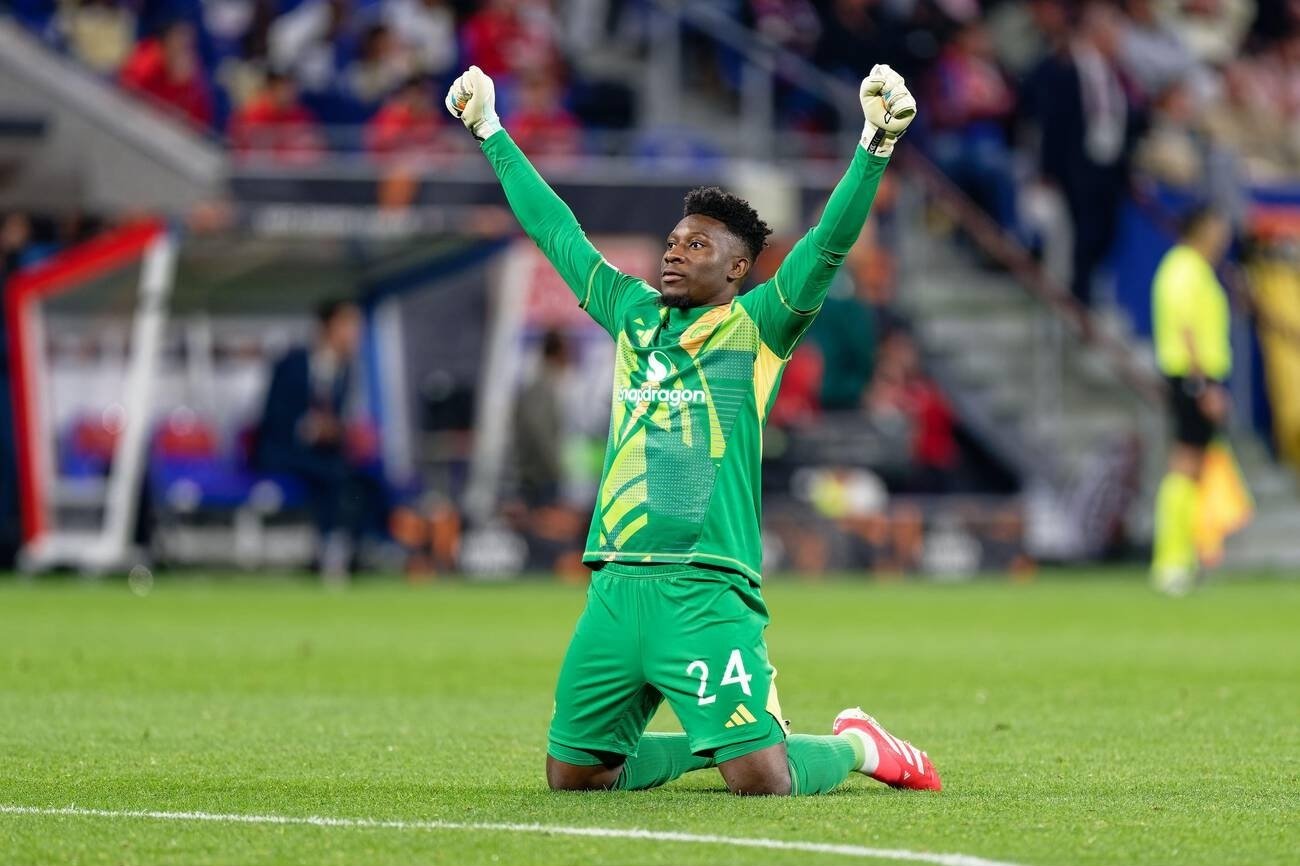
Before the match, Onana was involved in a controversy with Lyon midfielder Nemanja Matic. Matic claimed that Onana was "one of the worst goalkeepers in Manchester United's history." Onana immediately responded on social media that he "won titles with Manchester United, while Matic didn't."
However, what happened on the pitch was the opposite. The Cameroonian goalkeeper made mistakes in both of MU's goals conceded against Lyon, especially in the first one. Thiago Almada's dangerous free-kick caused the former Inter Milan star to fumble and push the ball into the net, much to the astonishment of the MU players and fans.
In the final minutes, it seemed as though MU would leave France with a one-goal lead, but Onana's habit of pushing the ball forward continued to cause the "Red Devils" to concede a goal in the final minute of injury time. Most people are now beginning to support Matic's statement, but is the MU goalkeeper really that bad?
The injustice of raw statistics
If Matic's assessment of Onana is based on statistics, looking only at the number of goals conceded per game and the clean sheet percentage, then it could be considered a valid observation.
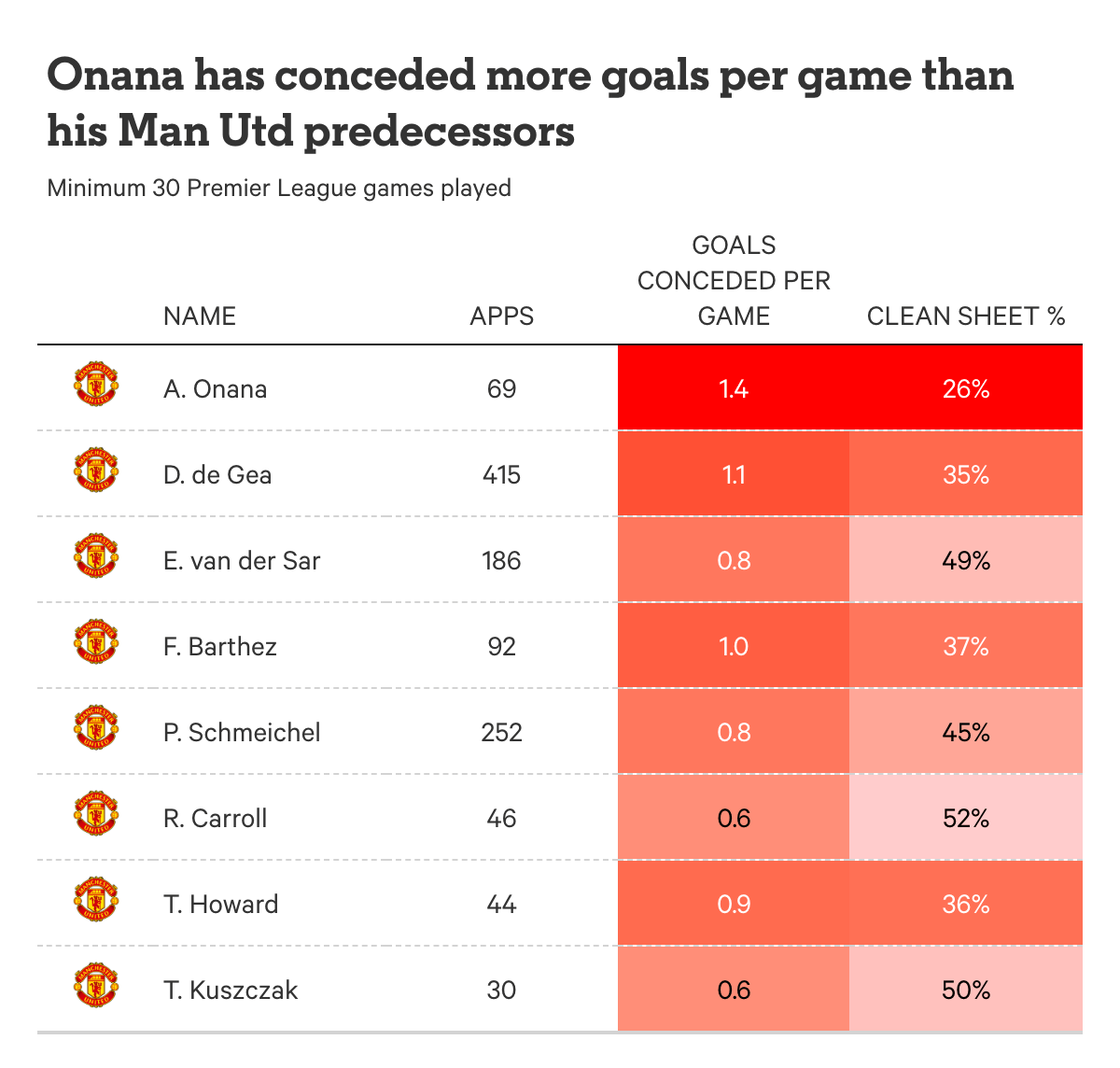
Considering only goalkeepers who have played at least 30 games, Onana is actually the one who has conceded the most goals in Manchester United's history. He conceded an average of 1.4 goals per game and kept only 26% clean sheets, both the lowest figures among the eight goalkeepers who have played for the Red Devils and met that criterion.
|
Goals conceded per game and clean sheet percentage for goalkeepers who have played at least 30 games for Manchester United. Photo: The Athletic. |
However, this statistical table also reveals the absurdity of ranking goalkeepers in this way. According to these indicators, Roy Carroll — famous for gifting a goal to Tottenham in 2005 — could actually be the best goalkeeper in modern Manchester United history.
The problem with comparing goalkeepers based on these raw statistics is that it ignores the broader context, or arguably one of the most important factors: the strength (or weakness) of the defense in front of them.
This season, Liverpool have conceded 30 goals in the Premier League, double the number Chelsea conceded in their 2004/2005 championship season. Does that mean Petr Cech is twice as good as Alisson or Caoimhin Kelleher? Of course not.
Chelsea's solid defense at the time was the result of many factors. A backline led by John Terry, Jose Mourinho's tactics, a more cautious era of football, and finally, Cech's outstanding goalkeeping abilities. Assigning the right amount of responsibility to each of these elements is almost impossible.
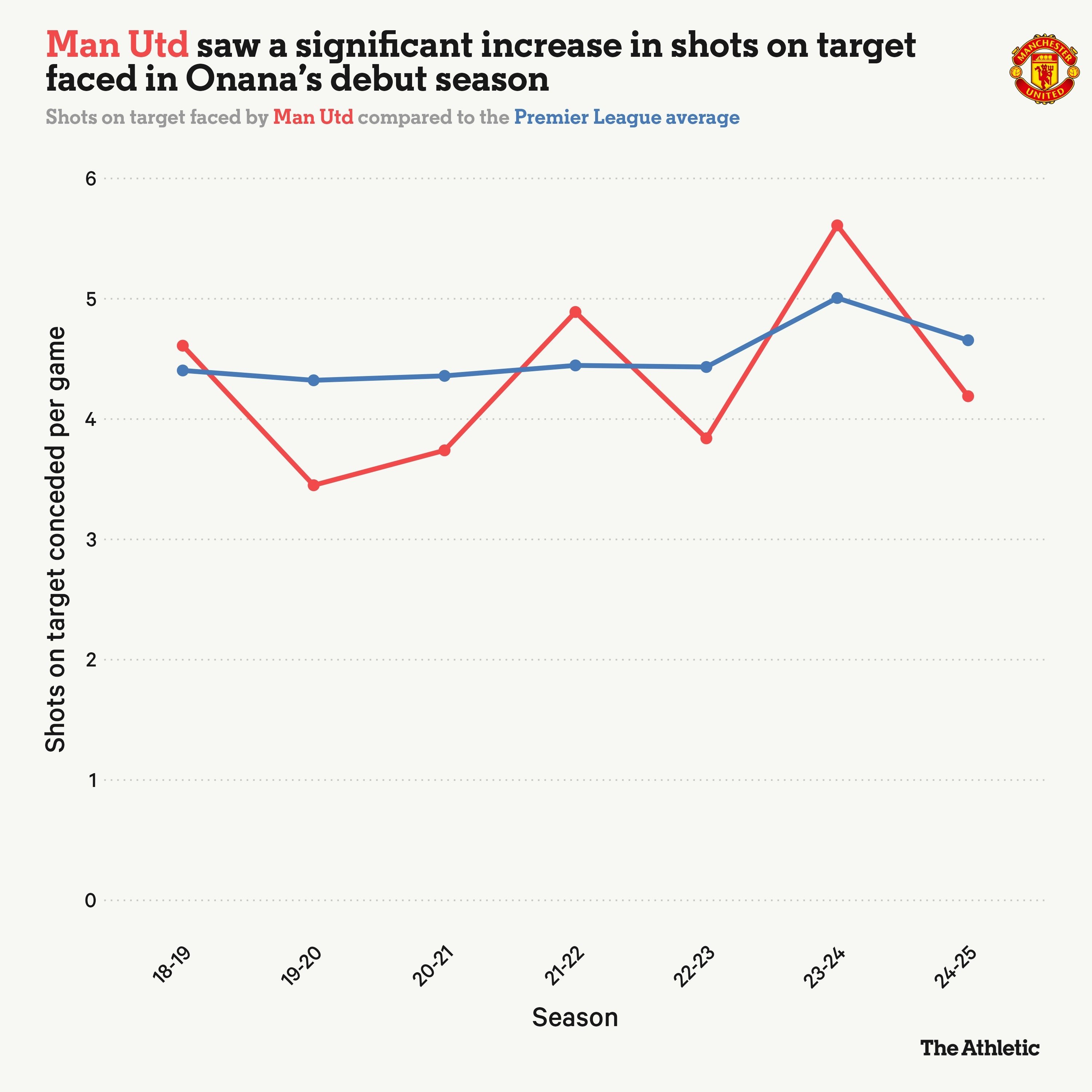
Unlike Cech, the loose defensive line in front of him has left Onana facing more shots. Despite improvements this season, MU have still conceded more shots on target than the Premier League average since the Cameroonian goalkeeper arrived at Old Trafford.
Onana still has its own unique values.
The Athletic points out that the number of shots on target Manchester United have conceded is one of the reasons why Onana is being unfairly compared to his predecessors. In total, he has faced an average of 4.8 shots on target per game.
For comparison, this figure is 50% higher than the 3.2 shots that legendary Edwin van der Sar faced during his time in the Premier League.
|
Manchester United have conceded more shots on target than the Premier League average since the Cameroonian goalkeeper arrived at Old Trafford. Photo: The Athletic. |
The problem with Onana is that when evaluating goalkeepers, it's easier to remember a few memorable but rare mistakes than to assess the consistency of their weekly performances. These notable errors have overshadowed Onana's ability to make saves that have actually placed him among the best goalkeepers in the English top flight since joining Manchester United.
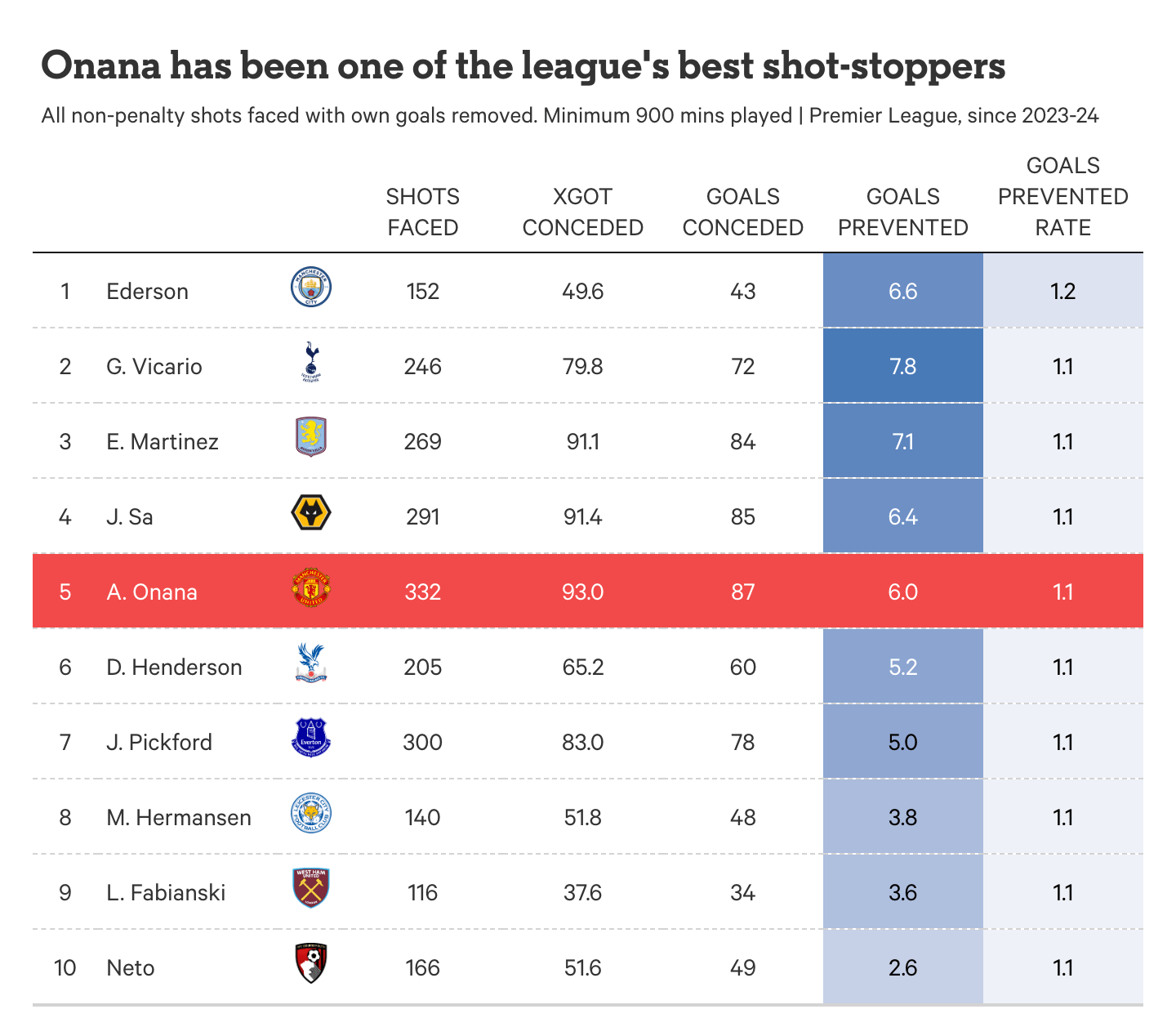
Since the start of last season, the 29-year-old goalkeeper has faced 332 shots in the Premier League, with xGOT (expected goals based on shots on target) reaching 93. However, Onana has only conceded 87 goals, six fewer than the expected statistic based on the quality of the shots he has faced.
In terms of percentages, this statistic places the Cameroonian goalkeeper in 5th place among Premier League goalkeepers in the same period for outstanding xGOT save performance.
Furthermore, another weakness in Matic's assessment is that the goalkeeper role has evolved so much that any meaningful statistical comparisons between generations become superfluous.
|
Onana is among the top 5 goalkeepers in the Premier League in terms of his shot-saving ability. Photo: The Athletic. |
Aside from rushing out to join the attack from late-game corners in search of equalizers, Peter Schmeichel rarely left the penalty area. Conversely, making crucial saves has now become an essential aspect of the modern goalkeeper's role, alongside effective ball distribution.
Pep Guardiola dropped Joe Hart at Manchester City — not because Hart lacked traditional goalkeeping qualities like saves and commanding the penalty area, but because he didn't meet modern demands for ball-playing ability and an active positioning.
Similarly, one of the main reasons Onana was brought in to replace David de Gea at United was the Spanish goalkeeper's hesitation to rush out of his goal and make dangerous saves further from the post.
The demands placed on goalkeepers are so diverse that reducing their performance to a few basic statistics risks obscuring the true complexity of the role in modern football.
Source: https://znews.vn/su-bat-cong-voi-andre-onana-post1544924.html


































































































Comment (0)