

With agricultural input prices constantly rising, especially fertilizer costs which put significant pressure on farmers, the rational use of fertilizers is becoming a necessary solution to reduce production costs and improve economic efficiency. This solution helps farmers save on input costs, contributes to precise nutrient management, reduces greenhouse gas emissions, promotes digital transformation in agricultural production, and supports the goal of developing 1 million hectares of high-quality, low-emission rice.
 |
| Farmers need to change their farming practices, use fertilizers rationally, and adopt new techniques to improve production efficiency. |
Fertilizers account for approximately one-third of production costs.
According to economic experts, fertilizers and pesticides are the two largest expenses in rice production. With the prices of agricultural inputs constantly fluctuating, many farmers experience reduced profits, or even losses, if yields and rice prices do not meet expectations.
In reality, the practice of dense sowing and the inappropriate use of pesticides increase input costs, lead to more pest and disease outbreaks, require the use of additional pesticides, and ultimately increase production costs.
According to Mr. Nguyen Van Hung, a senior expert at the International Rice Research Institute (IRRI), rice farmers in the Mekong Delta currently bear six main cost groups: land preparation, sowing, irrigation, fertilizers, pesticides, and harvesting. Of these, fertilizer costs account for 29-32%, and pesticides account for 27-31% of the total investment. The continuous increase in agricultural input prices has significantly impacted the profits of rice farmers, even leading to losses in the 2026 Summer-Autumn crop. Therefore, changing farming practices, using fertilizers rationally, and applying new techniques are considered crucial solutions to reduce input costs and improve production efficiency.
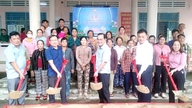
Mr. Tran Van Buu (Binh Phuoc commune) said: “Previously, I sowed densely, using more than 100kg of seeds per hectare, and fertilized according to habit, so the costs were very high, and pests and diseases appeared frequently. After being guided by the agricultural sector to apply sparse sowing, balanced fertilization, and proper water management, the amount of seeds used was reduced by almost half, the number of times pesticides were sprayed decreased significantly, but the yield remained stable. Thanks to the reduced investment costs, profits increased significantly, and the rice fields were less prone to lodging and required less labor for care than before.”
According to the agricultural sector, the economical and efficient use of PB contributes to improving soil fertility, enhancing rice grain quality, and reducing greenhouse gas emissions. This is considered a key solution in the implementation of the "Sustainable Development of 1 Million Hectares of High-Quality, Low-Emission Rice Cultivation Associated with Green Growth in the Mekong Delta by 2030" project.

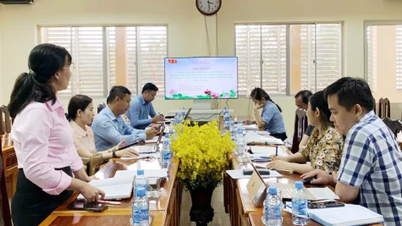
Mr. Tran Truong Giang, Deputy Director of the Department of Agriculture and Environment, said: "In recent times, the agricultural sector has intensified propaganda, training, and technology transfer to raise farmers' awareness of using fertilizers economically and efficiently, reducing production costs and protecting the environment. The locality is actively expanding the project of 1 million hectares of rice cultivation associated with modern technologies such as nano-fertilizers and automatic irrigation. Preliminary results are very promising: Yields reach 6.6-7 tons/ha, production costs are reduced by 15-17%, emissions are reduced by 20-23%, helping farmers achieve profits 30% higher than traditional farming. By the 2025-2026 Winter-Spring crop season, the planted area will reach over 8,100 hectares (99% of the plan)."
Applying new techniques to reduce rice production costs.
To achieve the goal of comprehensive cost reduction, the Department of Crop Production and Plant Protection recommends that farmers make a strong shift from a mindset focused on agricultural production to one focused on agricultural economics, prioritizing soil health and reducing nutrient loss.
To elaborate on this solution, Mr. Nguyen Van Hung recommended that farmers should apply precise row sowing combined with fertilization and proper water management to reduce input costs and improve production efficiency.
According to the results from the pilot model implemented in the 2024-2026 period, this solution helps reduce seed usage by 50-60 kg/ha, reduces nitrogen fertilizer use by about 30% and pesticide use by more than 20%, while still increasing rice yield by about 5% thanks to reduced lodging and post-harvest losses.
Mr. Le Thanh Tung, Vice President of the Vietnam Rice Industry Association, believes that the proper use of fertilizers plays a crucial role in rice cultivation. Each growth stage of the rice plant, from seedling and tillering to flowering and harvesting, has different nutritional needs. Therefore, it is necessary to choose the right type of fertilizer, apply the correct dosage, and do so at the right time for efficient plant development. Providing nutrients appropriate to weather conditions will help limit fertilizer loss due to rain, sun, or leaching, avoiding waste while still ensuring yield. Instead of simply spreading fertilizer on the surface of the field, burying it in the soil will help retain nutrients better and gradually supply them to the plants.
“Implementing the ‘four correct principles’ in using fertilizers helps save costs, increase profits for farmers, contribute to reducing greenhouse gas emissions, ensure food safety, and protect the environment. This is also a requirement that needs to be promoted in the implementation of the Project on 1 million hectares of high-quality, low-emission rice associated with green growth in the Mekong Delta by 2030,” Mr. Tung emphasized.
The efficient and effective use of PB (Plant, Pavement, and Grain) is opening up new avenues for rice production in the Mekong Delta. Along with helping farmers reduce cost pressures amidst rising input prices, this advanced farming solution contributes to improved rice yield and quality, and reduces environmental impact. When implemented in conjunction with the 1 million hectare high-quality, low-emission rice project, it will be a crucial foundation for the rice industry to develop in a modern, sustainable direction and increase farmers' incomes.
Text and photos: TRÀ MY
Source: https://baovinhlong.com.vn/kinh-te/nong-nghiep/202605/su-dung-phan-bon-hop-ly-giam-chi-phi-san-xuat-lua-8ce121d/































![[Video] Sunset at Lap An Lagoon – Where the sun sets over the fishing nets](https://vphoto.vietnam.vn/thumb/1200x675/vietnam/resource/IMAGE/2026/05/31/1780192137701_beach-landscape-sea-water-nature-grass-745871-pxhere-com.jpeg)





















Comment (0)