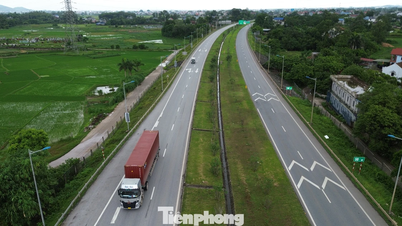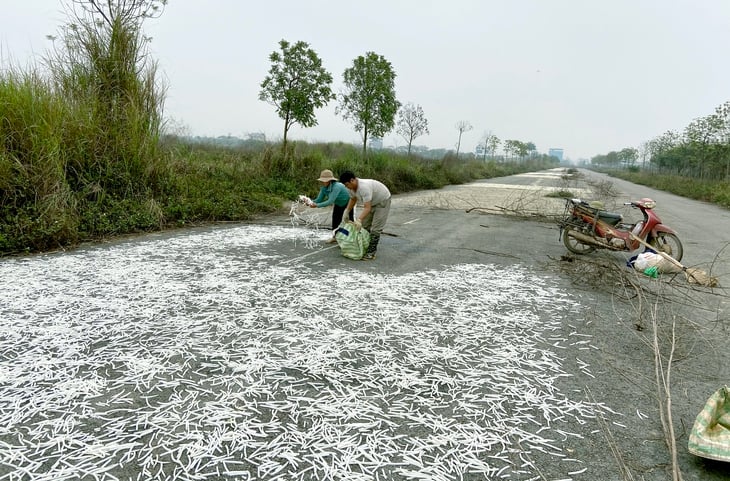
A road construction project in the outskirts of Hanoi has been abandoned for many years after completion. (Photo: Q.THẾ)
The State will take responsibility for land acquisition in projects where the investor has only less than 25% of the land area or less than 25% of the land users yet to reach an agreement, in order to implement socio-economic development projects...
This is one of two additional cases in which the State undertakes land reclamation, compared to the 32 cases stipulated in the 2024 Land Law, according to the draft amendment to the 2024 Land Law currently being circulated for comments from localities in order to meet the deadline for the Government to submit it to the National Assembly at the upcoming 10th session.
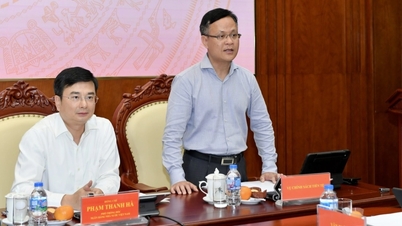
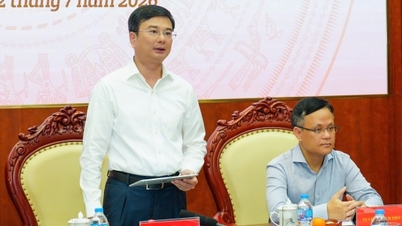
Mr. Dao Trung Chinh, Director of the Land Management Department, Ministry of Agriculture and Environment, affirmed this when discussing some new points in the draft amendment to the 2024 Land Law with Tuoi Tre newspaper .
Mr. Chinh said: "In reality, many projects have reached agreements with the majority of land users and land within the project area, but only a small portion remains unresolved, leading to 'stalled projects,' wasting land resources, prolonging progress, and causing difficulties for investors."
* The Land Law of 2024 has only been in effect for a short time, so why is it necessary to amend and supplement it, sir?

Mr. Dao Trung Chinh - Director of the Land Management Department, Ministry of Agriculture and Environment
- Land is a special national resource, a crucial resource for national development; any changes in land policy have a profound impact on socio-economic life.
The practical implementation of the 2024 Land Law and its guiding documents over the past period has shown certain effectiveness, promptly resolving many difficulties in land management and use.
However, further review and improvement are needed to ensure convenient and transparent access to land, meeting the requirements for implementing socio-economic development projects. Therefore, amending and supplementing the Land Law at this time is absolutely necessary to create strong momentum for realizing the country's development goals in the new period.
The amendments and additions to the Land Law also aim to ensure the review and improvement of the system of legal documents affected by the restructuring of the state apparatus, ensuring completion before March 1, 2027, as required by Resolution No. 190 of the National Assembly.
* Recently, many localities and businesses have reported that the implementation of the 2024 Land Law still faces numerous obstacles. Will these issues be addressed in a timely manner?
- In addition to reviewing and drafting the Law amending and supplementing a number of articles of the Land Law and organizing written consultations with ministries, sectors, and localities, the Ministry of Agriculture and Environment is also holding conferences to gather direct feedback from localities in order to comprehensively and practically incorporate their suggestions.
In addition, working groups from the ministry were sent to many provinces and cities to provide guidance and resolve difficulties in the process of implementing the two-tiered local government model.



This is also an opportunity to identify and summarize the difficulties and shortcomings in land management and use when applying the new organizational model, thereby promptly researching and improving the provisions of the draft law, ensuring its feasibility and suitability to practical requirements before reporting to the Government for consideration and submission to the National Assembly.
Many experts and businesses believe that collecting additional land fees for periods not yet covered by land use fees and land lease fees is unreasonable. Will this issue be included in the draft Land Law?
- The content related to abolishing the regulation on collecting additional land use fees and land lease fees for periods not yet calculated is still under discussion and undergoing widespread consultation.
Recently, in some localities, this additional payment has significantly increased the financial obligations regarding land use for land users. The Ministry of Agriculture and Environment has promptly acknowledged this and is closely coordinating with the Ministry of Finance to comprehensively review and assess the issue.
According to Article 257 of the Land Law, the Government is tasked with specifying the details of the additional fees that land users must pay for periods not yet subject to land use fees or land rent.
However, during the implementation process, it is necessary to clearly consider whether the reason for the non-payment stems from the fault of the land user or from the responsibility of the state agency, in order to have a reasonable and harmonious solution that ensures the legitimate rights of citizens and businesses while preventing budget revenue losses.
Regarding this issue, the Ministry of Finance is also leading research and proposing appropriate adjustments to this content during the process of amending and supplementing Decree No. 103/2024/ND-CP dated July 30, 2024, of the Government regulating land use fees and land lease fees, ensuring consistency with the direction of amending and supplementing the Land Law.
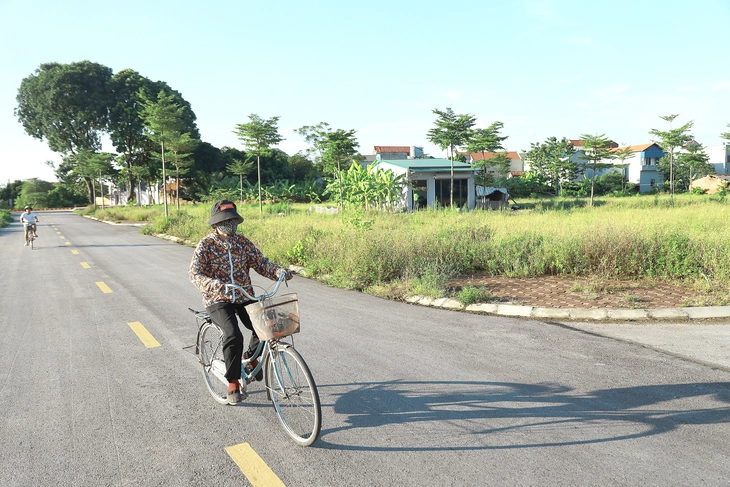
Land auctioned off but then left abandoned in some areas of Hanoi - Photo: DANH KHANG
* The draft also includes many new regulations such as a national land information system, conversion of rice land, encouragement of businesses to reclaim land from the sea... why is that, sir?
- This draft law adds many new strategic provisions aimed at maximizing land potential, promoting innovation, and fostering sustainable growth.
First and foremost, establishing a national land information system will require coordinated investment from both central and local budgets, while encouraging social participation to create a unified, transparent, and easily accessible data platform.
This is an important tool that helps the State manage effectively, reduce compliance costs for businesses, support investors in accessing quick and accurate information, and thereby enhance the competitiveness of the economy.
In addition, the draft also refines the mechanism for converting rice land in a flexible manner, consistent with planning and development needs, ensuring a balance between food security and the requirements of industrial, service, and infrastructure development. This regulation will help mobilize land for key projects, creating new development space for localities.
Furthermore, the encouragement of businesses to invest in land reclamation, specifically linked to environmental protection and sustainable development requirements, will open up significant opportunities to expand urban development, industrial zones, tourism, and services in coastal localities, while also contributing to affirming national sovereignty and interests at sea.
When implemented comprehensively, all these new regulations will contribute to unlocking land resources, strongly attracting domestic and foreign investment, creating jobs, increasing budget revenue, and promoting rapid and sustainable socio-economic development.
Proposal to add two more cases where the State takes responsibility for land reclamation.



According to Mr. Dao Trung Chinh, in addition to the 32 cases where the State reclaims land for socio-economic development in the national and public interest as stipulated in the 2024 Land Law, the draft law also adds two more cases where the State reclaims land.
Firstly, land is reclaimed for projects with specific requirements regarding investment location; urgent investment projects serving political and foreign affairs; projects in free trade zones, international financial centers, and logistics projects; mixed-use residential-urban-tourism-commercial-cultural-sports projects; cultural industry projects; and other socio-economic development projects decided by the Provincial People's Council in accordance with the actual conditions of the locality.
These are new project models, suitable for the current economic development context, capable of generating significant socio-economic benefits, attracting strategic investment, and propelling Vietnam to become a regional economic, financial, trade, and service hub.
At the same time, these projects often utilize large land areas, acting as drivers of development, making significant contributions to the state budget, creating many jobs, and contributing to building an independent and self-reliant economy.
Secondly, land is reclaimed for socio-economic development projects through the mechanism of agreement on land use rights as stipulated in Article 127 of this law, but after the expiration of the period (including extensions) stated in the approval document of the competent People's Committee chairman, the investor still has less than 25% of the land area or less than 25% of the land users remaining to be in dispute with the investor.
In reality, many projects have reached agreements with the majority of land users and land within the project area, but only a small portion remains unresolved, leading to "stalled projects," wasting land resources, prolonging progress, and causing difficulties for investors.
Adding this regulation will allow the State to reclaim the remaining land area to allocate or lease it to investors, accelerating land clearance and bringing the land into efficient use sooner.
Source: https://tuoitre.vn/sua-luat-dat-dai-khoi-thong-nguon-luc-20250820080420951.htm