Transforming the production model
Keeping pace with global economic shifts, businesses in the city are gradually transforming their traditional production models to embrace a greener approach. The application of renewable technologies and the thorough processing of by-products not only helps businesses address environmental concerns but also optimizes costs and creates sustainable added value.
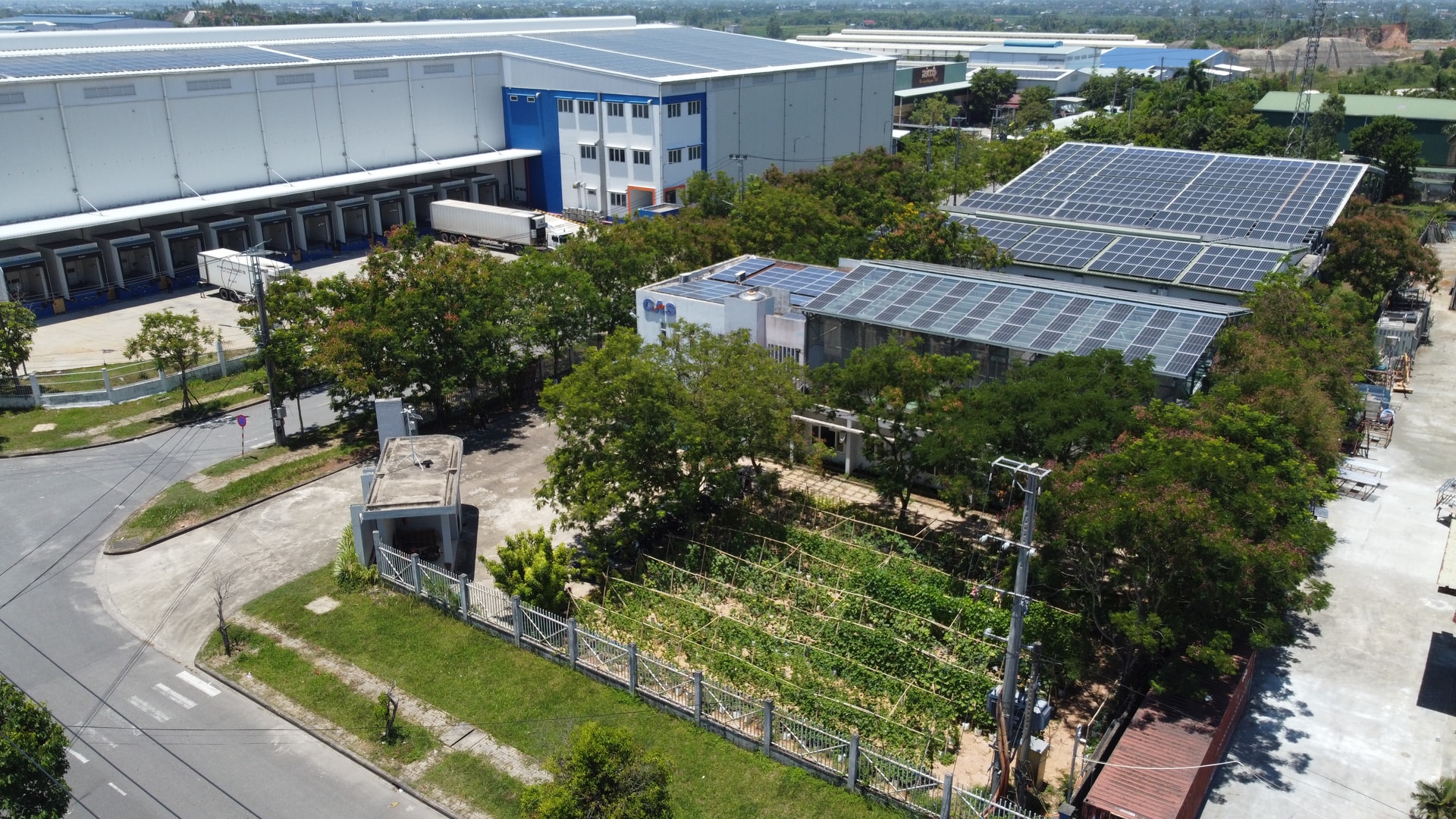
A prime example of green production thinking is the Control and Automation Solutions Company (CAS), operating in the Hoa Cam Industrial Park, Cam Le Ward. Seven years ago, the company boldly embarked on building a "solar farm" model combining agriculture .
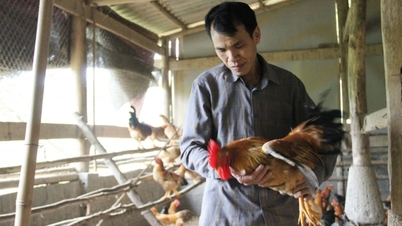
According to Mr. Nguyen Ngoc Duong, Project Development Director of CAS, the company utilizes the rooftop to install a solar power system, while the space below is designed for raising chickens, growing vegetables, and medicinal herbs. To date, this model alone has consistently supplied more than 10,000 clean chicken eggs per week to the Da Nang market.
Not stopping there, CAS continued to develop a 100% organic, recirculating hydroponic vegetable farming model right on its factory grounds in Hoa Cam Industrial Park. The highlight of the model is that all organic waste is processed and composted into bio-fertilizer to be used back on the plants, transforming the factory space from a dry, gray "gray" into vibrant "green patches".
In its long-term strategy, Mr. Duong stated that CAS is developing a rice-fish-duck project on a scale of 25-50 hectares in the Quang Phu area. This model will make full use of waste from fish and ducks to produce organic fertilizer for rice; combine it with an automated solar power system for irrigation; apply the alternating wet and dry irrigation (AWD) method; and transform rice straw into biochar.
Currently, the company is collaborating with the Da Nang Department of Crop Production and Plant Protection to test a low-emission rice farming model on a 2-hectare area in Dien Ban Tay. Further research is underway on a "city farm" model, transforming urban residents' rooftops into mini-solar-powered vegetable gardens.


“These solutions not only optimize renewable energy but also directly promote the circular economy. On-site food supply helps reduce a large amount of emissions from transportation, while increasing local food self-sufficiency, especially in the context of easily disrupted supply chains,” Mr. Duong shared.
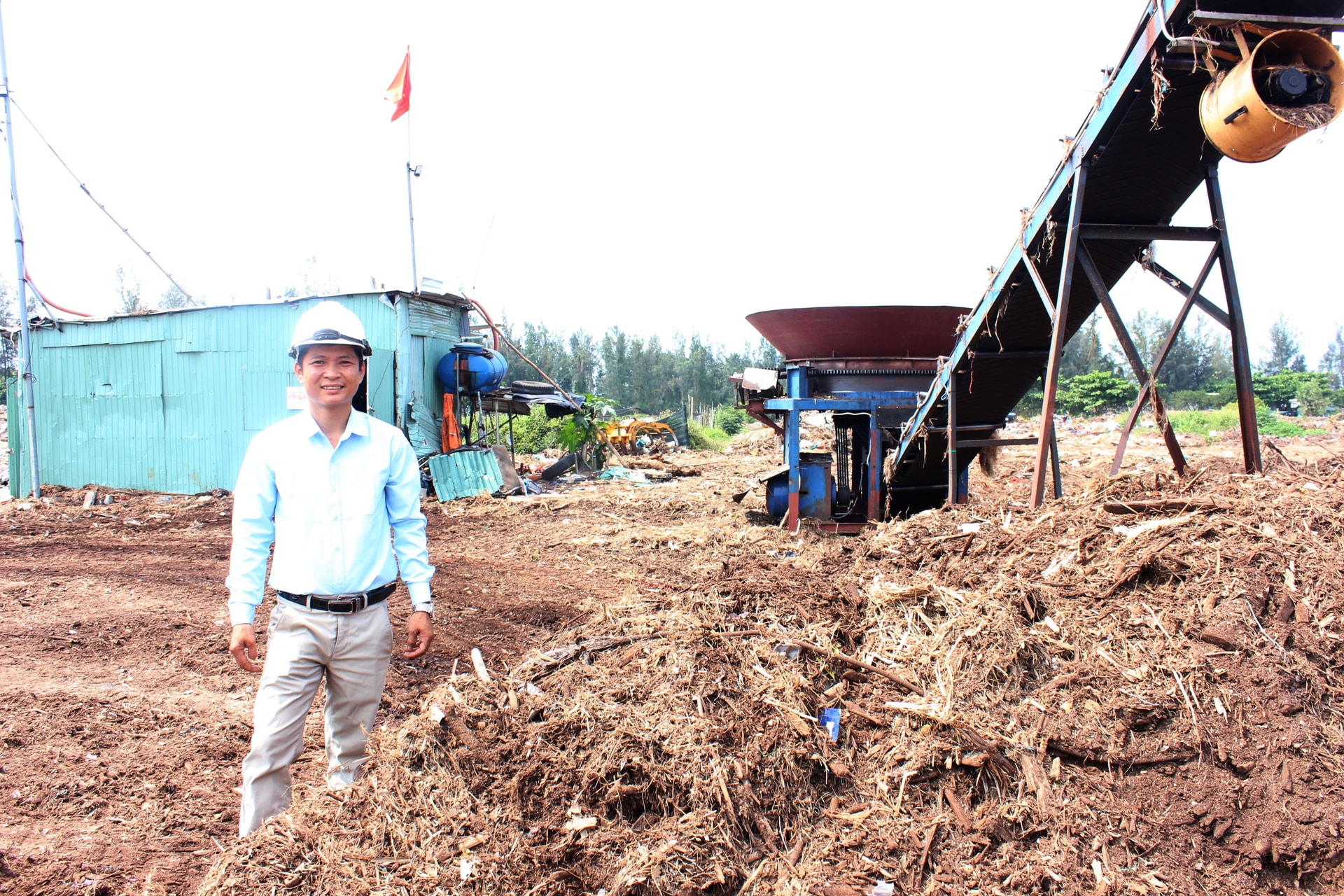
Meanwhile, Hai Van Clean Energy Joint Stock Company (Thanh Khe ward) has chosen a "green" approach using urban waste products. Concerned about the large amount of fallen leaves and branches that have to be sent to the Khanh Son landfill after each rainy season, Mr. Truong Tu Long, the company's founder, successfully researched and developed a technology to produce biomass pellets - a clean fuel to replace coal.
This product is supplied to many major partners such as Heineken Brewery Da Nang, Vinamilk Da Nang, Da Nang Rubber Joint Stock Company... Notably, the finely chopped leaves are also mixed with restaurant food waste to create an organic substrate, which is supplied to nurseries and eco-farms.
Mr. Truong Tu Long said that in the near future, the company will cooperate with the People's Committee of Thanh Khe ward to pilot a model of collecting and processing organic waste at the source at Quan Ho market (Ky Dong street), with the aim of producing fertilizer and animal feed in a closed system.
Building eco-industrial parks
The transformation efforts of businesses are the building blocks for Da Nang to move towards its bigger goal: building eco-industrial parks.
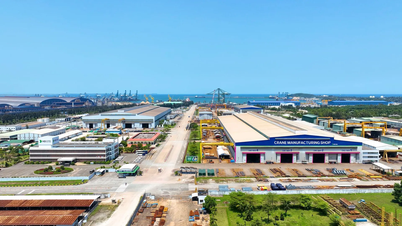
Ms. Doan Thi Ngoc Thuy, Deputy Head of the Construction and Environment Department (Da Nang High-Tech Park and Industrial Zones Management Board), said that the city is proud that Hoa Khanh Industrial Park (Lien Chieu ward) has been selected as one of the five industrial parks nationwide to participate in the pilot project to transform into an eco-industrial park.
The results after four years of piloting are very encouraging. Accordingly, 30% of businesses in the industrial park have implemented cleaner production; 334 solutions have been successfully proposed and 228 have been implemented in practice. These efforts have helped businesses save 14,000 billion VND per year; reduce 50,000 m3 of wastewater, 7,000 tons of CO2 and 2,700 tons of solid waste.



In particular, the core value of the eco-industrial park lies in the successful construction of six "industrial symbiosis" chains within the Hoa Khanh Industrial Park. Examples include recovering biogas from the Heineken brewery to use as boiler fuel; utilizing waste paper as input material for the Tan Long Packaging Factory; and using waste wood from Viet Lam Company to fuel furnaces for the Green Energy Production Company.
Regarding future direction, Ms. Thuy emphasized that the transformation roadmap will focus on two core groups. The first group is promoting resource efficiency, cleaner production, industrial symbiosis, and green infrastructure. The second group is systematic spatial planning, adhering to the principle of flexibility first, followed by ecological organization.
“A truly eco-industrial park must comprehensively meet stringent criteria regarding management, environment, social aspects, and economic efficiency. The formation and transformation into an eco-industrial park model is not only an environmental solution but also an economic strategy for Da Nang to affirm its position as a sustainable eco-city on the international map. This will be a new driving force for green growth, attracting investment in green technology and sustainable infrastructure, ensuring energy security, and responding to climate change,” Ms. Thuy said.
Source: https://baodanang.vn/suc-bat-moi-cua-doanh-nghiep-3336077.html



![[Photo] Strengthening character and expertise: Intense training for artillery soldiers.](https://vphoto.vietnam.vn/thumb/1200x675/vietnam/resource/IMAGE/2026/06/30/1782815602541_lu-368-1875-4571-jpg.webp)