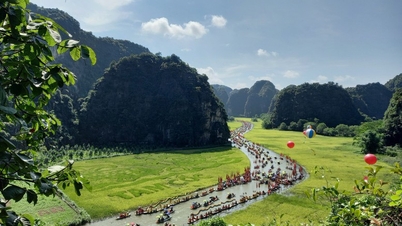
Southeast Asia is not only famous for its beautiful beaches and rich cuisine , but also for preserving many invaluable cultural and natural heritage sites.
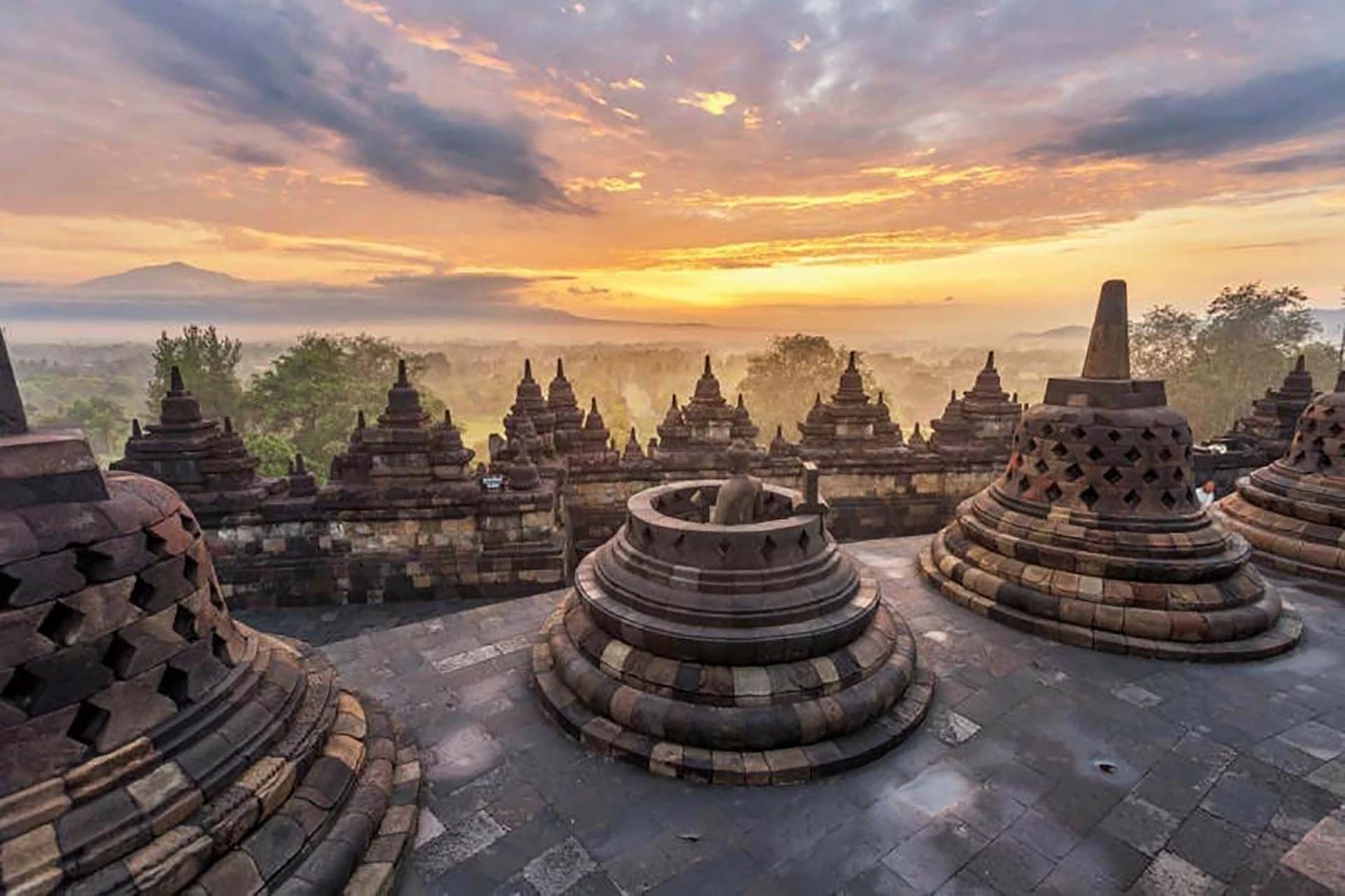 |
| Borobudur Temple in Indonesia , a marvel of Buddhist architecture. (Source: TripAdvisor) |
Wonders of the Land of a Thousand Islands
Borobudur Temple, a symbol of Mahayana Buddhism and one of the world's greatest Buddhist architectural wonders, is located in Magelang, Central Java, Indonesia.
Built in the 9th century, this monumental structure is not only a testament to the ingenuity of ancient architects but also reflects the complex intermingling of Indian, Chinese, and the unique indigenous cultures of the archipelago. With over 300,000 intricately stacked stones, Borobudur is a masterpiece of art, embodying profound historical and cultural values.
The temple has nine tiers, stacked on top of each other, with six square tiers, three round tiers, and a circular roof at the top. The temple houses a total of 504 Buddha statues, with 72 statues surrounding the dome alone.
Borobudur is a famous pilgrimage site for Buddhists, with pilgrimages beginning around the summit, passing through three areas depicting the Buddhist concept of the Three Realms: Kāmadhātu (Realm of Desire), Rupadhatu (Realm of Form), and Arupadhatu (Realm of Formlessness). Along the way to the summit, visitors traverse vast staircases and corridors, past thousands of reliefs carved into the walls and railings. The temple is renowned for having the most relief carvings in the world.
After the fall of the Buddhist Sailendra dynasty, the temple was abandoned for ten centuries. In 1814, the Dutch colonial administration in Indonesia sent a delegation of European scientists to study it, but it was already in a state of disrepair.
In 1970, the Indonesian government appealed to the United Nations Educational, Scientific and Cultural Organization (UNESCO) for assistance. UNESCO's Borobudur restoration program brought together nearly 600 renowned restoration experts from around the world to carry out large-scale restoration work on the temple, rearranging the stones back into their proper positions. This was done over 12 years at a total cost of approximately $50 million.
After restoration, the temple once again radiates the brilliant light of Eastern Buddhist architecture, revealing its former majestic appearance and rightfully earning its place as one of Asia's most famous wonders.
Kinabalu Biological Treasure



Kinabalu National Park, located on the island of Borneo, Malaysia, is not only a popular tourist destination but also one of the world's most valuable biodiversity treasures.
Recognized as a UNESCO World Natural Heritage Site since 2000, Kinabalu is home to over 4,500 species of plants and animals, including 326 species of birds, 100 species of mammals, and more than 110 species of land snails.
The park covers an area of 754 square kilometers surrounding Mount Kinabalu – the majestic mountain with the highest peak in Southeast Asia, formed approximately 10 to 35 million years ago. At 4,095 meters, Kinabalu is one of the youngest mountains in the world, still growing at a rate of 5 mm per year.
As one of Malaysia's most popular tourist destinations, Kinabalu National Park boasts diverse landscapes ranging from lowland tropical rainforests to frigid high mountain regions, creating an ideal habitat for thousands of species, many of which are endemic, including the Kinabalu giant earthworm (Pheretima darnleiensis) and the Kinabalu giant red leech (Mimobdella buettikoferi).
Naturalists will be particularly interested in the opportunity to explore Kinabalu's unique ecosystem, as it is a suitable environment for many orchids, and especially for many carnivorous plants, most notably the rare Nepenthes rajah, found only in this area. In addition, there are many species of birds, mammals, amphibians, reptiles, and insects...
Ancient Ayutthaya Citadel
Located about 80km north of Bangkok, Ayutthaya was once the political, economic, and cultural center of the Kingdom of Thailand.
The ancient city of Ayutthaya in Thailand was recognized as a UNESCO World Heritage Site in 1991.
The ancient city of Ayutthaya is a vivid testament to the intermingling and development of Southeast Asian architecture. Its architecture is a harmonious blend of Sukhothai, Angkorian, and Indian styles, creating a unique and distinctive character.
The temples, palaces, and other architectural structures were built according to a strict plan, with roads, canals, and moats surrounding them.
Stepping onto the main road leading into the city center, visitors will see well-preserved, towering stupas, a stark contrast to the temples in Bangkok. Ayutthaya boasts many ancient temples such as Wat Phutthaisawan, Wat Phra Mongkhon Bophit, Wat Pra Sri Sanphet, Wat Worachettharam, etc., which are valuable cultural and spiritual tourist destinations. Visitors can feel the sacredness and solemnity when they set foot in these temples.



Ayutthaya is quite large, so visitors can explore by tuk-tuk, bicycle, or on foot. Cycling is a fun experience as you weave through the streets and admire the time-worn temples and pagodas. The roads are paved and smooth, and the distances between the temples are not too far, making it very easy to get around.
***
Cultural and natural heritage, with their unique appeal, have played and continue to play a crucial role in promoting sustainable tourism development. Effectively utilizing the cultural and historical values of heritage sites not only brings economic benefits but also contributes to raising community awareness of heritage values, thereby creating a solid foundation for long-term development.
Not only in Indonesia, Malaysia, and Thailand, but preserving and promoting heritage values in the future continues to be a top priority for many countries, including Vietnam.
The success of these destinations has proven that heritage is not only a national asset but also a valuable resource for sustainable tourism development. Therefore, how to replicate these successful models and protect these precious heritage sites is the question we need to answer together.
Source: https://baoquocte.vn/suc-hut-di-san-dong-nam-a-289680.html