

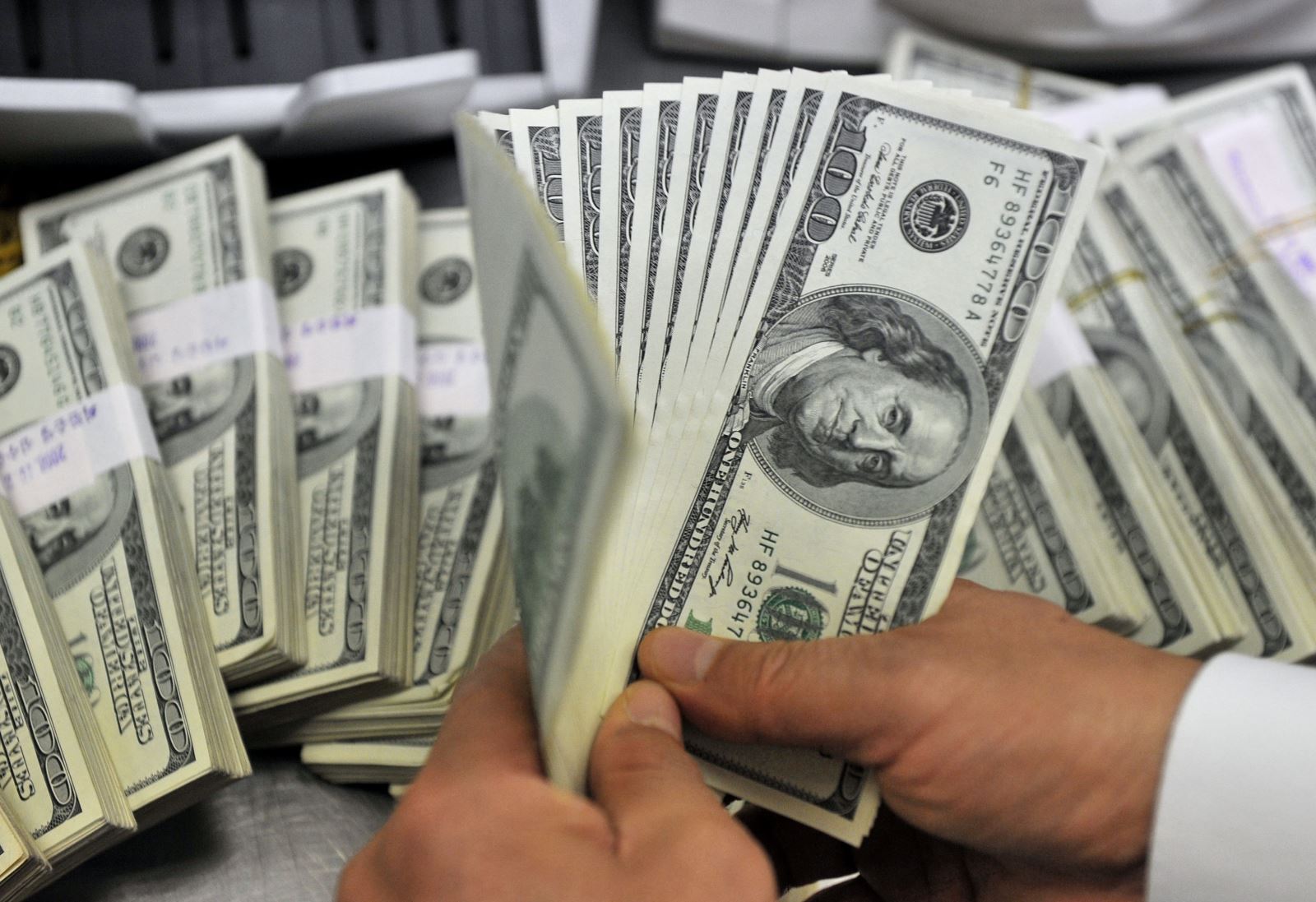
The unusual volatility and simultaneous weakening of US Treasury bonds and the dollar are signaling a global reassessment of US financial strength, raising serious questions about the currency's long-standing hegemonic position. In a recent commentary on Chinausfocus.com, Han Liqun, a researcher at the China Institute of Contemporary International Relations, stated that the US dollar's dominance may soon face a significant turning point.
Public debt pressure and record deficits
The weakening of the U.S. financial system stems from the relentless expansion of the budget deficit. In fiscal year 2024, the federal budget deficit reached $1.8 trillion, the highest level in two centuries outside of the COVID-19 pandemic period. Government borrowing continues to rise, exceeding $1.3 trillion in the first half of fiscal year 2025 (ending in March).
According to the U.S. Congressional Budget Office, the "One Big Beautiful Bill" act, promoted by the Trump administration, is expected to add approximately $3.4 trillion to the U.S. government debt over the next decade.
As a consequence, the US Treasury Department was forced to increase debt issuance. As of last August, federal debt had risen to over $37 trillion, with a debt-to-GDP ratio of nearly 140% and annual interest payments of approximately $1 trillion.
Rising interest costs are the primary reason President Trump is pressuring the Federal Reserve (Fed) to cut interest rates.
Supply and demand are imbalanced.
Despite a sharp increase in the supply of Treasury bonds, market demand was weaker than expected. Global central banks and investors did not purchase long-term Treasury bonds at the pace the U.S. government anticipated. This supply-demand imbalance pushed Treasury yields higher, with the 30-year Treasury yield briefly exceeding 5%.
Ray Dalio, founder of Bridgewater Associates, stated at a recent conference that the U.S. government would need to issue an additional $12 trillion in bonds to cover the deficit ($2 trillion), interest ($1 trillion), and the cost of refinancing maturing debt ($9 trillion). He noted that there is currently insufficient market demand to absorb such a large volume of issuance, leading to an imbalance.
The weakening of Treasury bonds is coinciding with a decline in the US dollar. Since January of this year, the US dollar index has fallen by more than 10%, repeatedly dropping below 97. After President Trump announced strong retaliatory tariffs last April, the index plummeted below 100 for several days, reaching its lowest level in nearly three years. This contrasts sharply with the period from June 2021 to September 2022, when the index showed steady growth.
The coexistence of weak Treasury bonds and a weak U.S. dollar is a rare scenario and has attracted considerable market attention. Since the collapse of the Bretton Woods system in 1971, U.S. Treasury bonds have been a key pillar of the dollar, transforming it into both a "credit dollar" and a "debt dollar" backed by bonds.
Typically, the correlation between bond yields and the dollar index tends to favor the U.S.: a booming economy can push both yields and the dollar index higher; or a search for safe havens can boost demand for bonds and the dollar index, while pushing yields lower.
However, the current scenario is a rare one, where the market begins to doubt the creditworthiness of the US government, or when the government issues too many bonds. This leads to a weakening of demand and forces the government to sell bonds at a discount (higher yields).
In this scenario, the market's pessimistic sentiment about the US economy causes money to flow out of Treasury bonds and into other dollar-denominated assets, instead of into other markets or currencies, thereby pushing the dollar index lower.
To maintain the stability of global markets and the financial system, expert Liqun argues that the US needs to restore confidence in Treasury bonds and the dollar. This depends on two main factors:
First, Washington must effectively control the budget deficit and achieve a more sustainable balance of payments to boost market confidence in Treasury bonds.
Secondly, Washington must maintain the independence of its monetary policy, allowing the value of the dollar to be determined by the market rather than political intervention, thereby enhancing confidence in the currency.
Currently, the Trump administration's policies are showing signs of undermining the stability of public debt and the dollar. Despite Trump's repeated pledges, both during his campaign and after taking office, to increase revenue and reduce spending, the US budget deficit continues to grow. Increased tariffs and pressure on the Fed are exacerbating this instability. If left unresolved, this rare systemic shock could put the global financial system at significant risk, and the dollar's hegemonic position may soon face a historic turning point.
Source: https://baotintuc.vn/phan-tichnhan-dinh/suc-manh-dong-do-la-my-dang-lung-lay-20251014085626907.htm



![[Photo] Prime Minister Pham Minh Chinh receives the Chinese Ambassador to Vietnam](https://vphoto.vietnam.vn/thumb/1200x675/vietnam/resource/IMAGE/2026/04/05/1775397481797_ndo_br_dsc-5512-jpg.webp)





























































































Comment (0)