


According to the latest statistics provided by the Israeli military on June 15, Iran has fired approximately 280 ballistic missiles at Israel in multiple attacks since the Israel Defense Forces began their operation against the Islamic Republic's nuclear program in the early morning of June 13. The Israel Defense Forces stated that most of the missiles were intercepted by air defense systems, with an interception rate similar to that of Iranian attacks on Israel in April and October 2024. (Photo: @L'Orient Today - L'Orient-Le Jour.)

However, according to the Israel Defense Forces, some missiles "bypassed" the air defense system, striking residential areas in Tel Aviv, Ramat Gan, Rishon Lezion, Bat Yam, and Rehovot in central Israel, as well as Haifa and Tamra in the north, causing significant casualties and damage. In total, at least 14 people were killed and hundreds injured by the missiles. Photo: @The War Zone.

The Israeli military claims to have attacked numerous Iranian missile depots and launchers, aiming to reduce Tehran's ability to continue attacks. However, according to experts, Iran still possesses hundreds, possibly up to 2,000 ballistic missiles with a range sufficient to reach Israel. If it maintains its current rate of fire, Iran could continue launching missiles for several more days. Photo: @NPR.

Israeli Prime Minister Benjamin Netanyahu claims that Iran's advanced ballistic missiles pose an existential threat to the Jewish state. Netanyahu stated that each Iranian missile carries 900 kg of explosives. However, military experts say this figure can vary depending on the type. Tal Inbar, an Israeli expert on space and missiles, estimates that each Iranian missile carries between 300 and 700 kg of explosives, with the total warhead weight potentially reaching 1,000 kg. (Image: @Al Jazeera)

According to Iranian media, the Islamic Revolutionary Guard Corps (IRGC) deployed several advanced missile systems in the nighttime attack on June 14 against Israel in retaliation for Tel Aviv's airstrike on Tehran the previous day. Photo: @ The Defense Post.

In the latest attack targeting the Israeli cities of Haifa and Tel Aviv, Emad, Ghadr, and Kheibar Shekan missiles were launched. Additionally, there are reports that Iran also used its newest Haj Qassem guided ballistic missiles in this retaliatory attack. These missiles are believed to have penetrated Israel's multi-layered defense system, causing damage to Tel Aviv. Photo: @CNN.

The Emad ballistic missile is equipped with a highly accurate and sophisticated guidance system. This type of missile uses a controllable warhead with fins at the tail, allowing it to adjust its flight path towards the target after re-entering the atmosphere. According to Iranian military officials, Emad is Iran's first missile capable of precise control right up to the moment of impact. Emad uses liquid fuel, is 15.5 meters long, weighs 1,750 kg, has a range of 1,700 km, and has a target accuracy of only about 50 meters. Photo: @Wikipedia.
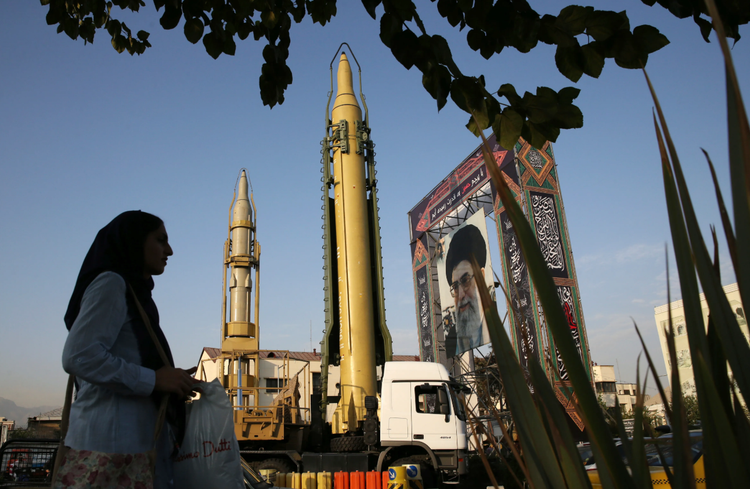
The Ghadr missile is an improved version of the Shahab-3 medium-range ballistic missile. It is a two-stage missile, with the first stage using liquid fuel and the second using solid fuel, produced in three variants: Ghadr-S (range 1,350 km), Ghadr-H (range 1,650 km), and Ghadr-F (range 1,950 km). With a length varying between variants from 15.86 to 16.58 meters and a body diameter of approximately 1.25 meters, the Ghadr missile weighs between 15 and 17.5 tons. The Ghadr has a long body to accommodate additional fuel and oxidizer tanks, carrying an additional 1,300 to 1,500 kg of fuel, allowing the engine to burn for at least 10 seconds longer. The missile's frame is constructed from lightweight aluminum alloy, reducing the static weight by approximately 600 kg compared to an all-steel design. The warhead weight was also reduced from 1,000kg to 650kg, extending the range from 1,200km to nearly 2,000km. Combined with an advanced guidance system, this design reduces the accuracy error during attack to approximately 100-300m. Photo: @MissileThreat - CSIS.
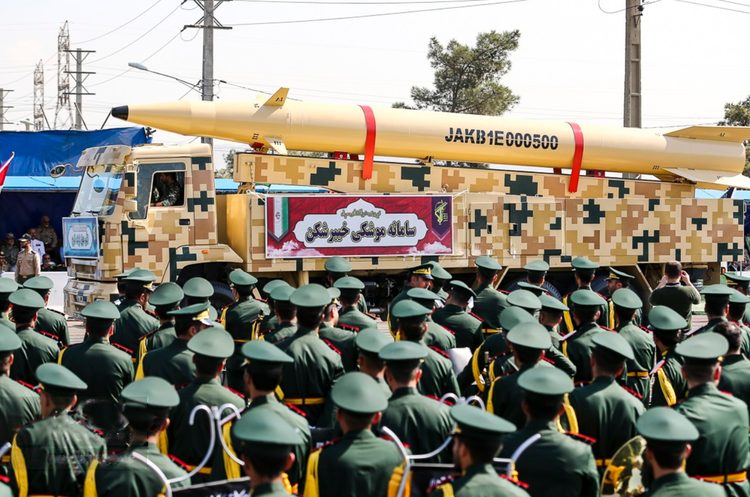
The Kheibar Shekan missile is a medium-range ballistic missile designed for strategic strikes and has proven effective in previous operations. Both the Kheibar Shekan-1 and Kheibar Shekan-2 variants are believed to be capable of penetrating advanced Israeli air defense systems, including the Arrow-3 and David's Sling. With an estimated range of 1,450 km, the Kheibar Shekan can carry conventional warheads. This missile utilizes advanced guidance technology, including maneuverable re-entry vehicles (MaRVs), designed to evade interceptors. The missile's propulsion system consists of two solid-fuel stages, shortening launch preparation time compared to liquid-fueled missiles. The Kheibar Shekan is designed to precisely strike high-value strategic targets, such as critical infrastructure and military bases deep within enemy territory. (Image: @Wikipedia)
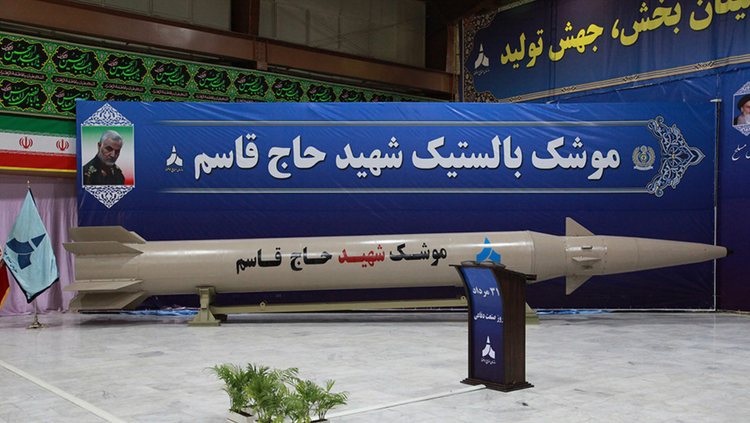
Recently, Iran used a newly developed ballistic missile called the Haj Qassem in its latest series of airstrikes against Israel, named after General Qassem Soleimani, who was killed on orders from President Trump in 2020. Iran claims that the Haj Qassem guided ballistic missile is designed to evade Israel's Iron Dome defense system and may even be able to overcome the US military's Terminal High Altitude Area Defense (THAAD) system. Photo: @Wikipedia.
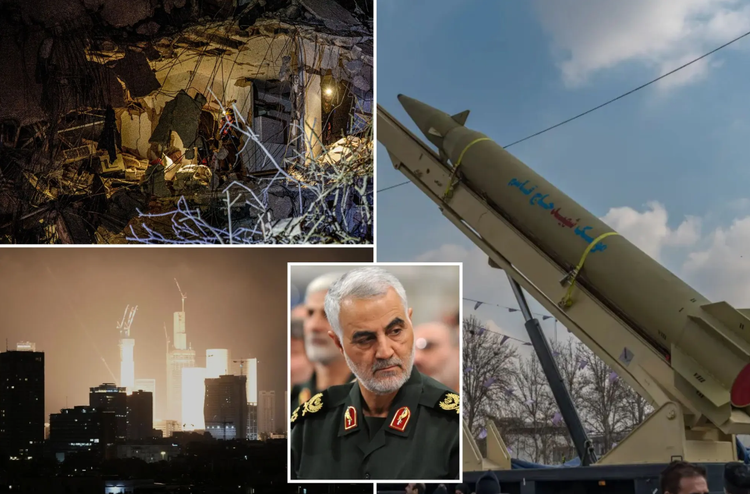
The Haj Qaseem missile is believed to have a range of 1,200 km and is equipped with a maneuverable re-entry vehicle (MaRV). It weighs 7 tons and is thought to carry a payload of 500 kg. Measuring 11 meters in length, the Haj Qaseem is estimated to have an atmospheric speed of Mach 11 and an impact speed of Mach 5. The Haj Qaseem is equipped with a maneuverable warhead and an advanced guidance system including optical/infrared seekers and inertial guidance, allowing it to penetrate missile defense systems. Photo: @New York Post.
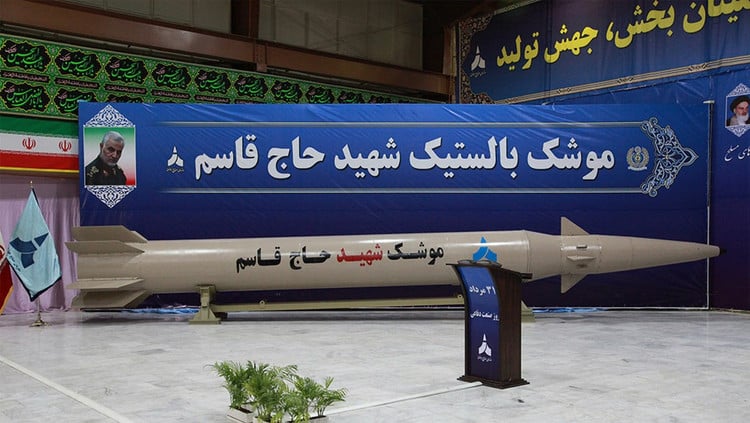
This new ballistic missile is also equipped with an advanced guidance system that allows it to accurately strike targets and counter electronic warfare. Iranian Defense Minister Aziz Nasirzadeh stated that the missile can evade the US military's Terminal High Altitude Area Defense (THAAD) system as well as the Patriot system. (Photo: [Image caption])
Source: https://khoahocdoisong.vn/suc-manh-ten-lua-ma-iran-dung-de-tra-dua-israel-post1548189.html

![[Photo] General Secretary and President visit the China-ASEAN AI Application Cooperation Center](https://vphoto.vietnam.vn/thumb/1200x675/vietnam/resource/IMAGE/2026/04/17/1776404277677_vna-potal-tong-bi-thu-chu-tich-nuoc-tham-trung-tam-hop-tac-ung-dung-ai-trung-quoc-asean-8706616-2286-jpg.webp)




















![[Photo] Speaker of the National Assembly meets with the Vietnamese community in Türkiye](https://vphoto.vietnam.vn/thumb/1200x675/vietnam/resource/IMAGE/2026/04/18/1776483346102_1-8136-jpg.webp)






































































Comment (0)