

 |
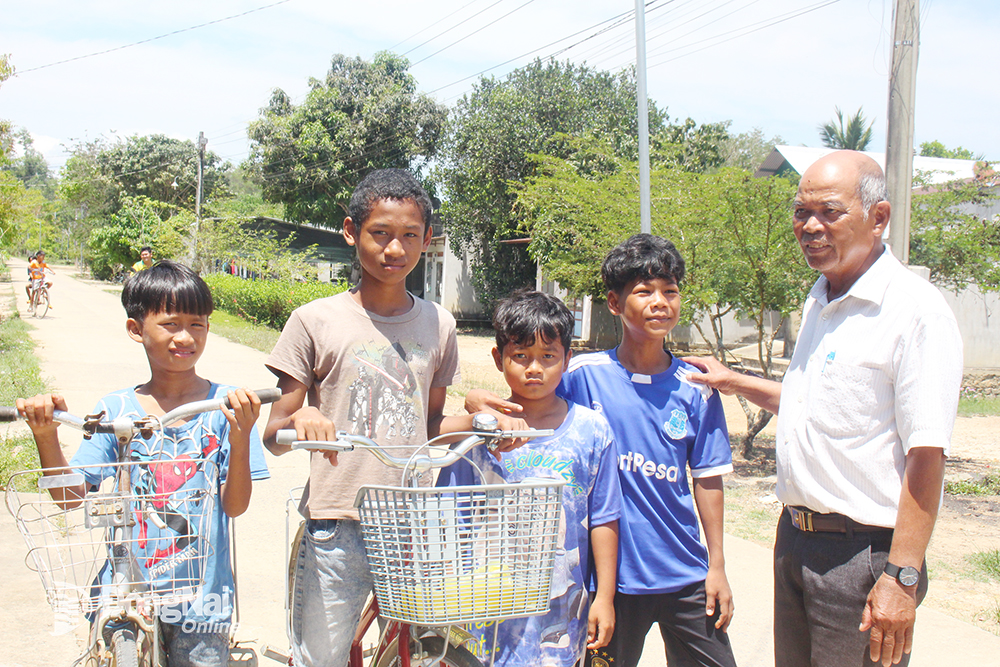
| Ma and S'tieng children and K'Can, a respected elder of the S'tieng ethnic group residing in Hamlet 4, Ta Lai Commune, Tan Phu District, walk along a well-maintained and clean village road. Photo: D. Phu |
The Ma and S'tieng people are united and patriotic.
Mr. K'Luận (of the Ma ethnic group, Head of the Front Committee of Hamlet 4, Ta Lai Commune) said that in the past, the Ma people called Ta Lai village R'lai. In 1994, Ta Lai commune was separated from Phu Lap commune. The land in Hamlet 4, Ta Lai commune still retains traces of the ancient culture and history of the Ma and S'tieng ethnic groups. The solidarity between the Ma and S'tieng ethnic groups and other ethnic groups remains strong.
Hamlet 4, Ta Lai commune, has 487 households with nearly 2,000 inhabitants, of which the Ma and S'tieng ethnic minorities make up the majority with over 370 households. Before the August Revolution of 1945, the village of R'lai, inhabited by the Ma and S'tieng people, was surrounded by vast forests and isolated from the outside world. Taking advantage of this rugged terrain, the French authorities built a prison to confine patriots. The French colonial government called the detention center Camp des Travailleurs Talai, while those imprisoned there called it "Ta Lai Camp" or "Special Labor Camp".
According to the History of the Ta Lai Commune Party Committee, on March 27, 1941, revolutionary fighters who were imprisoned, including eight Party members: Duong Quang Dong, Tran Van Giau, Tran Van Kiet, Truong Van Nham, Nguyen Van Duc, To Ky, Chau Van Giac, and Nguyen Cong Trung, with the help of ethnic minority people, escaped from prison, avoiding the intense pursuit of the French colonialists, and returned to their localities to continue leading the revolutionary movement.
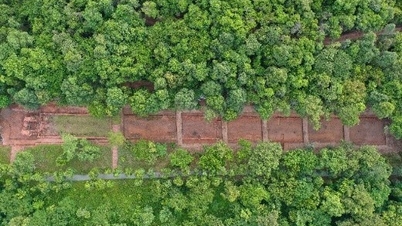
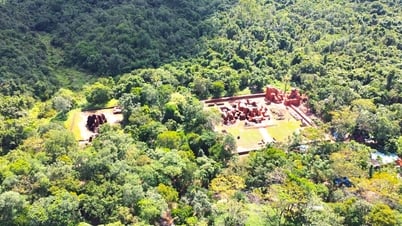
This historical event is preserved through the Monument Complex (erected in 2002), a memorial commemorating the Ta Lai prison break on the night of March 27, 1941, peacefully situated beside the Dong Nai River, reflecting the steadfast and indomitable spirit of history. In 1998, Ta Lai commune was honored with the title of Hero of the People's Armed Forces.
According to the History of the Ta Lai Commune Party Committee, during the resistance war against foreign invasion, the village of R'lai (Bu Chap, Ta Lai) played a crucial role in the D War Zone Base. The sons of the S'tieng, Ma, and Choro villages acted as messengers, sheltered soldiers and party members, produced food, and supported military units operating in the area. Many young men from the villages directly participated in combat with bravery and courage, as recorded in history, such as Prai, Dieu Khuynh, K'Tieng, K'Lu, K'Nang, K'Ret, K'Lieng, K'Coong...
“The Ma and S'tieng people in Ta Lai are inherently united and loving; during the resistance war, despite difficulties and shortages, they shared food and clothing with the revolution. Now that everyone's economic and material lives are stable and prosperous, the ethnic minorities, along with cadres and the Kinh people, are working together to build new rural areas, advanced new rural areas, and model new rural areas to make our homeland even richer and more beautiful,” said K'CÂN (64 years old, S'tieng ethnic minority, residing in Hamlet 4, Ta Lai commune, Tan Phu district), a respected figure in the community.
Rising from adversity
Ta Lai commune was established in 1994 by splitting from Phu Lap commune, with a natural area of 2,889 hectares and a population of 1,315 households with 7,300 people. The commune is home to 11 ethnic groups, with ethnic minorities such as the Ma, S'tieng, Tay, Nung, and Hoa accounting for over 30% of the population. At the time of its establishment in 1994, the economic situation of the people was very difficult, with the poverty rate reaching 61.55% of the population.
Ta Lai commune was originally a region heavily affected by war, with a sparse population and underdeveloped infrastructure such as roads, electricity, schools, and health stations. Nevertheless, the locality has rapidly developed since its establishment in 1994.
The highlight of the transformation of the Ta Lai area is the investment and construction of infrastructure projects such as roads, electricity, schools, health stations, offices, and irrigation systems. These projects have been widely implemented and connected to the commune and hamlet centers, as well as to the fields, gardens, and settled farming areas, especially during the period from 2014 to the present when the locality started building new rural areas, advanced new rural areas, and model new rural areas. Specifically, many rural roads have been constructed using hot asphalt and cement concrete; medium and low voltage power lines have been extended to the hamlets; cultural centers for the Ta Lai ethnic groups have been built, schools have been constructed, suspension bridges and concrete bridges have been built, and the Vam Ho dam has been constructed to provide irrigation water for the people's agricultural production...
According to Mai Ngoc Hue, Chairman of the People's Committee of Ta Lai commune, Ta Lai commune achieved the new rural commune standard in 2018 and the advanced new rural commune standard in 2022. This achievement has not only contributed to the socio-economic development of the locality but also significantly improved the lives of the people, especially the ethnic minorities.
Currently, the commune no longer has abandoned land, and has increased the number of cultivated crops from one to three per year; converting land previously used for cashew cultivation and short-term crops such as cassava, beans, and corn to high-value economic crops such as pomelo, durian, and pepper... covering nearly 1,200 hectares of agricultural land throughout the commune. As a result, in 2024, the income of the people reached over 84 million VND/person/year, an increase of more than 82.5 million VND compared to 1994 when the commune was first established (only 1.5 million VND/person/year).
To date, Ta Lai commune has a total of 50.97km of roads, including 5.3km of asphalt roads managed by the district and 45.67km of concrete roads managed by the commune. Specifically, in Hamlet 4, an area inhabited by the Ma and S'tieng ethnic minorities, the local government has invested in 6.62km of concrete roads (reaching 100% completion).
“The transportation routes not only facilitate trade and service development for the people, but also serve as a connecting link, fostering solidarity among the 11 ethnic groups in the commune. Thanks to the development of transportation, connecting residential areas, hamlets, and villages with each other and with the outside world, the poverty and backwardness of the people and this land are now gone,” said Dang Son Lam, Vice Chairman of the People's Committee of Ta Lai Commune.
As a son of the mountains and forests, the heroic land of Ta Lai commune, K'Can (64 years old, S'tieng ethnic group, residing in Hamlet 4, Ta Lai commune) said that the changes in Ta Lai commune in general and Hamlet 4 where he was born and raised in particular are evident at night, with electric lights illuminating everywhere; people's lives are becoming increasingly prosperous, children are well cared for and receive a good education; many children of the Ma and S'tieng ethnic minorities in Hamlet 4 have college and university degrees.
Doan Phu
Source: https://baodongnai.com.vn/xa-hoi/202504/suc-song-moi-tren-vung-dat-ta-lai-bc5125b/




![[Photo] National Assembly Chairman Tran Thanh Man successfully concludes his participation in IPU-152](https://vphoto.vietnam.vn/thumb/1200x675/vietnam/resource/IMAGE/2026/04/18/1776502638199_vna-potal-chu-tich-quoc-hoi-ket-thuc-tot-dep-chuong-trinh-tham-du-ipu-152-8709975-jpg.webp)




























































Comment (0)