

Over 600 cases of cosmetic skin surgery complications were received by the Ho Chi Minh City Dermatology Hospital last year, an increase of more than 1.5 times compared to four years ago.
Dr. Nguyen Thi Phan Thuy, Deputy Director of the Ho Chi Minh City Dermatology Hospital, provided this information at the Southern Aesthetic Dermatology Conference on January 16th, adding that the number of cosmetic surgery complications has been increasing every year, except for 2021 due to the impact of the Covid-19 pandemic. 69% of complications are related to injections (led by micro-injections and fillers), 16% are related to laser, light, and energy-emitting devices used for beauty treatments, and 10% are due to facial rejuvenation procedures and chemicals.
Advances in cosmetic dermatology over the past decade have led to a significant increase in non-surgical cosmetic techniques, but this has also resulted in numerous risks and complications that severely affect the health and lives of many people. According to medical definition, non-surgical cosmetic procedures are non-invasive cosmetic treatments – methods of correcting and improving physical appearance without the use of scalpels or deep manipulation of the body's structure. Surgical cosmetic procedures, on the other hand, are invasive cosmetic surgeries that affect the body.
"The trend of non-surgical beauty treatments is becoming increasingly popular, and medical aesthetics is a fertile ground for many to exploit," Ms. Thuy said, explaining that as the market for invasive or non-invasive cosmetic procedures grows, doctors are receiving more and more cases of complications.
There are many causes of complications, some stemming from the patient such as individual predisposition, non-compliance with or improper post-procedure skin care. Another cause is the practitioner performing the procedure, who is considered to play a crucial and pivotal role in causing complications.
Statistics from the Ho Chi Minh City Dermatology Hospital show that nearly 78% of cases of complications arising from non-medical cosmetic procedures are not performed by doctors. More than 15% of patients could not identify whether the person performing the procedure was a doctor or not, "only seeing them wearing a lab coat."
Furthermore, complications can also occur due to unsafe facilities and equipment, such as using uncertified or faulty equipment, injectable products of unknown origin or that have not been tested or are adulterated. Many places perform procedures without ensuring sterile conditions, lack necessary medical equipment, and operate unlicensed, illegal beauty clinics...
According to Dr. Thuy, complications are often very diverse and vary in severity, affecting the health and even the lives of patients. Some patients go to spas for laser treatment of melasma, and after staff apply various unknown medications, they experience redness, burning, and itching, with the medication adhering to the skin and worsening the melasma. Recently, a young woman suffered severe acute cellulitis 10 days after receiving filler injections in the temple area, and patients suffered severe infections after fat-dissolving injections at spas, nearly going blind after self-administering fillers...
"Most cases that arrive at the hospital early are treated promptly, but some patients suffer irreversible complications," said Dr. Thuy. For example, a young man who had filler injections went blind before arriving at the hospital; despite the doctors' best efforts, they could not save his eyesight.
"If the doctor is well-trained, knowledgeable in cosmetic dermatology, and follows the correct procedures, the probability of causing complications for the patient is very low," said Dr. Thuy, advising those seeking cosmetic procedures to go to hospitals with cosmetic surgery departments or reputable, licensed cosmetic clinics.
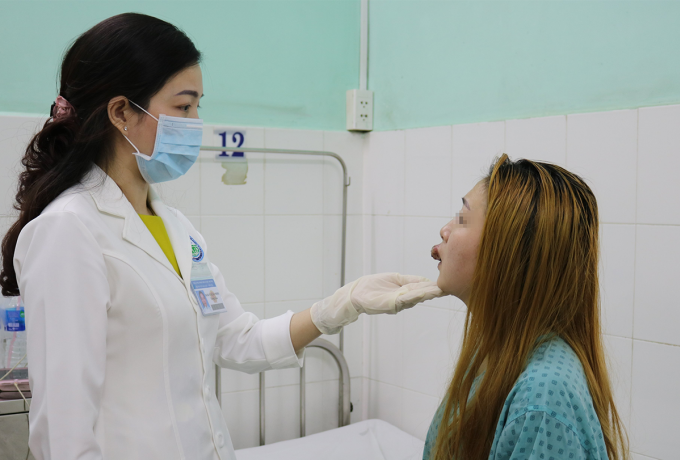
A patient suffering from cosmetic surgery complications visits the Ho Chi Minh City Dermatology Hospital for examination. (Photo: Provided by the hospital)
The Ho Chi Minh City health sector also advises people undergoing invasive beauty procedures such as injections, surgery, liposuction, laser treatments, etc., to choose hospitals or specialized aesthetic clinics that have been approved for the list of techniques and granted operating licenses.
Do not choose a beauty establishment based solely on its name on the signboard, such as "beauty salon," "beauty institute," or "spa." When encountering advertisements on social media, do not immediately believe them but verify them through multiple channels, especially by accessing the Department of Health's Medical Examination and Treatment Information Portal to find out about the clinic's license and the doctors' qualifications, to avoid potential problems.
Le Phuong
Source link


![[Image] National Assembly discusses the implementation of the socio-economic development plan.](https://vphoto.vietnam.vn/thumb/1200x675/vietnam/resource/IMAGE/2026/04/20/1776696707422_ndo_br_img-20260420-185419-jpg.webp)
![[Photo] General Secretary and President To Lam meets with National Assembly delegates from ethnic minorities.](https://vphoto.vietnam.vn/thumb/1200x675/vietnam/resource/IMAGE/2026/04/20/1776696701056_a1-bnd-8331-3342-jpg.webp)



























































































Comment (0)