

An increased heart rate is often the body's natural response to stressors such as nervousness, anxiety, exercise, or heart disease.
A fast heart rate is defined as a heart rate exceeding 100 beats per minute. Several factors can cause this condition.
Do exercise
When exercising, the heart pumps blood faster to the muscles to sustain activity. Therefore, the heart beats faster, but only temporarily. This is a good habit that helps strengthen the heart muscle and improve blood pumping. People should exercise moderately to allow the body to adapt, and cardiovascular health will gradually improve. Useful exercises include yoga, planking, walking, and jogging.
Caffeine
According to the U.S. National Library of Medicine, after consumption, caffeine enters the bloodstream, stomach, and small intestine. There, it begins to stimulate the central nervous system, specifically receptors in cells in the heart, to increase heart rate. This increases blood flow and heart rate, potentially by about three beats per minute. The increased heart rate can occur as early as 15 minutes after drinking coffee, and it takes the body about 6 hours to metabolize caffeine.
This side effect rarely causes serious health problems. Caffeine does not cause chest pain for most people when consumed at safe levels (no more than 400 mg of caffeine a day, equivalent to about 4 cups of coffee).
For people sensitive to caffeine, certain other substances such as soda, tea, and medications containing caffeine can worsen a rapid heart rate. Therefore, patients should check the ingredients before consuming them.
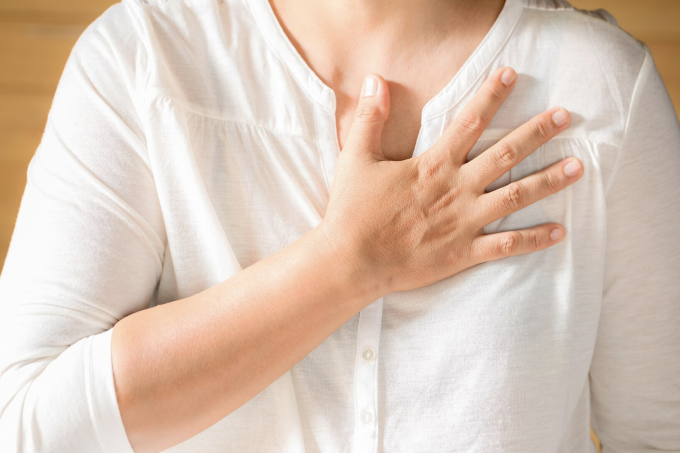
Heart rate increases during exercise and after consuming caffeinated beverages. (Image: Freepik)
Medicine
Some prescription medications may contain stimulants like caffeine or other ingredients that can sometimes cause a rapid heartbeat. People taking psychiatric medications, beta-blockers, or sympathomimetic drugs who notice abnormal heartbeats should talk to their doctor.
Obesity
Excessive weight puts a lot of strain on the heart, sometimes causing it to beat faster. The heart of an overweight or obese person has to work harder to pump blood and oxygen to vital organs.
Perturbation
The heart also beats faster when anxious, stressed, or panicked. This increases adrenaline (a hormone that acts on the sympathetic nervous system) in the body. Anxiety, panic, and stress can cause a sudden increase in heart rate or chest pain, sometimes leading to confusion with symptoms of a heart attack.
A fast resting heart rate can be related to an underlying health condition such as an arrhythmia. Breathing exercises, relaxation techniques, physical exercise, yoga, and a proper diet can be helpful. If the rapid heartbeat persists, the patient should see a doctor.
Bao Bao (According to Livestrong )
| Readers can post questions about cardiovascular diseases here for doctors to answer. |
Source link






























































































Comment (0)