Composer Ngoc Khue was born in 1947 in Gia village, Yen So, now Duong Hoa commune, on the outskirts of Hanoi. Almost his entire career was dedicated to the Air Defense - Air Force Performing Arts Troupe, and his body of work includes over 300 songs. Among them, "Spring, the Village of Rice and Flowers" can be considered the song that "defined" Ngoc Khue's style in music . Every time Tet (Lunar New Year) comes around, this song remains a top choice for spring cultural programs. On the occasion of the Year of the Horse, the former soldier-composer shared with the Newspaper of Journalists and Public Opinion a few stories surrounding his iconic song.
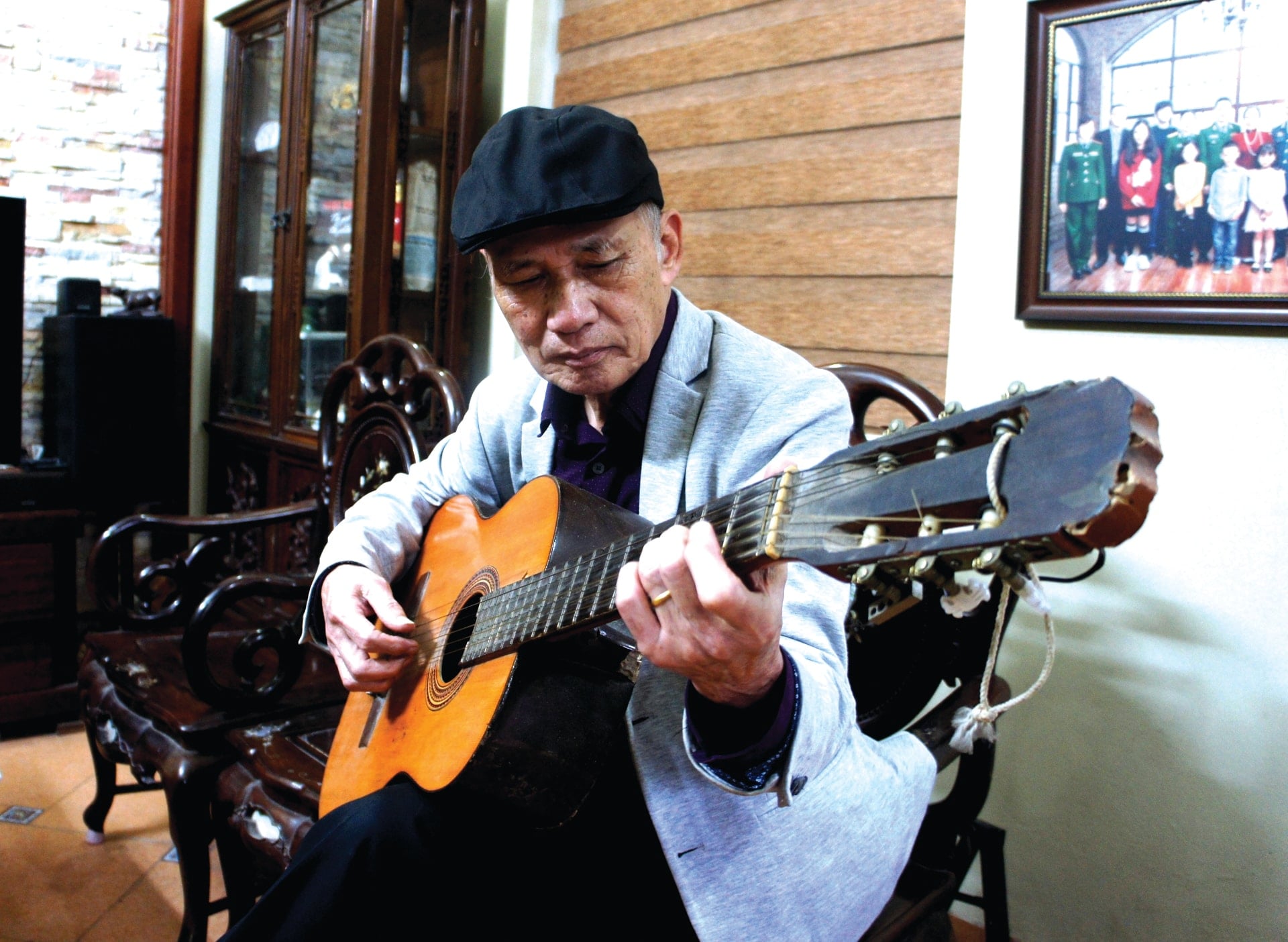
Composer Ngoc Khue poured his most passionate emotions into the season of spring.
The song "Rice Village, Flower Village" has become an icon of Hanoi's suburban areas, depicting the beauty of labor, romantic love, and love for one's homeland. Could you share what moment or event inspired you to capture that fresh, optimistic, and poetic melody?
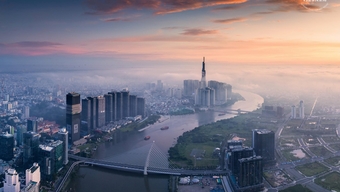
- I wrote "Spring, the Village of Rice and Flowers" primarily out of love for Hanoi and the West Lake area. It's because I have a friend in Nghi Tam flower village; we fought together in the same unit for nearly 10 years, and we still occasionally meet and visit each other. Back then, almost every house in Nghi Tam had a plot of land for growing flowers. Once, while visiting my friend, going up from Buoi slope, I suddenly saw West Lake on the right, and in the distance were the flower villages of Nghi Tam, Quang Ba, and Nhat Tan; beyond the dike were Xuan La and Xuan Dinh villages – which at that time were entirely rice fields. That scene inspired me to write the lyrics: "Beside my rice fields, beside my rice fields, the village fields along the dike / West Lake, vast and green in the bright afternoon sun / My village, the village of flowers…" These specific details gave me the melody: West Lake, rice, and flowers. The song was formed in this way; it truly reflects the real scenery of West Lake in those years.
Throughout the work's journey of dissemination, there must have been special memories. Do you remember the first time the work was performed in public, or any other memorable and impressive experience?
You may also like
Cherishing every spring of reunification.Born during wartime and raised in bomb shelters, I (and perhaps many others of my generation) can never forget the first moments of peace. The spring of reunification and independence in 1975 and the first Tet (Lunar New Year) of peace in 1976 have become an indelible part of my memory. 
The abstract style of female artist Doan Mai ThuyFor Doan Mai Thuy, her path in painting wasn't based on intuition but was clearly planned from the beginning. Willing to abandon a successful career to start over and persistently hone her skills for 30 years, she has made her mark in abstract art, a field traditionally dominated by men. - I wrote this song at the end of 1980. When I submitted it to the Voice of Vietnam radio station , they accepted it immediately and allowed me to record it. I really enjoyed listening to music programs on the station and never missed a single one. On the evening of the second day of Tet in the year of the Rooster, 1981, while on duty at the office, I was surprised to hear "Spring, the Village of Rice and Flowers" on the Voice of Vietnam radio station's music program introducing new works. And the song was sung by singer Thanh Hoa herself, just as I had requested. That was a great happiness for a composer, because at that time I was considered a young author, and my work was broadcast to listeners nationwide. I was overjoyed and very proud. The joy and happiness kept me awake for several days.

+ In your opinion, what is the core element that has helped "Spring, the Village of Rice and Flowers" overcome the test of time and maintain its vitality despite the constantly changing musical landscape over the past few decades?
- I think I've successfully incorporated folk music elements into the song. Imagine "Beside the rice paddies, you are beside the rice paddies..." as small waves on West Lake. If folk music is skillfully incorporated into a work, the effect will be significant. But if folk music is incorporated clumsily, or too obviously, it will immediately seem like copying. You have to exploit the "essence" of the folk music, hidden within the melody, for the song to be truly harmonious and create something new. I wrote this song based on my genuine feelings, thoughts, and the wealth of traditional music I already possess.
I also heard some critics and audience members comment that the lyrics in the song are beautiful, the melody is smooth, and it brings the cheerful and joyful atmosphere of a warm spring...
To date, the song has been around for 45 years, a considerable amount of time. Fortunately, although it's about Hanoi, it's loved by audiences nationwide. Along with receiving the State Prize in 2012, the song was also recognized and awarded as one of the two best songs about agriculture. At the 50th anniversary celebration of Vietnamese literature and art after national reunification last April, "Spring, the Village of Rice and Flowers" was also included in the list of 50 best songs.


Vietnam encourages US businesses to expand investment in high technology.On the morning of June 26th, at the Government Headquarters, Deputy Prime Minister Ho Quoc Dung received Mr. Jeff Place, Supply Chain Director of Coherent Group (USA). During the meeting, the Deputy Prime Minister affirmed that Vietnam encourages US businesses to expand investment, especially in high-tech, innovation, and semiconductor industries. The song "Spring, Rice and Flower Villages" has become a symbol of the beauty of the suburban countryside. But in the current context, when rice fields are gradually giving way to new urban areas, and flower villages are shrinking year by year, what are your thoughts, feelings, or concerns about this change? Will these "rice and flower villages" only exist in music and memories?
- It's not just me; many people also feel concerned and regretful that the places we wrote about have now become cities and towns, and the flower villages seem to no longer grow flowers. A critic told me that in his song, he wrote about one thing to eat and live on: rice; another thing to enjoy: flowers. Without rice, one would die, but without flowers, one would also be "almost dead." Fortunately, the flower-growing areas in the city center have been replaced by flower fields in the suburbs. It's a pity, but we still have flowers. Our lives are still intertwined, both materially and spiritually, with rice and flowers. Despite the regret, I'm also happy that the countryside is becoming more prosperous and beautiful, and I think "rice villages, flower villages" will continue to exist, not just on television and radio, but always present in real life.
Source: https://congluan.vn/tan-man-ngay-xuan-with-musician-lang-lua-lang-hoa-10329489.html