

 |
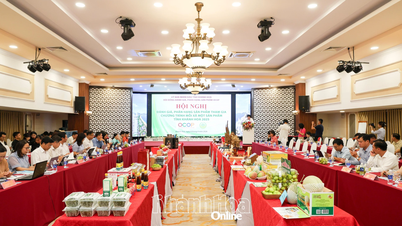
| Businesses in Dong Nai and Ho Chi Minh City are connecting to supply each other with supporting industrial products. Photo: Vuong The |
Adapting to the volatile global playing field.
Increasing exports is one of the key tasks in maintaining the country's high economic growth rate; therefore, supporting the business community to adapt to the global market is an urgent solution. This is especially true for the US market, which accounts for over 30% of Vietnam's total export value and has imposed stricter trade barriers in recent years.
According to Mr. Do Ngoc Hung, Head of the Vietnamese Trade Office in the United States, competitive pressure in the market is increasing, consumers are concerned about sustainability, and there is a tendency to use deeply processed products with traceability and transparent supply chains. In particular, the US policy environment is becoming more complex, with increased trade defense investigations creating further pressure on Vietnamese export businesses.
According to economic experts, industrial self-reliance is not just a matter for large corporations or long-established production centers, but also a process of spreading production capacity to localities, linked to advantages in infrastructure, human resources, and regional linkages.
Similarly, the European market demands high-quality goods, with strong commitments to environmental protection. The EU's new approach to sustainable development, with its stringent standards on environment, labor, traceability, and anti-deforestation, is becoming a significant non-tariff barrier.
According to Mr. Nguyen Ngoc Hoa, Chairman of the Ho Chi Minh City Business Association, these pressures require businesses to change themselves in order to survive and develop. Digital transformation, green transformation, or ESG (environmental-social-governance) standards for sustainable development are mandatory requirements. They need to be integrated into the overall development strategy of businesses, linked to improving productivity, technological innovation, and management capabilities. When implemented synchronously, these transformations not only help businesses adapt but also open up opportunities to upgrade their position in the global value chain.

Similarly, Dr. Huynh The Du, a lecturer at the University of Wisconsin Oshkosh (USA), believes that businesses need to proactively grasp developments in the global market. Currently, for the US market, tariff rates on goods have decreased to 10%, but there is a possibility of further increases or stricter controls when the 150-day temporary import tariff period ends. Businesses need to review and renegotiate contracts, ensure transparency of raw material origins, proactively manage supply chain risks, and develop financial scenarios. Correctly identifying the "temporary but long-term oriented" nature of the policy, along with timely responses and strict adherence to trade regulations, will be key factors for Vietnamese goods to maintain market share and reputation in the US market.
Be more proactive in production and business planning.
According to experts, in the context of a volatile global market, it is essential for businesses to proactively develop contingency plans. This includes diversifying export markets; in addition to traditional, large-scale markets, Vietnamese businesses are also boosting exports to regions such as Africa, South America, and countries with free trade agreements with Vietnam.
 |
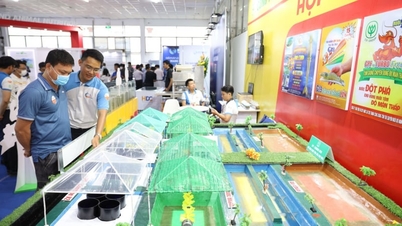
| Businesses from Dong Nai participate in an international trade fair in Ho Chi Minh City. Photo: Vuong The |
Diversification should not only focus on export markets but also expand into import markets. Proactively developing alternative supply sources will help minimize the risk of disruptions and contribute to balancing the trade balance. Diversifying and ensuring self-sufficiency in supply sources also gives businesses more confidence in their production plans, especially small and medium-sized enterprises.
For example, Nam Long Co., Ltd. (Long Thanh commune) is conquering the domestic market and exporting rubber gloves. Instead of focusing solely on international orders, the domestic market is a crucial channel for the company's product distribution. According to Mr. Le Bach Long, the company's director, this strategy not only aims to promote the domestic rubber industry but also strengthens the power of Vietnamese brands right at home. Utilizing the abundant domestic rubber latex resources allows the company to be flexible in production management and optimize business operations.
Similarly, in Dong Nai's wood industry, self-sufficiency in raw materials and connections with foreign partners have been actively promoted recently. According to Mr. Vo Quang Ha, Vice Chairman of the Dong Nai Wood and Handicraft Association, the wood industry business community is currently coordinating to develop a domestic wood raw material area in Dong Nai. In addition, they are cooperating closely with partners to import wood raw materials with certified origins, creating a more sustainable wood supply for numerous wood production businesses amidst market fluctuations.
Besides the efforts of businesses, there is also regulation from the State. In the 2026 tasks of the Provincial Steering Committee for Business Support and Economic Development, the Standing Vice Chairman of the Provincial People's Committee, Nguyen Kim Long, requested that trade promotion activities be intensified, supporting businesses and production facilities in promoting their products, expanding export markets and domestic consumption. At the same time, coordination with the Trade Promotion Department and Vietnamese trade offices abroad is needed to provide market information, promote trade, connect import-export and distribution partners; support product and brand promotion; and effectively utilize free trade agreements (FTAs) to which Vietnam is a member.
King
Source: https://baodongnai.com.vn/kinh-te/202604/tang-thich-ung-giam-phu-thuoc-cho-cacdoanh-nghiep-4976faf/









































![[Video] Sunset at Lap An Lagoon – Where the sun sets over the fishing nets](https://vphoto.vietnam.vn/thumb/1200x675/vietnam/resource/IMAGE/2026/05/31/1780192137701_beach-landscape-sea-water-nature-grass-745871-pxhere-com.jpeg)





























Comment (0)