

Child labor is a reality in many countries, including Vietnam. According to the latest figures, the rate of child labor in Vietnam has decreased to 3.5%, equivalent to about 3-4 children per 100 children (a decrease of 5.6 percentage points compared to 2018). This is a noteworthy achievement reflecting Vietnam's efforts to promote economic growth and reduce poverty.
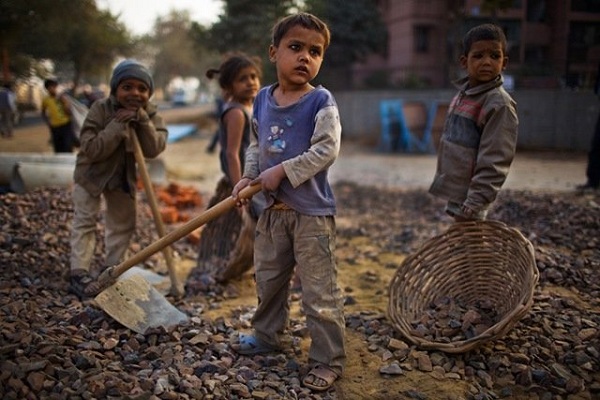
However, there are still approximately 1.75 million children aged 12-17, mainly in rural areas, engaged in labor. The majority of these child laborers are not attending school, numbering around 403,200.
Alarmingly, across the country, 94,300 children (accounting for 35% of the total child labor force) are forced to perform work that could endanger their own lives. In Quang Tri province , although there are no specific statistics, the situation of child labor, in both direct and indirect forms, still persists. Many children help their parents with farming, sell goods on the streets, or work in restaurants and eateries for meager wages.
Regarding this issue, the Quang Tri Newspaper recently published an article reflecting on the story of a teacher at a high school in Dong Ha City who, during a year-end parent meeting, raised the issue that many students in her class had low academic results due to spending time working part-time.
According to the teachers, the reason for this situation is that the students' families are facing financial difficulties, leading them to want to earn extra income to help their parents cover their educational expenses.
This is also the first and most obvious reason when discussing the causes of child labor. In low-income families, especially in rural areas and ethnic minority regions, parents consider it normal for their children to participate in labor.
However, in many cases, the choice to work part-time is not due to economic conditions but rather to parents' views on helping their children "mature," and the following story is an example. Around the middle of the second semester, with the high school graduation exam approaching, Truong T. - a 12th-grade student at a high school in Dong Ha City - was still diligently working at a fast-food restaurant.
For T., the purpose of this short-term part-time job was simply to earn enough money to go out with friends after the exams. As for her parents, they considered it a valuable experience and therefore did not interfere with her part-time work.
The International Labour Organization defines child labor as “work that deprives children of their childhood, potential, and dignity, and is detrimental to their physical and mental development.” Physically, children are vulnerable to accidents and injuries due to overwork.
Mentally, these students live in anxiety and self-consciousness, and may even be drawn into vice. But more seriously, if they focus too much on part-time work, they will lose opportunities for holistic learning and development – something that should be a top priority for students.
The loss or restriction of the right to education leads to a vicious cycle of poverty that repeats itself across generations. A civilized society cannot be built on the fragile feet of those who are forced to struggle for survival at a young age.
The World Day Against Child Labour was established to promote awareness and action to prevent and eliminate all forms of child labour worldwide. Recognizing this crucial importance, Vietnam has, over the years, perfected its legal framework and implemented solutions to protect children in many areas, including child labour.
To realize the goal of eliminating child labor, Vietnam has developed a roadmap to gradually reduce the rate of child labor, setting targets of below 9% by 2020, below 8% by 2025, and below 7% by 2030. However, achieving this goal is not easy. Child labor still exists, with 15% of children working illegally.
And somewhere, there are still many hidden corners, many young lives being pushed into the whirlwind of making a living too early. Therefore, achieving the above goal requires continuous and long-term efforts from many sides, including the Government, ministries, departments, the community, and families.
This includes strengthening public awareness campaigns to change societal perceptions about child labor and providing livelihood support to disadvantaged families so that their children do not have to work for money while still of school age. In this process, it is necessary to mobilize the active participation and effective coordination of socio-political organizations and professional associations to promote efforts to eliminate child labor in all its forms.
From a family perspective, parents are the ones who know best what their children should or shouldn't do. They are also the ones who supervise their children most closely, providing them with a truly meaningful childhood.
Therefore, along with livelihood support, strengthening initiatives on parenting skills and community education needs to be emphasized to equip families and society with the necessary knowledge to change their perceptions of child labor.
Hoai Nam
Source: https://baoquangtri.vn/tang-toc-hanh-dong-de-cham-dut-lao-dong-tre-em-194308.htm


![[Photo] General Secretary and President To Lam meets with National Assembly delegates from ethnic minorities.](https://vphoto.vietnam.vn/thumb/1200x675/vietnam/resource/IMAGE/2026/04/20/1776696701056_a1-bnd-8331-3342-jpg.webp)

![[Image] National Assembly discusses the implementation of the socio-economic development plan.](https://vphoto.vietnam.vn/thumb/1200x675/vietnam/resource/IMAGE/2026/04/20/1776696707422_ndo_br_img-20260420-185419-jpg.webp)










































































Comment (0)