Reporter: Comrade X , could you please explain the necessity and objectives of Resolution No. 27 of the Provincial Party Standing Committee on " solutions to improve the quality of grassroots cadres to effectively implement the two-tiered local government model and ensure double-digit growth, contributing to building a clean and strong Party and political system "?
Comrade Nguyen Quang Vinh: Implementing the two-tiered local government model (from July 1, 2025), Phu Tho province has proactively, seriously, and urgently carried out the arrangement and placement of cadres in general, and grassroots-level cadres in particular, ensuring progress, strictness, synchronization, effectiveness, and consistency with central regulations, meeting the requirements and practical needs of the province.
Overall, the team of grassroots officials and civil servants in the province possesses strong political convictions, good moral character, is basically sufficient in number, most have professional qualifications that meet the prescribed standards, and demonstrate a sense of responsibility, organizational discipline, and proactive adaptation to requirements.
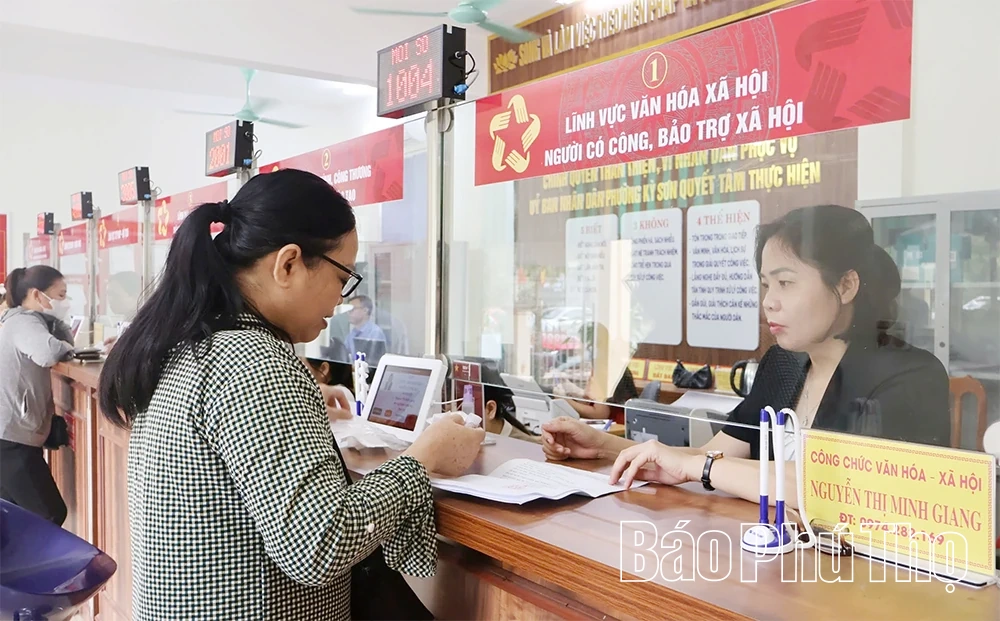
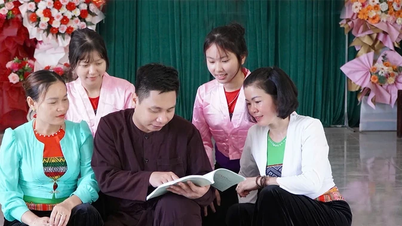
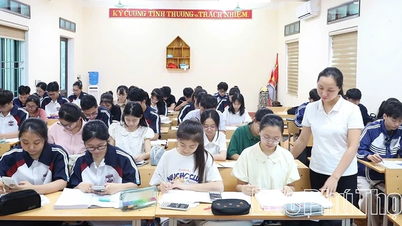
100% of the staff at the Ky Son Ward Public Administrative Service Center have professional qualifications that meet or exceed the required standards, effectively fulfilling the assigned tasks.
However, the quality of the staff, civil servants, and public employees is uneven; the leadership and management capabilities, as well as the professional and technical skills of some grassroots officials, do not fully meet the requirements and tasks of the new period. There is still a surplus or shortage of personnel; and an imbalance between different sectors and professions.
Therefore, in order to promptly address the aforementioned shortcomings and limitations, on April 14, 2026, the Standing Committee of the Provincial Party Committee issued Resolution No. 27 on "solutions to improve the quality of grassroots officials to effectively implement the two-tiered local government model and ensure double-digit growth, contributing to building a clean and strong Party and political system."
The province's viewpoint is that improving the quality of grassroots officials and civil servants must be carried out regularly, scientifically , and effectively; shifting strongly from a mindset of general personnel recruitment and training to a modern approach to personnel management. Standardizing the capabilities of grassroots officials and civil servants according to job positions, evaluating them based on output results, and tightening control over power are crucial. Simultaneously, it aims to create incentives for officials to dare to think, dare to act, dare to take responsibility, and dare to innovate and make breakthroughs for the common good.
Building a team of grassroots officials, civil servants, and public employees that is sufficient in quantity, has the right expertise, and is balanced in structure is the responsibility of the entire political system, directly of Party committees and organizations at all levels, first and foremost the leaders and advisory bodies of the Party committees. Most importantly, solutions for building a grassroots team of officials must address current difficulties, meet the internal requirements of the new organizational model and the requirements of digital transformation associated with the effective implementation of the two-tiered local government model, and ensure double-digit growth, contributing to building a clean and strong Party and political system at the grassroots level.
The province's goal is to build a team of grassroots officials, civil servants, and public employees in the 2026-2030 period who are proactive in creating and leading the development of the digital economy and digital society, ensuring two core elements: sufficient quantity and improved quality, integrity, and close ties with the people. The structure should be appropriate to the requirements and tasks in the new situation, especially in line with the socio-economic development strategy and the double-digit growth target.


Reporter: Could you please tell us about the innovative and groundbreaking approaches in personnel management that Phu Tho province will focus on implementing to achieve the aforementioned goals?
Comrade Nguyen Quang Vinh: Recognizing that personnel work is "the key of keys," the Provincial Party Committee has determined that personnel work must always be carried out democratically, openly, strictly, and in accordance with procedures and regulations, following the motto of being "dynamic," "open," "having entry and exit," and "having promotion and demotion." The Standing Committee of the Provincial Party Committee strictly implements the principle of unified Party leadership in personnel work, ensuring compliance with regulations, practicality, and the promotion of responsibility of organizations and heads of Party committees. To meet the requirements of the new situation, Phu Tho province has identified and implemented several new, groundbreaking approaches in personnel work in general, and grassroots cadres in particular.
First and foremost, we must build a team of honest, responsible, intelligent, dedicated officials who are closely connected to the people, striving to achieve the "three no's" standard while simultaneously achieving the "three yes's". In Resolution No. 27-NQ/TU, the Provincial Party Standing Committee has defined the viewpoint for building a team of grassroots officials in the 2026-2030 period as ensuring three "no's": "No corruption, waste, or negative practices; no alienation from the people; no stagnation," and three "yes's": "Having responsibility, having the capacity to perform all assigned tasks; having prestige."
This is a strategic decision, clearly demonstrating the vision, political determination, and guiding role of the Provincial Party Standing Committee in successfully and effectively implementing a streamlined, efficient, and effective two-tiered local government model that fosters development and better serves the people, contributing to the goal of double-digit growth and meeting the requirement of "strong commune-level implementation."

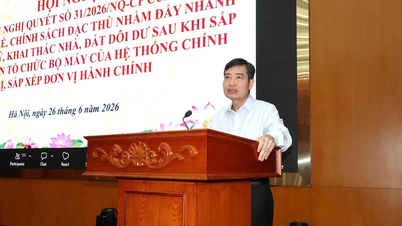
Officials from the Party Building Committee of Tan Hoa ward are reviewing the quality of cadres to provide a basis for advising the ward Party Committee on the implementation of the contents of Resolution 27.
Secondly, the province has standardized the evaluation of officials based on KPIs, digital data, and "output-based measurement." In Resolution No. 27-NQ/TU, the province has shifted strongly from qualitative to quantitative evaluation, using work efficiency and digital data as the central basis in personnel management. Specific tasks include building a system for evaluating officials based on four KPI indicators: task performance; level of service to citizens and businesses; inter-agency coordination capacity; and discipline, order, and integrity in public service.
The process involves gradually implementing a digital platform for competency scoring, integrating data on work progress, output, on-time processing rates, and citizen satisfaction levels via QR codes. The evaluation results will be used directly in planning, appointing, transferring, and rewarding officials.
Thirdly, there has been a breakthrough in the rotation, transfer, and placement of cadres in the direction of "the right person - the right job - the right location." In Resolution No. 27-NQ/TU and Resolution No. 14-NQ/TU, the province has implemented a comprehensive strategic mechanism for transferring and rotating cadres to overcome the imbalance of cadres between regions and sectors with specific actions: Strengthening the transfer of cadres from the provincial level to the grassroots; piloting the placement of young cadres and female cadres from departments and agencies to key positions at the commune level; implementing the policy that the Party Secretary and Chairman of the People's Committee at the commune level should not be from the local area; prioritizing the transfer of cadres with expertise in information technology, land management, construction, health, and education to disadvantaged areas.
Fourth, the province aims to promote job-specific training and development, and digital transformation, linking "learning with practical application at the grassroots level." In Resolution No. 27-NQ/TU, the province clearly defined the goal of fundamentally transforming the method of cadre training from "general training" to "training based on competence and job position," with specific requirements: Developing mandatory digital learning materials for each group of positions (land, budget, public investment, public administration). Organizing online training combined with on-site support between experienced and young cadres. Mandatory updating of digital skills: online public services, digital data, and operation on digital platforms. Training linked to the practical requirements of operating local government at both levels.



Fifth, the province prioritizes people's satisfaction as the central criterion in evaluating officials. The province clearly established the principle of "the people are the center of official evaluation," shifting strongly from administrative management to service-oriented governance with specific contents: Annual public consultations are conducted on the attitude, responsibility, and quality of service provided by officials. Over 90% of citizens participate in assessing their satisfaction with administrative procedures. The results of public satisfaction are used as a basis for evaluating, ranking, and appointing officials. The responsibility of leaders is linked to the results of serving the people at the grassroots level.
Sixth, the province focuses on building a workforce structure that is youthful, digitalized, and internationally integrated. Accordingly, the province has outlined tasks and solutions and proactively designed a long-term strategic workforce structure, aiming for a lean and modern team. Specific targets have been set for young cadres, female cadres, and science and technology cadres in planning and appointments. The proportion of cadres capable of working in digital and international environments has been expanded. Priority has been given to developing a workforce in strategic areas: digital transformation, public investment, legislation, high-tech agriculture, tourism, and industry.
The above approaches clearly demonstrate Phu Tho province's innovative direction in personnel management, focusing on: modern, data-driven, and results-based personnel management; closely linking training, utilization, evaluation, and remuneration; strengthening decentralization while maintaining power control; placing the people at the center of personnel quality assessment; and proactively building a workforce that meets the requirements of a two-tiered government model and double-digit growth targets.
Reporter: Thank you very much, Comrade!
Source: https://baophutho.vn/tao-dot-pha-trong-cong-tac-can-bo-255507.htm
![[Photo] "Hanoi Lotus Festival" honors the lotus flower that has been associated with Vietnam for thousands of years.](https://vphoto.vietnam.vn/thumb/1200x675/vietnam/resource/IMAGE/2026/06/27/1782516943048_sen-ha-noi-2026-minh-duy-1-jpg.webp)