

"Act now, don't wait."
In his keynote address at the conference, General Secretary To Lam affirmed that, among the four resolutions being disseminated and implemented, Resolution 59 is one of the four "pillar resolutions" mentioned previously. The remaining three resolutions are thematic resolutions, continuing and supplementing the set of four strategic resolutions to form a unified whole, a breakthrough to realize the two centenary goals: building a strong, prosperous, enduring, and sustainable Vietnam.
The General Secretary also informed that the Politburo will soon issue two more resolutions that are also very important in the overall development: a resolution on the state-owned economy and a resolution on the revival and development of Vietnamese culture.
According to the General Secretary, there is a great deal of work to be done, so it must be done urgently and early to allow time for action. The Government and the National Assembly must also calculate the resources and conditions for implementation. The General Secretary also requested that the Central Party Committees and local Party Committees immediately incorporate this into their documents and action programs at the congresses of their respective agencies and localities, so that "it can be implemented immediately without any further delay."
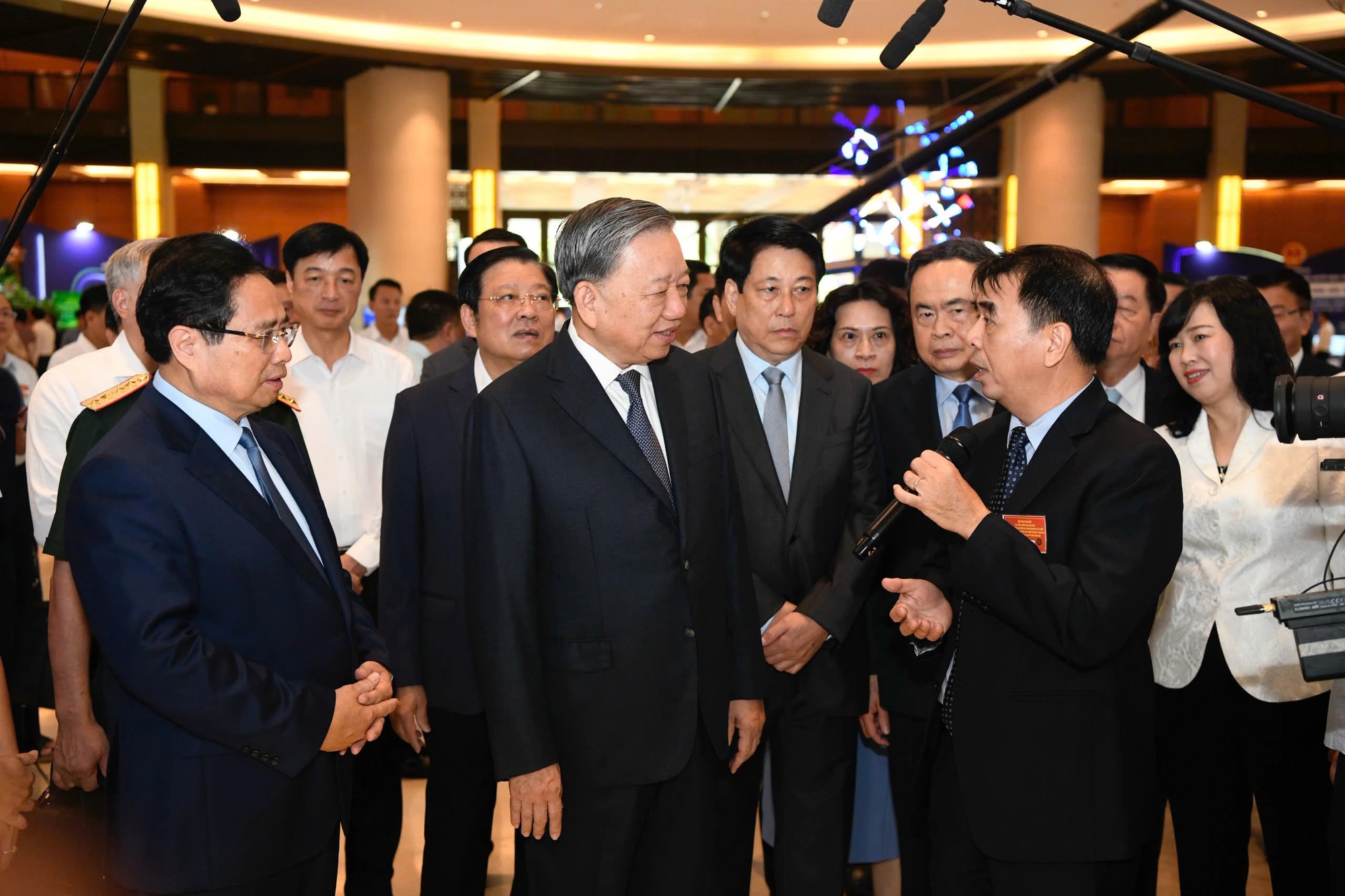
General Secretary To Lam and other Party and State leaders visited an exhibition showcasing outstanding achievements in the health and education sectors at the national conference on the implementation of four Politburo resolutions on the morning of September 16.
PHOTO: GIA HAN
The General Secretary emphasized that the overarching spirit of Resolution 59 and the three resolutions 70, 71, and 72 is to rapidly shift from "issuing policies" to "managing implementation," placing the people and businesses at the center, and using practical effectiveness as a measure. Each agency, organization, and individual is responsible for transforming the content of these resolutions into daily work, into concrete action programs with resources, deadlines, measurable indicators, monitoring, and accountability.
"Every official and Party member must take responsibility for this. It's unacceptable to assume that the education resolution belongs solely to the education sector, and the health resolution belongs solely to the health sector. These resolutions are closely interconnected. This is a whole, not the responsibility of any one individual," the General Secretary emphasized.
The General Secretary also suggested considering the establishment of a Central Steering Committee for each resolution or a Central Steering Committee for the implementation of Politburo resolutions. In addition, a publicly accessible digital dashboard should be developed, updated weekly and monthly, to monitor core indicators, bottlenecks, progress in implementing each resolution, and the responsibilities of each Party committee, agency, and unit.
Encouraging businesses to invest abroad.
Emphasizing the key directions and solutions of each resolution, the General Secretary noted that Resolution 59 focuses on comprehensive, synchronous, and in-depth integration. At the same time, it is necessary to promote the attraction of high-quality FDI, especially from large global corporations that play a leading role in important supply chains such as information technology, telecommunications, semiconductor chips, and artificial intelligence. Simultaneously, Vietnamese businesses should be encouraged to invest abroad and build national brands with international reach. "We are shifting from opening up to investment to a phase of selectively attracting investment," the General Secretary noted.
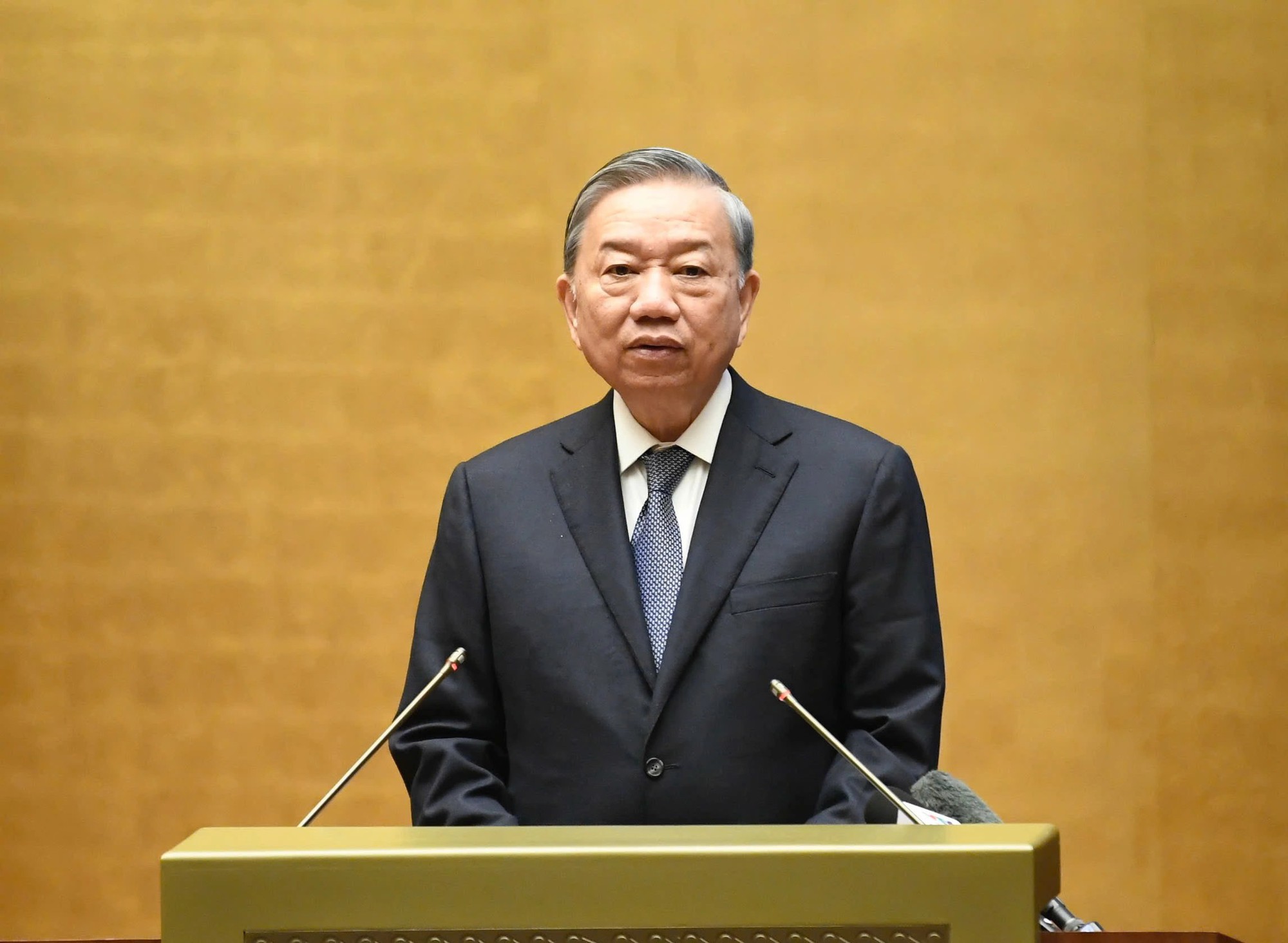
General Secretary To Lam delivered a directive speech at the conference.
PHOTO: GIA HAN
Regarding Resolution 70, the General Secretary emphasized that the core objective is for the energy system to be safe, stable, and have reliable backup; to provide sufficient supply for production and daily life; to shift towards green, low-emission systems; to operate intelligently on a digital platform; and to ensure reasonable and transparent costs. The General Secretary stated that the breakthrough in the energy security strategy is sustainable development and realizing the "net zero" commitment by 2050, focusing on three points: institutional reform, creating favorable conditions to attract social resources, especially the private sector, to participate in renewable energy investment, transmission, and distribution.
Regarding Resolution 71, the General Secretary noted that education and training must be clearly defined as a top national priority and a key driving force for national development. Investing in education is investing in nurturing and enhancing the national spirit, and investing in the future of the nation. The General Secretary emphasized the educational motto of prioritizing quality, using teachers as the key, and using technology as a lever. Regarding solutions, the General Secretary noted the need to reform curricula and assessment, reduce the obsession with achievements, and combat widespread private tutoring. At the same time, there needs to be a breakthrough in the teaching staff with new professional standards, performance-based incentives, scholarships to attract talented individuals to the teaching profession, the development of digital skills, and the protection of teachers' ethics and honor…
Developing primary healthcare and family doctors.
Spending considerable time discussing Resolution 72, the General Secretary noted that the goals are to increase healthy life expectancy, reduce patient costs, digitize the system, strengthen grassroots healthcare, and improve the quality of services and patient and citizen satisfaction.
The General Secretary stated that Resolution 72 outlines nine groups of solutions that need to be focused on, including strengthening preventive medicine and public health. According to the General Secretary, the health sector has prioritized vaccine development as the most effective and cost-efficient solution for disease prevention. Currently, 50% of vaccines are produced domestically, while the remaining 50% require international cooperation. Therefore, continued efforts are necessary in this area.
Another task the General Secretary noted was the development of grassroots healthcare and family doctors. The General Secretary emphasized that the goal of Resolution 72 is that every citizen must receive healthcare, leaving no one behind. To achieve this, grassroots healthcare and family doctors must be implemented. "The family doctor model is very effective elsewhere, not only providing medical treatment but also offering advice, healthcare, physical exercise, and disease prevention. These are easy things to do, yet we haven't focused on them," the General Secretary noted.
The General Secretary expressed his strong desire for models of healthcare centers that combat loneliness for the elderly. "A nursing home that cares for the elderly like a school, picking them up in the morning and dropping them off in the evening. Here they can meet friends and former colleagues, chat, and participate in sports, music, culture, and arts activities… it’s wonderful," the General Secretary said, and requested the Ministry of Interior, the Ministry of Health, and the Association of the Elderly to assign responsibilities for its implementation.
Another task noted by the General Secretary is universal health insurance coupled with value-based payment; expanding benefits and reducing costs for patients. At the same time, it is necessary to promote controlled hospital autonomy, pricing services based on actual costs, publicly disclosing quality, centralized and transparent procurement, and combating vested interests. The General Secretary also emphasized the digital transformation of healthcare with nationwide electronic health records, electronic prescriptions, telemedicine, shared data repositories, as well as developing a competent healthcare workforce with attractive incentives to attract personnel to grassroots levels...
The General Secretary affirmed that the country's new driving force for development stems from the organic links between the aforementioned resolutions and requested that each ministry, sector, locality, unit, official, and Party member immediately begin concrete actions.
"The four resolutions, when implemented decisively and synchronously, will further cultivate new momentum and create a strong impetus for us to break through and successfully achieve strategic goals, making our country increasingly prosperous and civilized, and our people increasingly happy," the General Secretary affirmed.
Breakthrough development, revitalization of education.
In implementing Resolution 71, Prime Minister Pham Minh Chinh stated that this resolution sets out stronger policies and decisions to remove bottlenecks, create breakthroughs in development, modernization, and revitalization of the national education system, contributing to promoting the implementation of new Politburo decisions on science and technology, innovation, digital transformation; international integration; lawmaking; and private sector development.
According to the Prime Minister, Resolution 71 identifies eight groups of tasks and solutions, including many new and breakthrough points. Specifically, breakthroughs in institutions and policies, innovation in thinking and action, creating unique and superior mechanisms and policies for the development of education and training. Breakthroughs in investment resources with a budget allocation policy ensuring that educational conditions meet standards, striving for a 5% investment expenditure structure; and 3% allocated to higher education. Priority is given to allocating clean land, exempting or reducing land use fees, leasing land, and expanding credit for educational institutions…
This also includes comprehensive digital transformation, widespread adoption and strong application of digital technology and artificial intelligence in education and training. Focus is placed on building a qualified teaching staff and school infrastructure, improving the quality of preschool and general education. Strengthening foreign language teaching and learning, gradually making English the second language in schools is also a priority. The Prime Minister stated that research has been directed on integrating artificial intelligence (AI) into teaching in general schools starting from grade 1, with the spirit of "learning through play" and "combining technology with entertainment activities".
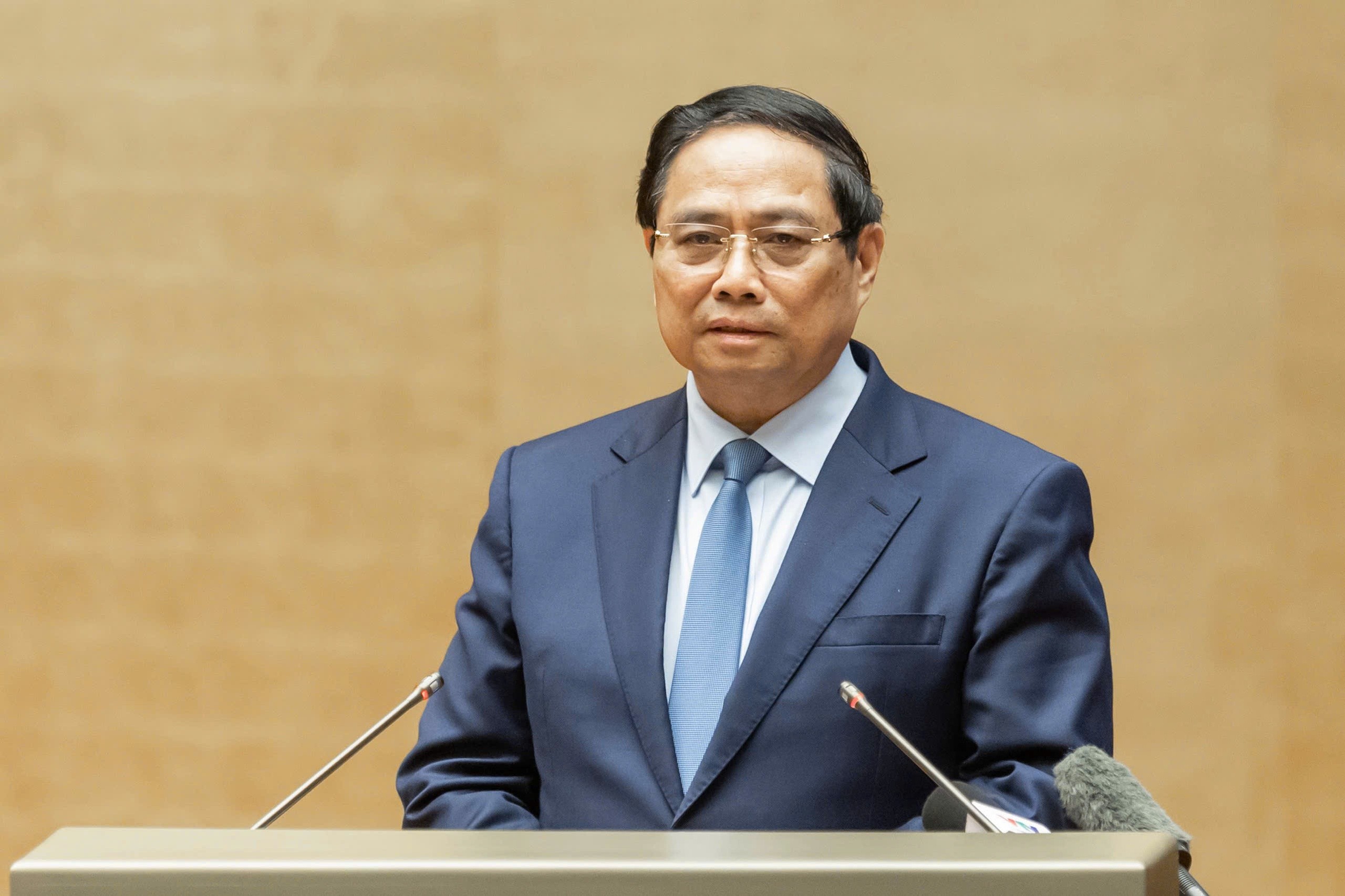
Prime Minister Pham Minh Chinh briefed on the content of Resolution 71.
PHOTO: GIA HAN
The budget has been balanced to provide free medical care for all citizens.
In explaining the content of Resolution 72, Deputy Prime Minister Le Thanh Long said that there are three main policy groups in the resolution that are of particular interest to the people, especially whether the State has sufficient resources to implement the policies.
Accordingly, the first group concerns professional incentive allowances at different levels, for different groups, ranging from 70% to 100% for medical staff working in public health facilities in remote areas. Mr. Long stated that an estimated 4,335 billion VND per year is needed. "This amount is higher than the current salary level, but it is manageable," Mr. Long clarified.
The second group of expenses is for annual routine health check-ups and screenings for the entire population. According to Deputy Prime Minister Le Thanh Long, Vietnam's population is approximately 106 million, but if we round to 100 million people, and each check-up costs 300,000 VND, then 30,000 billion VND per year is needed. With about 16 million workers undergoing routine check-ups and screenings, employers would have to pay approximately 4,800 billion VND. Therefore, the State needs to spend 25,200 billion VND.
The third funding category is the policy of waiving hospital fees, Mr. Long said. The Ministry of Health used 2024 data, showing that the Health Insurance Fund paid approximately 140,000 billion VND, while patients paid about 21,545 billion VND out of pocket. Based on this calculation, from 2026 onwards, the State would have to spend a maximum of an additional 21,545 billion VND per year. Currently, the Health Insurance Fund has a surplus of about 49,000 - 50,000 billion VND, enough to cover expenses for the first two years. After that, a roadmap for increasing health insurance revenue will be needed to gradually balance the fund. "In short, the Ministry of Health and the Government have calculated this relatively carefully and found it feasible; it can be balanced in the near future," the Deputy Prime Minister affirmed.
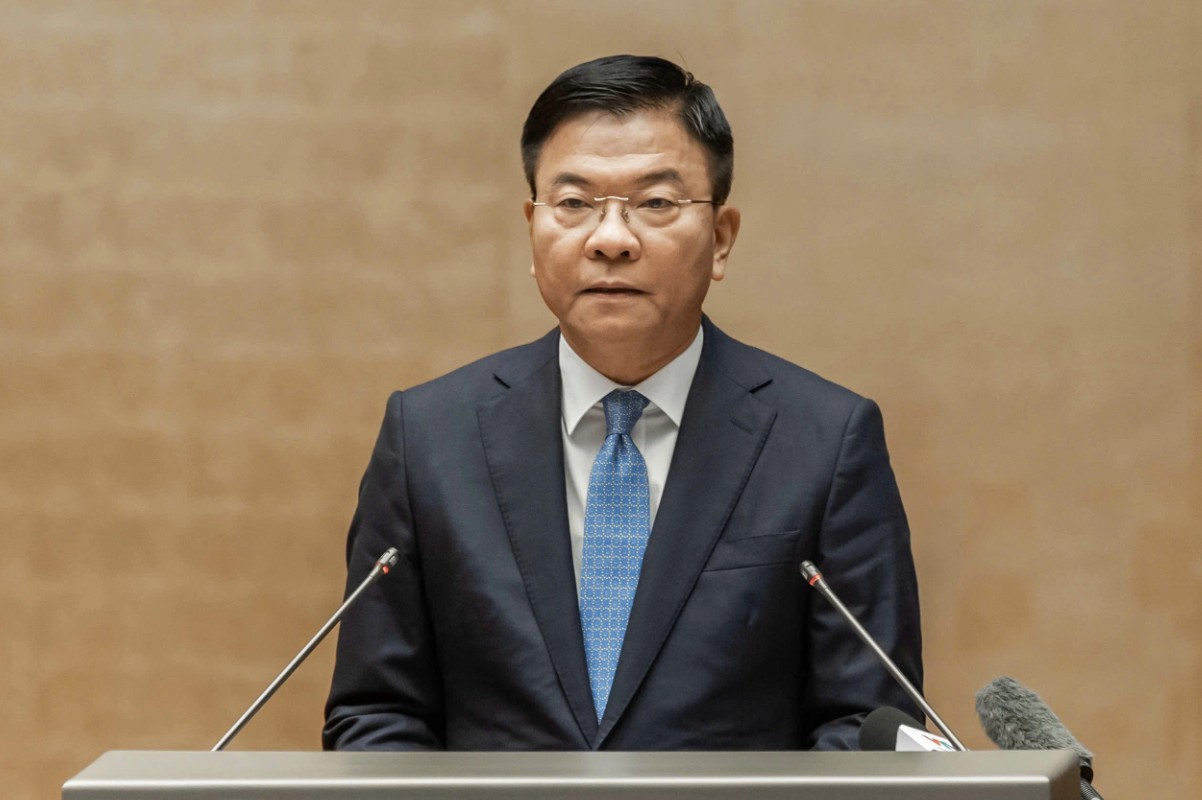
Deputy Prime Minister Le Thanh Long briefed on the content of Resolution 72.
PHOTO: GIA HAN
Diversify markets, avoid dependence.
In implementing Resolution 59 on international integration in the new situation, Central Party Secretary and Acting Minister of Foreign Affairs Le Hoai Trung stated that the resolution emphasizes that integration must reflect the spirit of being an active and responsible partner, shifting from a mindset of seeking and receiving, joining and participating, to proactively contributing and building, shaping, and being ready to make responsible contributions to the common work of the international community.
Regarding objectives, it is necessary to maximize external resources and favorable conditions to build an independent, self-reliant, and strong economy that develops rapidly and sustainably; to strengthen the overall national strength, and to enhance the country's role, position, and international prestige. Mr. Le Hoai Trung also affirmed the need to propose negotiations to upgrade international economic cooperation agreements, selectively participate in new trade agreements, diversify markets, and avoid dependence on a few specific markets or sectors...
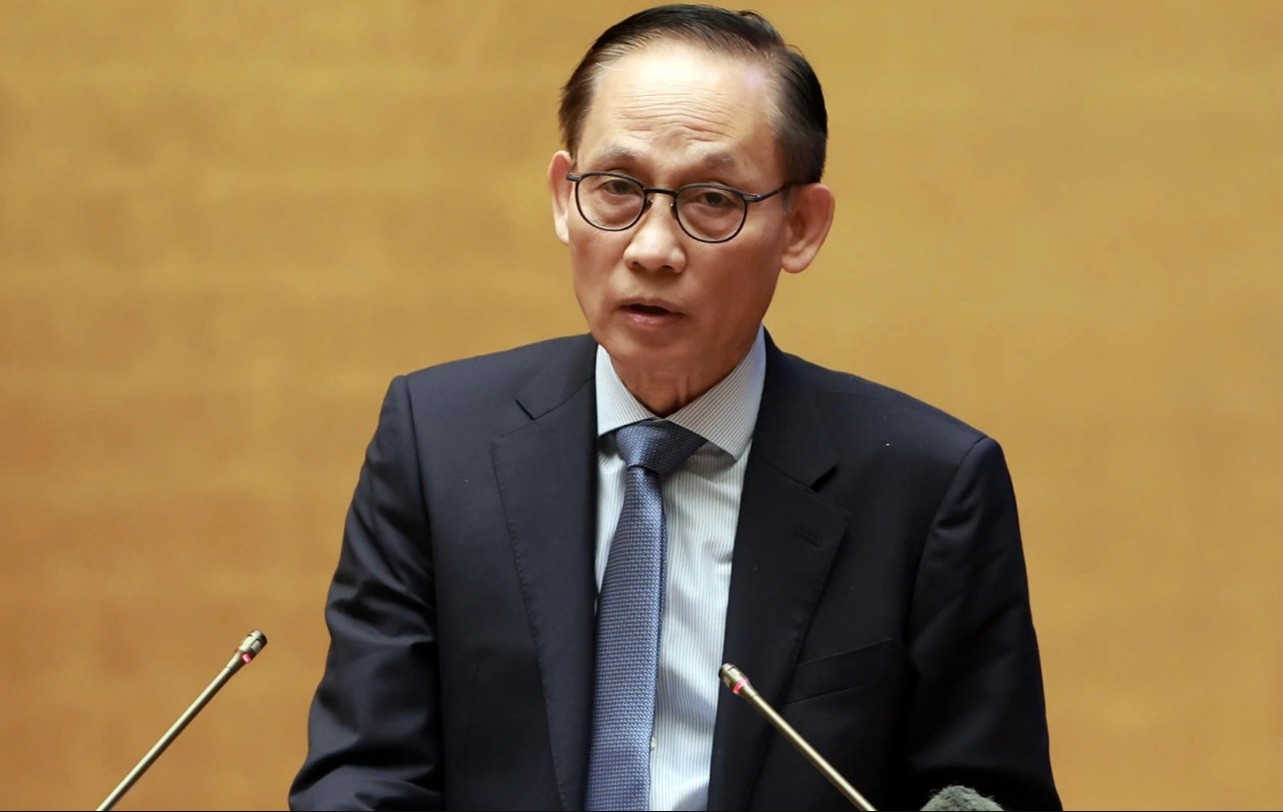
Party Central Committee Secretary and Acting Minister of Foreign Affairs Le Hoai Trung disseminated Resolution 59.
PHOTO: GIA HAN
Eliminate cross-subsidization mechanisms and adjust energy prices according to market forces.
In implementing Resolution 70 on ensuring national energy security until 2030, with a vision to 2045, the Head of the Central Committee's Policy and Strategy Department, Nguyen Thanh Nghi, stated that Resolution 70 adheres to the principle that "energy development must be consistent with the socialist-oriented market economy."
Accordingly, the development of a synchronized, competitive, and transparent energy market, the elimination of cross-subsidization mechanisms, and the adjustment of energy prices according to market forces under state management are crucial. Strong encouragement should be given to all economic sectors, especially the private sector, to participate comprehensively in energy development.
Regarding encouraging private sector participation in energy development, Mr. Nghi said that the direct electricity trading mechanism will be effectively implemented; and at the same time, the rights of electricity customers to choose the electricity supplier that best suits their needs will be strengthened…
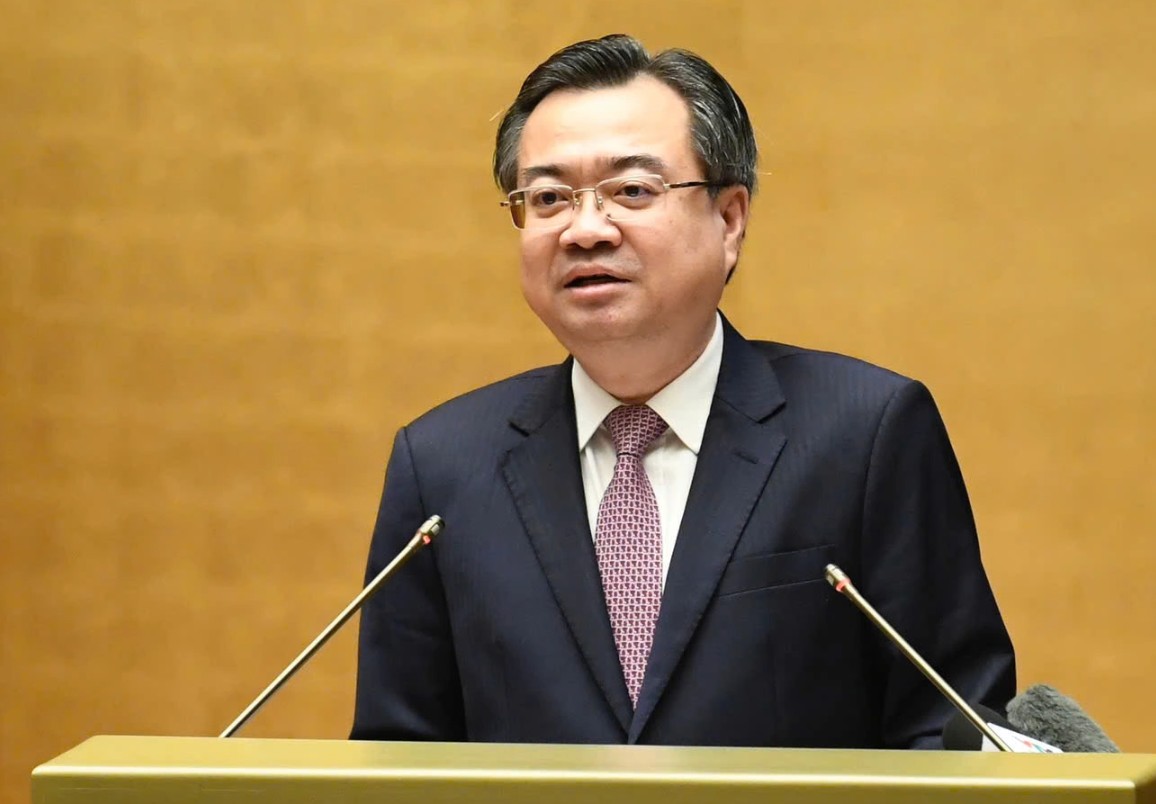
Head of the Central Committee's Policy and Strategy Department, Nguyen Thanh Nghi, disseminated Resolution 70.
PHOTO: GIA HAN
Thanhnien.vn
Source: https://thanhnien.vn/tao-xung-luc-manh-me-de-dat-nuoc-but-pha-185250916235159073.htm
![[Photo] My Son at night: A thousand-year-old heritage site amidst the Milky Way](https://vphoto.vietnam.vn/thumb/1200x675/vietnam/resource/IMAGE/2026/04/15/1776261039184_ndo_br_chon6-jpg.webp)

![[Photo] National Assembly Chairman Tran Thanh Man attends the opening session of IPU-152](https://vphoto.vietnam.vn/thumb/1200x675/vietnam/resource/IMAGE/2026/04/16/1776277863731_ctqh5-jpg.webp)

![[Photo] The General Secretary, President and his wife meet with Vietnamese-Chinese friendship leaders.](https://vphoto.vietnam.vn/thumb/1200x675/vietnam/resource/IMAGE/2026/04/15/1776264829725_vna-potal-tong-bi-thu-chu-tich-nuoc-to-lam-gap-mat-nhan-sy-huu-nghi-viet-nam-trung-quoc-8703641-3130-jpg.webp)
![[Photo] Mrs. Ngo Phuong Ly meets and exchanges views with Mrs. Peng Li Yuan](https://vphoto.vietnam.vn/thumb/1200x675/vietnam/resource/IMAGE/2026/04/16/1776277858080_phu-nhan-1-jpg.webp)





































































Comment (0)