1. "Grandma, remember to soak the sticky rice so I can wrap the rice cakes tomorrow morning," my maternal grandfather's reminder on the evening of the 28th of the twelfth lunar month every year was like a signal that Tet (Lunar New Year) had arrived. Of course, even if he didn't remind her, my grandmother would remember, because wrapping rice cakes had become almost the most important Tet "ritual" in my family.
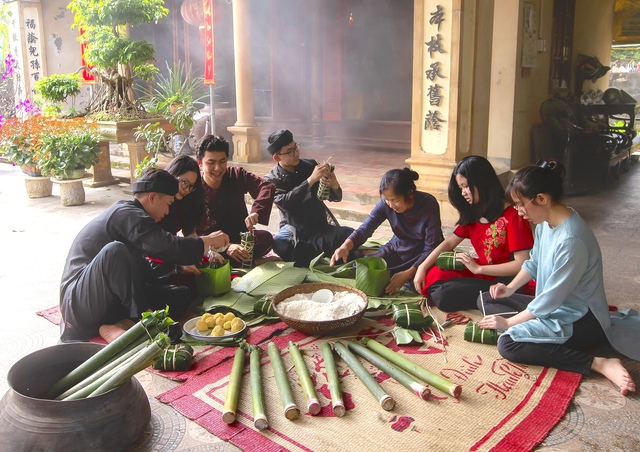
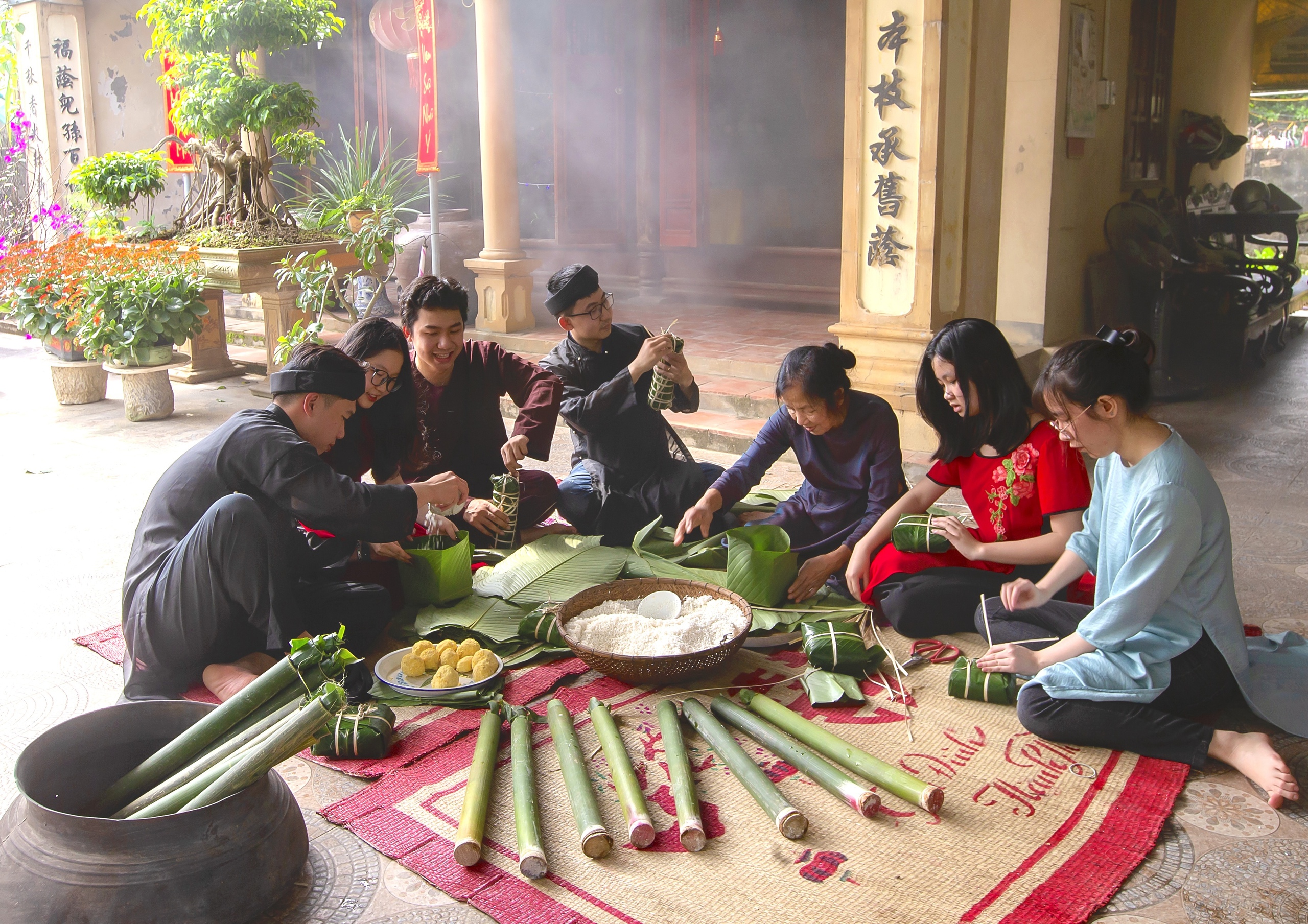
Wrapping sticky rice cakes (Banh Chung) to celebrate Tet.
PHOTO: QUOC DAN
During the famine years of the subsidy era, children were filled with excitement and anticipation upon hearing that "command." Some years were so difficult that rice had to be cooked sparingly, "one grain of rice carrying ten potatoes," but in my hometown, every family absolutely had to make sure they had a pot of sticky rice cakes for Tet (Lunar New Year).
Sticky rice is grown, harvested, and stored in a separate basket, reserved until the days leading up to Tet (Vietnamese New Year) when it is milled and pounded to make the rice cakes. Banh chung is not only a traditional symbol of Vietnamese Tet, offered to ancestors, but also an unforgettable favorite dish, especially during times of scarcity.
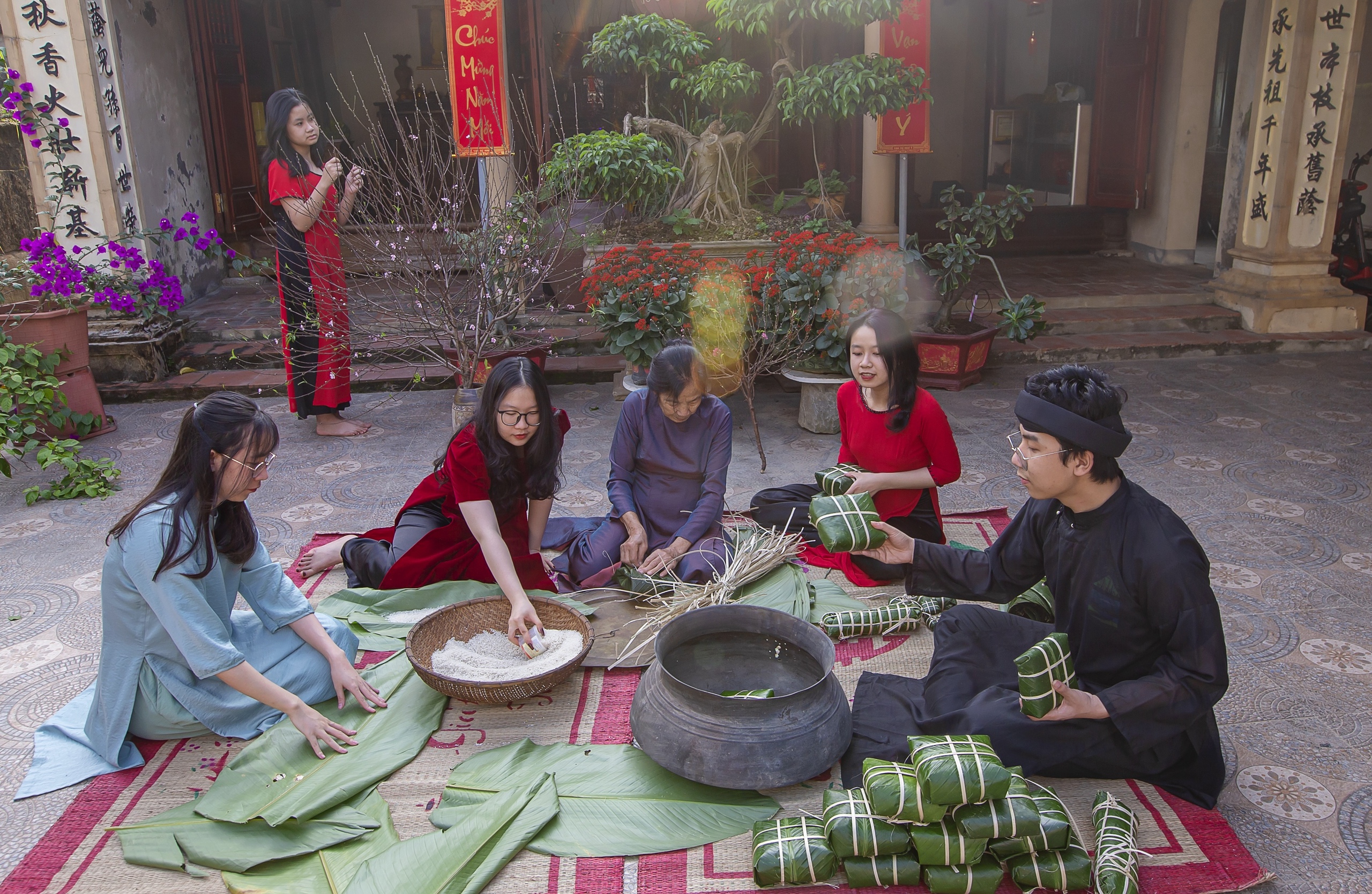
On the morning of the 29th of the twelfth lunar month, my grandfather placed a bamboo tray in the middle of the house, took out banana leaves, sticky rice, and a filling of stir-fried pork with onions, and wrapped the cakes . We children sat around to watch, chattering and praising him, and helping him tie the strings. The fragrant aroma of the filling, wafting from our empty stomachs, captivated our senses.
I kept wishing the rice cake would cook instantly so I could eat it right away. The sticky rice cake, with its fragrant aroma, dipped in molasses, was simply amazing. But we had to stay up late that night to enjoy the tiny cake, only slightly larger than half an adult's hand, that my grandmother had specially wrapped for her grandchildren.
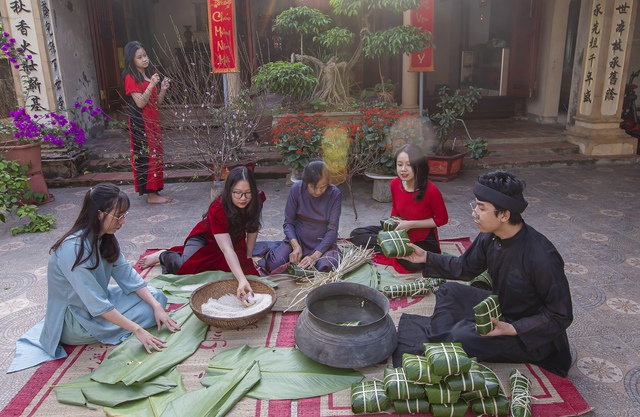
Wrapping sticky rice cakes (Banh Chung) to celebrate Tet.
PHOTO: QUOC DAN
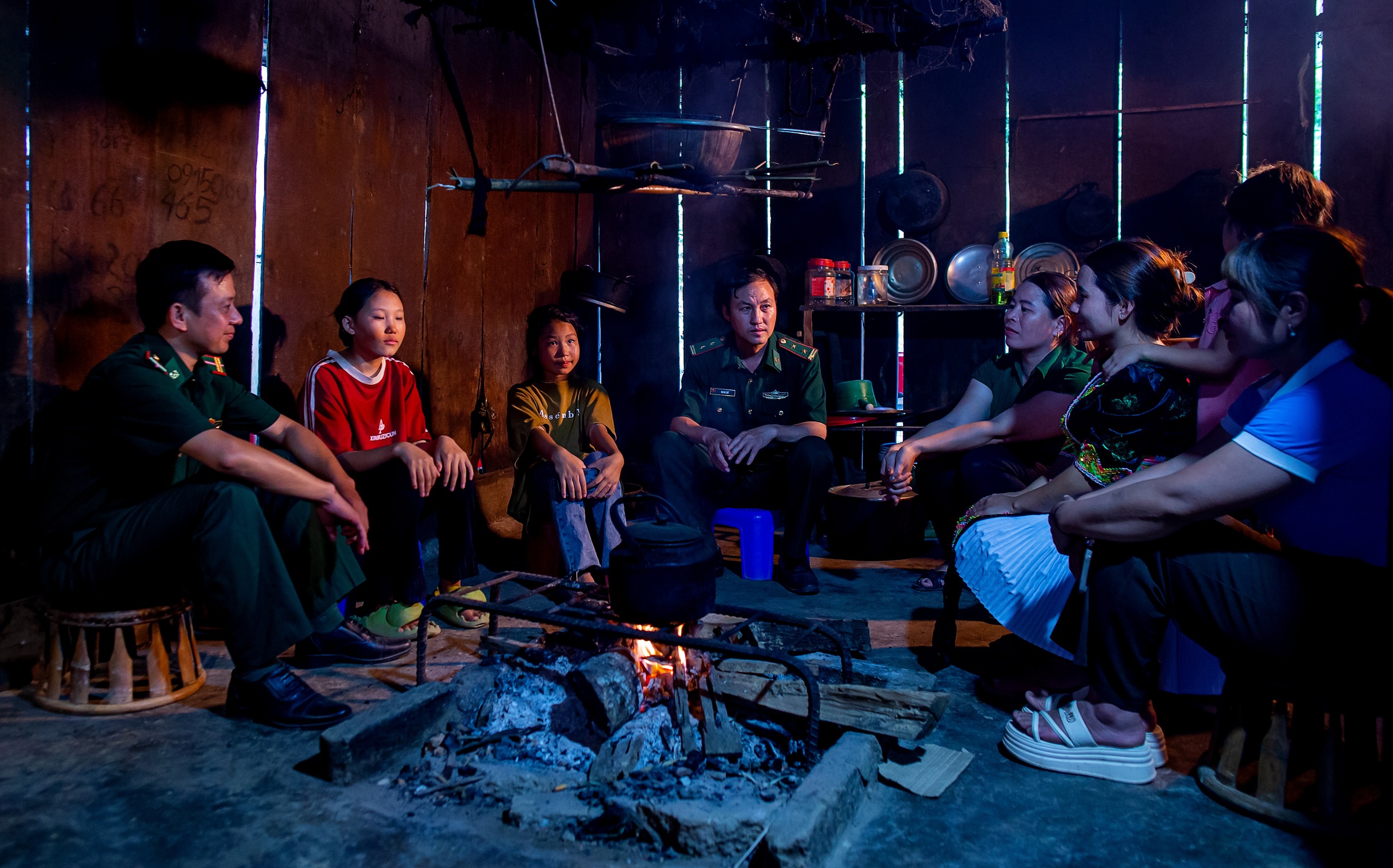
After the rice cakes were soaked in water, in the afternoon my grandfather would bring the three-legged iron stand and set it up in the middle of the kitchen to cook them. In the evening, after dinner, the whole family would gather around the fire, warming themselves while watching the cakes cook.
In Northern and North Central Vietnam, it's usually very cold around Tet (Lunar New Year). Sitting huddled around the fire cooking banh chung (traditional rice cakes), my grandfather, mother, and uncle took turns telling stories about the village and the cooperatives. The pungent smoke from the fire, the crackling of the burning wood, and the warmth radiating from the hearth were so comforting that I drifted off to sleep in my mother's arms without even realizing it.
My parents were allocated land to build a house. Our house was right next to my eldest uncle's. He had many children, and since childhood, I was very close to his two sons, so he treated me like his own child. Every Tet (Lunar New Year), he would make a lot of sticky rice cakes (banh chung). Every year, on the evening of the 28th of the twelfth lunar month, the pot of banh chung would sit proudly on the fire. The children and grandchildren would gather around, chatting and laughing.
The best part was sitting by the fireplace in the chill of the year-end, listening to my uncle tell stories about the village. My uncle had been a volunteer youth corps member during the war, then worked as a cooperative officer and a village official; he knew so many stories that he could tell them all night long and still not finish. His two sons had a knack for telling funny stories; sitting by the fireplace, they would tell hundreds of hilarious tales, each one making the whole family laugh uncontrollably…
2. My cousins and I grew up, went to school, and started working, but returning to our hometown for Tet (Lunar New Year) remained the same. The hearth where our uncle cooked sticky rice cakes became an indispensable part of our journey home. Sitting by the fire, we still preferred listening to stories about the village and the joys of our hometown rather than about business or national affairs.
In that corner of the kitchen, the aroma of roasted potatoes and corn buried in hot coals, mingled with the warmth of the fire, created a strange allure that was hard to resist.
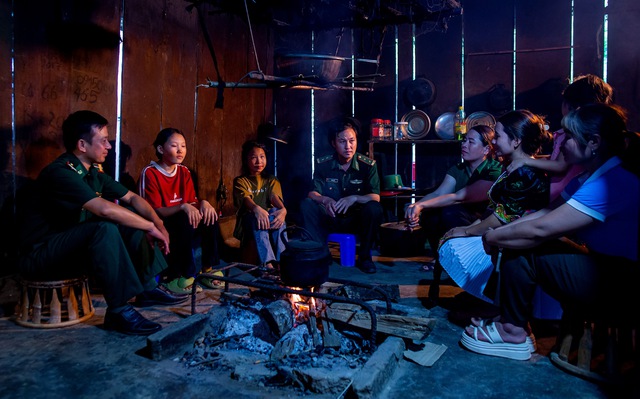
The hearth - the soul of the Vietnamese home.
PHOTO: QUOC DAN
My cousin went to work abroad and settled in Germany decades ago. Every year when he comes home for Tet (Lunar New Year), he always arrives before the day of the Kitchen God ceremony. He says that the day of the Kitchen God ceremony marks the beginning of Tet.
"I like the atmosphere in the days leading up to Tet; it's lively and exciting, not bland like Tet in the West," he said.
Now it's just him and his elderly mother at home, but he still makes a lot of sticky rice cakes himself, cooks a huge pot, and then gives them away to the neighbors. He built a house for his mother, furnished it with all the amenities, but he also built a separate area for the wood-burning stove. Not only does his mother like this stove, but he does too.
He said that cooking in this wood-fired stove, with the smoky aroma infused into the food, made it taste better than cooking on a gas or induction stove. After finishing the sticky rice cake, he bought meat and fish, prepared various dishes, and cooked them using the same wood-fired stove before inviting friends over to enjoy them. "In Germany, there were days when I was driving on the highway and saw smoke rising in the distance, and I missed the smell of the wood smoke from my hometown so much, I just wanted to leave and go back," he said.
My village has transformed and is on the verge of becoming a town, but the traditional wood-burning stove remains intact. Multi-story houses have replaced the old, single-story ones, designed in a modern style, with kitchens tiled with stone, and cabinets made of wood or plastic, clean and luxurious, but almost every house still has a traditional wood-burning stove built at the back or side.
Many families still prefer cooking in that type of stove, even though it's not as convenient as a gas stove. It's not necessarily because it's more economical, but because that stove is like the soul of the house, ingrained in their subconscious.
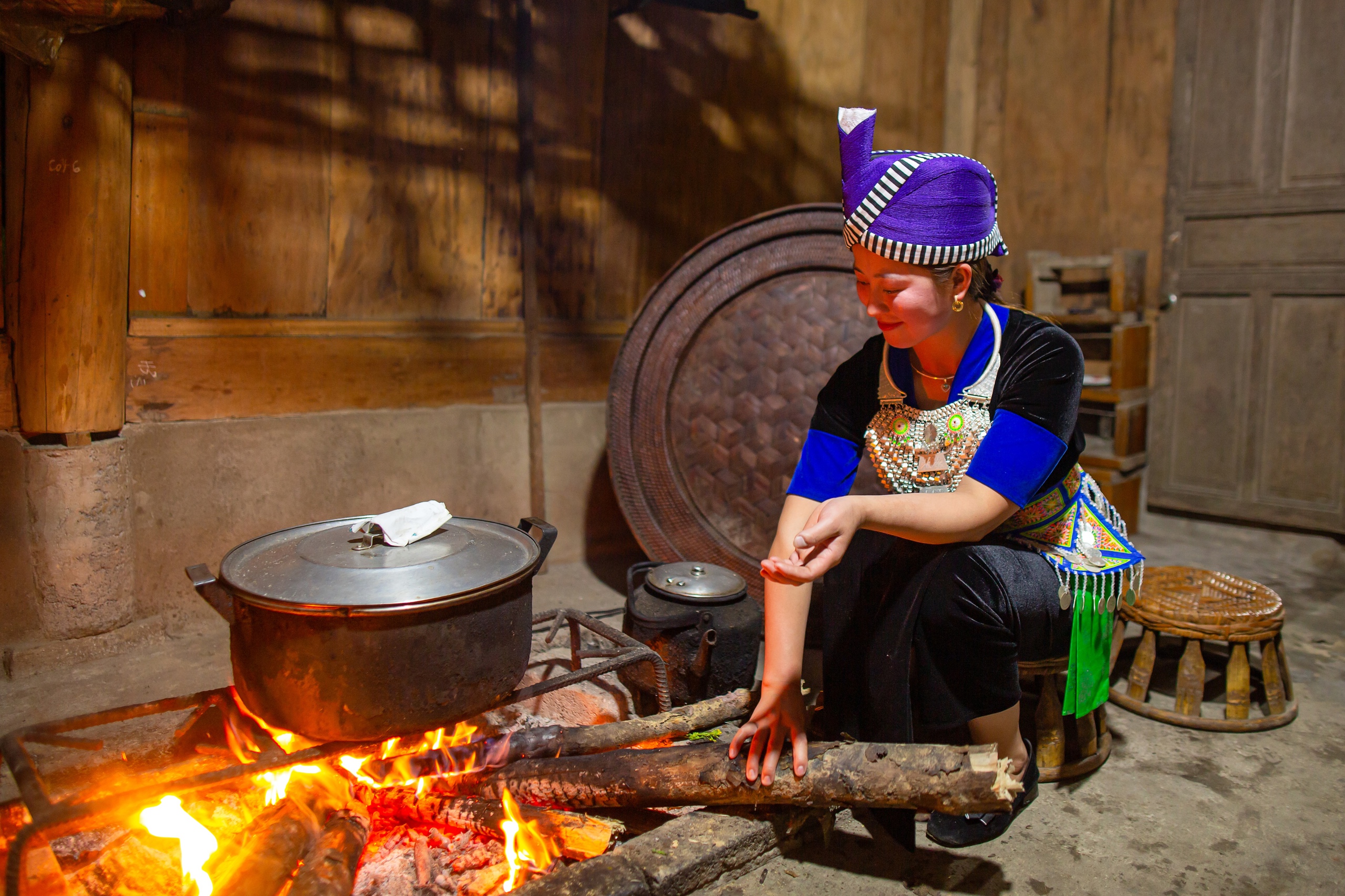
A wood-burning stove is easy to make; it's just a three-legged stand, a U-shaped iron bar placed on a few bricks, or even simpler, just a few stones or bricks can be used to make a stove. A more elaborate setup might involve building a chimney.
In winter, after dinner, the fireplace became a gathering place for neighbors, where they would sit, drink green tea, and chat. My family had a wood-burning stove in the corner of the house; it was less common in summer, but when the weather turned cold, and especially during the Lunar New Year holidays, my mother would light the fire every day.
She said to light the fire to create some warmth. In the biting cold, those who came to wish them a happy New Year didn't sit at the living room table but all sat down by the stove. Everyone who sat there exclaimed, "It's so warm, so warm!"
3. In my neighborhood, there's an elderly couple with four children. Three of them went to the South to work and establish themselves there, and one is working abroad. During Tet (Vietnamese New Year), they usually come home to celebrate and visit their parents. Sometimes, they're too busy and none of them can come home.
On the eve of Tet (Vietnamese Lunar New Year), I visited and saw the elderly couple sitting by a wood-fired stove, cooking banh chung (traditional Vietnamese rice cakes). Beside them were four warm jackets placed on four chairs. Curious, I asked them about it. The old woman explained that the jackets belonged to her four children; none of them could come home for Tet this year, so she kept them there to ease her longing and to allow them to experience the warmth of Tet in their hometown.
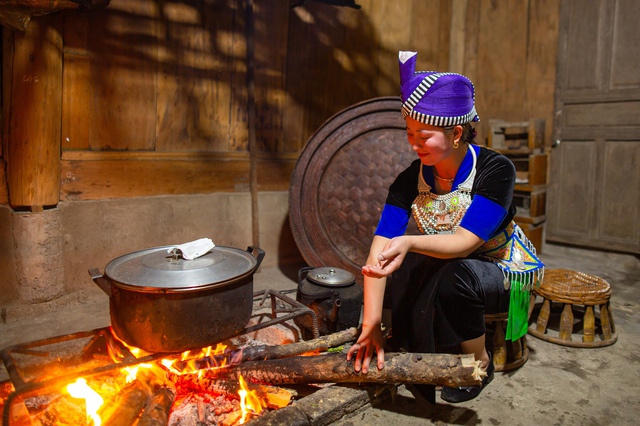
The hearth - the soul of the Vietnamese home.
PHOTO: QUOC DAN
Surprisingly, it's not just those far from home who miss their hometown; even those living in their hometowns now feel nostalgic. In recent years, some areas in Nghe An have organized traditional Tet (Lunar New Year) markets, and surprisingly, these markets attract a large number of people.
Unforgettable dishes from a time of scarcity: rice cakes, mashed sweet potatoes, gourd-based sweet soup, rice mixed with sweet potatoes… cooked directly at the market over a wood-fired stove, yet they evoke such fondness and nostalgia in many people.
Without extravagant dishes, Vietnamese Tet has remained the same for generations. Simple and unpretentious like the smoke from a kitchen fire, slightly spicy, yet always possessing a magical allure that captivates the soul.
Source: https://thanhnien.vn/tet-tu-bep-lua-185260130202838325.htm



![[Image] Hanoi's urban life under the challenge of a "scorching hot" environment](https://vphoto.vietnam.vn/thumb/1200x675/vietnam/resource/IMAGE/2026/05/25/1779706979265_nang-nong-t5-2026-minh-duy-7-4636-jpg.webp)






![[Photo] Procession of a giant "pig" weighing over 200kg at the La Phu Village Festival](https://vphoto.vietnam.vn/thumb/402x226/vietnam/resource/IMAGE/2026/03/02/1772444501339_anh-man-hinh-2026-03-02-luc-16-40-20.png)





















































Comment (0)