

Recently, a university lecturer shared a story about how she repeatedly reminded students to change their default Zalo friend request template to "Hello, my name is... please add me as a friend." She insisted that students should clearly state their name and class before accepting, otherwise she would ignore them. The lecturer also stated that while Generation Z is dynamic and creative, they have limitations in communication and social skills, such as in texting, and therefore need to bravely confront these limitations to make necessary adjustments.
Below the post, many readers agreed with this opinion. For example, reader Ngan Nguyen expressed: "I agree with the teacher. I also suggest that students stop sending messages like 'Teacher' or 'Teacher, I have a question' and then staying silent, waiting for the teacher to reply before presenting the main issue." Expanding to life in general, account 297084 shared that when befriending someone on social media, it's necessary to introduce yourself fully, such as your name and the purpose of getting acquainted.

Lecturers advise students not to leave the default template "Hello, my name is... please add me as a friend" when adding teachers on Zalo.
The above perspectives reflect an equally important aspect besides learning: communication in the school environment between teachers and students, especially now that the students are no longer teenagers. In reality, how are Generation Z students behaving towards their lecturers, particularly online?
The communication style varies depending on the instructor's age.
Commenting on the communication characteristics of Generation Z, Le Phuong Uyen, a student at the University of Social Sciences and Humanities in Ho Chi Minh City, summarized it in two words: "open-minded" and "creative." "We are willing to talk about any topic, even sensitive ones like sex, in various ways, from conventional to 'trendy.' For example, lately I often use the pronouns 'she' or 'she' to refer to myself," Uyen said.
However, in an academic environment, she believes that two additional words, "appropriateness" and "respect," must be included. Specifically, with young, friendly lecturers, students can sometimes joke around or use slang common among young people. But with older lecturers, this is not advisable because they are "like fathers or uncles in the family," and behaving too casually can easily offend them.
"But whether communicating with young or older lecturers, especially on social media, I always use polite forms of address like 'yes,' 'no,' 'sir/ma'am,' etc., and carefully consider the topic of conversation to avoid turning it into harassment or attacking the lecturers. The process of adding lecturers as friends also needs attention. For example, in my first year, before clicking the 'add friend' button on Zalo, I had to change the default template 'Hello, my name is...' to 'Hello, I am... studying in... with student ID... Please add me as a friend so I can talk to you more'," Uyên recalled.
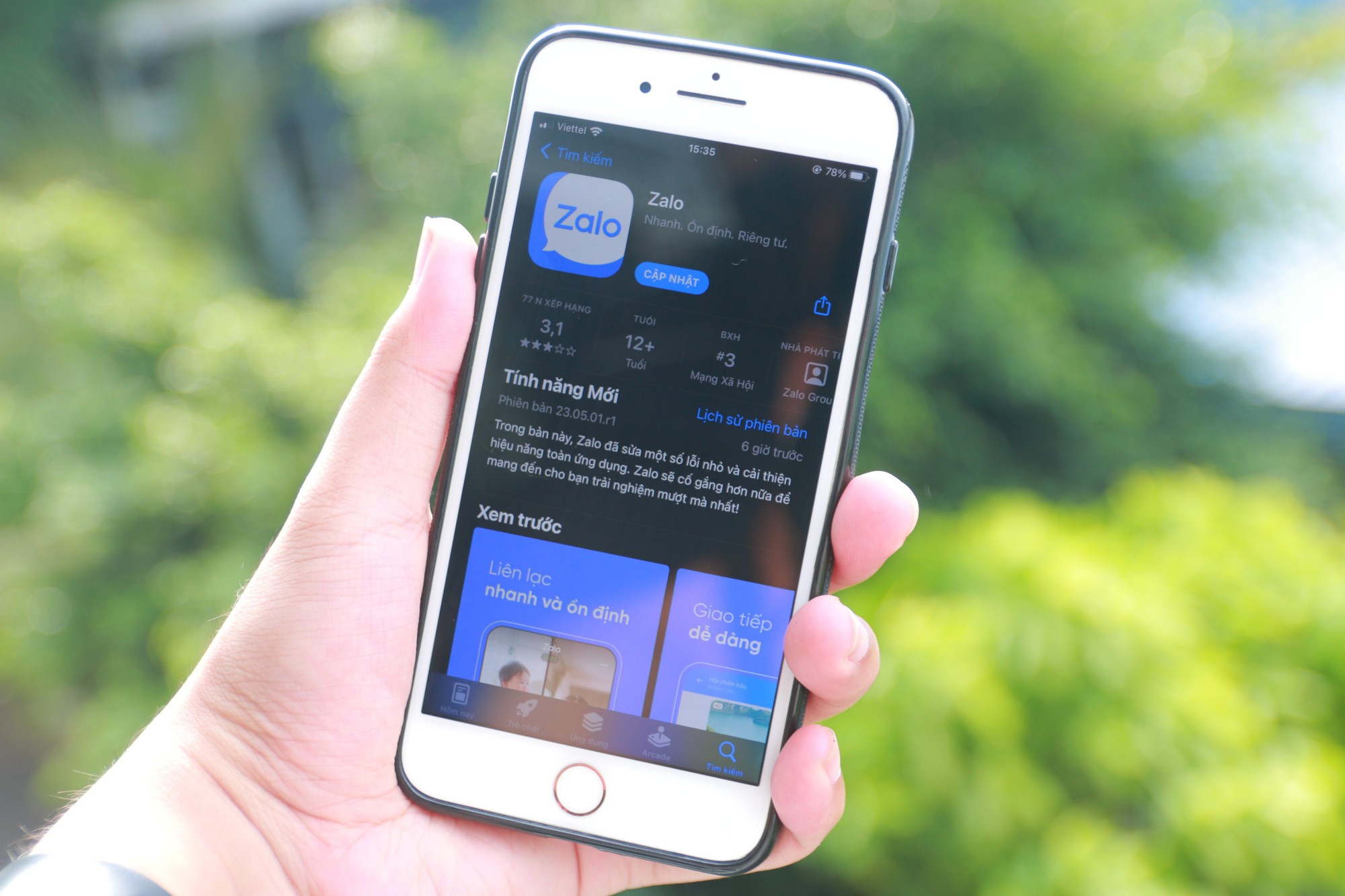
Zalo is currently a popular communication app used by many lecturers.
Agreeing with Phuong Uyen, Kieu Minh Hung, a student at the University of Social Sciences and Humanities in Ho Chi Minh City, said that students today always maintain a certain level of respect for their lecturers. "Perhaps with some younger or more easygoing lecturers, we will behave more freely and dynamically, but fundamentally, we still ensure the spirit of 'respecting our teachers' in all our words, gestures, and thoughts," the male student confided.
However, in real-life communication, Hung admitted that students often can't "control themselves" due to personal habits. "I once witnessed a case where a student frequently used teencode (internet slang) in text messages with friends, and when communicating with a lecturer, they got carried away and mistakenly wrote the word 'có' (to have) as 'cs', causing the lecturer to misunderstand it as 'cơ sở' (facility/establishment) and affecting the effectiveness of communication," he recounted.
The lecturers are also "trendy".
One characteristic of communication among young people today is the frequent use of memes (popular and widely shared images), slang, and trendy phrases when messaging online to make conversations more lively and humorous. According to Phan Ho Duy Khang, a student at Van Lang University (Ho Chi Minh City), this element is also common in some Zalo chat groups that include lecturers in male student classes.
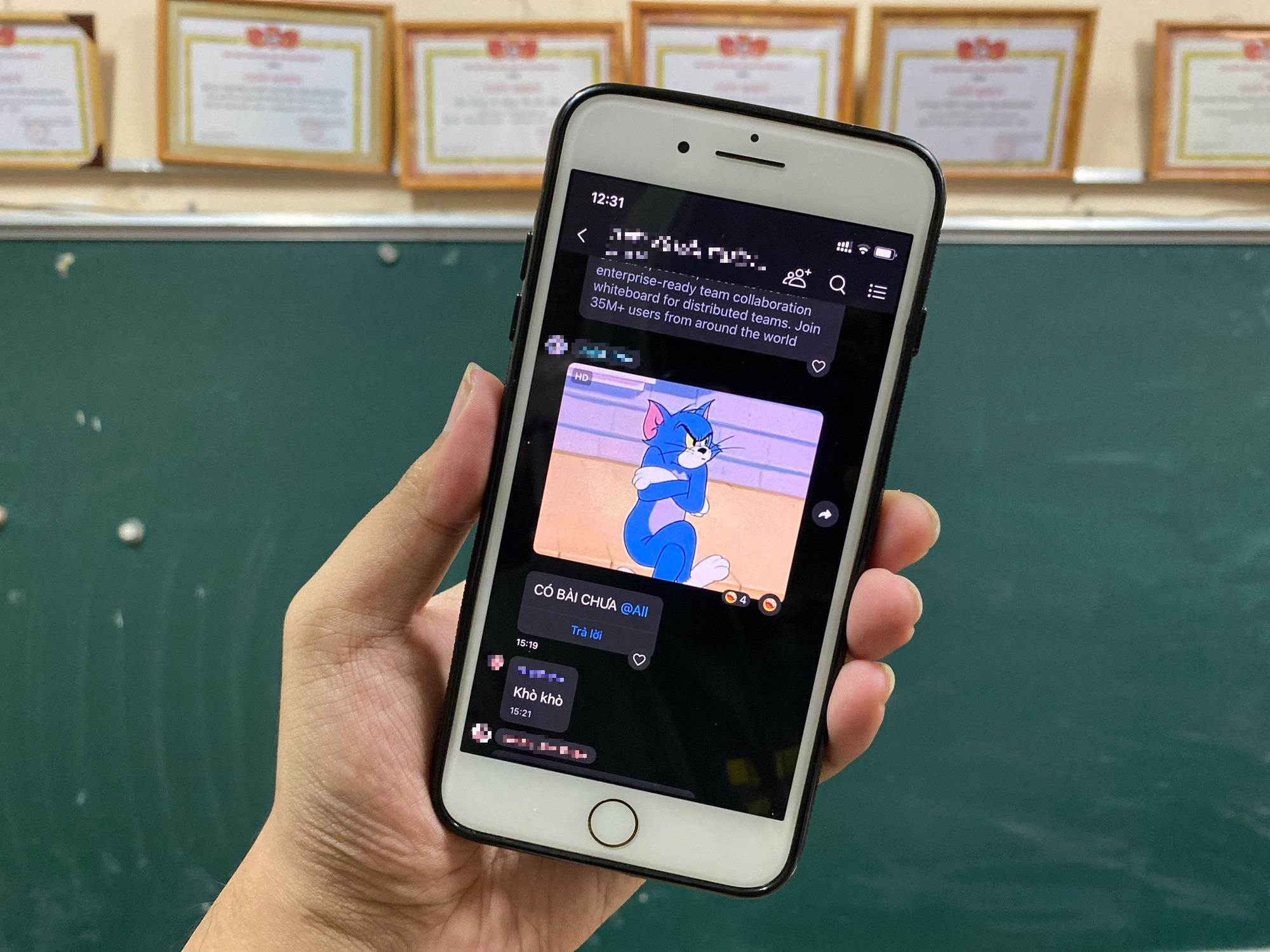
A humorous conversation ensued when a young female lecturer used a meme to remind students to submit their assignments, only to be met with the reply, "Snore-snore," implying, "I'm still sleeping, so I don't have the assignment yet, teacher."
"Generally, 'trendy' messaging only happens in groups with young lecturers, and sometimes the lecturers themselves 'initiate' the use of memes to become closer to their students. This makes us feel more comfortable and confident in our communication because we don't feel pressured to be meticulous in every word. However, some students, being too relaxed, go 'overboard,' losing respect," Khang stated.
According to Khang, in certain special contexts, such as writing emails to lecturers, he and his classmates often pay attention to formality and proper etiquette, both in language and form. "I always start with 'Dear Professor,' then introduce myself and present the content I need to discuss, and conclude with 'Thank you very much, Professor.' This stems from the belief that writing an email should be different from sending a regular text message," he shared.
Teachers also need to understand their students.
According to Phuong Uyen, not only do students need to cultivate proper communication skills, but lecturers also need to be understanding and empathetic if students unintentionally behave inappropriately, while also limiting some cumbersome "communication procedures." Furthermore, teachers and students should establish prior agreements on appropriate behavior in the classroom and online, avoiding a situation where they only act after the fact.
Offering further suggestions on how lecturers communicate with students, Minh Hung proposed that both sides could use voice recording to save time and accurately convey their intended message. "If implemented, lecturers should proactively disseminate information so students dare to use it, as many still view using this feature as disrespectful if the two sides aren't close," he said. On the other hand, Duy Khang hoped that lecturers would always use diacritics in their messages to prevent students from having to guess the meaning from the text.
Source link
![[Image] "Journey of Hope" promotes the organ and tissue donation movement in Vietnam.](https://vphoto.vietnam.vn/thumb/1200x675/vietnam/resource/IMAGE/2026/05/20/1779294400833_1-8910-jpg.webp)
![[Photo] National Assembly Chairman Tran Thanh Man working with the Standing Committee of the National Assembly's Delegation Affairs Committee.](https://vphoto.vietnam.vn/thumb/1200x675/vietnam/resource/IMAGE/2026/05/20/1779294340023_ndo_br_1-1691-jpg.webp)
![[Photo] General Secretary and President To Lam works with the Party Committee of the Ministry of Health on the work of Vietnamese traditional medicine.](https://vphoto.vietnam.vn/thumb/1200x675/vietnam/resource/IMAGE/2026/05/20/1779294323718_a1-bnd-2978-3319-jpg.webp)







































































































Comment (0)