

Recently, significant archaeological discoveries have helped unravel the mysteries surrounding the construction of this structure, from the source of the stone quarry and transportation methods to the advanced construction techniques.
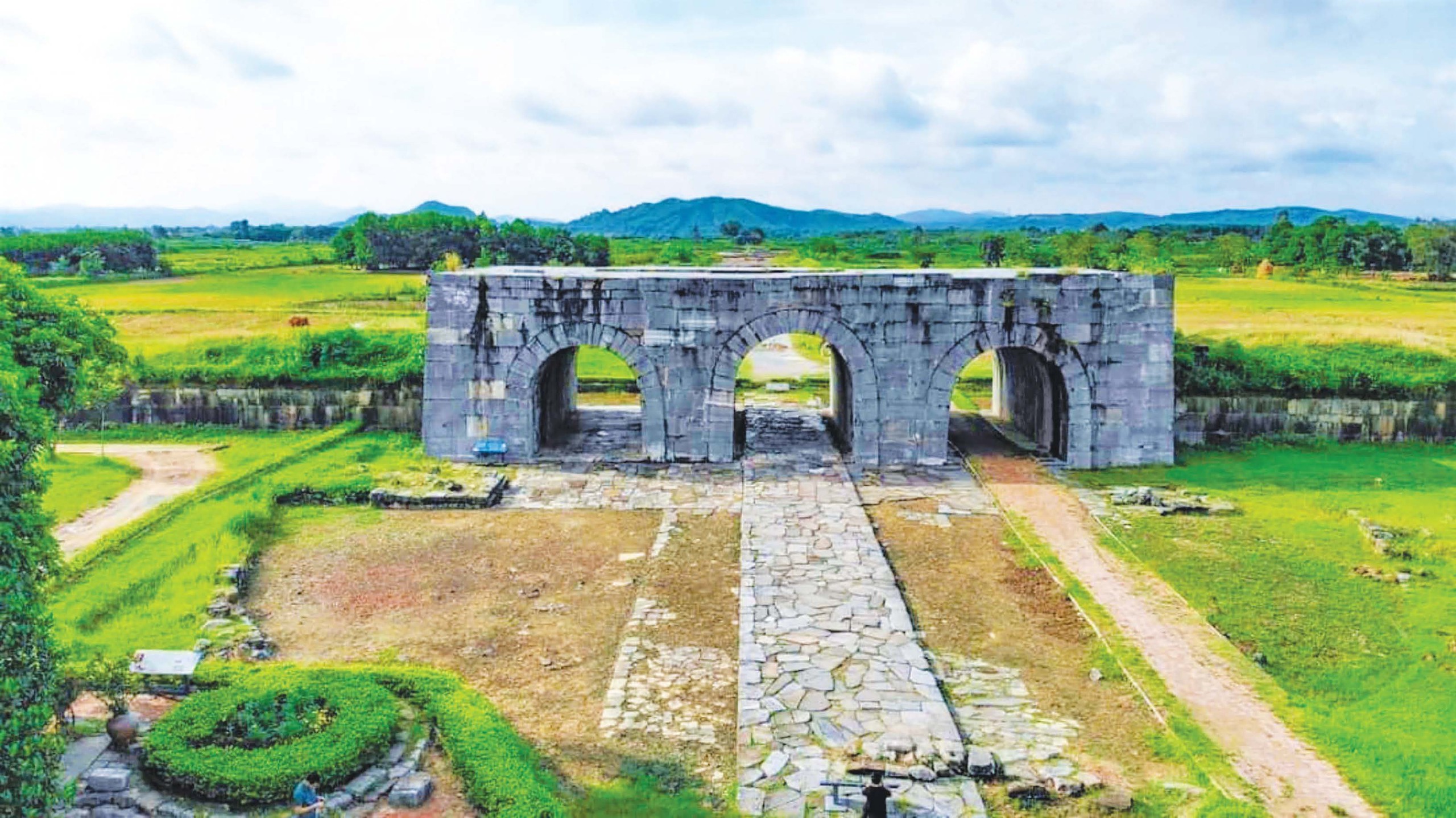
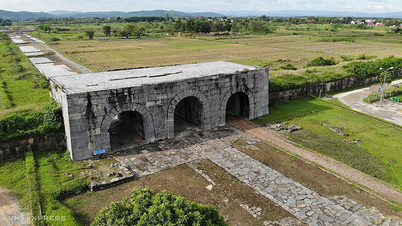
Ho Citadel, one of Vietnam's most unique stone architectural works, was built in 1397 at the end of the Tran Dynasty, initially named Tay Do. The citadel was chosen as the capital of the new dynasty by Ho Quy Ly after his ascension to the throne in 1400. In 2011, Ho Citadel was recognized as a UNESCO World Heritage Site.
Decoding the origin of the stones used to build the citadel.
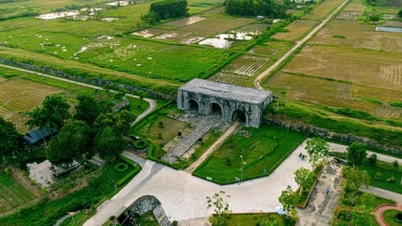
Ho Citadel is a unique and unparalleled stone architectural masterpiece in Vietnam. It is also known as Tay Do (or Tay Giai) to distinguish it from Dong Do (Thang Long, Hanoi). It served as the economic, political , and cultural center of the late Tran Dynasty for seven years, from 1400 to 1407.
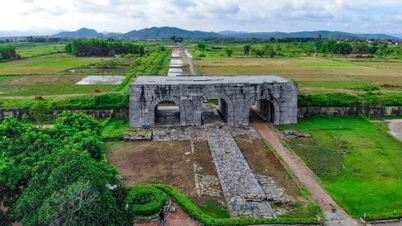
The Ho Dynasty Citadel consists of three parts: the outer wall, the moat, and the inner citadel. Of these, the most massive and relatively intact structure to this day is the inner citadel. The entire outer wall and the four main gates are built from meticulously carved, square-shaped blue stone slabs, stacked tightly together. The walls are constructed from large stone blocks, some slabs measuring over 6 meters in length and weighing approximately 26 tons. The total volume of stone used in construction is about 25,000 cubic meters, and nearly 100,000 cubic meters of earth were meticulously excavated and filled.
Historical records specifically state that the construction of the Ho Dynasty Citadel took only 3 months. The book Dai Viet Su Ky Toan Thu (Complete History of Dai Viet) records: "In the tenth year of Dinh Suu (Quang Thai) (1397), in the spring, in the first month, the Minister of the Board of Rites and Grand Historian Do Tinh (some books write it as Man) was sent to inspect and survey the land in An Ton district, Thanh Hoa province, to build the citadel, dig moats, establish the ancestral temple, erect the Altar of the Gods of the Land and Grain, and open streets, with the intention of moving the capital there. The work was completed in the third month."
The archaeological excavation process, which lasted more than 10 years at the heritage site, has gradually deciphered and clarified the mysteries related to the origin of the stones used to build the citadel, the design and construction methods, as well as the formation, development, and existence of this capital city. These discoveries not only contribute to clarifying the historical values but also enhance the global prominence of the Ho Dynasty Citadel World Heritage Site throughout different historical periods.
After extensive research, scientists have identified a mountain named An Ton, located approximately 2km from the northern gate of Ho Dynasty Citadel. This mountain is situated in Vinh Yen commune, Vinh Loc district. It is a limestone mountain with a peak reaching 126.5m. The mountain slopes gently towards the west, covering a total area of nearly 26 hectares. Notably, An Ton mountain possesses many layers of rock arranged in natural formations, making it ideal for mining and processing, providing a perfect source of raw materials for the construction of Ho Dynasty Citadel.
In fact, through comparative analysis with the stone slabs at the Ho Dynasty citadel walls and through excavation pits at the South Gate, scientists have confirmed that these stone slabs were quarried from the An Ton mountain range for use in the construction of the capital city. Some of the slabs even have very square shapes and sizes, similar to the stone slabs at the Ho Dynasty citadel.
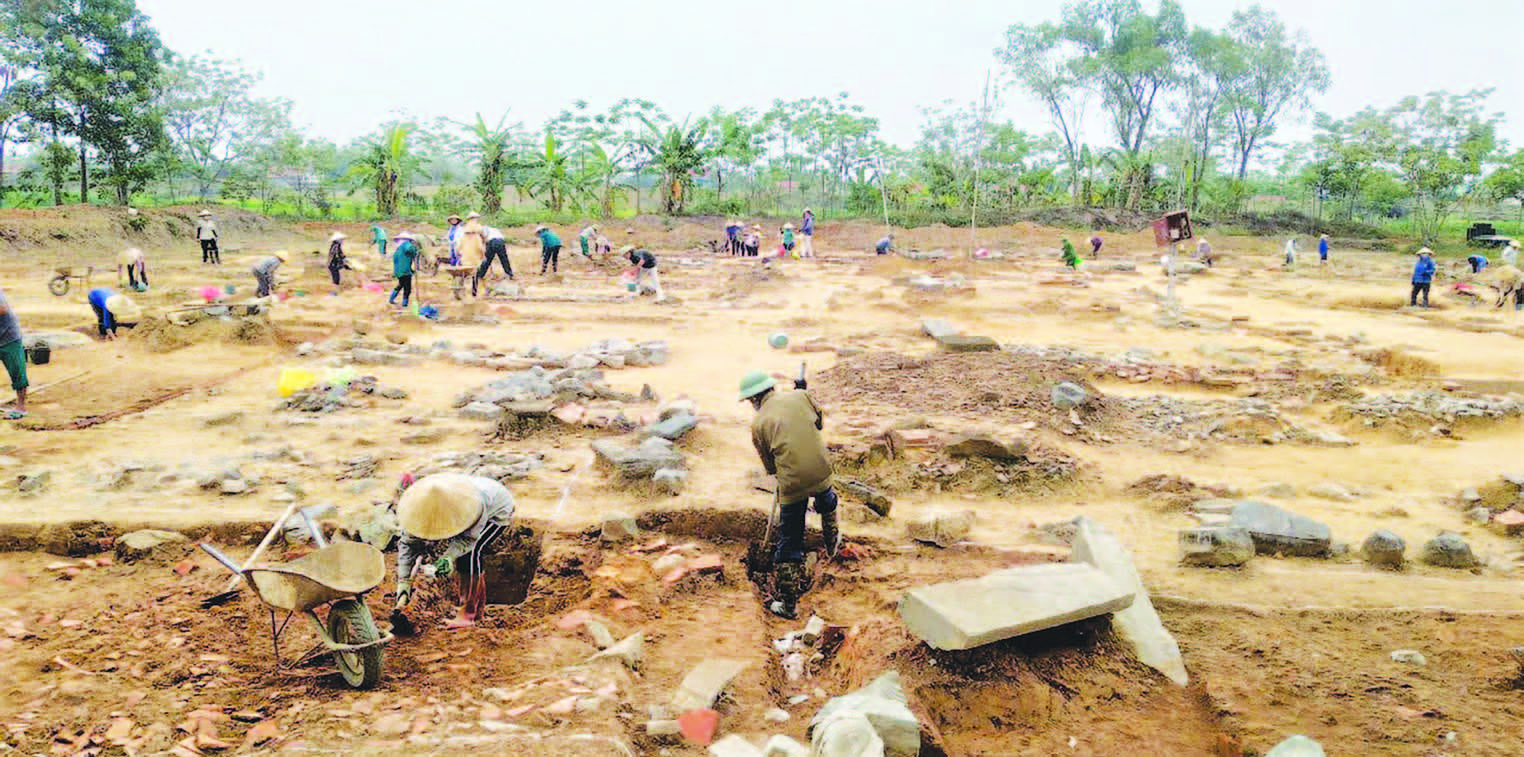
Archaeologists are excavating the Imperial Citadel.
Through soil surveys on the slopes and foothills, scientists also discovered many fragments of stone, densely mixed with soil. Traces of processing and quarrying indicate that the Ho Dynasty processed the stone in its rough form on-site, then transported it to the citadel area for finishing the construction techniques. On the An Ton mountain range, many valuable artifacts such as rusted stone quarrying tools, fragments of bowls, plates, and other household items made of earthenware from the Tran-Ho dynasties have also been found.
This crucial discovery has solved a question that has persisted for over 600 years: Where did the stones used to build the Ho Dynasty Citadel come from? The use of readily available materials transported from Thang Long (Hanoi) to construct the Ho Dynasty Citadel, combined with the efficient use of local materials (stone for the citadel), a large and disciplined workforce, and a scientific design and construction method, explains why the Ho Dynasty Citadel could be completed in just 3 months, as recorded in historical texts.
How are those massive blocks of stone, weighing tens of tons, transported?
The citadel was built from blocks of blue stone, with each slab averaging 1.5m in length, 1m in width, and 0.8m in thickness. However, many slabs were up to 7m long, nearly 2m wide, over 1m thick, and weighed tens of tons. How were these large, heavy stones transported to build the citadel?
Based on folklore such as legends about the Cong Da road, the rollers, and the stone wharf at the Ma River where stones were gathered, along with the advantageous location of An Ton mountain relative to the Ma River and Ho Dynasty Citadel, scientists have put forward a hypothesis about the process of transporting these large stone blocks: Accordingly, it is possible that the craftsmen shaped the stones on-site according to predetermined sizes, then transported them from An Ton mountain down to the Ma River (via the Yen Ton village area).
The stones would be gathered on rafts and transported downstream to the Ben Da area of Tho Don village (about 1.5km away). Then, the stones were transported along the Cong Da road to build the citadel. Currently, traces of the stone wharf and the stone transport road still remain in Tay Giai hamlet, Vinh Tien commune.
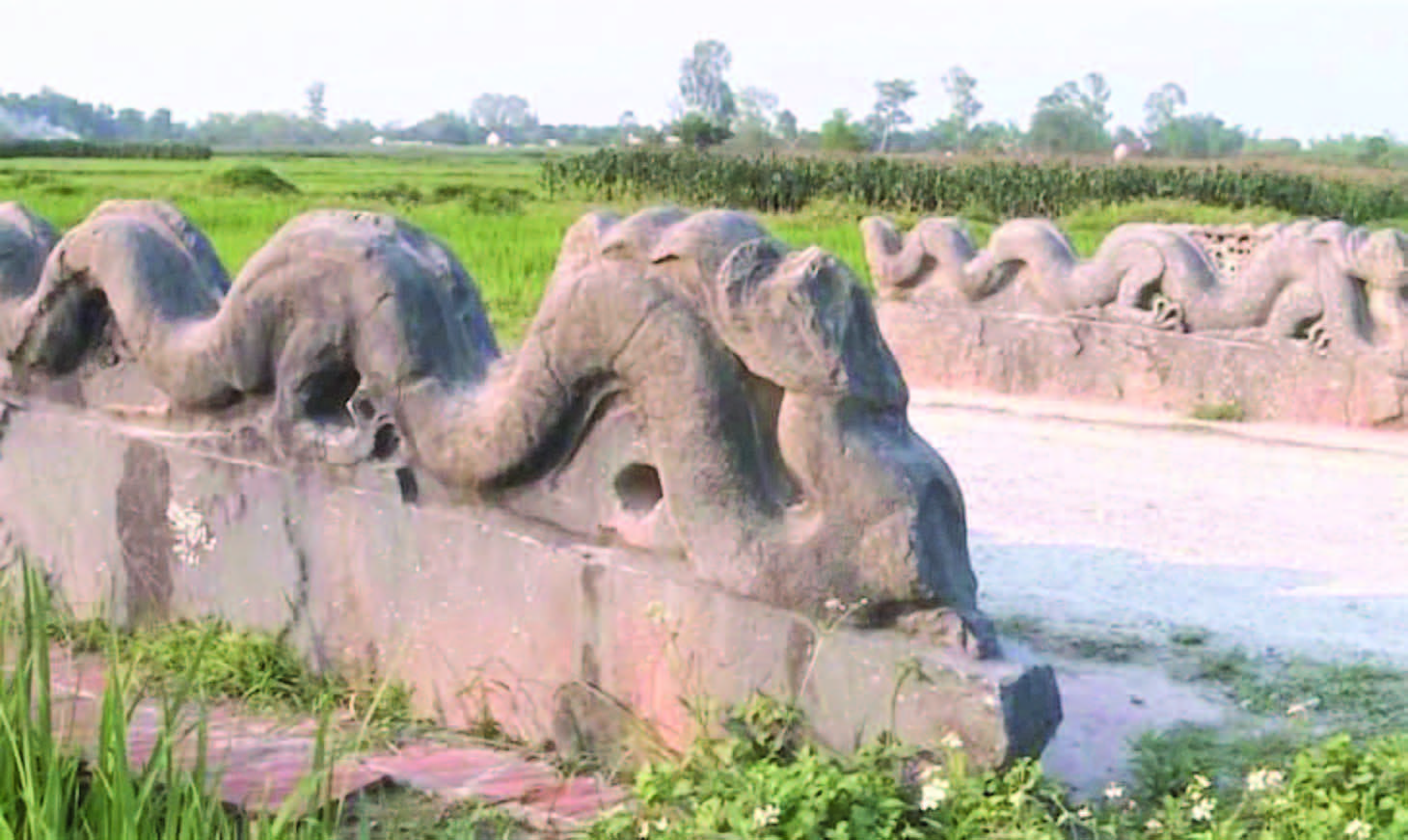
The two stone dragons are headless.
Legend has it that during the construction of the Ho Dynasty Citadel, to facilitate the transportation of large stone blocks, the Ho Dynasty dug a waterway connecting the stone quarry at An Ton Mountain to the citadel. However, due to rushed construction and work carried out at night, the waterway was dug off course from the original plan. This, by chance, created a beautiful scenic spot that exists to this day. The existence of My Xuyen Lake today testifies to the various methods used to transport the stones for the construction of the Ho Dynasty Citadel.
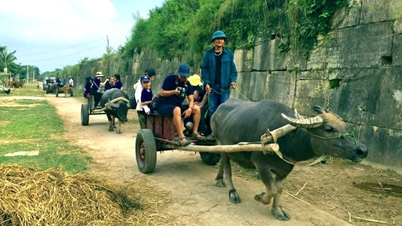
When transporting stones, the ancients used rollers, levers, the pulling power of elephants and buffaloes, and human strength. To move the stone slabs to higher levels, they built earthen ramps with a gentle slope, then gradually pulled each slab up and arranged them into a vertical wall, with the stone blocks forming a "Công" (Chinese character for "work" or "achievement") shape. Larger stones were placed at the bottom, and smaller stones on top. The soil after digging the trench was mixed with sand, gravel, and crushed stone to build the inner ramparts, compacting them firmly to prevent slippage and create an inclined surface to help pull the stones up. When completed, the outer stone wall, along with the inner earthen wall, formed a solid structure.
During archaeological excavations and the collection of artifacts from the local people, many stone balls and stone rollers of various sizes were collected. According to scientists, these were tools used to transport heavy stone blocks from the quarry to the construction site of the citadel.
The Ho Dynasty Citadel is affirmed by many cultural researchers and archaeological experts as a "breakthrough phenomenon" in the techniques of quarrying, crafting, and constructing a massive structure, with large stone blocks as the basic material. It can be said that the Ho Dynasty left behind an unprecedented achievement in construction techniques, unique and distinctive, astonishing future generations with the talent and wisdom of their ancestors.
The capital city was complete with temples, shrines, roads, palaces, and other structures.
The Ho Dynasty Citadel was built on an extremely auspicious feng shui location. It is surrounded by mountains, creating a strategic position with the Green Dragon on the left and the White Tiger on the right. Furthermore, the citadel is bordered by the confluence of two major rivers, the Ma River and the Buoi River, creating a stable and favorable geographical setting.
Currently, above the South and North gates of the citadel, there are still traces of the holes drilled into the stone for the pillars. According to scholars, these are the remaining traces of the watchtower architecture on the gates of the Ho Dynasty citadel. The pillar holes indicate that the watchtower at the South gate was larger and more magnificent than the watchtower at the North gate. This confirms the existence of special architectural structures, serving many important functions during the Ho Dynasty's establishment and nation-building. These data completely match historical records, showing that this was where the Ho Dynasty launched campaigns, expanded its territory, and achieved victories.
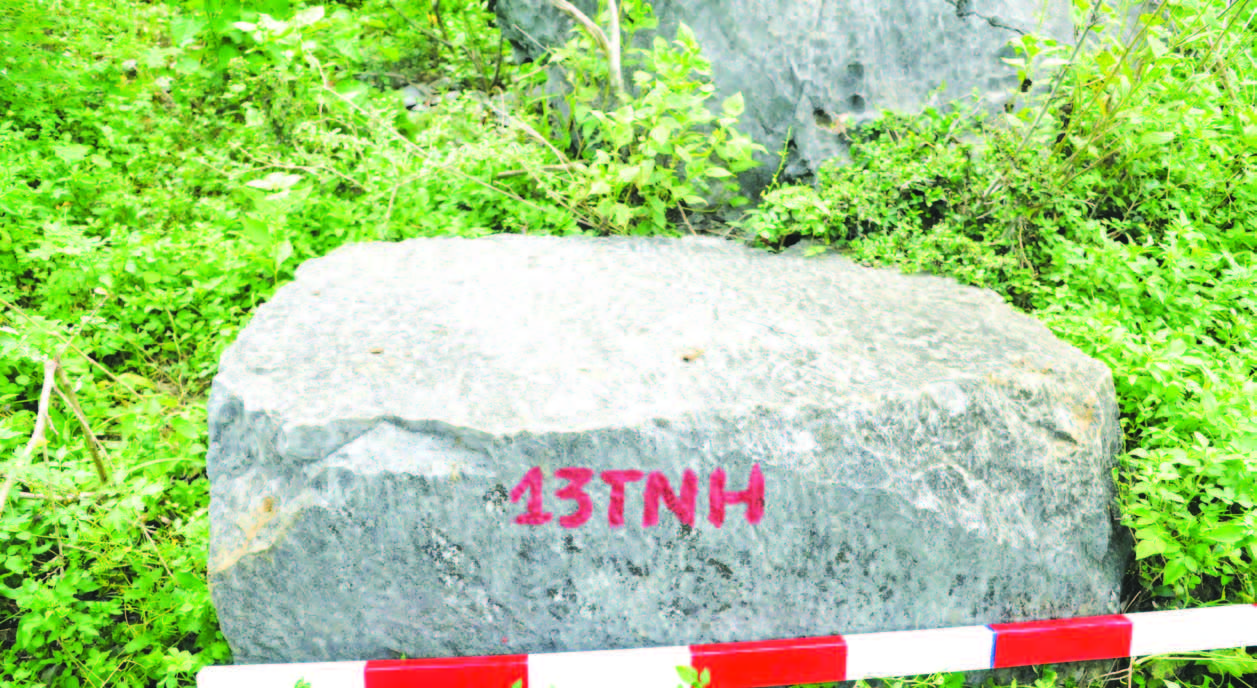
These are the remaining rocks and artifacts at An Ton Mountain, where scientists believe the Ho Dynasty brought stones to build the citadel. (Photo in the article: Provided by the author)
In the central area of Ho Citadel, the only remaining artifact is a pair of stone dragons on the steps. Many legends and anecdotes surround the mystery of these dragons – where did they come from, when were they placed, and why are their heads missing? Archaeological excavations in the inner citadel of Ho Citadel from 2019 to 2023 have gradually unraveled these mysteries and anecdotes. These stone dragons originally belonged to the main hall of the Tay Do citadel, placed in their original position on the steps leading up to the main hall of a capital city.
Currently, a road still runs along the central axis of the Ho Dynasty citadel, connecting the South Gate to the North Gate. Archaeological findings confirm that this is the Royal Road (or Imperial Road) – the road used by the Emperor, situated in the center of the capital along the North-South axis in the overall planning of ancient Eastern capitals. Along the Royal Road, archaeologists have also discovered numerous important architectural remains of the main palace of the Tay Do citadel, considered the oldest surviving remains of a main palace in the history of a Vietnamese capital discovered to date.
Excavations and archaeological research in the central area of Ho Citadel have determined that throughout its existence, there was once a complete central architectural complex, including a magnificent nine-bay main hall. The architecture of this main hall is considered the largest archaeological site discovered to date.
Furthermore, from the surviving city walls and gates, archaeology has uncovered many important structures within the Ho Dynasty Citadel, such as: Hoang Nguyen Palace (main palace), Dong Thai Mieu Temple, Tay Thai Mieu Temple, the King's Foundation, the moat, the Royal Road, and the structure of the city walls and gates. This unique and valuable system of relics and artifacts clearly demonstrates that the Ho Dynasty Citadel was an ancient capital that was meticulously planned and constructed.
Speaking with a reporter from the Health and Life Newspaper, Mr. Nguyen Ba Linh, Director of the Ho Citadel World Heritage Conservation Center, said that the Ho Citadel, throughout the history of Dai Viet civilization, has left many mysteries, questions, and debates over its more than 600 years of existence and development as the capital and ancient capital of a dynasty. Archaeological excavations over more than 10 years at this heritage site have gradually deciphered and revealed the mysteries surrounding the design, construction, existence, and development of this capital. The Ho Citadel has become a historical witness with its inherent values of global significance, earning its place on the list of world cultural heritage sites.




































































Comment (0)