

With the Dong Ho folk painting craft being inscribed on the List of Intangible Cultural Heritage in Need of Urgent Safeguarding by the United Nations Educational , Scientific and Cultural Organization (UNESCO) on December 9, 2025, Vietnam now has 17 Intangible Cultural Heritage sites inscribed by UNESCO.
The 17 intangible cultural heritage sites of Vietnam inscribed by UNESCO possess immense value, affirming the diversity, uniqueness, and profound humanistic nature of Vietnamese culture. They help preserve traditional essences, enhance Vietnam's position internationally, and promote tourism and local economic development through values such as music (Nha Nhac, Gong music), performing arts (Quan Ho, Ca Tru, Xoe Thai, Hat Xoan), beliefs (Hung Vuong worship, Mother Goddess worship), festivals (Giong festival, Via Ba festival), and handicrafts (Cham pottery, Dong Ho paintings), reflecting distinct identities and community cohesion.
Being recognized on the UNESCO list is a powerful motivation for communities to preserve and pass on these heritages to future generations, while also creating opportunities for the development of cultural tourism , the economy, and improving the lives of local people.
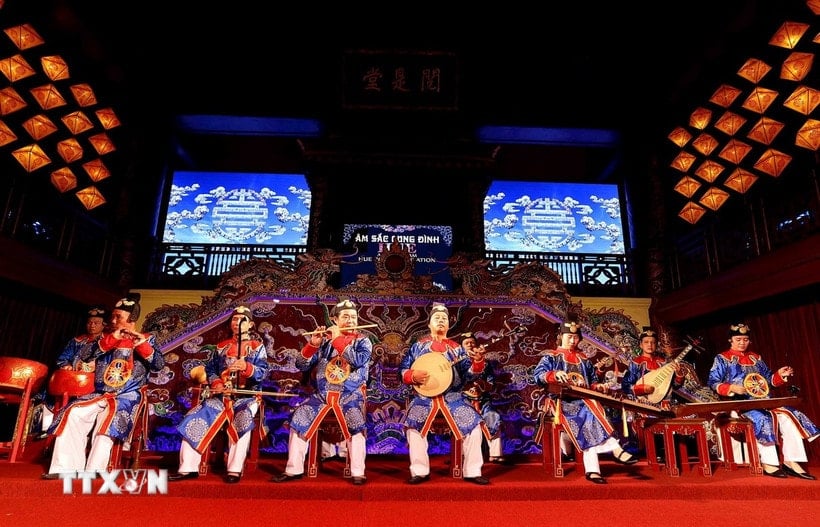
1. Hue Royal Court Music (inscribed by UNESCO in 2003)
Court music emerged in the early years of the Ly Dynasty (1010-1225). However, it was not until the Nguyen Dynasty (1802-1945) that this musical form truly flourished.
The music of court music is elegant and sacred, often performed during solemn court ceremonies, religious rituals, and was indispensable during that dynasty.
From this point on, Hue court music became closely associated with the Hue royal court and developed according to a standardized, systematic model with hundreds of musical pieces.
A distinctive feature of court music is its all-encompassing nature, encompassing all other musical genres, from ceremonial music (used in large and small court ceremonies and in temples), chamber music, theatrical music, and even dances, with each genre having its own dedicated artists for creation and performance.
The regulations regarding orchestra size, performance style, and musical content of Nha Nhac are very strict, reflecting a highly structured aesthetic framework capable of reflecting the thoughts and philosophical concepts of the contemporary monarchy.
2. The Gong Culture Space of the Central Highlands (inscribed by UNESCO in 2005)
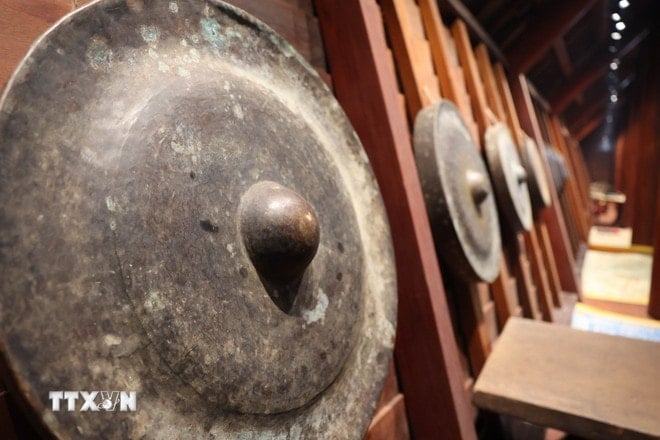
Gongs and cymbals are made from copper alloy, sometimes mixed with gold, silver, or black copper. Gongs have knobs, while cymbals do not. These musical instruments come in many sizes, with diameters ranging from 20 to 50-60 cm, and the largest ones reaching 90-120 cm.
Gongs can be used individually or in sets of 2 to 12 or 13, and in some places even up to 18-20. In a set of gongs, the mother gong (the main gong) is the most important.
Gongs can be struck with a mallet or punched with the hand. Some ethnic groups even employ techniques such as muting the sound with the left hand or creating melodies on a gong...
On November 25, 2005, the Gong Culture Space of the Central Highlands was officially recognized by UNESCO as a Masterpiece of Oral and Intangible Cultural Heritage of Humanity.
3. Quan Ho folk songs of Bac Ninh (inscribed by UNESCO in 2009)
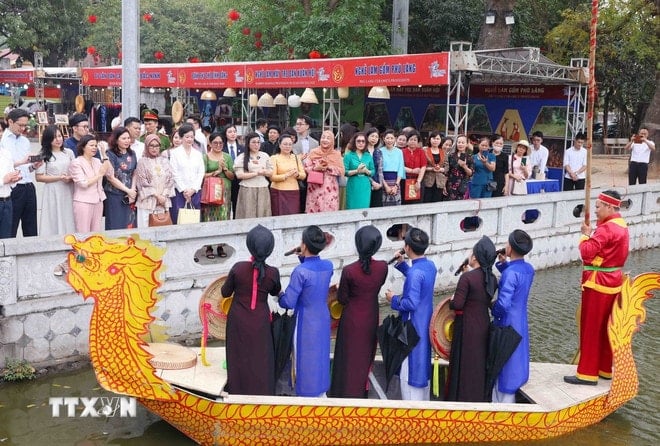
Quan Ho folk songs are a form of courtship singing. Male singers in traditional silk robes and turbans, and graceful female singers in traditional multi-layered dresses and conical hats, sing together in call-and-response style. These simple, heartfelt songs, performed without musical accompaniment, are full of musicality and reflect the refined culture of the Quan Ho people.
Most Quan Ho songs follow the six-eight meter or variations of the six-eight meter, although some are in prose form. Each Quan Ho song has its own unique melody. With a rich number of songs and melodies (over 500 songs and 213 melodies), performed with distinctive and unique singing artistry, Quan Ho folk music can be said to have reached the pinnacle of national poetry and music.
On September 30, 2009, Quan Ho folk songs of Bac Ninh were officially recognized by UNESCO as a Representative Intangible Cultural Heritage of Humanity.
4. Ca Tru art (inscribed by UNESCO in 2009)
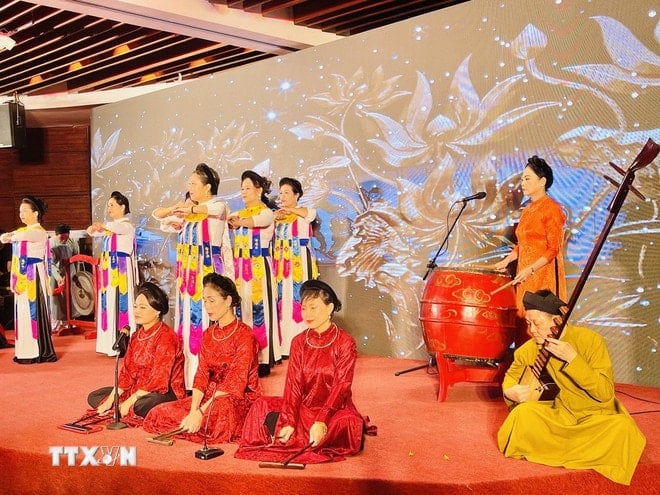
This art form, also known as "ả đào" or "cô đầu" singing, was very popular in Vietnamese cultural life from the 15th century, possessing a unique beauty that no other form of singing can replace. It is a harmonious blend of poetry, music, language, and philosophy of life – where listeners not only enjoy the singing but also perceive a cultural depth, an ancient and elegant aesthetic space.
Ca trù singing requires female singers with strong, deep, and resonant voices. The musical accompaniment for the singer includes the đàn đáy (a type of lute), a small drum (called the "trống chầu"), and a clapper (called the "cỗ phách"), all played by the singer.
In Ca Tru art, the musician and singer play the main roles. However, the person playing the ceremonial drum is both the subject and the object. The ceremonial drum produces a "tom" sound when the whip strikes the drumhead, and a "chat" sound when the whip hits the drum body.
The clappers are controlled by the singer. They are made from thick bamboo sticks, almost the size of a glass case. A pair of clappers consists of a large clapper and a smaller clapper; one heavy, one light; one round, one pointed; one split in two. The round clapper represents the yang, the split one represents the yin; the harmonious combination of yin and yang reflects the Vietnamese philosophy of life.
Each piece of music usually has an introduction. The same is true for Ca Tru singing. Before the vocals begin, five rhythmic clappers, along with drums and stringed instruments, intertwine like the sounds of silk, bamboo, and pearls gliding on a jade plate – a sound that is both heartfelt, warm, and sublime, and is repeated many times throughout the piece.
On October 1, 2009, Ca Tru was inscribed by UNESCO on the List of Intangible Cultural Heritage in Need of Urgent Safeguarding.
5. Giong Festival at Phu Dong Temple and Soc Temple (inscribed by UNESCO in 2010)
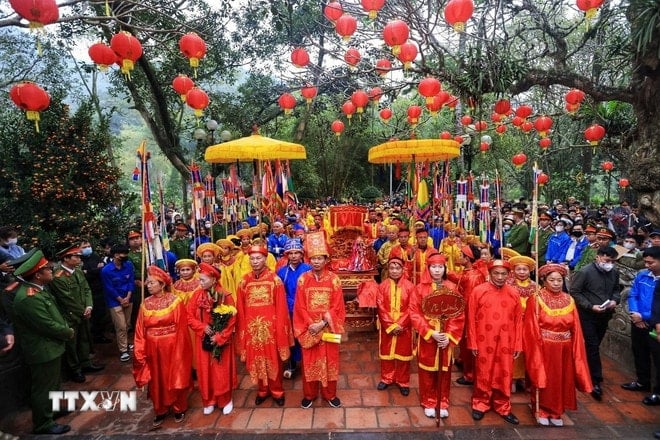
The Giong Festival at Phu Dong Temple (Phu Dong commune, Hanoi - the birthplace of Saint Giong) takes place from the 7th to the 9th day of the 4th lunar month. The Giong Festival at Soc Temple (Soc Son, where Saint Giong ascended to heaven on horseback) takes place from the 6th to the 8th day of the 1st lunar month.
This unique festival meets the criteria of a Representative Intangible Cultural Heritage of Humanity, preserved by the community, passed down from generation to generation, cherished as part of its identity, containing creations of global significance, and expressing aspirations for a prosperous life for each family, and for peace for the nation and the world.
On November 16, 2010, the Giong Festival at Phu Dong Temple and Soc Temple was officially inscribed on the List of Representative Intangible Cultural Heritage of Humanity.
6. Xoan Singing Art (inscribed by UNESCO in 2011 and 2017)

Xoan singing, also known as Lai Len singing, Dum singing, worship singing, or temple gate singing, originates from the form of singing in worship of the Hung Kings. This is one of the unique cultural activities of the people of Phu Tho.
When performed in its entirety, Xoan singing follows these stages: Worship Songs (commemorating the Hung Kings, deities, those who contributed to the people and the nation, and the ancestors of the clans), Ritual Songs (praising nature, people, production life, and community activities), Festival Songs (expressing aspirations in life and love between men and women with lyrical and joyful melodies, performed through call-and-response singing between local young men and women and the male and female singers of the Xoan troupe...).
On November 24, 2011, Xoan singing was inscribed on the List of Intangible Cultural Heritage in Need of Urgent Safeguarding. And on December 8, 2017, UNESCO removed Xoan singing from the List of Intangible Cultural Heritage in Need of Urgent Safeguarding and inscribed it on the Representative List of Intangible Cultural Heritage of Humanity.
7. The Hung Kings worship belief (inscribed by UNESCO in 2012)

According to legend, Hung Vuong was the son of Lac Long Quan (of the Dragon lineage) and Au Co (of the Fairy lineage), and was instrumental in establishing the ancient state of Van Lang. For the communities surrounding the Hung Temple area (Phu Tho province), Hung Vuong is also considered the ancestral deity associated with agriculture, teaching people how to plow fields and plant rice, bestowing spiritual energy upon the land, houses, crops, and livestock, ensuring abundant harvests.
With this profound belief, for thousands of years, the Vietnamese people have created, practiced, nurtured, and passed down the Hung Kings worship tradition to express their gratitude to their ancestral founder. The most typical manifestation of the Hung Kings worship tradition in Phu Tho is the Hung Kings Commemoration Ceremony, held annually on the 10th day of the 3rd lunar month at the Hung Kings Temple historical site.
Beyond the ancestral land, to commemorate the merits of the Hung Kings, localities throughout the country have Hung King shrines such as in Hanoi, Hai Phong, Bac Ninh, Thai Nguyen, Lang Son, Nghe An, Hue, Lam Dong, Ho Chi Minh City, etc. On the 10th day of the 3rd lunar month every year, provinces and cities organize incense offering ceremonies in accordance with the general guidelines of the Ministry of Culture, Sports and Tourism in a solemn and respectful manner, expressing gratitude and appreciation for the ancestors' merits and the nation-building efforts of the Hung Kings.
On December 6, 2012, the Hung Kings worship belief was inscribed by UNESCO on the List of Representative Intangible Cultural Heritage of Humanity.
8. Southern Vietnamese folk music (UNESCO inscription in 2013)

Don ca tai tu is a distinctive folk art form of the Southern region of Vietnam, developing from the late 19th century. It is created based on ceremonial music, court music, and the sweet, profound melodies of folk songs from Central and Southern Vietnam.
This is a unique art form of the Southern Vietnam's riverine and garden region, a delicate and harmonious blend of music, lyrics, and performance, reflecting the essence of our nation's thousand-year-old culture while also embodying the distinctive characteristics of the people of the South – hardworking, simple, honest, generous, chivalrous, courageous, and profoundly humane.
On December 5, 2013, Southern Vietnamese folk music (Đờn ca Tài tử Nam Bộ) was officially inscribed on the List of Representative Intangible Cultural Heritage of Humanity.
9. Ví and Giặm folk songs of Nghe Tinh (inscribed by UNESCO in 2014)

Ví and Giặm folk songs of Nghe Tinh are two styles of folk singing without musical accompaniment, created and passed down by the communities of Nghe An and Ha Tinh provinces during their labor and production activities, and closely associated with the daily life of the people of Nghe An.
The Ví and Giặm folk songs of Nghe An province are often performed in daily life: while rocking babies to sleep, working in the fields, rowing boats, weaving cloth, milling rice, etc. Therefore, these singing styles are named after the forms of labor and daily life, such as: Ví of the cloth weavers, Ví of the knitting weavers, Ví of the hat makers, Ví of the firewood makers, Ví of mountain climbing, Ví of boatmen, Giặm lullabies, Giặm stories, Giặm advice…
On November 27, 2014, the Ví and Giặm folk songs of Nghe Tinh were officially recognized as a representative intangible cultural heritage of humanity.
10. The Tug-of-War Ceremony and Game (UNESCO listed in 2015)

The ritual and game of tug-of-war are widely practiced in rice-farming cultures in many East Asian countries, signifying prayers for favorable weather, abundant harvests, or predictions related to the success or failure of farming endeavors.
In Vietnam, the tug-of-war ritual and game are concentrated in the midland, Red River Delta, and North Central regions, with centers in Phu Tho, Bac Ninh provinces and Hanoi city. In addition, the heritage is also regularly practiced by ethnic groups in the northern mountainous regions such as the Tay, Thai, and Giay people – who were among the earliest rice-cultivators in history.
On December 2, 2015, the tug-of-war ritual and game in Vietnam, Cambodia, South Korea, and the Philippines was officially inscribed by UNESCO on the Representative List of the Intangible Cultural Heritage of Humanity.
11. The Practice of the Tam Phu Mother Goddess Worship of the Vietnamese People (UNESCO inscription in 2016)

The Vietnamese belief in the worship of the Three Realms Mother Goddess is a blend of indigenous Vietnamese religion and elements of imported religions such as Taoism and Buddhism. From the 16th century onwards, the practice of this belief became a cultural activity with a profound influence on the social life and consciousness of the Vietnamese people.
Through the artistic combination of folk cultural elements (costumes, music, ceremonial singing, dance, folk performances in spirit possession rituals and festivals), the practice of the Three-Realm Mother Goddess worship acts as a "living museum" preserving the history and cultural identity of the Vietnamese people. Through this, the Vietnamese express their views on history, culture, gender roles, and ethnic identity. The strength and significance of the practice of the Three-Realm Mother Goddess worship lies in its ability to meet the daily needs and aspirations of people: seeking wealth, prosperity, and health.
On December 1, 2016, the Vietnamese practice of worshipping the Mother Goddess of the Three Realms was officially inscribed by UNESCO on the Representative List of the Intangible Cultural Heritage of Humanity.
12. Bài Chòi Art of Central Vietnam (UNESCO inscription in 2017)
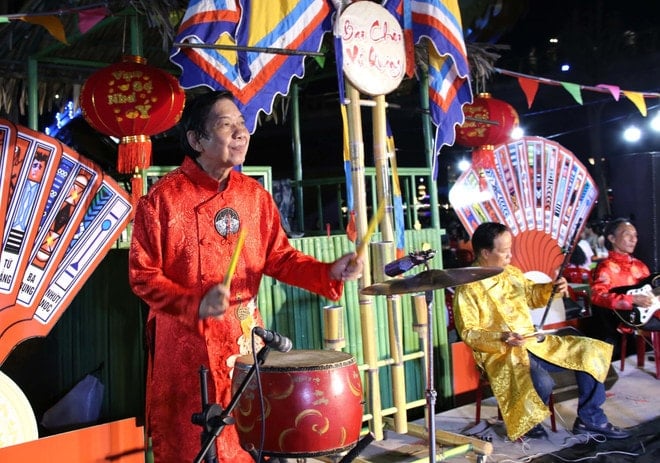
The Bài Chòi art form of Central Vietnam (in the provinces of Quang Tri, Hue, Quang Ngai, Khanh Hoa, and Da Nang…) originated from the need for communication between watchtowers in the fields and plantations.
Bài Chòi is both a form of improvisational performance art and a fun, intellectually stimulating folk game (combining music, poetry, acting, painting, and literature). It has two main forms: "Playing Bài Chòi" and "Performing Bài Chòi".
On December 7, 2017, the Bài Chòi art form of Central Vietnam was officially inscribed by UNESCO on the Representative List of the Intangible Cultural Heritage of Humanity.
13. The Then ritual practices of the Tay, Nung, and Thai people (inscribed on the UNESCO list in 2019)

Then singing is a comprehensive folk performance art form encompassing singing, music, dancing, and theatrical performance. The practice of Then is an indispensable ritual in the spiritual life of the Tay, Nung, and Thai people, concentrated in the northwestern and northeastern provinces of Vietnam, reflecting their beliefs about humanity, the natural world, and the universe.
The Then ritual is practiced in important events, New Year celebrations, or in ceremonies for peace, warding off misfortune, praying for a good harvest, going to the fields, and bestowing blessings… Then is always passed down orally during the ritual, demonstrating continuity between generations.
Then masters play a key role in transmitting the relevant skills and secrets; some Then masters perform around 200 Then rituals a year.
On December 13, 2019, the Then ritual practices of the Tay, Nung, and Thai people were officially inscribed by UNESCO on the Representative List of Intangible Cultural Heritage of Humanity.
14. Thai Xoe Dance (UNESCO inscription in 2021)

Thai Xoe dance is a unique traditional dance form that holds an important place in the lives of the Thai community in the northwestern provinces of Vietnam.
The basic movements of the Xòe dance involve raising the arms high, opening them, lowering them, grasping the hand of the person next to you, and then moving rhythmically together, with the chest slightly arched and the back leaning backward. The music for the Xòe dance also reflects the worldview and philosophy of life of the ancients.
In December 2021, the dossier on Thai Xoe dance art was inscribed by UNESCO as a Representative Intangible Cultural Heritage of Humanity.
15. Cham pottery art (UNESCO inscription in 2022)
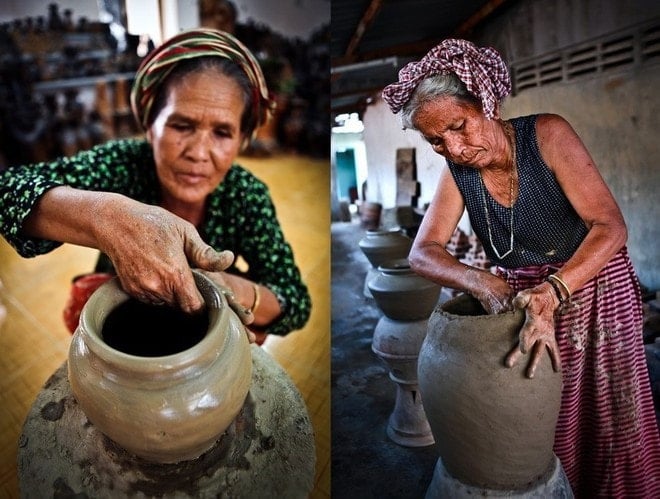
The unique pottery art of the Cham people in Bau Truc village (formerly Ninh Thuan province, now Khanh Hoa province) has existed since around the end of the 12th century.
Today, Bau Truc is considered one of the very few ancient pottery villages in Southeast Asia that still retains the rudimentary pottery production methods from millennia ago.
Instead of using a potter's wheel, the Cham woman moves backward around the raw material to shape the product. The pottery is unglazed and dried, then fired outdoors using firewood and straw for 7 to 8 hours…
However, despite numerous efforts to preserve it, the Cham pottery craft is facing the risk of extinction.
On November 29, 2022, the Cham pottery art was officially inscribed by UNESCO on the List of Intangible Cultural Heritage in Need of Urgent Safeguarding.
16. Via Ba Chua Xu Festival at Sam Mountain (UNESCO inscription scheduled for 2024)

The Via Ba Chua Xu festival at Sam Mountain takes place from the 22nd to the 27th of April in the lunar calendar, within the Ba Chua Xu temple and the stone altar area dedicated to her on Sam Mountain. It includes spiritual rituals and artistic performances, expressing the faith and gratitude of the Vietnamese, Cham, Khmer, and Chinese communities in Chau Doc, An Giang, towards Mother Earth and Motherland.
The Lady of the Land is a revered Mother Goddess in the worship of female deities, always protecting and assisting the people. The rituals and festivals dedicated to her fulfill the beliefs and aspirations for health, peace, and prosperity of the Khmer, Cham, Chinese, and Vietnamese communities in Chau Doc, An Giang, as well as residents of the Southwestern region of Vietnam.
The Via Ba Chua Xu festival at Sam Mountain is a continuation, assimilation, integration, and creation of the Vietnamese people during the process of land reclamation, and is a synthesis of the Mother Goddess worship beliefs of the Vietnamese, Cham, Khmer, and Chinese ethnic groups.
On December 4, 2024, the Via Ba Chua Xu Festival at Sam Mountain was inscribed by UNESCO as a Representative Intangible Cultural Heritage of Humanity.
17. Dong Ho folk painting craft (UNESCO inscription to be made in 2025)
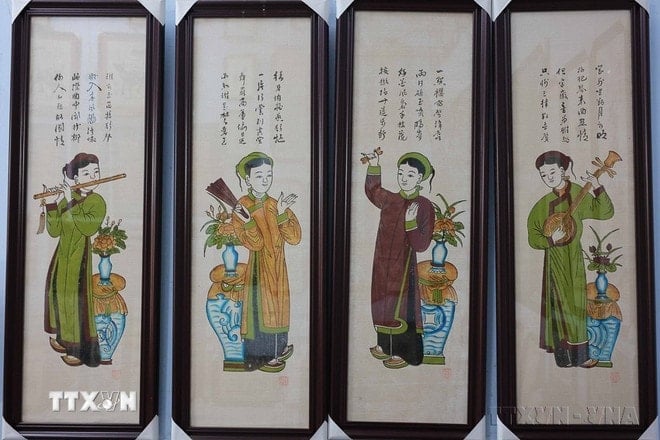
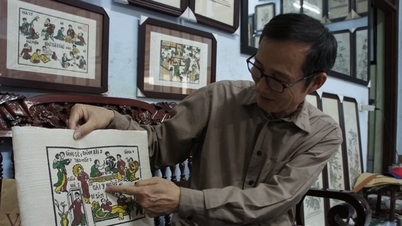
The craft of making Dong Ho folk paintings in Dong Khe neighborhood, Thuan Thanh ward, Bac Ninh province, originated approximately 500 years ago. The community practicing this craft has created paintings with unique characteristics in terms of themes, printing techniques, colors, and graphics using woodblock printing.
The themes of these paintings often include devotional paintings, celebratory paintings, historical paintings, scenes of daily life, and landscape paintings, associated with the custom of hanging paintings during the Lunar New Year, Mid-Autumn Festival, ancestor worship, and deity worship.
The more you look at Dong Ho folk paintings, the more you appreciate their profound cultural significance, containing hidden meanings, reminders, and detailed, comprehensive teachings about right and wrong in life, imbued with an optimistic, affectionate, and heartfelt outlook on life.
On December 9, 2025, the craft of making Dong Ho folk paintings was inscribed by UNESCO on the List of Intangible Cultural Heritage in Need of Urgent Safeguarding.
According to VNASource: https://baohaiphong.vn/nen-van-hoa-phong-phu-do-so-cua-dan-toc-qua-17-di-san-duoc-unesco-ghi-danh-529330.html


![[Photo] Closing Ceremony of the 10th Session of the 15th National Assembly](/_next/image?url=https%3A%2F%2Fvphoto.vietnam.vn%2Fthumb%2F1200x675%2Fvietnam%2Fresource%2FIMAGE%2F2025%2F12%2F11%2F1765448959967_image-1437-jpg.webp&w=3840&q=75)


![[Photo] Prime Minister Pham Minh Chinh holds a phone call with the CEO of Russia's Rosatom Corporation.](/_next/image?url=https%3A%2F%2Fvphoto.vietnam.vn%2Fthumb%2F1200x675%2Fvietnam%2Fresource%2FIMAGE%2F2025%2F12%2F11%2F1765464552365_dsc-5295-jpg.webp&w=3840&q=75)








































![[OFFICIAL] MISA GROUP ANNOUNCES ITS PIONEERING BRAND POSITIONING IN BUILDING AGENTIC AI FOR BUSINESSES, HOUSEHOLDS, AND THE GOVERNMENT](https://vphoto.vietnam.vn/thumb/402x226/vietnam/resource/IMAGE/2025/12/11/1765444754256_agentic-ai_postfb-scaled.png)







































Comment (0)