Hanoi seems familiar, yet it's strange.
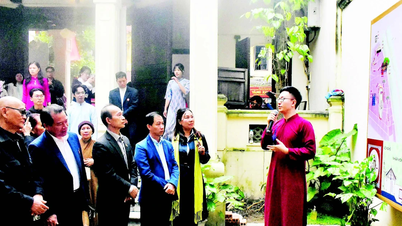
Amidst the crowds at Quan Thanh Temple, a group of tourists stopped by an electronic information board and scanned a QR code with their phones. In just seconds, the screen displayed a digital database about the temple guarding the northern part of Thang Long citadel, including digitized records from Han Nom, French, and Vietnamese texts. The emergence of digital maps and the H-Heritage app has created a completely new approach, perfectly suited to the fast-paced and convenient lifestyle of young people.
For many years, Hanoi's heritage was associated with books, signboards, or ceremonial visits. The Hanoi Heritage Tourism Journey project has changed this by digitizing all research information and placing it on an interactive map. Users simply select a destination on their phone and immediately have a complete profile: architecture, history, beliefs, and related stories. Thanks to the combination of field surveys and analysis of massive amounts of documentation in multiple languages, the information is presented clearly and coherently, making heritage sites no longer "difficult to read" as before.
The further users follow the map, the more they realize that Hanoi has many familiar and unfamiliar historical sites. The Bach Ma Temple, guarding the eastern side of Thang Long, is a name many have heard, but the legends related to its role in guiding the city's planning are rarely recounted. H-Heritage brings these details to the screen in a concrete way, helping viewers visualize the time when the deity Long Do (Dragon's Navel) was revered as the guardian deity of the capital. The Kim Ngan Temple on Hang Bac Street is another example. Young people still frequent the street on weekends, but few know that it was once the center of the goldsmithing trade, a place of worship for the founder of the craft. "The story of the trade is recreated using research materials, making the old town appear more vivid, deeper, and more attractive," Nguyen Ngoc Long (a third-year student at the University of Social Sciences and Humanities) enthusiastically shared.
The convenience of technology isn't the only attraction. The ability to independently navigate the Four Temples, the Ancestral Shrine of the Craft, or the Mother Goddess Temple transforms street walks into learning experiences. Hidden historical sites in small alleys, amidst residential areas, or right on busy streets are connected into a continuous route, helping visitors understand the spiritual structure of ancient Thang Long. A visitor from Ho Chi Minh City shared: “I used to think Hanoi only had the Temple of Literature and the Imperial Citadel. Now it turns out there are many historical sites in the middle of the city, like the Lo Ren Temple (ancestor of blacksmiths) or the Tu Thi Temple (ancestor of embroidery), which I had never heard of before.”
The project has been underway for over a year, implemented by French-Vietnamese expert teams. Dr. Nguyen Thi Hiep, the project's scientific coordinator, said the team surveyed more than 100 ancient relics and compiled dossiers for 28 representative sites. All dossiers are integrated into electronic maps and the H-Heritage application, allowing for direct searching within the heritage sites. According to her, the method combining field surveys, document analysis, and mapping helps to make relics that have existed silently amidst the city streets more clearly and coherently visible, especially for those unfamiliar with reading specialized documents.
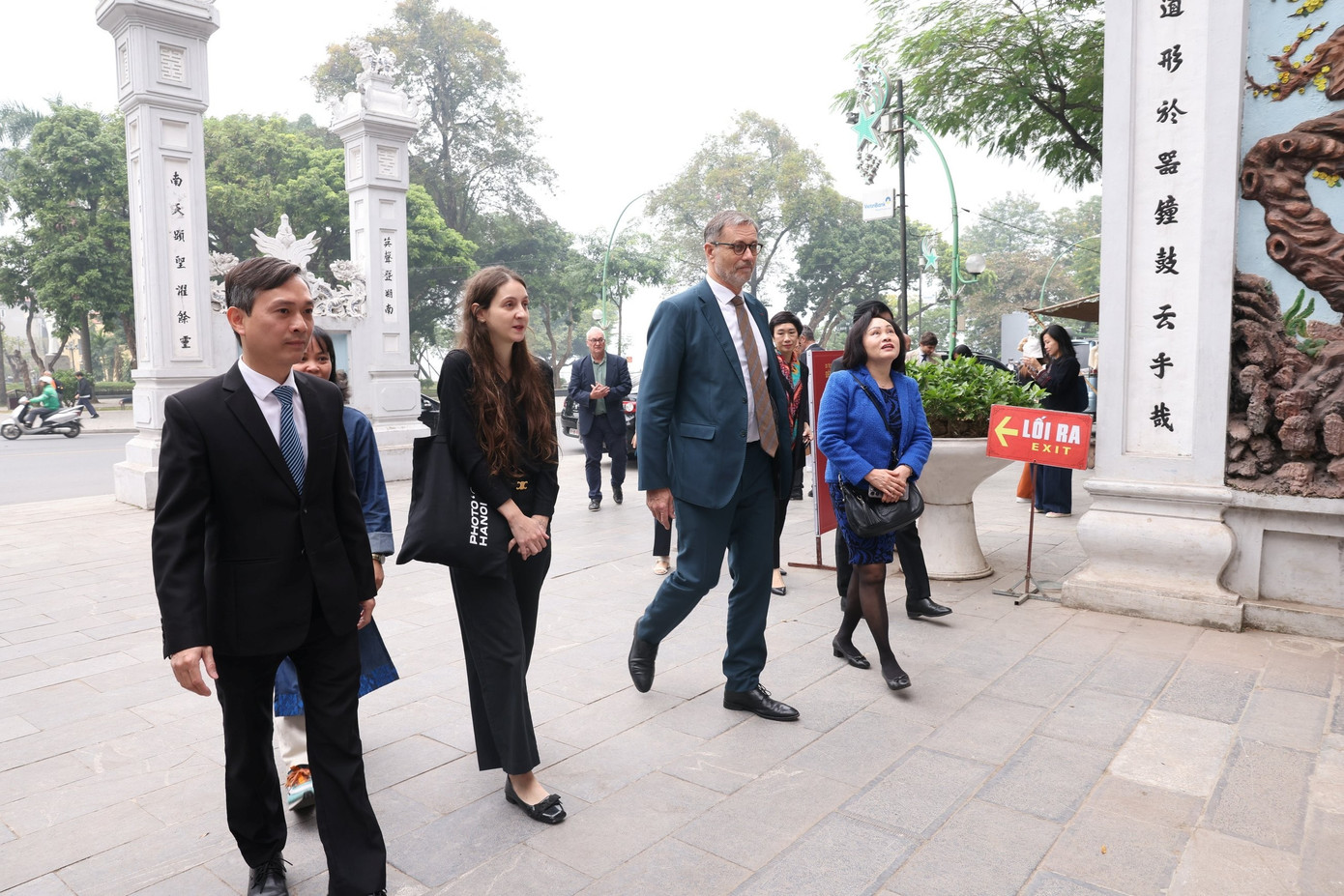
The Hanoi Heritage Tourism Journey project was implemented by French and Vietnamese expert teams over more than a year, based on field surveys and analysis of extensive documentation in French, Sino-Vietnamese, and Vietnamese.
The French Ambassador to Vietnam, Olivier Brochet, emphasized that the project “lays the foundation for a new phase: building a city that considers knowledge of heritage as a driving force for sustainable development.” According to him, the application of technology not only makes it easier for tourists to access information but also creates an effective educational tool for students, tour guides, and local communities. Heritage, when retold in an accessible way, becomes a vibrant part of urban life, rather than just symbolic tourist attractions.
Initial social impact shows that Hanoi is becoming more appealing to tourists. Those who have visited the capital before have more reasons to return and try a different way of exploring, while Hanoians have the opportunity to see the city from a new perspective. A French tourist, during a trial experience, shared: "I had passed by Dong Lac Temple several times without realizing it was the place of worship for the founder of the traditional Vietnamese craft of making traditional aprons. Thanks to the app, I understood the story and found the trip much more interesting."
4 must-try journeys
One of the program's highlights is the selection of 28 representative historical sites, divided into four routes linked to four traditional Vietnamese religious beliefs: the Four Guardian Temples, the Mother Goddess Temple, the Ancestral Temple of Crafts, and Hanoi Pagodas. The context of each route is constructed by the project based on surveys, documentation, and a method of linking heritage according to a spiritual structure.
Dr. Vu Thi Minh Huong, Member of the National Cultural Heritage Council and Vice President of the UNESCO Memory of the World Committee for the Asia-Pacific region, shared: “In reality, Hanoi has many historical sites hidden right in the middle of the city, appearing daily in people's lives but rarely known systematically. It is not by chance that the project uses images to “awaken” these historical sites. In Hanoi, where temples and pagodas can be located next to cafes, tailor shops, or old apartment complexes, the boundary between modern and traditional life is sometimes too blurred. This is what makes heritage easily obscured by the urban landscape.”
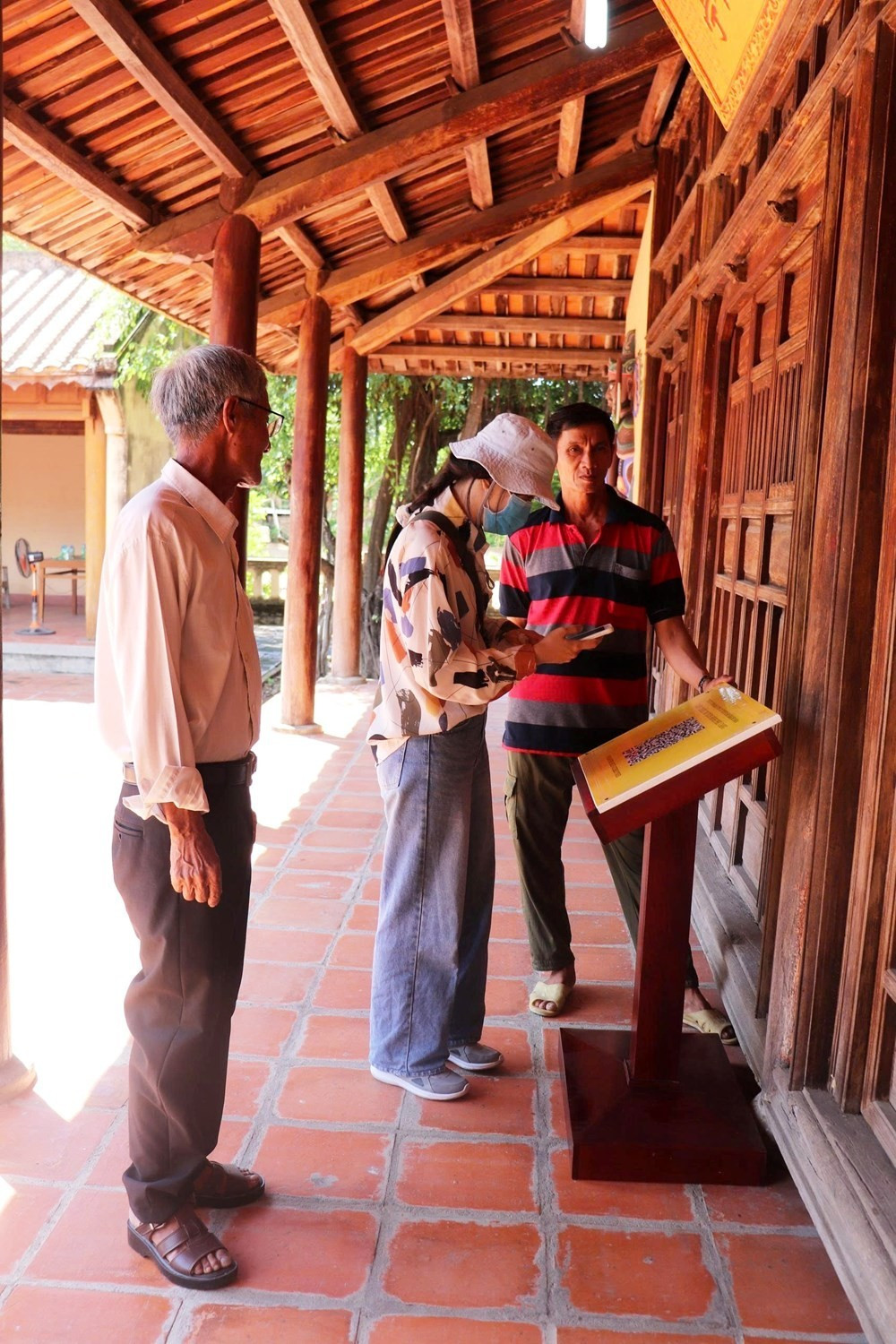
Visitors can access information directly at the heritage site via QR code.
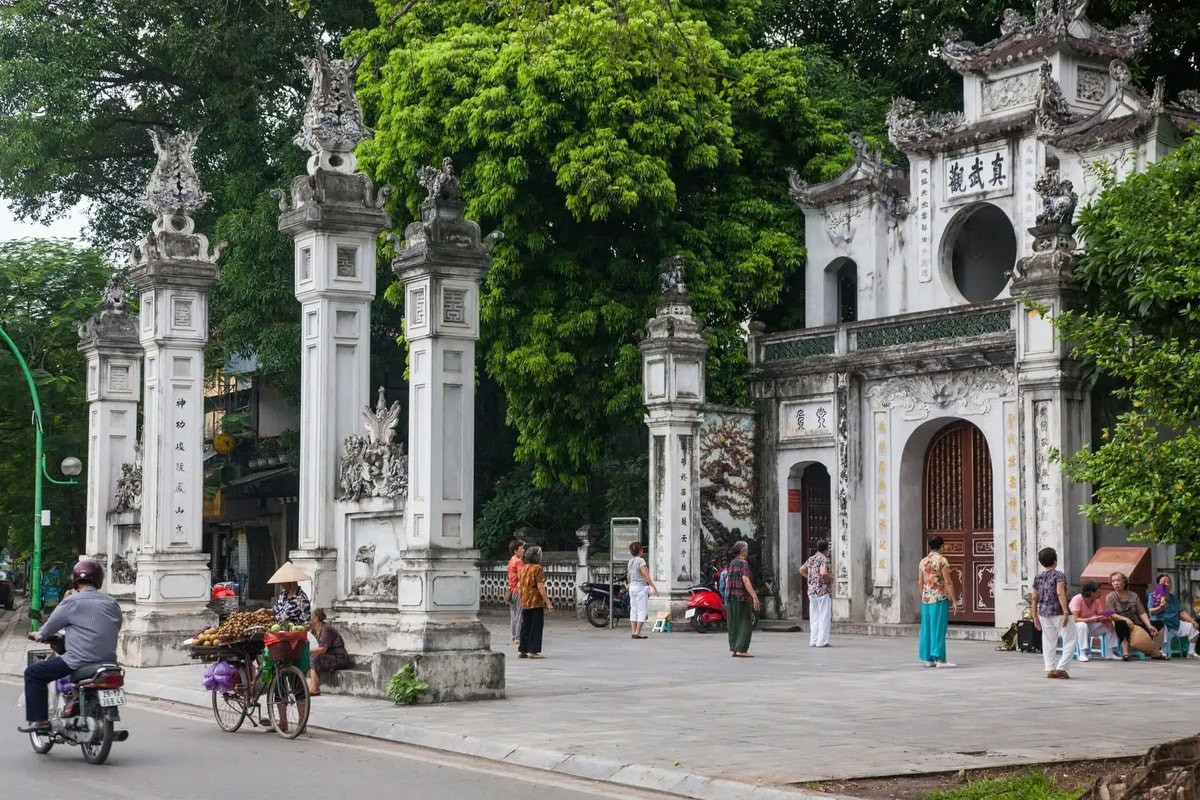
Quan Thanh Temple, located on Thanh Nien Street in Ba Dinh District, is one of the most famous temples of Thang Long's Four Guardian Temples, guarding the northern part of the capital city.
4 itineraries to explore Hanoi's heritage
Journey 1 - The Four Fortresses of Thang Long: Bach Ma, Voi Phuc, Quan Thanh, and Kim Lien, guarding the four directions (East, West, South, and North) of the capital city of Thang Long.
Journey 2 - Temples dedicated to the Mother Goddess, exploring the temples: Dong Ha, Vu Thach, Ba Kieu, Xuan Yen, Den Dau, Vong Tien, Phu Tay Ho, and the incense tree at Long Bien train station.
Journey 3 - Temples dedicated to the patron saints of traditional crafts: Kim Ngan (patron saint of jewelry making), Dong Lac (patron saint of traditional Vietnamese blouse making), Pha Truc Lam (patron saint of leather and footwear making), Ha Vi Temple (patron saint of lacquer painting), Phuc Hau Temple (patron saint of mirror making), Tu Thi Temple (patron saint of embroidery), Lo Ren Temple (patron saint of blacksmithing), Ngu Xa Temple (patron saint of bronze casting).
Journey 4 - Hanoi Pagodas: A journey that recreates the historical and spiritual flow of Thang Long, telling the story of loss, rebirth, reconstruction, and preservation of heritage.
Ms. Huong cited the example of the numerous ancestral temples dedicated to traditional crafts in Hanoi's Old Quarter. In the face of rapid urban development, these historical sites are sometimes only mentioned briefly in tourist guides. Including them in itineraries, alongside clear historical information and digital maps, makes them appear as vibrant memory stations, allowing locals and tourists to not only see the architecture but also understand the role of each craft in Hanoi's life.
The new route also shows how heritage preservation in a modern urban context is not just about restoration and repair, but also about creating an accessible knowledge system. When people understand heritage, they can participate in protecting it, from preserving the surrounding space to how they behave in religious activities.
Source: https://tienphong.vn/ngo-ngang-di-san-an-minh-giua-long-ha-noi-post1803576.tpo





![[Photo] General Secretary and President To Lam and the President of the Philippines hold talks.](https://vphoto.vietnam.vn/thumb/1200x675/vietnam/resource/IMAGE/2026/06/01/1780286997787_anh-man-hinh-2026-06-01-luc-11-09-43.png)




































































Comment (0)