


This is the main result of the project "Research on the exploitation and development of yellow-flowered and rocky mountain corn genetic resources for the northern highlands" carried out by the research team of the Northern Mountainous Region Institute of Agricultural and Forestry Science and Technology. This task is part of the Program for Conservation and Sustainable Use of Genetic Resources until 2025, with a vision to 2030.
Based on the assessment of the agrobiological characteristics of two local maize varieties, the research team developed a detailed description of the genetic material's characteristics and successfully restored the original seed source. The restoration results allowed for the production of seeds that met technical standards, serving for reproduction and breeding on a larger scale.

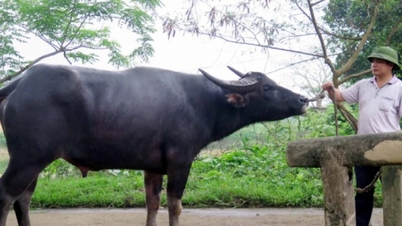
Illustrative image.
Alongside the restoration process, the project has completed two seed production processes for both yellow field corn and mountain sticky corn, including seed production processes at various levels and cultivation and preservation processes suitable for high-altitude mountainous conditions. Two cultivation models using the restored seeds showed significantly improved yields compared to un-restored seeds, contributing to increased economic efficiency for growers.
Besides the genetic material, the project also aims to perfect the processing model for traditional corn products, ensuring food safety and orienting towards value-added development. The scientific information obtained on the agrobiological characteristics of local genetic resources will not only serve conservation efforts but also provide important data for the future development of new varieties.
The research findings have provided a scientific basis for the restoration and preservation of yellow field corn and mountain sticky corn varieties. The restored corn varieties have stable yields and quality. The cultivation and preservation processes help producers improve the yield and quality of yellow field corn and mountain sticky corn kernels.
The cultivation model for yellow field corn using restored varieties and applying established cultivation processes resulted in a yield increase of 18.5-21.1% and an economic efficiency increase of 34.6-47.0% compared to non-restored varieties.
The model for cultivating glutinous corn on rocky mountains using restored varieties and applying four established cultivation processes has resulted in a 18.6-21.1% increase in yield and a 43.5-47.7% increase in economic efficiency compared to non-restored varieties.
The granting of special approval for the circulation of yellow field corn and mountain sticky corn varieties will provide a legal basis for the production and business activities of specialized units in the locality.
The scientific products, technical processes, and seed sources created provide a foundation for localities in the northern mountainous region to apply, maintain, and sustainably develop the genetic resources of yellow-flowered and mountain-dwelling glutinous corn, while also increasing income for people in the highlands.
Source: https://mst.gov.vn/khai-thac-va-phat-trien-nguon-gen-ngo-dia-phuong-cho-vung-nui-cao-phia-bac-197251211165132333.htm
![[Photo] Closing Ceremony of the 10th Session of the 15th National Assembly](/_next/image?url=https%3A%2F%2Fvphoto.vietnam.vn%2Fthumb%2F1200x675%2Fvietnam%2Fresource%2FIMAGE%2F2025%2F12%2F11%2F1765448959967_image-1437-jpg.webp&w=3840&q=75)









































![[OFFICIAL] MISA GROUP ANNOUNCES ITS PIONEERING BRAND POSITIONING IN BUILDING AGENTIC AI FOR BUSINESSES, HOUSEHOLDS, AND THE GOVERNMENT](https://vphoto.vietnam.vn/thumb/402x226/vietnam/resource/IMAGE/2025/12/11/1765444754256_agentic-ai_postfb-scaled.png)










































Comment (0)