

The project "Research on the exploitation and development of genetic resources of specialty rice varieties (Nếp Bản Luốc, Khẩu Mường Lò, and Khẩu Tan Đón) towards commercial production in some northern mountainous provinces" has been implemented from 2023–2025, led by the Center for Plant Resources.
The main objective of the project is to focus on exploiting, developing, and standardizing three specialty rice gene pools, namely Ban Luoc sticky rice, Khau Muong Lo sticky rice, and Khau Tan Don sticky rice, towards commercial production, gene pool conservation, and enhancing socio -economic value for the northern mountainous region.

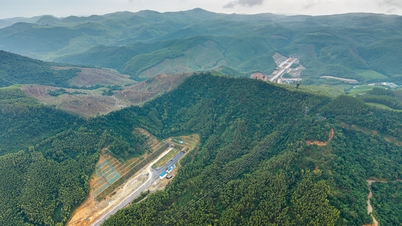
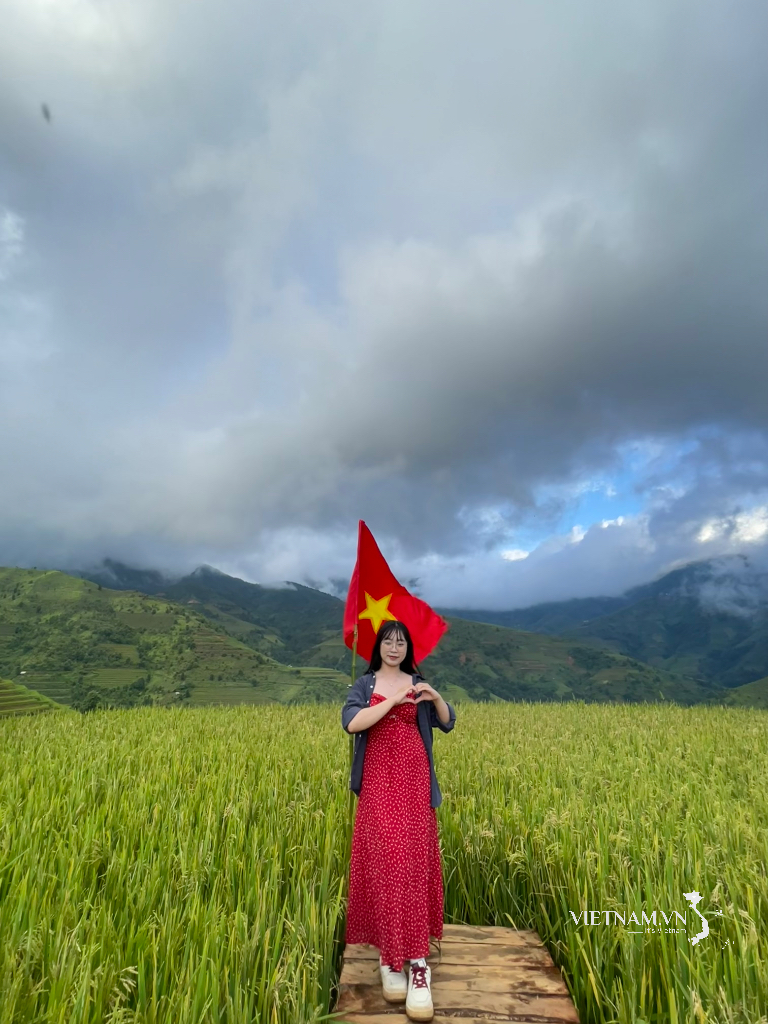
Illustrative image.
The project has completed a scientific database describing the current production status, agrobiological characteristics, pest and disease resistance, and rice quality of three specialty rice varieties.
This database is recognized as a specialized resource for the conservation, breeding, and sustainable management of agricultural genetic resources. Simultaneously, the research team successfully registered the DNA barcodes of three specialty rice varieties on the NCBI International Gene Bank, creating a tool for accurate identification and traceability, contributing to the protection of intellectual property rights for indigenous genetic resources.
Regarding breeding results, the research team produced 300 kg of super-elite seeds meeting the national quality standard QCVN 01-54:2011/BNNPTNT. In addition, the project completed the technical cultivation process suitable to the ecological conditions of each locality, providing a basis for expanding the area of specialty rice cultivation in mountainous provinces.
Three production models, each covering 10 hectares, were established in Ha Giang (Ban Luoc sticky rice), Lai Chau (Muong Lo sticky rice), and Lao Cai (Tan Don sticky rice).
The model results show a significant increase in economic efficiency. For the Ban Luoc sticky rice variety in Ha Giang, economic efficiency increased by 19.4–20.0% compared to the production of un-restored varieties and traditional methods. In the Khau Muong Lo model in Lai Chau, efficiency increased by 17.9–18.5%, while the Khau Tan Don variety in Lao Cai achieved an increase of 16.4–18.2%. These models also contribute to improving rice quality, standardizing processes, increasing people's income, and laying the groundwork for expanding production.
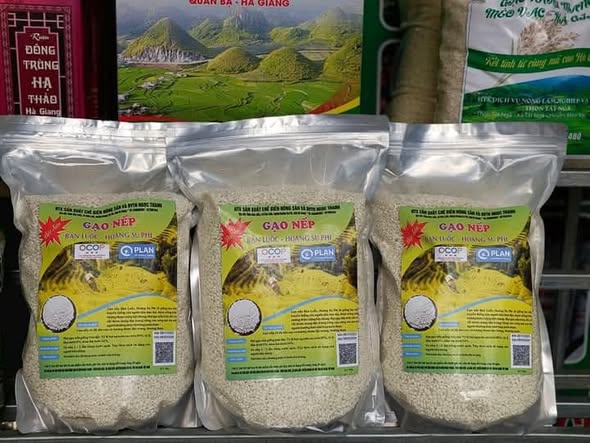
Ban Luoc sticky rice has been certified as a 3-star OCOP product.
In terms of social impact, the project actively contributes to the conservation and development of valuable indigenous genetic resources, while creating new value chains for specialty agricultural products in mountainous areas. Products such as Ban Luoc sticky rice have been certified with a 3-star OCOP rating, facilitating the development of products linked to agricultural tourism. The project also helps improve the production capacity and technical skills of the people through training and technology transfer, with 77 farming households directly participating in and benefiting from the model.
Source: https://mst.gov.vn/hoan-thien-co-so-du-lieu-va-mo-hinh-san-xuat-cho-ba-giong-lua-dac-san-mien-nui-phia-bac-197251211145642065.htm

![[Photo] Closing Ceremony of the 10th Session of the 15th National Assembly](/_next/image?url=https%3A%2F%2Fvphoto.vietnam.vn%2Fthumb%2F1200x675%2Fvietnam%2Fresource%2FIMAGE%2F2025%2F12%2F11%2F1765448959967_image-1437-jpg.webp&w=3840&q=75)







































![[OFFICIAL] MISA GROUP ANNOUNCES ITS PIONEERING BRAND POSITIONING IN BUILDING AGENTIC AI FOR BUSINESSES, HOUSEHOLDS, AND THE GOVERNMENT](https://vphoto.vietnam.vn/thumb/402x226/vietnam/resource/IMAGE/2025/12/11/1765444754256_agentic-ai_postfb-scaled.png)







































Comment (0)