

From the practice of management, operation and production expansion, the Cooperative has drawn many important experiences and proposed sustainable development solutions for the collective economic sector in the new period.

From professional human resources...
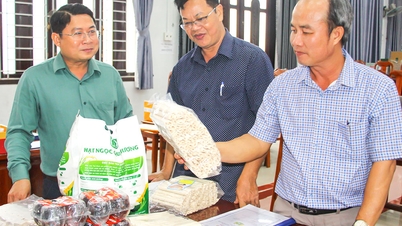
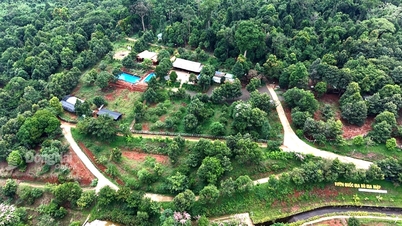
When it was first established (in 2016), Chuc Son Clean Vegetable and Fruit Cooperative had only 16 members, now it has grown to 73 members, managing a VietGAP production area of 31.7 hectares and consuming more than 1,013 tons of vegetables each year. The cooperative's operating model not only helps improve farmers' income, but also creates regular jobs for 62 local workers, 100% of whom participate in social insurance and health insurance. Expected revenue is more than 30 billion VND in 2025.
From that effortful process of development, Chairman of the Board of Directors and General Director of Chuc Son Clean Vegetable and Fruit Cooperative Hoang Van Tham has drawn a series of lessons. Accordingly, the first factor that creates sustainability is propaganda, mobilization and building trust among each member. "Members must truly see themselves as the subject, the direct beneficiary of the development of the cooperative, in order to be able to accompany for a long time," Mr. Hoang Van Tham emphasized.
The Cooperative maintains monthly member meetings and organizes congresses in accordance with regulations, publicly discloses production and business plans, financial results and development strategies. Transparency and respect for the role of members help the Cooperative expand its scale quickly, mobilize internal resources, especially capital contributed by farmers themselves, which is an important factor when the Cooperative needs to expand its production area.
Another factor contributing to the success of Chuc Son Clean Vegetable Cooperative is the central role of the Board of Directors and the leader. The Chairman of the Board of Directors must have both practical experience in agricultural production and the capacity to manage human resources, markets and finances.
“A cooperative cannot be strong if the director is not strong,” Mr. Tham shared. According to him, the cooperative leader must have a medium-term vision to orient production, choose crops, markets and appropriate linkage models, and at the same time maintain a balance between members’ income, workers’ rights and savings for cooperative development. This is also an important criterion for agricultural cooperatives to transform from a small-scale production model to a collective economic model operating according to market demand.
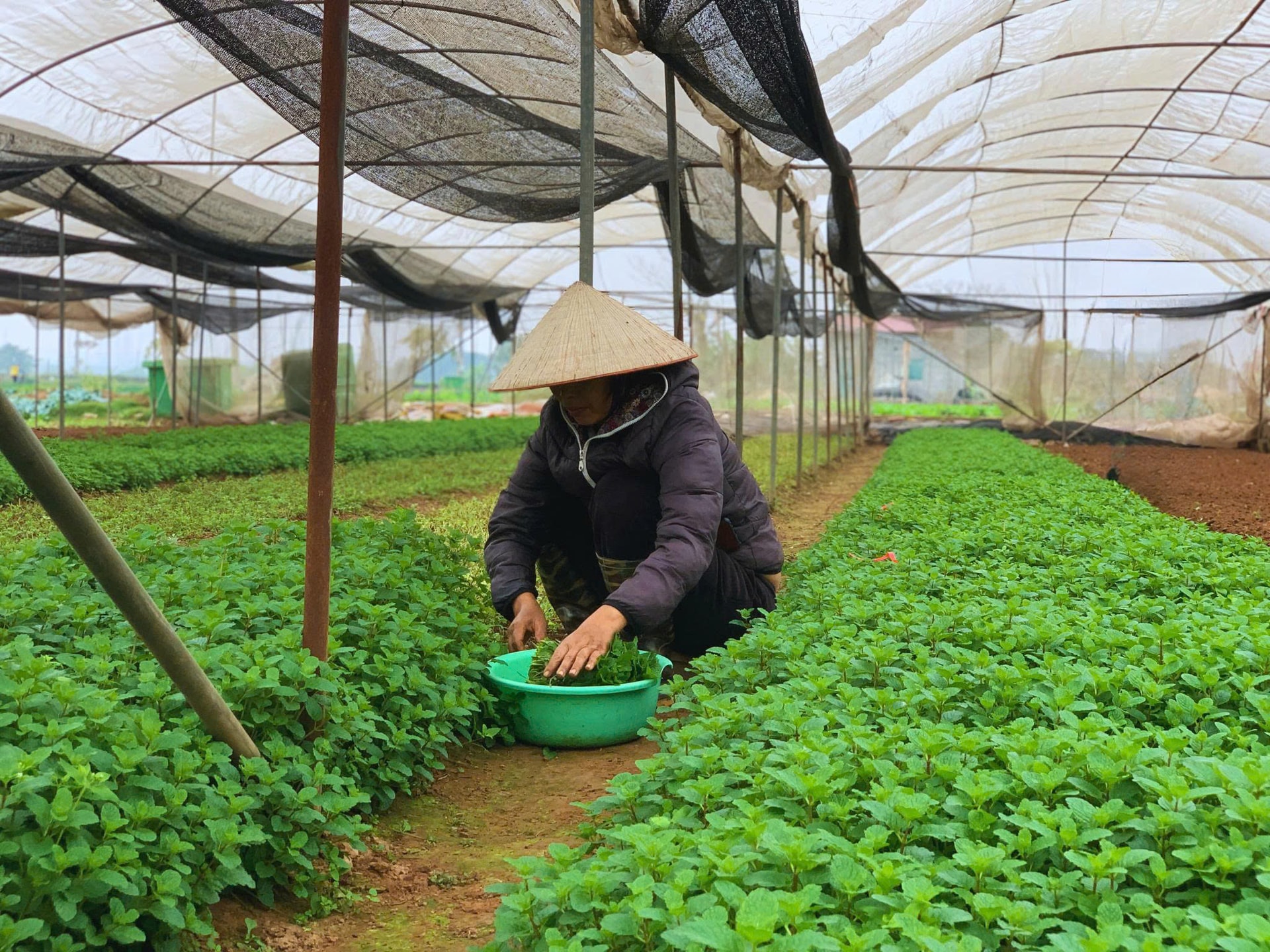
In addition, professional human resources are a prerequisite for an effective operation of a cooperative. The cooperative has built a team of personnel with expertise in agriculture, business administration, accounting, and engineering, helping the cooperative organize production according to processes, manage quality, control costs, and ensure transparency in operations.
At the same time, the Cooperative focuses on training the general labor force, helping people access new techniques, ensuring consistent product quality, meeting the strict requirements of supermarkets, collective kitchens and clean agricultural product store chains.
...to a strategic move in the digital economy
Digital transformation is considered one of the breakthroughs of Chuc Son Clean Vegetable and Fruit Cooperative. The Cooperative has applied technology to trace origin, production management, human resource management, crop planning, consumption monitoring and financial management. Applying the Internet of Things (IoT) to production helps manage soil conditions, temperature, humidity more effectively, reduce disease risks, and ensure products meet VietGAP standards. "Technology helps us make the process transparent, meet the requirements of purchasing businesses and create trust for consumers. This is an indispensable step if the Cooperative wants to participate deeply in the value chain," Mr. Tham affirmed.

To solve the problem of investment capital, the Cooperative has prioritized internal capital mobilization, considering members' capital contributions as a responsibility and an opportunity to increase benefits. Thanks to this approach, the Cooperative has been financially proactive, not dependent much on external support, and at the same time, raising the members' sense of commitment to common activities.
To develop sustainable agricultural cooperatives, Mr. Hoang Van Tham also recommended that the commune and ward authorities strongly decentralize the implementation of cooperative support policies, helping cooperatives access resources faster and more substantially; strengthen in-depth training for cooperative directors on governance, operational skills, market analysis and development strategy development. The State continues to support policies associated with the value chain, such as: Favorable land access mechanisms; credit support; support for innovation, application of high technology, digital technology; development of production management software, traceability; circular and ecological models and OCOP product development..., helping cooperatives participate deeply in the market, creating sustainable output for agricultural products.
According to the Hanoi Department of Agriculture and Environment, the experience of Chuc Son Clean Vegetable and Fruit Cooperative is an important suggestion for the collective economic sector in general in the context of Hanoi promoting the restructuring of the agricultural sector and building new rural areas in the new phase. This can be considered an important suggestion for many agricultural cooperatives facing the challenge of transforming their operating models according to the Law on Cooperatives 2023.
Source: https://hanoimoi.vn/hop-tac-xa-rau-qua-sach-chuc-son-diem-sang-voi-vung-san-xuat-hon-30ha-vietgap-725582.html
![[Photo] Cat Ba - Green island paradise](/_next/image?url=https%3A%2F%2Fvphoto.vietnam.vn%2Fthumb%2F1200x675%2Fvietnam%2Fresource%2FIMAGE%2F2025%2F12%2F04%2F1764821844074_ndo_br_1-dcbthienduongxanh638-jpg.webp&w=3840&q=75)








































![[VIMC 40 days of lightning speed] Hai Phong Port determined to break through, reaching the target of 2 million TEUs by 2025](https://vphoto.vietnam.vn/thumb/402x226/vietnam/resource/IMAGE/2025/12/04/1764816441820_chp_4-12-25.jpeg)


































Comment (0)