

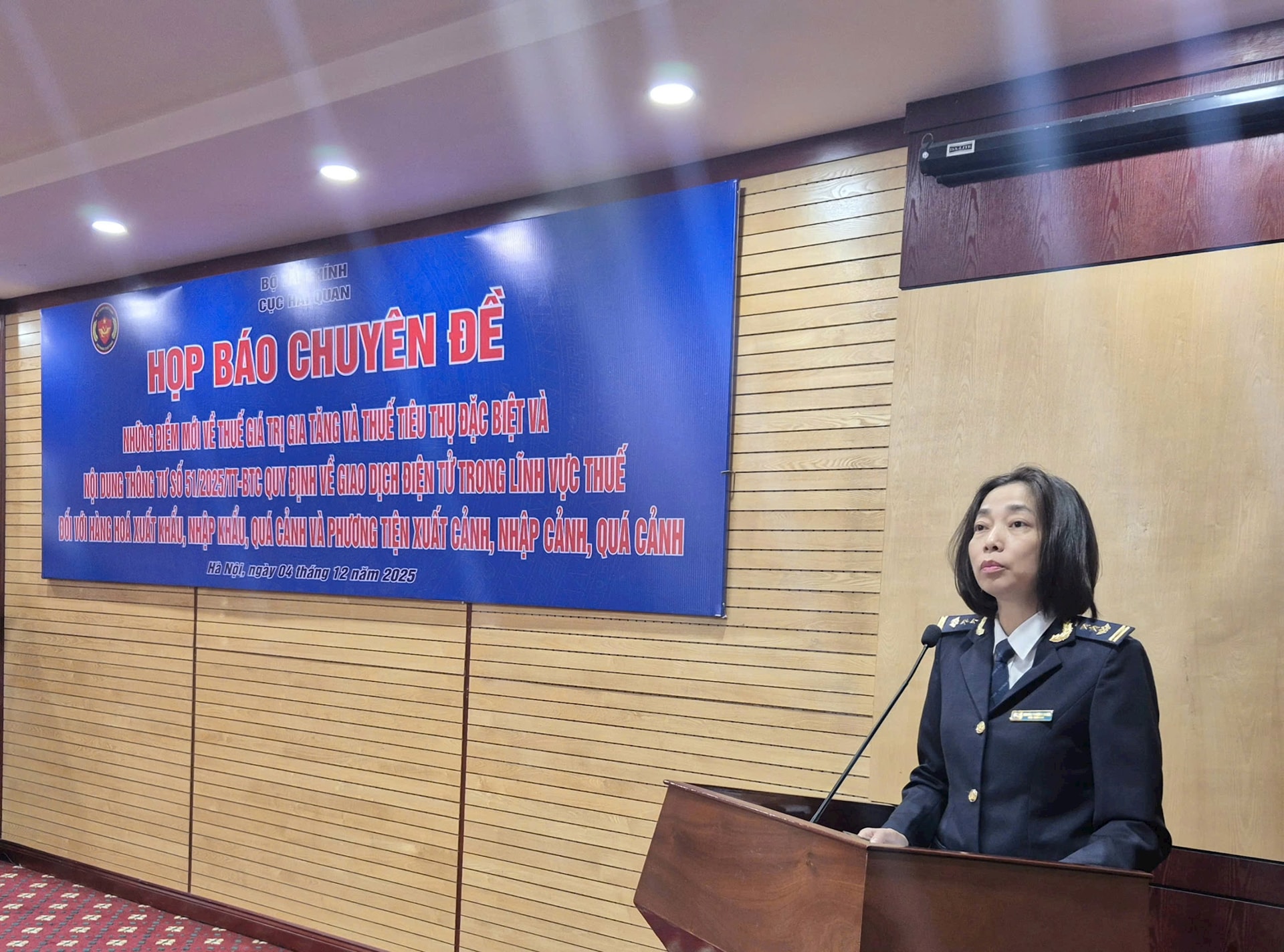
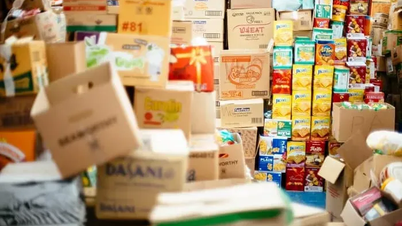
According to a representative of the Customs Department, from February 18, 2025, the exemption of value-added tax (VAT) for small-value imported goods via express delivery services will be abolished.
From that time to September 15, 2025, customs collected 1,082 billion VND in VAT on low-value goods.
Regarding the Law on VAT effective from July 1, 2025, a Customs representative said that a number of groups of goods not subject to VAT have been added.
These are goods imported from abroad by financial leasing companies that are transported directly into duty-free zones for financial leasing to enterprises in duty-free zones; exported products are resources and unprocessed minerals and exported products are resources and processed minerals according to the list prescribed by the Government in accordance with the State's orientation on discouraging exports and restricting exports; assets moving within the import tax exemption limit according to law.
In addition, there are goods bought, sold, and exchanged to serve the production and consumption of border residents according to regulations and within tax-free limits; national relics, antiques, and treasures according to the provisions of the law on cultural heritage imported by competent state agencies.
Meanwhile, the Law has stricter regulations on transferring goods from non-VAT subject to VAT subject to narrow down the non-taxable subjects...
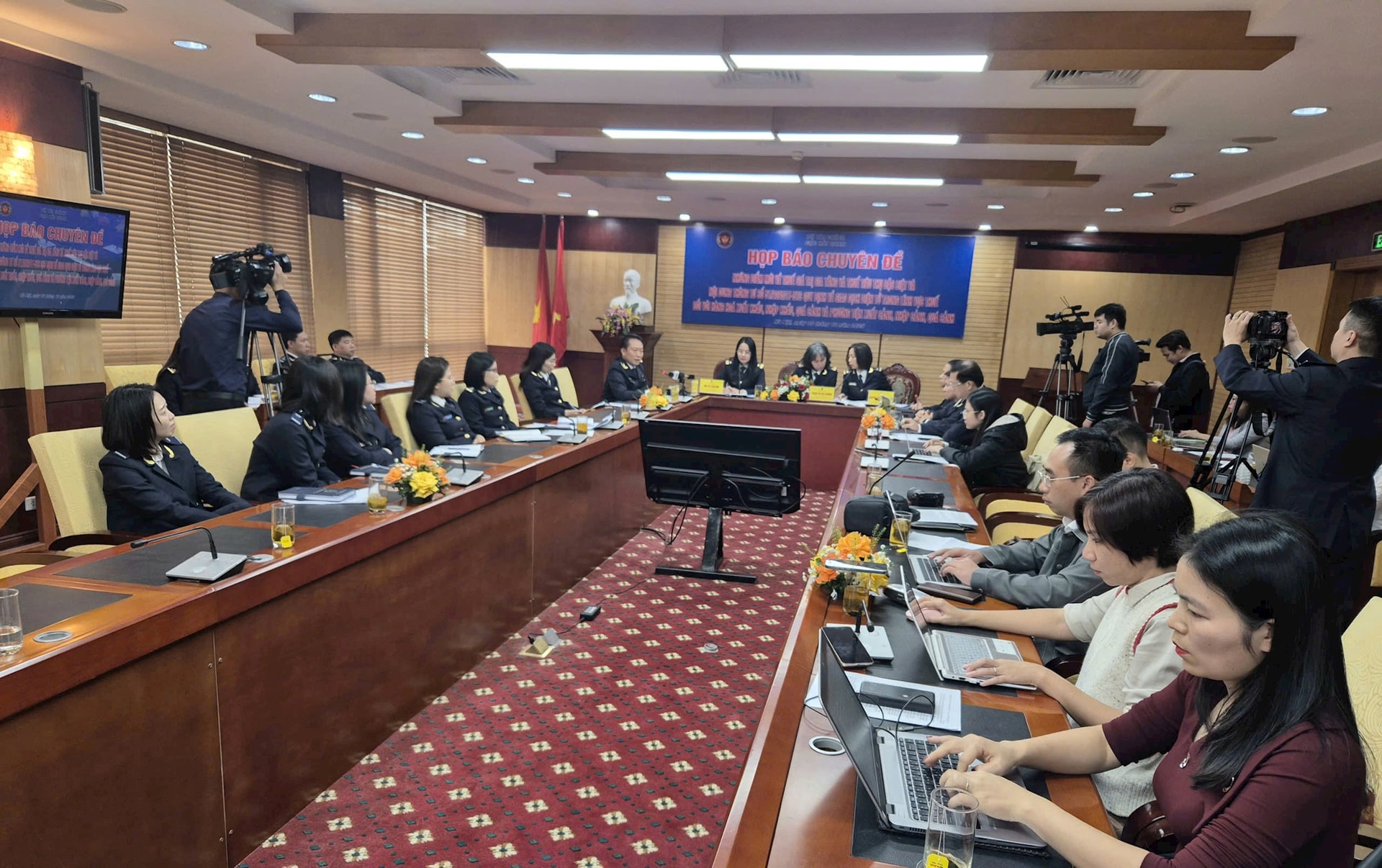
With the Law on Special Consumption Tax (SCT), effective from January 1, 2026, a number of new points create favorable conditions for businesses. That is, the Law removes the regulation that air conditioners with a capacity of 24,000 BTU or less are subject to SCT, creating favorable conditions for manufacturing, importing, and distributing businesses, helping to reduce product costs.
The Law also expands the cases not subject to special consumption tax, including: Goods manufactured, processed or hired for processing for export abroad; goods exported abroad for which special consumption tax has been paid and returned by the foreign side upon import; certain types of cars running within the scope of historical sites, hospitals, and schools; helicopters and gliders used for rescue, search and rescue, and pilot training.
Additional conditions for deduction and refund of special consumption tax include the following cases: Imported raw materials for production/processing of export goods; dissolved or bankrupt enterprises with remaining tax amount not fully deducted; tax refund according to international treaties.
However, some groups of goods have stricter regulations, such as adding soft drinks with sugar content over 5g/100ml to the taxable objects; tightening management of tobacco, alcohol and beer products.
The Law also stipulates more clearly the subjects of special consumption tax to avoid problems arising during implementation, such as the regulation that the subjects of tax are airplanes, helicopters, and gliders (replacing the concept of "airplanes" in general); regulations on votive paper and goods not including votive paper are children's toys and teaching aids...
The representative of the Customs Department also said that the pilot of electronic tax collection and payment through intermediary payment service providers has increased convenience and choices for taxpayers, contributing to the implementation of the Prime Minister 's cashless payment project. Therefore, electronic tax collection and payment through intermediary payment service providers will continue to be expanded in the coming time.
Source: https://hanoimoi.vn/da-thu-1-082-ty-dong-thue-gia-tri-gia-tang-voi-hang-tri-gia-thap-725599.html

![[Photo] Cat Ba - Green island paradise](/_next/image?url=https%3A%2F%2Fvphoto.vietnam.vn%2Fthumb%2F1200x675%2Fvietnam%2Fresource%2FIMAGE%2F2025%2F12%2F04%2F1764821844074_ndo_br_1-dcbthienduongxanh638-jpg.webp&w=3840&q=75)














































![[VIMC 40 days of lightning speed] Da Nang Port: Unity - Lightning speed - Breakthrough to the finish line](https://vphoto.vietnam.vn/thumb/402x226/vietnam/resource/IMAGE/2025/12/04/1764833540882_cdn_4-12-25.jpeg)





































Comment (0)