

Speaking of one of the "four great masterpieces" of Chinese literature - the novel "Romance of the Three Kingdoms" by author La Quan Trung or the TV series of the same name, surely everyone is familiar with the Battle of Red Cliffs which marked the formation of the "tripod" between the three powers of Cao Wei - Shu Han - Dong Ngo more than 1,800 years ago.
Red Cliff is a city in Hubei province, central China, where the imprint of the ancient battle is still preserved through the vivid reenactment of the Three Kingdoms culture through historical relics, bringing artistic and technological elements into the Red Cliff-Three Kingdoms Ancient Battlefield to help the public have a complete view of an important event as well as a tragic period of Chinese history.
The cultural appeal of the Three Kingdoms
Located on the southern bank of the midland of the Yangtze River, bordering the two provinces of Hubei and Hunan, Red Cliff has a mountain-like position overlooking the river, with waves crashing on the shore day and night, reminding us of the historic battle more than 1,800 years ago.
The fire attack of "using the few to fight the many, using the weak to defeat the strong" shaped the historical situation of the "tripod" situation between the three countries Wei-Shu-Wu that lasted about 60 years in Chinese feudal history.
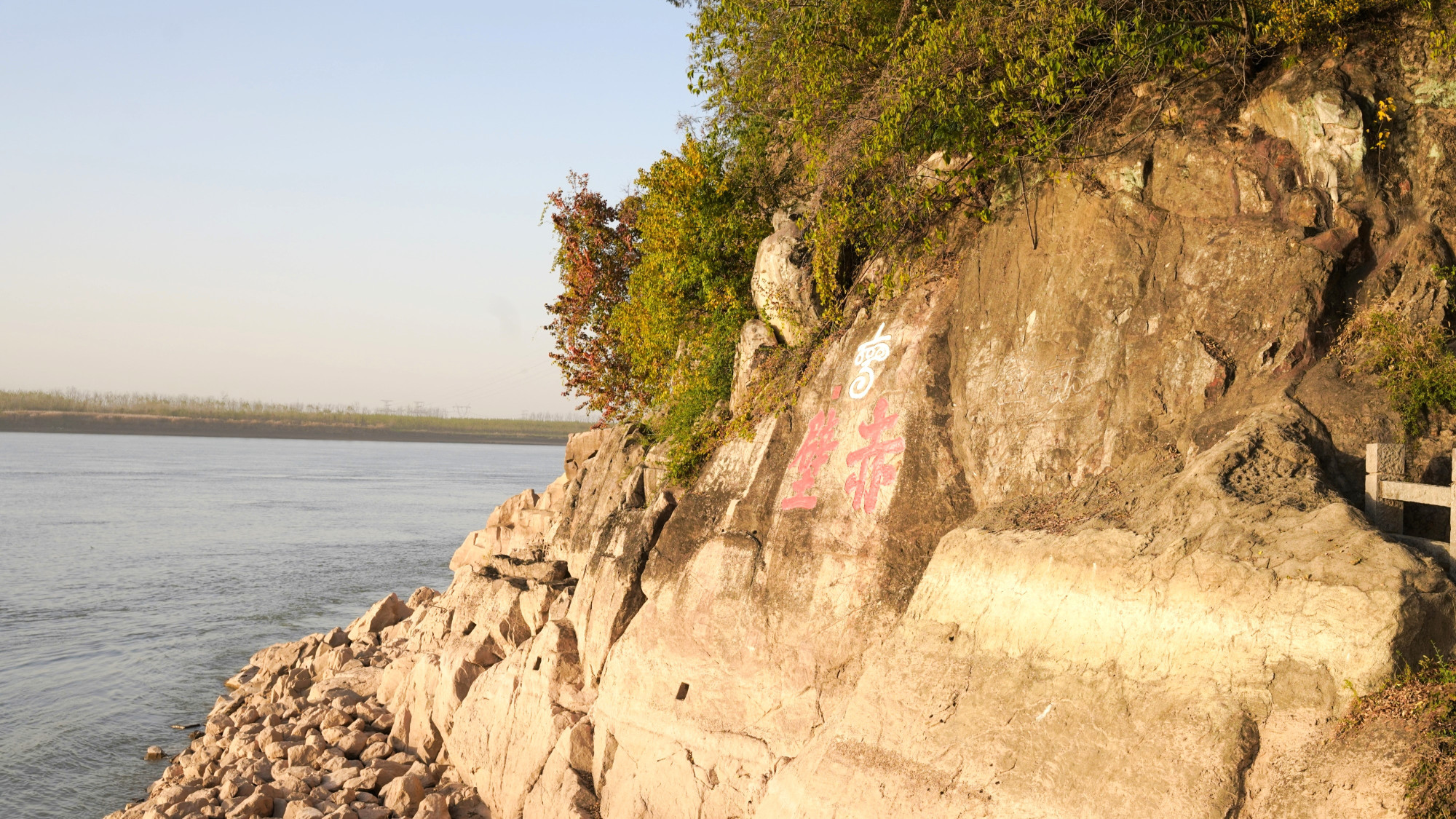
After more than 18 centuries, the ancient Red Cliff Battlefield has become a national 5A tourist area, a national cultural relic, welcoming tourists to visit and learn about the only relic that still preserves the appearance of the ancient battlefield among all the relics of the 7 major battles in ancient Chinese history.
The relics that remain today, such as the "Red Cliff" stone carvings on the cliff, Bai Phong Dai (Wind Prayer Platform), Phuong So hermitage, Chu Lang stone statue (ie Chu Du)..., are pieces of history, helping visitors experience and deeply feel the lasting appeal of the Three Kingdoms culture.
Arriving at the bank of the Yangtze River, the two words "Red Cliff" are carved on the cliff facing the river, each word is 1.5m long and 1.2m wide, said to be the handwriting of Zhou Yu himself, the commander of Eastern Wu in the ancient battle. After more than a thousand years of history, despite the wind and rain, the letters are still strong and sturdy, the red ink on the sandstone background becomes even more prominent under the sunlight.
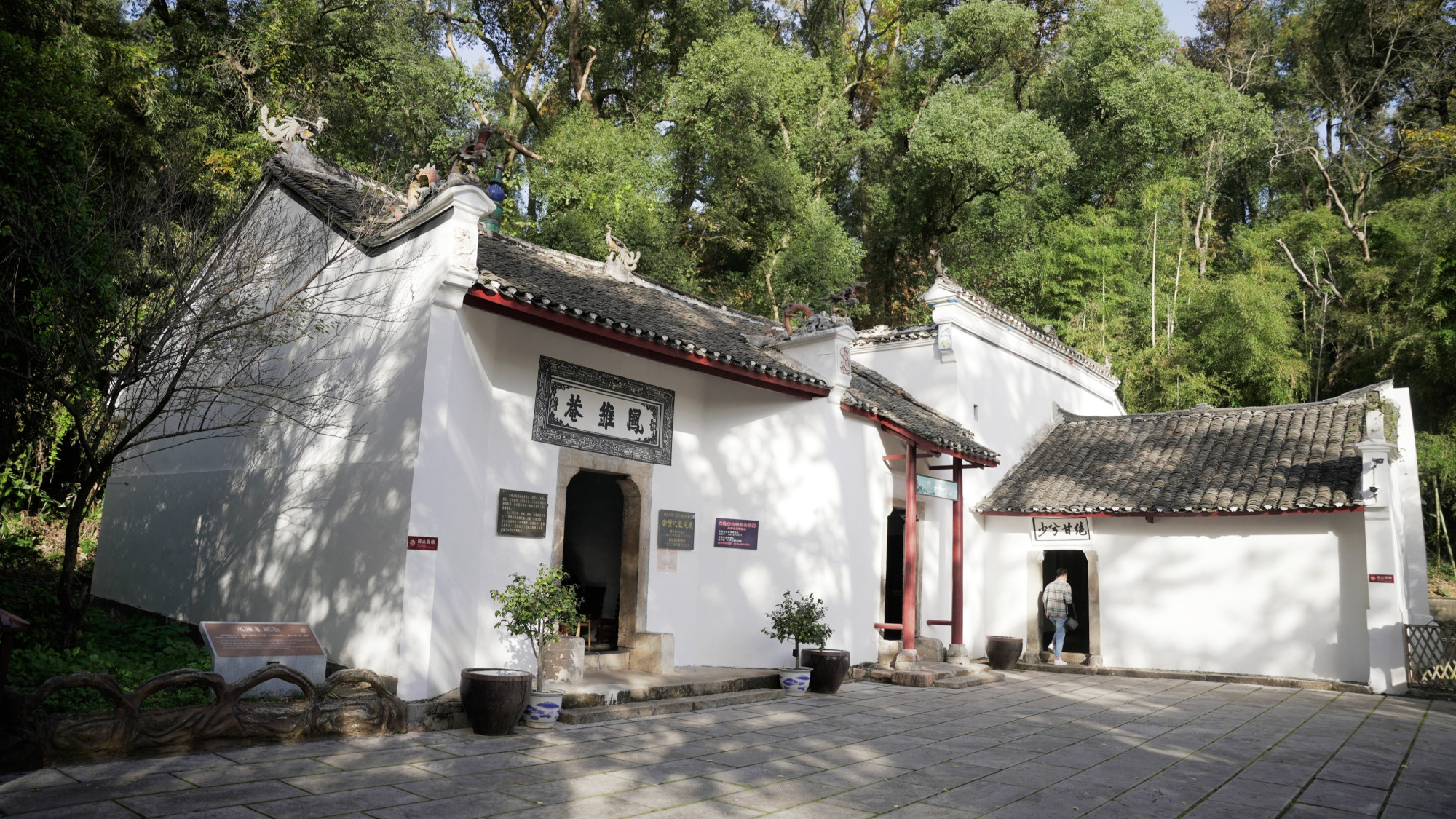
The Red Cliffs-Three Kingdoms Ancient Battlefield is considered an open-air museum of the history of the Three Kingdoms, with many relics associated with ancient characters and stories. For example, the Phoenix Nest located under the canopy of a ginkgo tree over 1,700 years old, is said to be the place where Pang Tong lived in seclusion to study military books. In the Romance of the Three Kingdoms, Pang Tong was the one who proposed the "chain strategy", which is to use iron chains to connect and secure warships together, helping Zhuge Liang and Zhou Yu's fire attack strategy to take effect, thereby defeating Cao Cao's army.
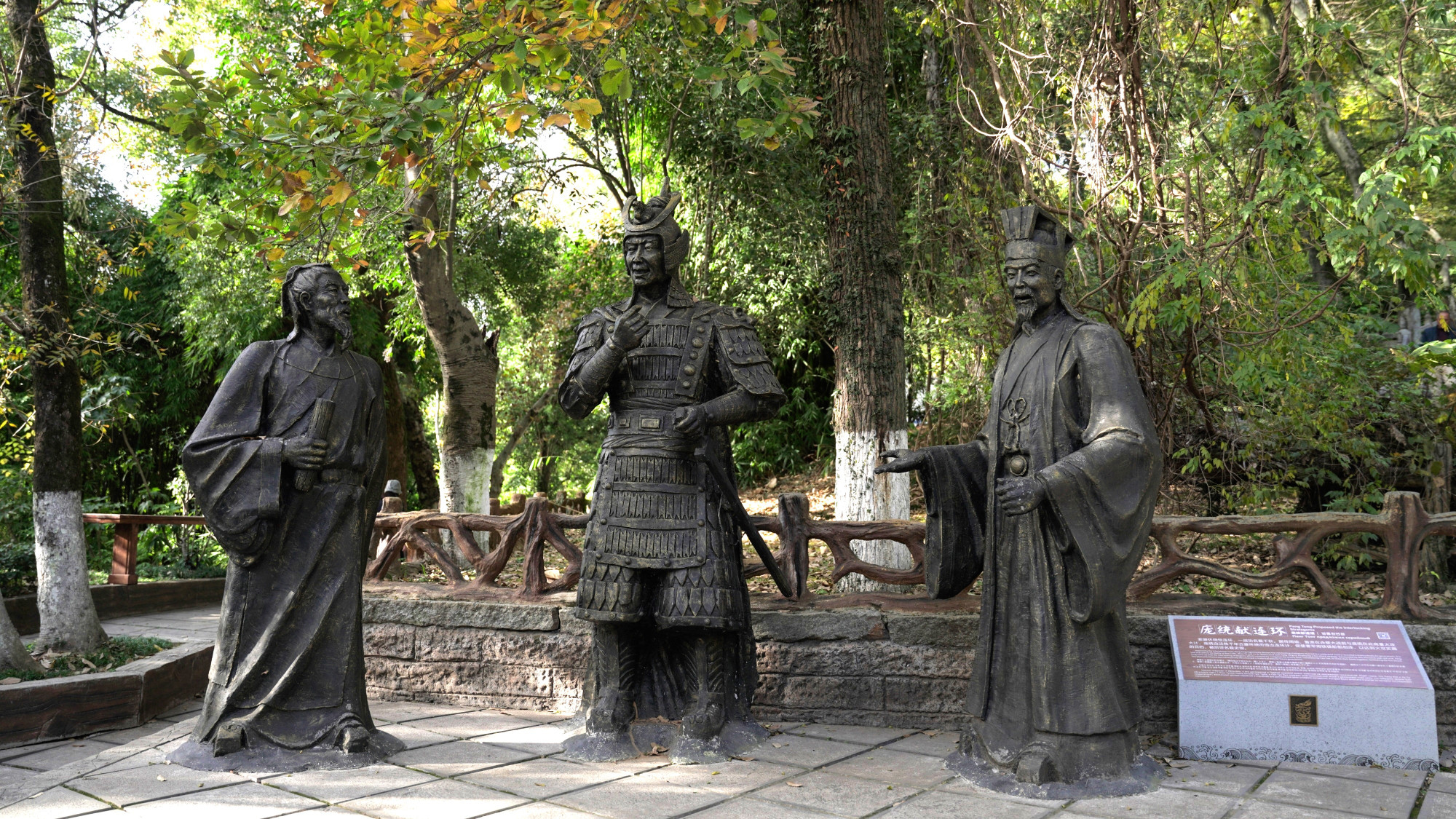
Bai Phong Dai is said to be the place where Zhuge Liang set up an altar to pray for an east wind, carried out a fire attack, burned down his warships, defeated the Cao Wei army, and created a "tripod" situation that divided the world into three parts. Standing on the platform, looking far away, one can see the vast river and the appearance of the entire ancient battlefield.
Spectacular live performance
Not only preserving and maintaining relics associated with the history of the Three Kingdoms, the Red Cliff Ancient Battlefield also strives to innovate through integrating elements of art and science and technology into telling ancient stories, turning "relics" into "stages", turning visitors into "time travelers", thereby having extremely impressive "role-playing" cultural experiences.
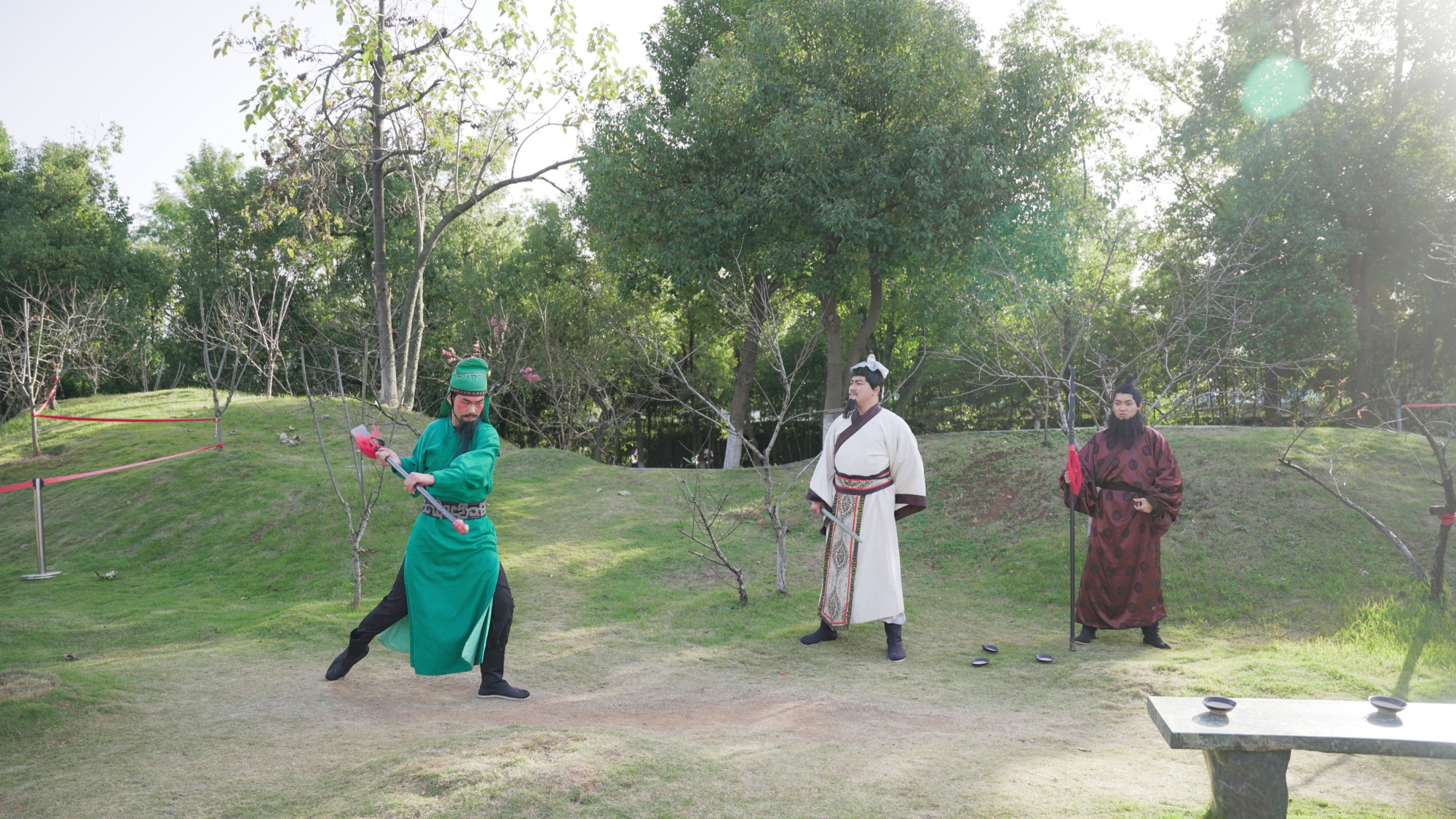
Since its upgrade in mid-2025, the Red Cliffs Ancient Battlefield has been upgraded with the addition of many performance and interactive spots as highlights in the tourist itinerary.
The "Peach Garden of Brotherhood" attraction with three statues of Liu Bei, Guan Yu, and Zhang Fei in the pose of sworn brothers always attracts the attention of tourists. Every day, at specific times, actors in costumes of the three historical figures will perform and interact with the public.
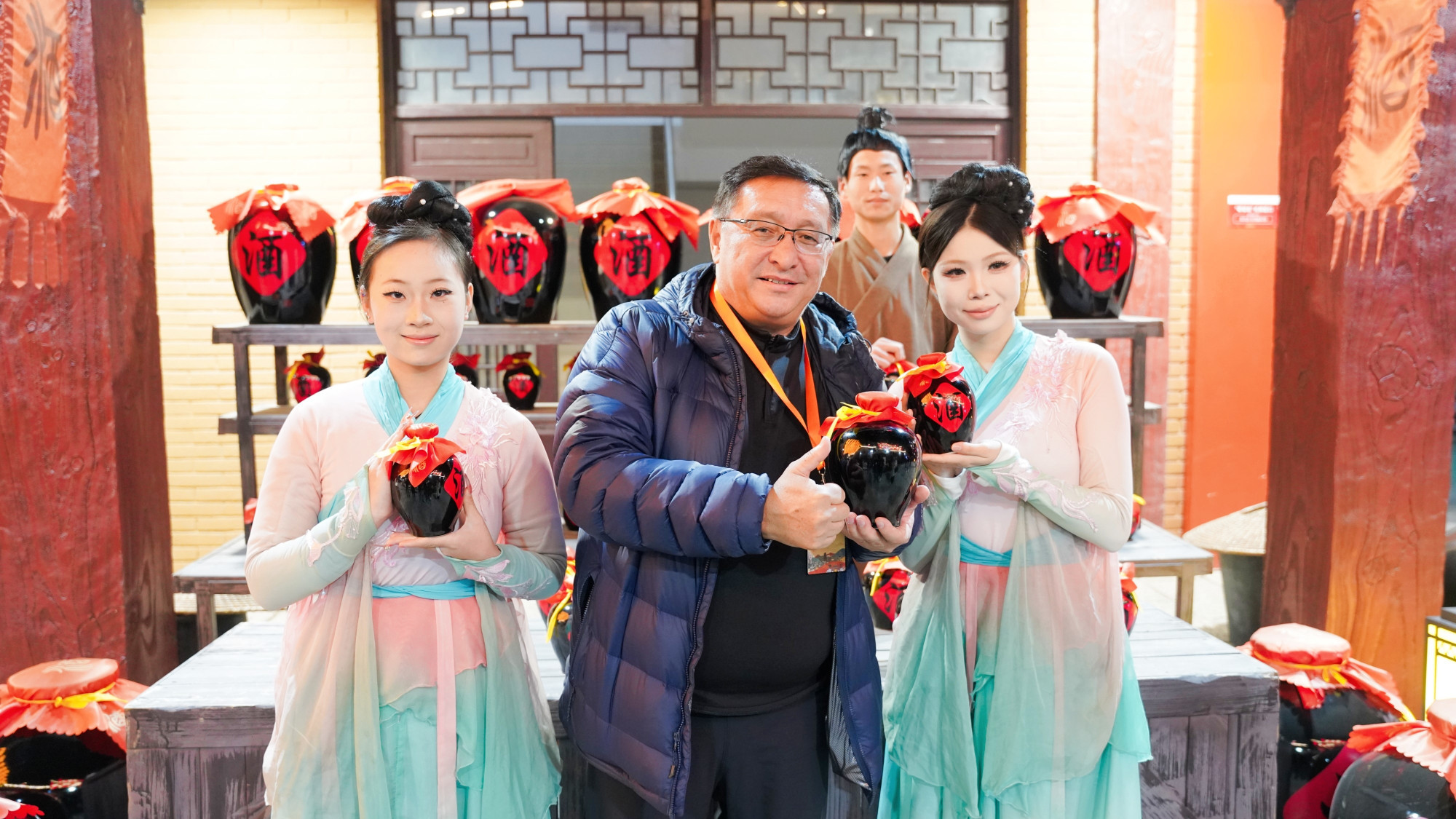
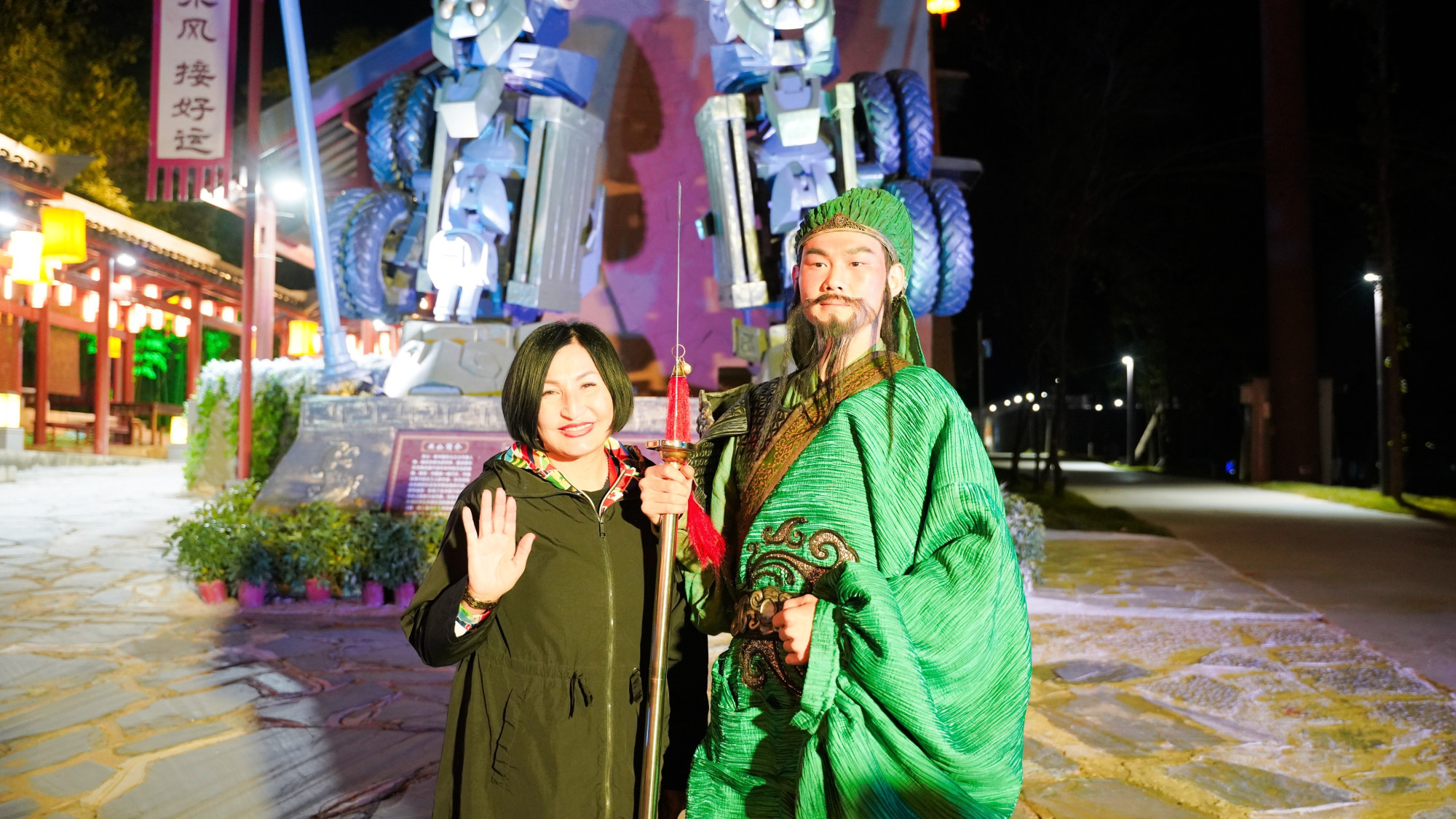
In addition, there are more than a dozen cultural experience points such as the Sacred Fire stage, the Thirty-six Stratagems corridor, the Eight Trigrams battle... with unique designs for visitors to "immerse" themselves in the Three Kingdoms culture. Among them, the most prominent is probably the live performance "Red Cliff - Borrowing the East Wind" directed by La Kha Ca, with a capacity of up to 2,000 spectators.
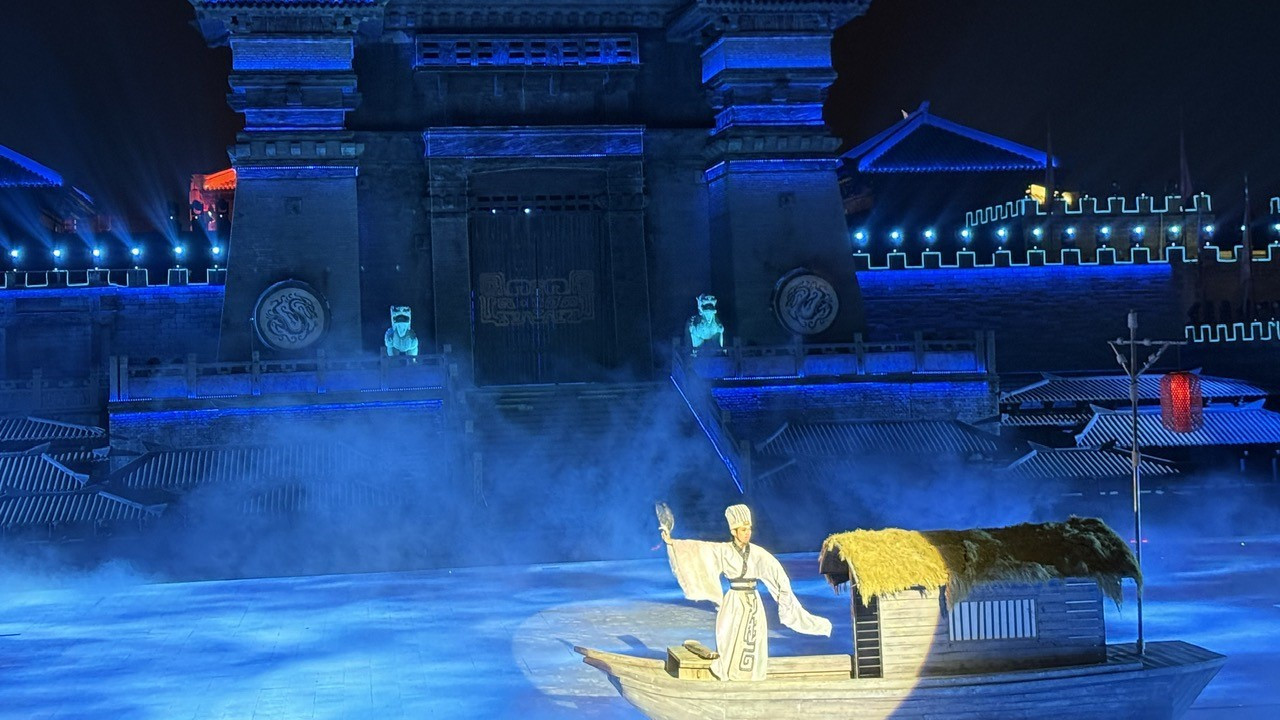
The work takes the form of a "storyteller", using a fresh perspective and humorous modern language to interpret historical anecdotes such as "empty fortress strategy", "bitter meat strategy", "grass boat borrowing arrows"..., revolving around the theme "Red Cliff borrows the east wind - We are all heroes", creating a unique 45-minute Three Kingdoms cultural feast.
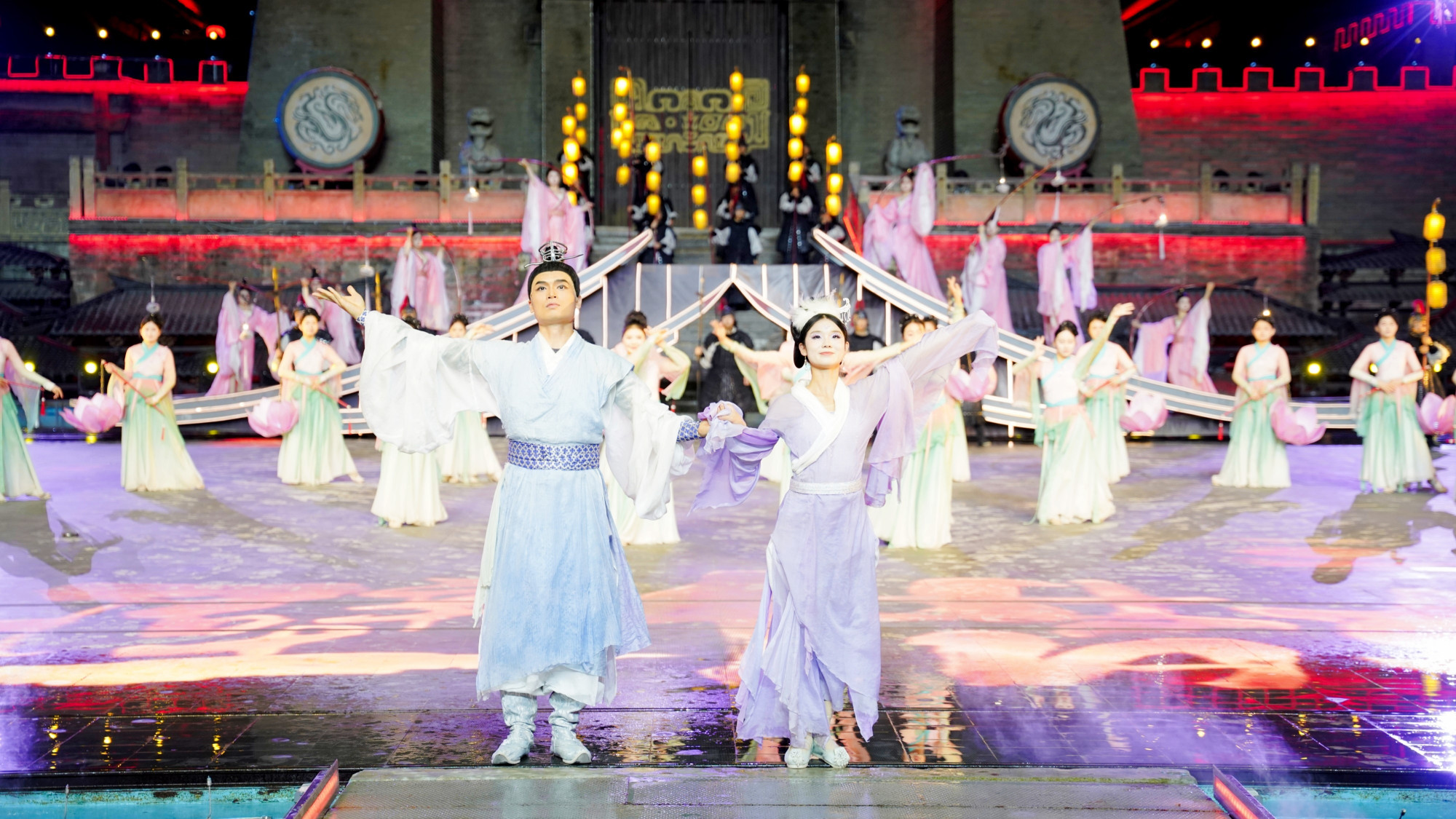
To help the audience truly feel the events of the Battle of Red Cliffs, the work integrates interactive content between the audience and the play, through the form of rhythmic drumming, so that each person can transform into a warrior in the Battle of Red Cliffs, creating an interplay between history and the present, like a dialogue across time.
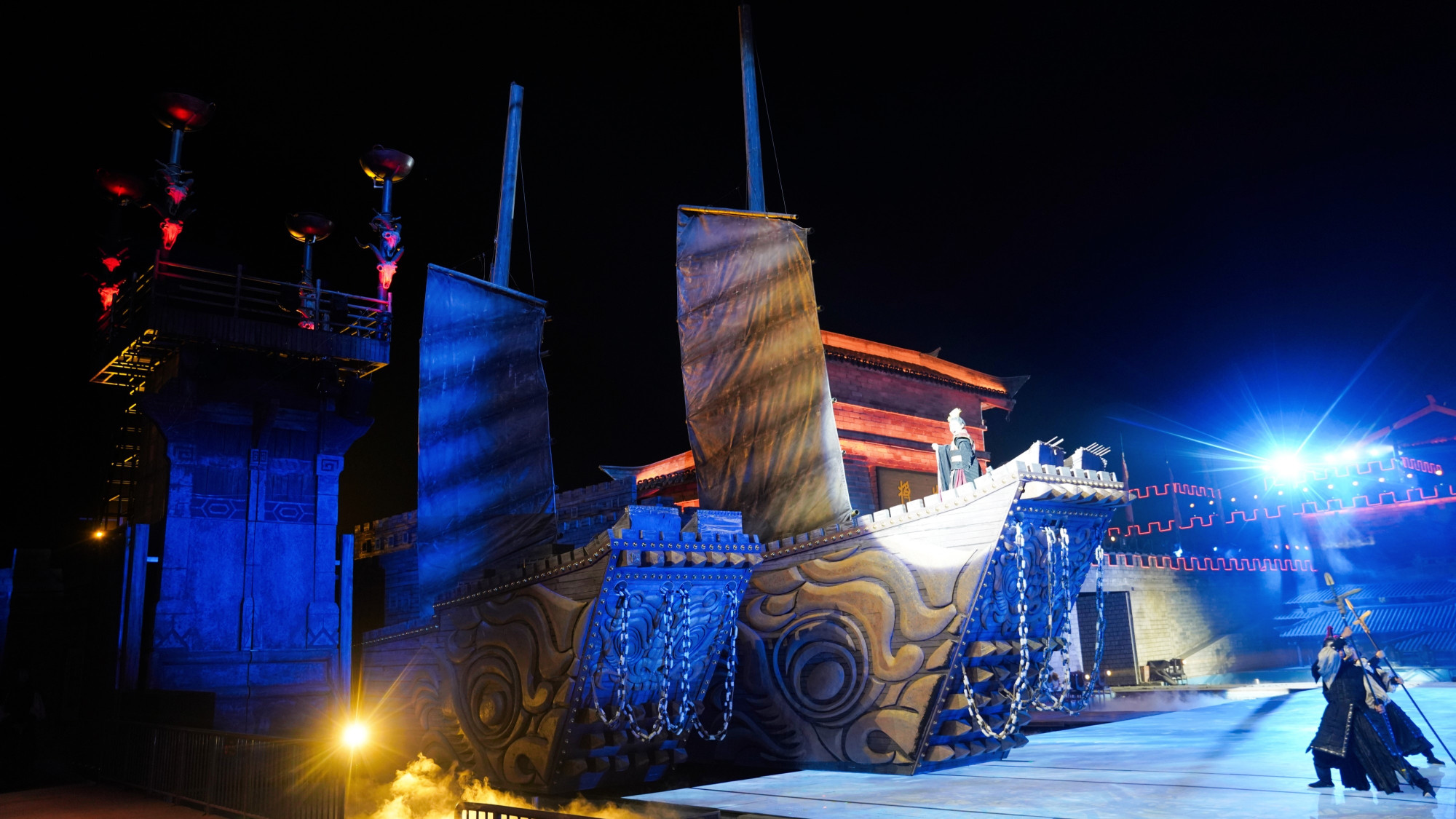
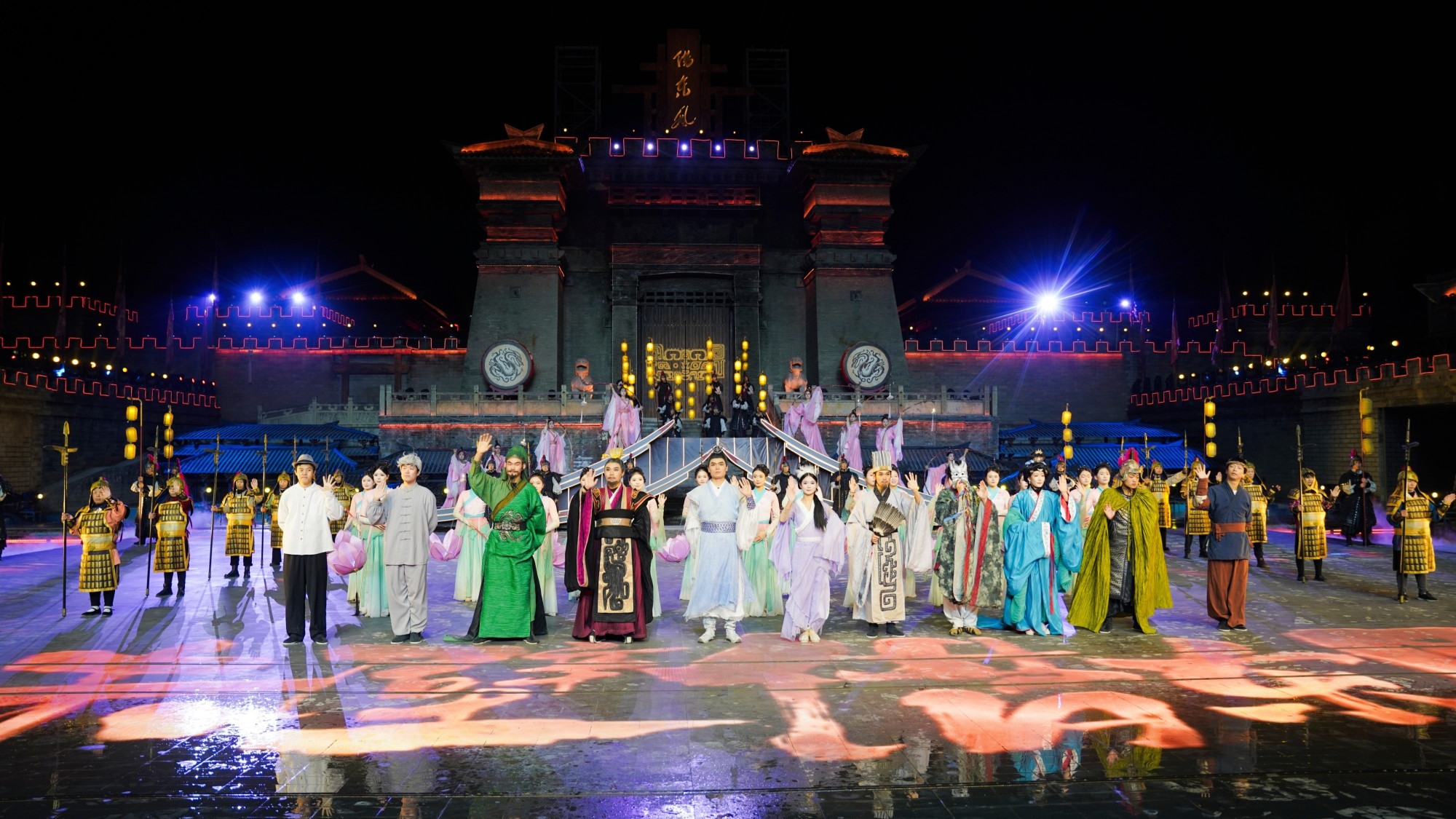
The use of sound effects, lighting, choreography, and live performances has perfectly combined history with the present, virtual and real, depicting a vivid and attractive world of the Three Kingdoms, a symbol of the wisdom of "borrowing the east wind", gathering people's hearts, uniting to use the few to fight the many, using the weak to defeat the strong, creating glorious victories in history.
Source: https://nhandan.vn/kham-pha-van-hoa-tam-quoc-tai-chien-truong-co-xich-bich-trung-quoc-post927347.html














![[Photo] Parade to celebrate the 50th anniversary of Laos' National Day](https://vphoto.vietnam.vn/thumb/402x226/vietnam/resource/IMAGE/2025/12/02/1764691918289_ndo_br_0-jpg.webp)
![[Photo] Worshiping the Tuyet Son statue - a nearly 400-year-old treasure at Keo Pagoda](https://vphoto.vietnam.vn/thumb/402x226/vietnam/resource/IMAGE/2025/12/02/1764679323086_ndo_br_tempimageomw0hi-4884-jpg.webp)








![[Video] Focus on thematic audits and hot areas of interest to voters](https://vphoto.vietnam.vn/thumb/402x226/vietnam/resource/IMAGE/2025/12/03/1764777738344_2-691-png.webp)

![[Video] More than 96% of cases related to land planning, management and use have been resolved.](https://vphoto.vietnam.vn/thumb/402x226/vietnam/resource/IMAGE/2025/12/03/1764775937805_1-5566-png.webp)
![[Photo] Parade to celebrate the 50th anniversary of Laos' National Day](/_next/image?url=https%3A%2F%2Fvphoto.vietnam.vn%2Fthumb%2F1200x675%2Fvietnam%2Fresource%2FIMAGE%2F2025%2F12%2F02%2F1764691918289_ndo_br_0-jpg.webp&w=3840&q=75)
![[Photo] Worshiping the Tuyet Son statue - a nearly 400-year-old treasure at Keo Pagoda](/_next/image?url=https%3A%2F%2Fvphoto.vietnam.vn%2Fthumb%2F1200x675%2Fvietnam%2Fresource%2FIMAGE%2F2025%2F12%2F02%2F1764679323086_ndo_br_tempimageomw0hi-4884-jpg.webp&w=3840&q=75)























































Comment (0)