

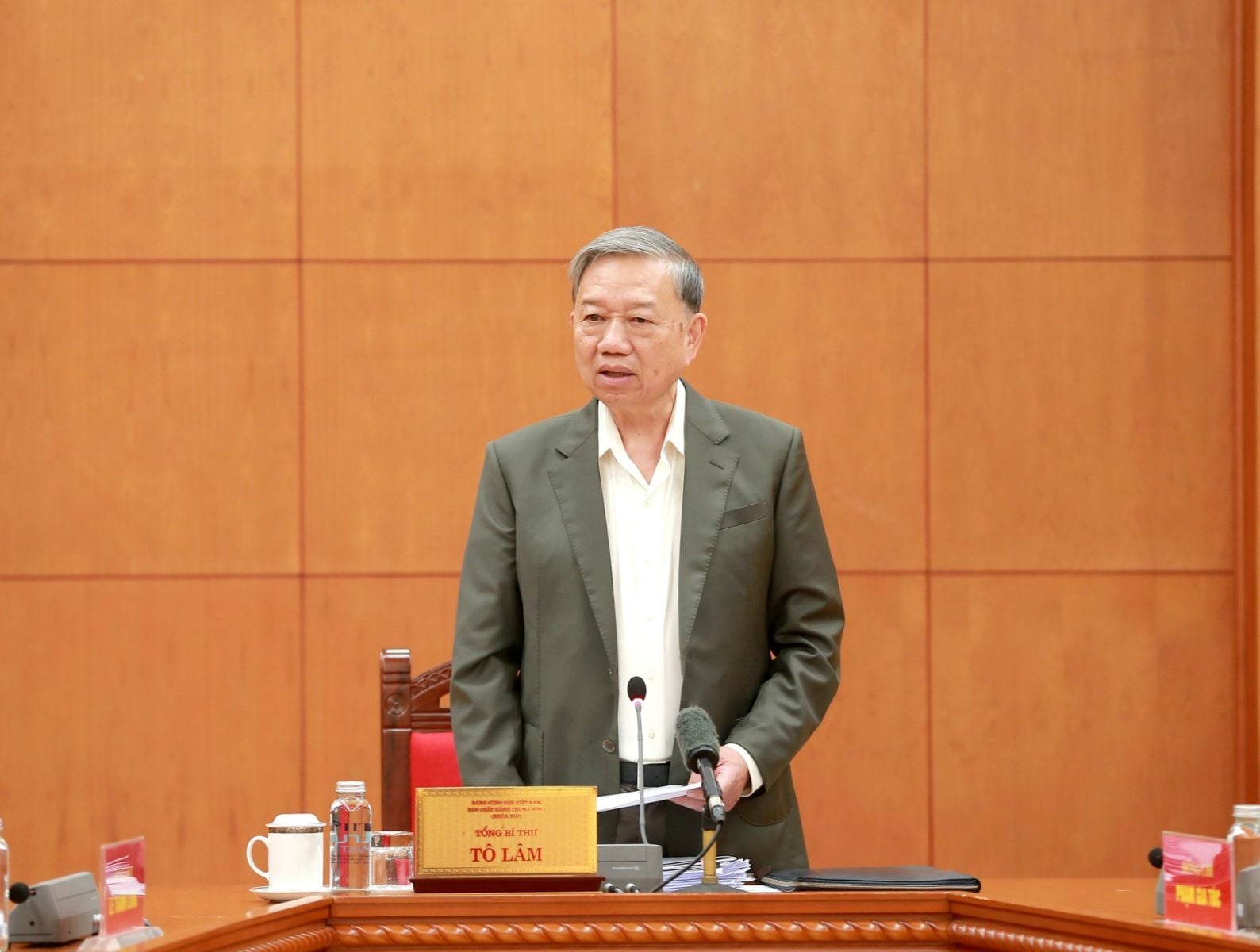
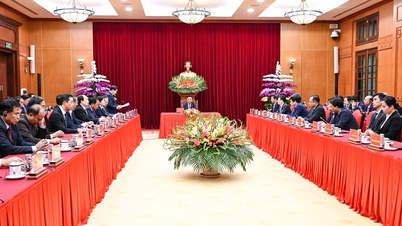
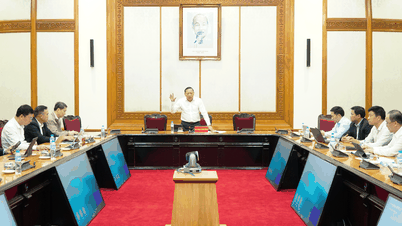
The meeting aimed to clearly identify difficulties, propose practical and feasible solutions, and create strong changes in the work of supporting people with disabilities; ensuring that all people with disabilities can live safely, be cared for, study, work, integrate and develop equally.
Also attending the meeting were Party Central Committee members: Le Thanh Long, Deputy Prime Minister; Pham Gia Tuc, Chief of the Party Central Committee Office; Lam Thi Phuong Thanh, Permanent Deputy Chief of the Party Central Committee Office; Nguyen Dac Vinh, Chairman of the National Assembly's Committee for Culture and Social Affairs; Dao Hong Lan, Minister of Health ; and leaders of relevant ministries, departments, branches and organizations.
At the meeting, the Report of the Standing Committee of the Party Committee of the Ministry of Health said that Vietnam currently has over 8 million people with disabilities, accounting for 7.2% of the population aged 2 and over, of which 28.3% are children, 58% are women; about 21.4% are people with severe and extremely severe disabilities; more than 3 million people with disabilities have been granted disability certificates... In the past time, implementing the policy of regular social assistance, people with severe and especially severe disabilities have enjoyed monthly social assistance, health insurance cards; support for education and learning costs according to current regulations, support for studying at all levels of general education or vocational training, intermediate vocational schools, colleges and universities.
The monthly social allowance for people with severe disabilities in the community is 1,250,000 VND to 1,400,000 VND/month; for people with disabilities cared for at social assistance facilities, it is 1,440,000 VND to 2,500,000 VND/month.
Current social assistance policies have created a comprehensive support system, covering all three pillars of basic social security for people with disabilities: Livelihood (cash subsidies), health (free health insurance) and education (support for study costs).
Resources for the work of people with disabilities have been invested, and at the same time, the mobilization of resources in society has been promoted. Every year, the state budget spends 45,000 billion VND on social subsidies, health insurance cards for social protection beneficiaries, of which 20,533 billion VND is spent on social subsidies for people with severe and especially severe disabilities. Along with that, the Vietnam Fatherland Front and organizations, unions, and organizations of people with disabilities have mobilized social resources with hundreds of billions of VND to support children and people with disabilities in health care, rehabilitation, education, vocational training, employment, livelihoods, etc.
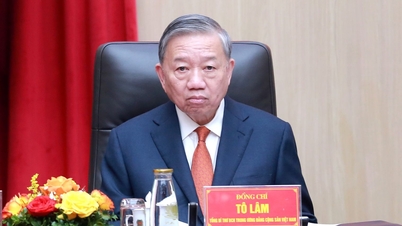
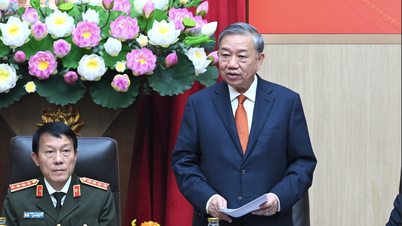
After listening to the delegates' discussions and speeches at the meeting, the General Secretary stated that according to preliminary data, the country currently has about 7.2% of the population with disabilities, equivalent to about 8 million people. Behind those numbers are lives and families who are struggling every day to face many difficulties in life. Caring for people with disabilities is not only a moral responsibility, but also a measure of civilization and modernity, a requirement of sustainable development and international integration.
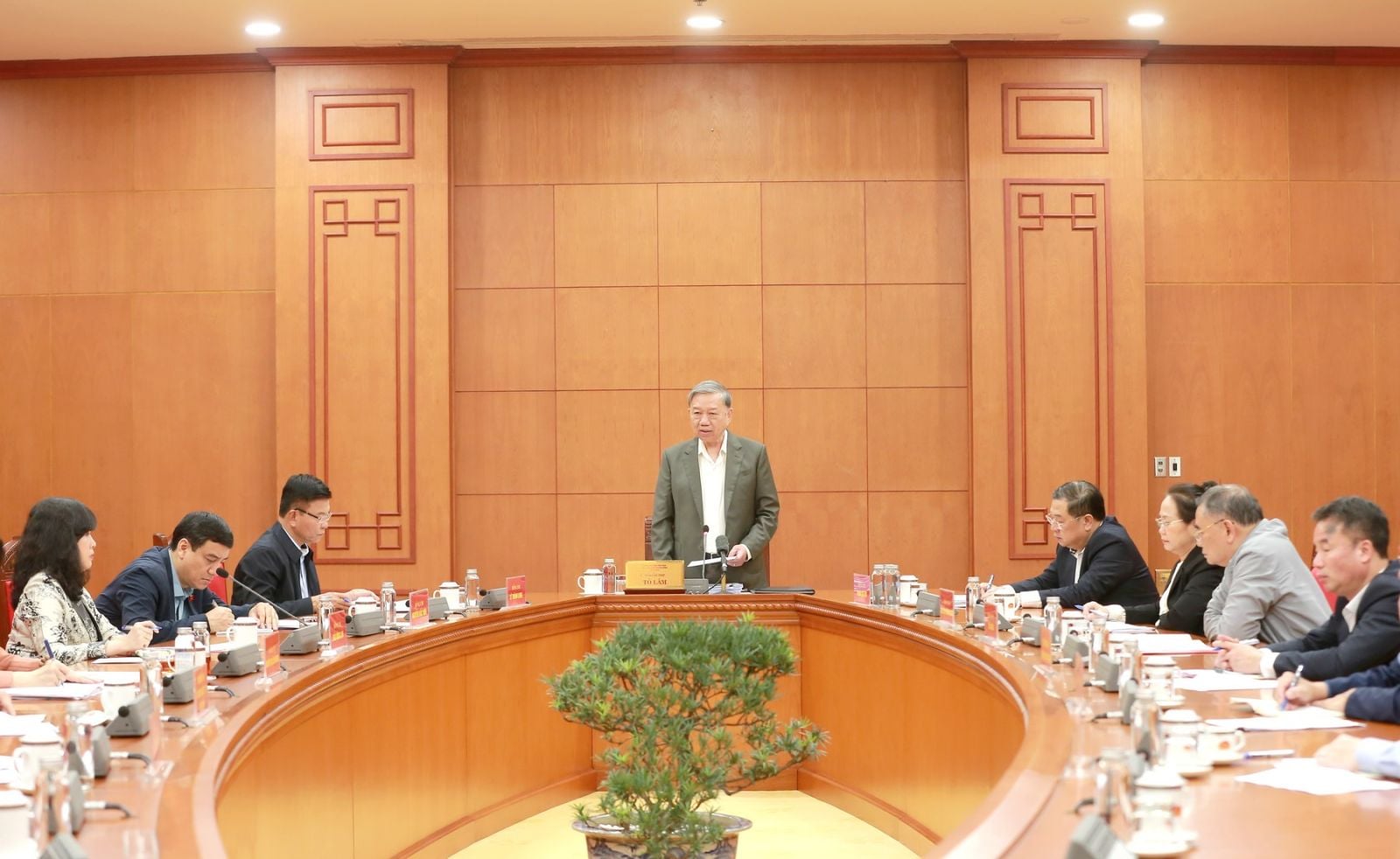
In recent years, the Party and the State have had many important policies and guidelines; many support models, rehabilitation, inclusive education, job creation, etc. have been effective. Many people with disabilities have strived to improve, study, work, and contribute to society. However, in reality, most people with disabilities still face many difficulties in their daily lives. Currently, only about 38% of people with disabilities have full access to medical and rehabilitation services; only about 1/3 of children with disabilities are detected and intervened early; less than 30% of people with disabilities of working age have stable jobs; the rate of schools, hospitals, train stations, and means of transport that meet accessibility standards is still very low. Many mountainous provinces, remote areas, and isolated areas seriously lack rehabilitation services, early intervention services, inclusive education, and social workers. This creates a huge gap in opportunities and quality of support for people with disabilities. Many people with disabilities, especially women and children, still face the risk of violence, abandonment and discrimination.
The current way of supporting people with disabilities is still scattered and not really comprehensive; many policies have not been put into practice; the design of infrastructure - transportation - public works - online public services is not really friendly and accessible; assistive technology is still at the initial stage; coordination between levels and sectors is not really synchronous. Many programs and projects still overlap, disperse resources, and lack necessary integration.
The General Secretary welcomed the Ministry of Health, ministries, branches and agencies for reporting, analyzing and proposing many important contents; clarifying the current difficulties of people with disabilities; limitations and inadequacies in support methods; requirements in the context of rapid development, population aging and strong digital transformation.
The General Secretary stressed that people with disabilities across the country are in dire need of attention, care and practical support. Caring for people with disabilities is not only a moral responsibility, but also a measure of civilization and modernity, a requirement of sustainable development and international integration.
The General Secretary requested that we aim for a very clear goal: No disabled person should be left behind. Every disabled person should have the opportunity to live a better life every day.
The General Secretary requested that solutions to improve accessibility and rehabilitation for people with disabilities must be clarified and perfected. The development of policies for people with disabilities in the current period must change thinking, shifting the approach from health and care to an inclusive social approach. That is, it is necessary to develop legal policies to access people with disabilities according to a social model, not according to the conventional health approach model.
This is very important, disability is not just a health problem, functional impairment but also a social barrier, limiting the participation of people with disabilities in economic and cultural life of the community. When recognizing this nature, policies must aim to eliminate prejudice, reduce inequality, expand opportunities, and empower people with disabilities as subjects of development, not passive objects of care. From that perspective, the policy system needs to be designed to be more interdisciplinary and comprehensive.
The General Secretary said that, in addition to supporting healthcare, rehabilitation, and health insurance, the state needs to focus strongly on policies for inclusive education, appropriate vocational training, preferential mechanisms in recruitment, access to transport infrastructure, public works, and digital transformation to allow people with disabilities to access online public services and assistive technology tools.
Social security policies must also ensure a minimum standard of living, support livelihoods, housing, and legal assistance so that people with disabilities can integrate in a real way. This requires raising public awareness, eliminating stigma, promoting a barrier-free and accessible social model for all. Along with that, it is necessary to encourage the private sector, social organizations, and communities to participate extensively in activities to support people with disabilities, create jobs, and create other friendly products and services. Review and specify the 2030 goals that the Ministry of Health is building; expand rehabilitation services at the grassroots level, and ensure that people with disabilities receive regular health monitoring...
The General Secretary requested that strong solutions be continued to be researched so that all children with disabilities can be detected early, go to school, study, and integrate. Every commune and locality where children with disabilities remain at home must be held responsible by the local government. Education is considered the key to ensuring that children with disabilities are not left behind. The Ministry of Education and Training needs to review the system of centers supporting inclusive education; prioritize localities that lack or do not have centers for school development for children with visual and hearing impairments, and train support teachers.
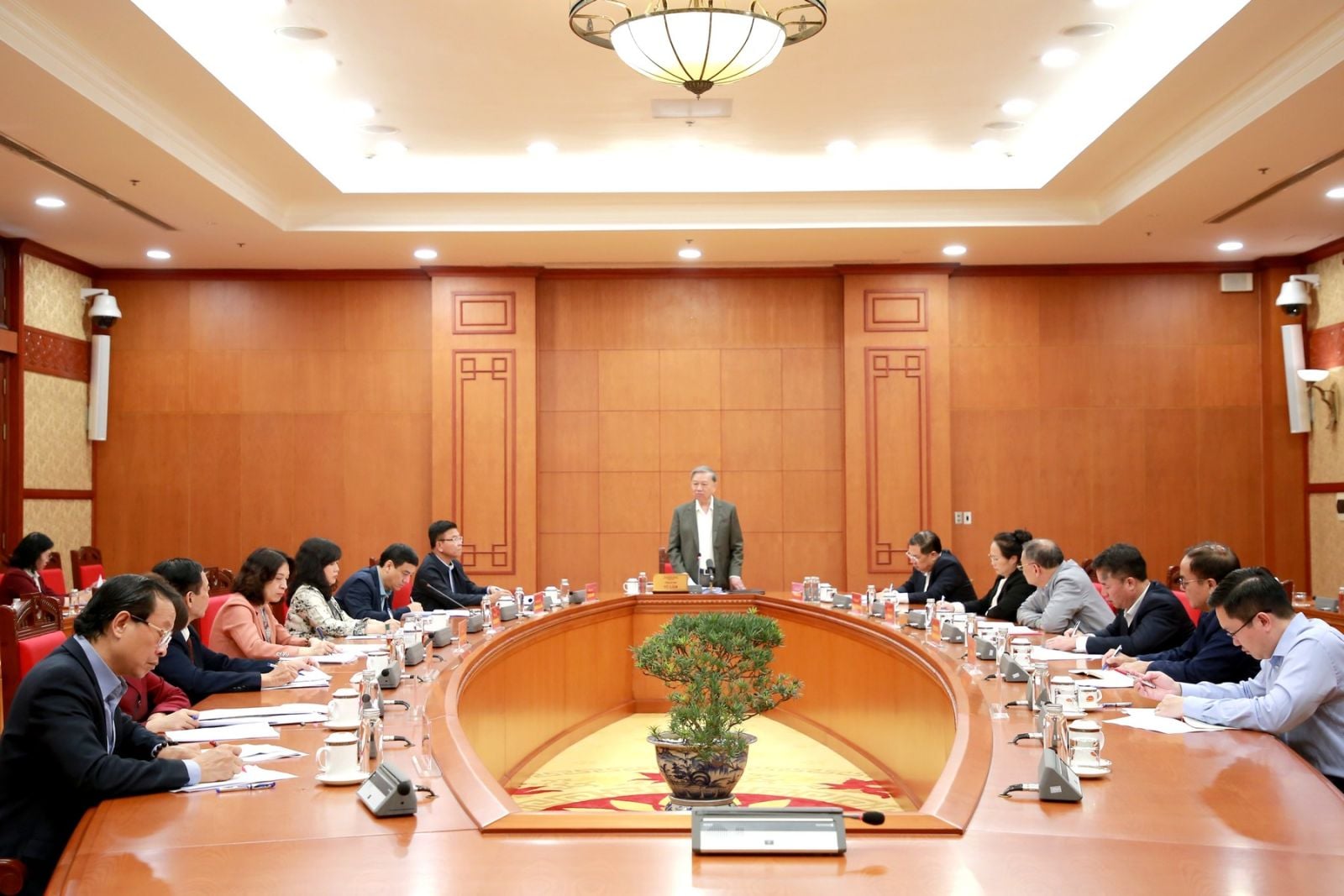
The General Secretary proposed practical solutions to expand employment and livelihood opportunities for people with disabilities and to have policies on this issue for people with disabilities, equality, self-reliance, and opportunities to contribute to society. Solutions on transport infrastructure, public works, and online services must be more friendly and accessible; promote the application of assistive technology and digital transformation, and improve the quality of life for people with disabilities.
The General Secretary noted that it is necessary to continue researching solutions to prevent and detect violence, abandonment and discrimination against people with disabilities; there should be a friendly reporting mechanism and timely support at the grassroots level, focusing on women and children with disabilities, the most vulnerable groups; strengthen communication and raise social awareness, spread the spirit of respect, sharing and accompanying people with disabilities; simplify administrative procedures, remove barriers that make it difficult for people with disabilities to access legitimate rights.
Agencies continue to conduct deeper research, more comprehensive analysis, clarify problems in policies and practices, highlight overlapping contents between programs, and propose new solutions suitable to the country's conditions and the actual needs of people with disabilities.
The General Secretary requested that the Party Central Committee Office announce the conclusion of the working session; assign the Government Party Committee to direct the Ministry of Health, ministries and branches to continue researching and consulting widely to have practical, feasible solutions with clear impacts, thereby building and perfecting specific projects, plans and actions, and reporting to the Secretariat for consideration and comments.
The General Secretary stated that the common view is to create a new step forward, take stronger and more drastic actions to improve the quality of life of people with disabilities nationwide; so that all people with disabilities have the opportunity to live safely, study, work, integrate and develop like all other citizens./.
Source: https://dangcongsan.org.vn/tin-hoat-dong/tong-bi-thu-to-lam-chu-tri-cuoc-lam-viec-ve-chu-truong-chinh-sach-voi-nguoi-khuet-tat.html
![[Photo] Cat Ba - Green island paradise](/_next/image?url=https%3A%2F%2Fvphoto.vietnam.vn%2Fthumb%2F1200x675%2Fvietnam%2Fresource%2FIMAGE%2F2025%2F12%2F04%2F1764821844074_ndo_br_1-dcbthienduongxanh638-jpg.webp&w=3840&q=75)




























![[VIMC 40 days of lightning speed] Da Nang Port: Unity - Lightning speed - Breakthrough to the finish line](https://vphoto.vietnam.vn/thumb/402x226/vietnam/resource/IMAGE/2025/12/04/1764833540882_cdn_4-12-25.jpeg)






























Comment (0)