

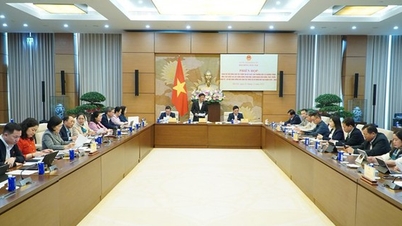
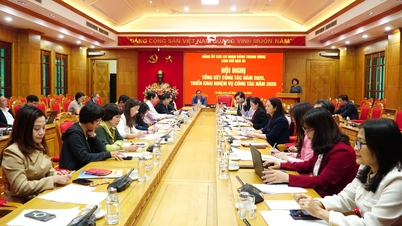
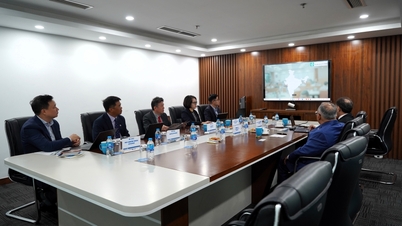
Attending the meeting were members of the Steering Committee's Working Group; Interdisciplinary Team; Leaders of the Department of Digital Transformation - Cryptography, Office of the Central Party; representatives of the Ministry of Education and Training, Ministry of Science and Technology, Ministry of Finance ; representatives of the School and related units implementing the tasks. Comrade Ngo Hai Phan, Director of the Department of Digital Transformation - Cryptography, Office of the Central Party, Member of the Central Steering Committee, Deputy Head of the Steering Committee's Working Group chaired the meeting.
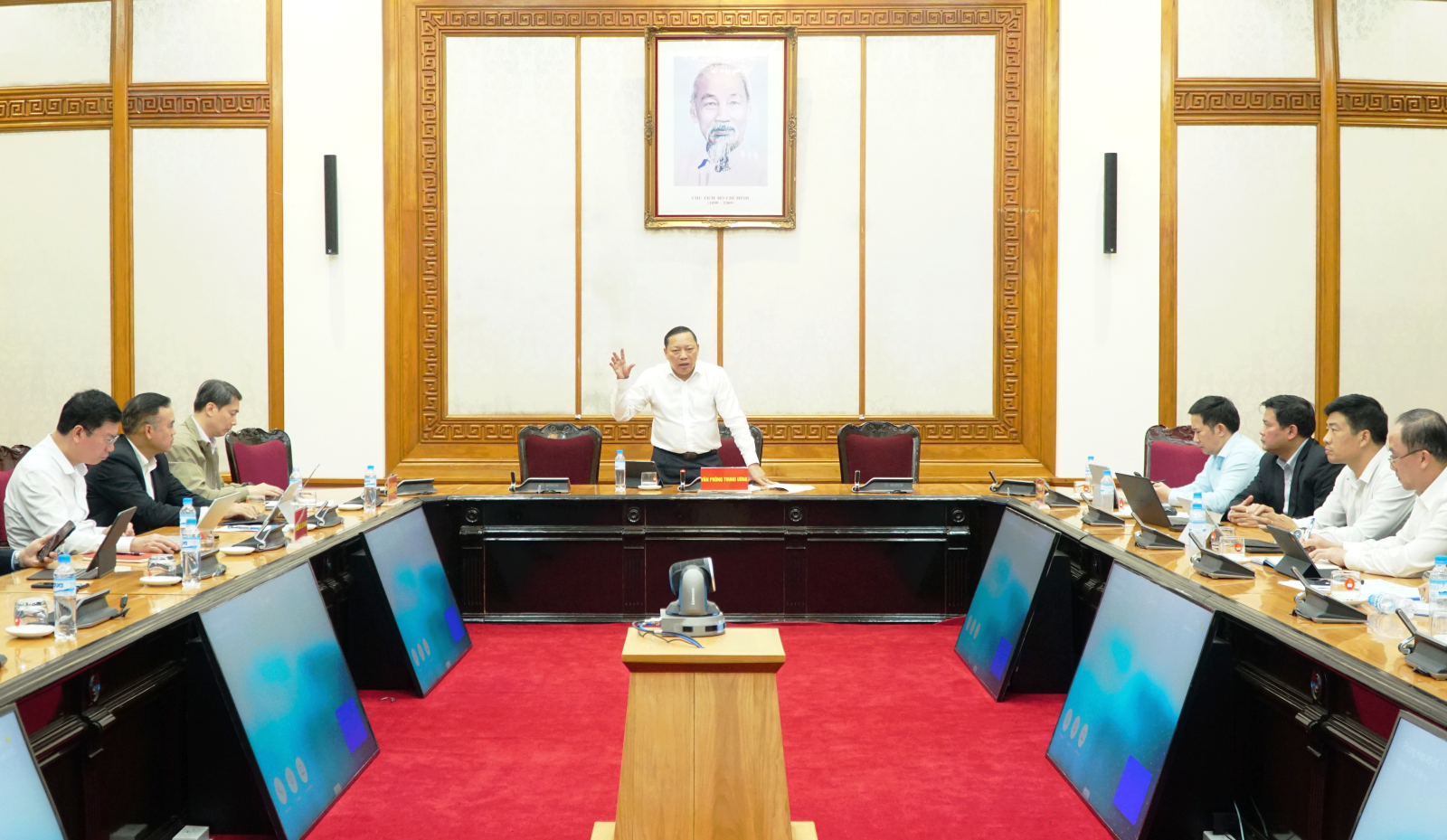
Cooperation in scientific and technological research is promoted.
According to the report of the Steering Committee's Working Group, regarding the "3 Houses" cooperation model, up to now, the Steering Committee has assigned 32 tasks, of which 18 have been completed and 14 are in progress.
Many tasks assigned to the Schools have been implemented quite well, typically 4 schools (Hanoi National University, Ho Chi Minh City National University, Hanoi University of Science and Technology, Da Nang University) have all established Steering Committees, Working Groups and Expert Groups to implement Resolution 57-NQ/TW, integrated with the innovation plan for the period 2025-2030. Hanoi National University and Ho Chi Minh City National University have issued separate decisions and action plans related to each field of science - technology, training, and digital transformation.
Regarding cooperation with businesses and localities, Ho Chi Minh City National University is leading by signing 10 strategic cooperation agreements with large enterprises; at the same time, implementing 05 applied research topics and 06 research groups on AI with a total value of nearly 40 billion VND.
Hanoi National University has 138 corporate partners, 31 policy consulting contracts, more than 1,900 international publications, and 189 intellectual property registrations. Hanoi University of Science and Technology focuses on developing Edge AI, semiconductor, and AI laboratories in microchip design (with a budget of more than 350 billion VND), and at the same time cooperates with domestic technology enterprises such as Viettel, PVN, FPT, EVN, CMC ... in strategic technology projects. Danang University cooperates with 13 corporations in the field of strategic technology and 11 IT - Communications enterprises, and develops research clusters on AI, Robots, green energy, biomedicine and smart cities.
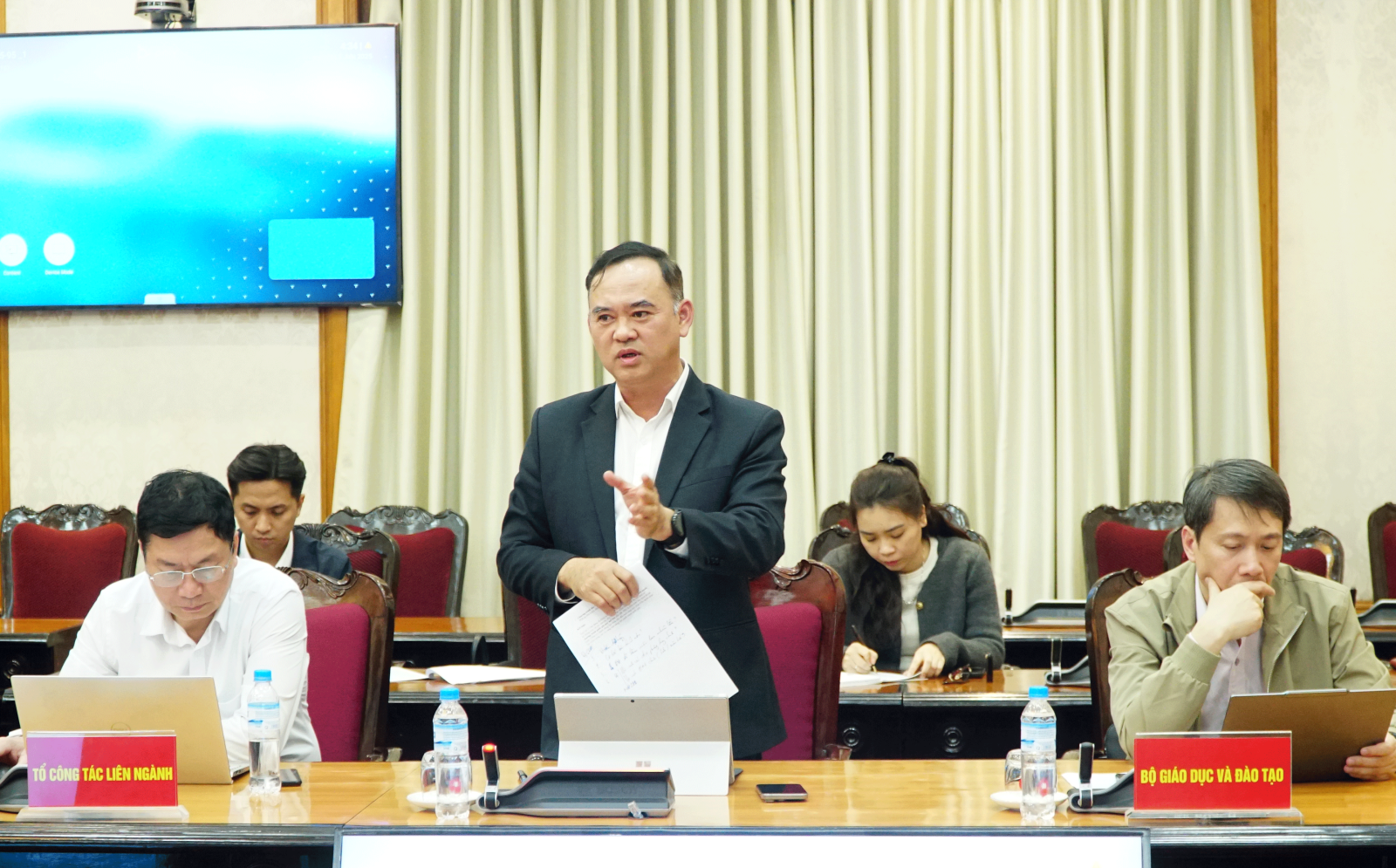
All four universities have established or are establishing “Innovation Hubs” associated with local high-tech zones, such as Ho Chi Minh City National University implementing regional scale, following the public-private model; Hanoi University of Science and Technology cooperating with CMC and state-owned corporations; “Da Nang Innovation Hub” - associated with the city’s high-tech zone and smart city.
There needs to be a mechanism to promote the "3 Houses" cooperation model.
Delegates attending the meeting said that, in fact, the cooperation of “3 Houses” has been carried out for a long time but mainly in the training part. Through the survey, there are up to 840 computer rooms but mainly among them are computer rooms, only 20-30 laboratories. For many years, the laboratories have not been invested and there is no mechanism for sharing or socialization to avoid waste and for reinvestment.
In addition, the process of approving research topics is quite complicated, businesses do not have confidence in universities; there is a lack of specific guidance on the public-private "common fund" mechanism, so R&D projects find it difficult to mobilize socialized capital. The process of appraisal, valuation, and auditing of intellectual property is still complicated, making businesses hesitant to contribute capital with technology; at the same time, there is no mechanism to ensure that businesses "dare" to invest in scientific research. Regarding human resources for science and technology, especially high-level R&D human resources, they do not meet the requirements of international integration and commercialization of research results; the development of strong research groups is being left to the universities themselves to develop...
The birth of Resolution 57 is truly a “push”, a premise as well as a mechanism for the development model. The Resolution was issued nearly a year ago, however, the implementation has only been completed mainly in terms of institutions and mechanisms. Therefore, delegates proposed many solutions to promote the “3 Houses” cooperation model.
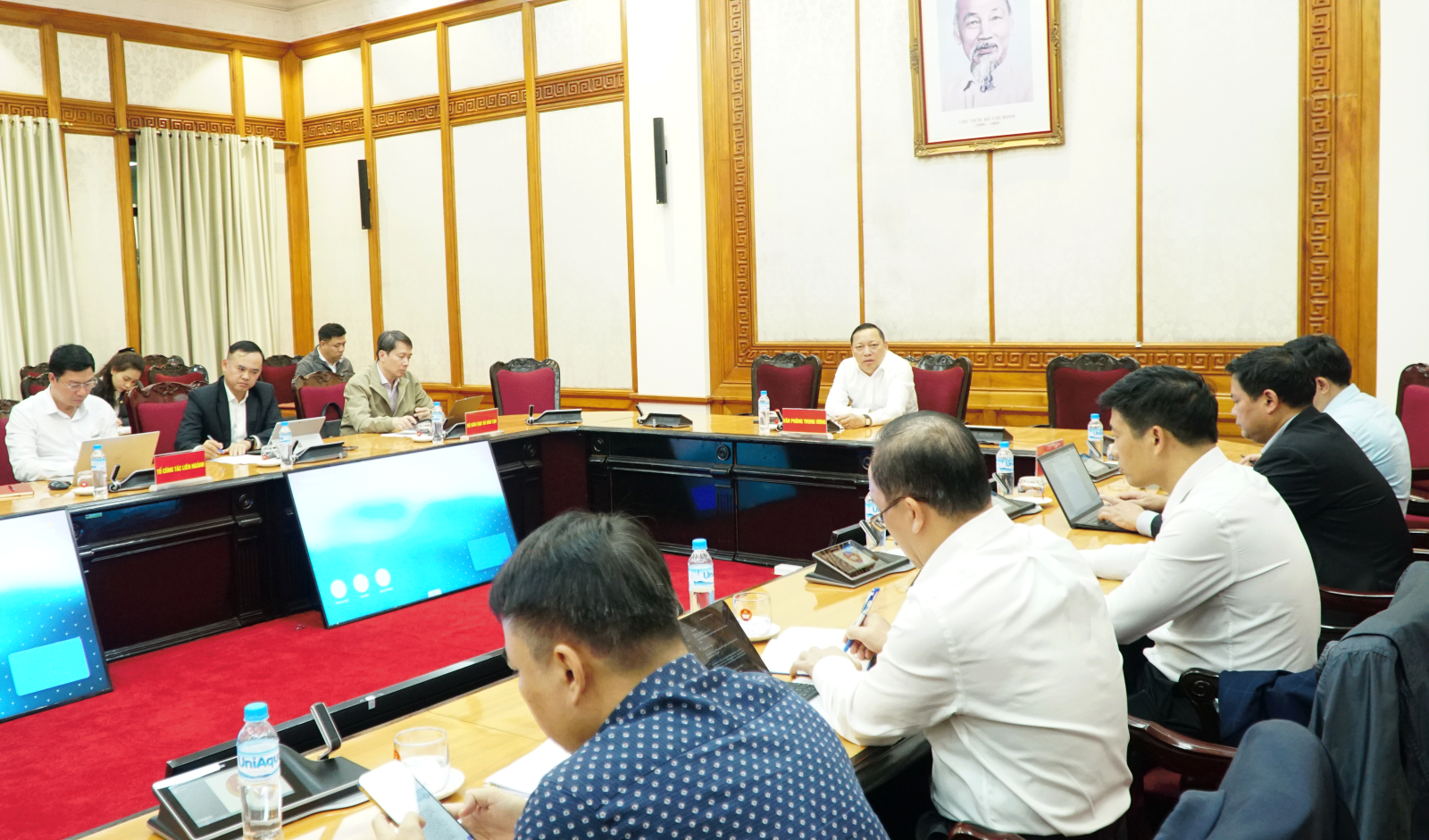
The representative of the Ministry of Education and Training said that from research to product, there must be time, accordingly, with science and technology tasks, it is necessary to divide working groups, the State must "nurture" the topic. The State must have a topic to give to schools, businesses "order" science and technology; it is necessary to "run samples" of models to remove obstacles and gain experience.
The representative of the Ministry of Finance said that in terms of financial resources, the Ministry of Finance has reserved resources for science and technology activities. However, when implementing projects, the Ministries of Education and Training and Science and Technology must have a "spending address". When developing projects, they must propose funding and work with the Ministry of Finance on related issues...
Delegates also said that the Government has now issued a list of 11 strategic technology groups and 35 strategic technology product groups. To promote the “3 Houses” cooperation model, the State must create pressure for businesses to participate in scientific research (required to set aside profits for scientific and technological research); with projects involving new technology, it is required to have the participation of at least 1 university. At the same time, it is necessary to develop policies to create conditions for businesses to participate in investing in scientific and technological research; develop a mechanism for reasonable benefit sharing among the “3 Houses”…
Concluding the meeting, comrade Ngo Hai Phan asked the delegates to summarize the difficulties and problems in their units and present them to the Minister for solutions; actively coordinate between ministries on related issues; frankly acknowledge the tasks that have not been done well, specify the work contents, and be determined to carry out the work contents assigned by the Central Steering Committee. The proposed and recommended contents should be reported soon for the Steering Committee to consider and give opinions./.
Source: https://dangcongsan.org.vn/tin-hoat-dong/thao-go-vuong-mac-thuc-day-mo-hinh-hop-tac-3-nha-.html










![[Photo] Parade to celebrate the 50th anniversary of Laos' National Day](/_next/image?url=https%3A%2F%2Fvphoto.vietnam.vn%2Fthumb%2F1200x675%2Fvietnam%2Fresource%2FIMAGE%2F2025%2F12%2F02%2F1764691918289_ndo_br_0-jpg.webp&w=3840&q=75)
![[Photo] Worshiping the Tuyet Son statue - a nearly 400-year-old treasure at Keo Pagoda](/_next/image?url=https%3A%2F%2Fvphoto.vietnam.vn%2Fthumb%2F1200x675%2Fvietnam%2Fresource%2FIMAGE%2F2025%2F12%2F02%2F1764679323086_ndo_br_tempimageomw0hi-4884-jpg.webp&w=3840&q=75)










































![[Infographic] 3 timelines of the "Quang Trung Campaign"](https://vphoto.vietnam.vn/thumb/402x226/vietnam/resource/IMAGE/2025/12/04/1764800248456_fb_ava-2.jpeg)










Comment (0)