

“Today, we are not only introducing heritage itineraries to the public, but also laying the foundations for a new phase: building a city that considers heritage knowledge as a driving force for sustainable development, a factor in enhancing cultural and tourist attractiveness, and a training tool for younger generations. France will continue to accompany Vietnam on this path, with the same enthusiasm, listening and determination as before.”
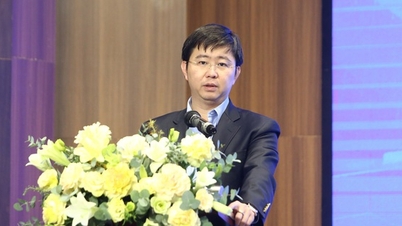
French Ambassador to Vietnam, Mr. Olivier Brochet shared within the framework of the launching ceremony of the program " Hanoi Heritage Tourism Journey" on the morning of December 3, at Quan Thanh Temple, Hanoi.
Accordingly, four journeys to explore the unique heritage of the Capital are new experiences, supported by an interactive map system, the H-Heritage application and a QR code system at many relic sites in the city center that have been introduced to the public.
Ancient relics "awaken"
Perhaps, there are few places where ancient relics still exist silently in the heart of modern residential areas, where the past and present intertwine in every street, house and lifestyle like Hanoi. However, most of those values are present simply and humbly in communal houses, temples, pagodas, and shops hidden deep in alleys, little known, and rarely introduced systematically.
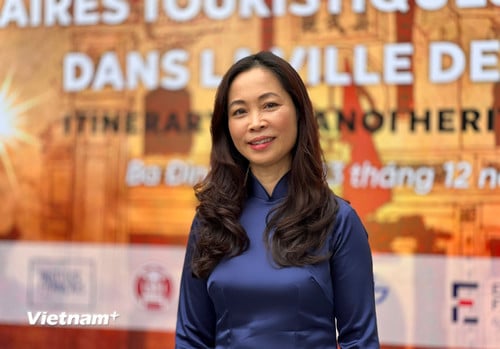
Dr. Nguyen Thi Hiep. (Photo: Mai Mai/Vietnam+)
Based on this reality, the program "Hanoi Heritage Tourism Journey" was born to help people and tourists identify and connect with heritage through new thinking: combining academic research and modern digital technology.
Sharing on the sidelines of the event with reporters from VietnamPlus e-newspaper, Dr. Nguyen Thi Hiep (French International Technical Cooperation Agency - Expertise France, Scientific Coordinator of the Project), said that the project chose a method combining field surveys, document analysis, training and application of mapping technology.
Accordingly, the implementation team surveyed more than 100 ancient relics in Hanoi. A huge archive of documents in French, Han Nom and Vietnamese was awakened. Then, each relic was vividly recreated through complete records, digitized on electronic maps and integrated into the H-Heritage application. With just a smartphone, visitors can touch history.
“The travel itineraries we build are aimed at all audiences: not only serving simple experiential tourism but also as a tool for learning cultural knowledge, an educational tool and finally a research document for students and scientists. Thus, just one platform but integrating many functions,” Dr. Nguyen Thi Hiep shared.
Notably, one of the impressive results of the Project is the construction of an online heritage journey website and mobile application (QR code) so that Vietnamese people and international friends can access and learn about Hanoi's heritage in the most complete, quick and convenient way.
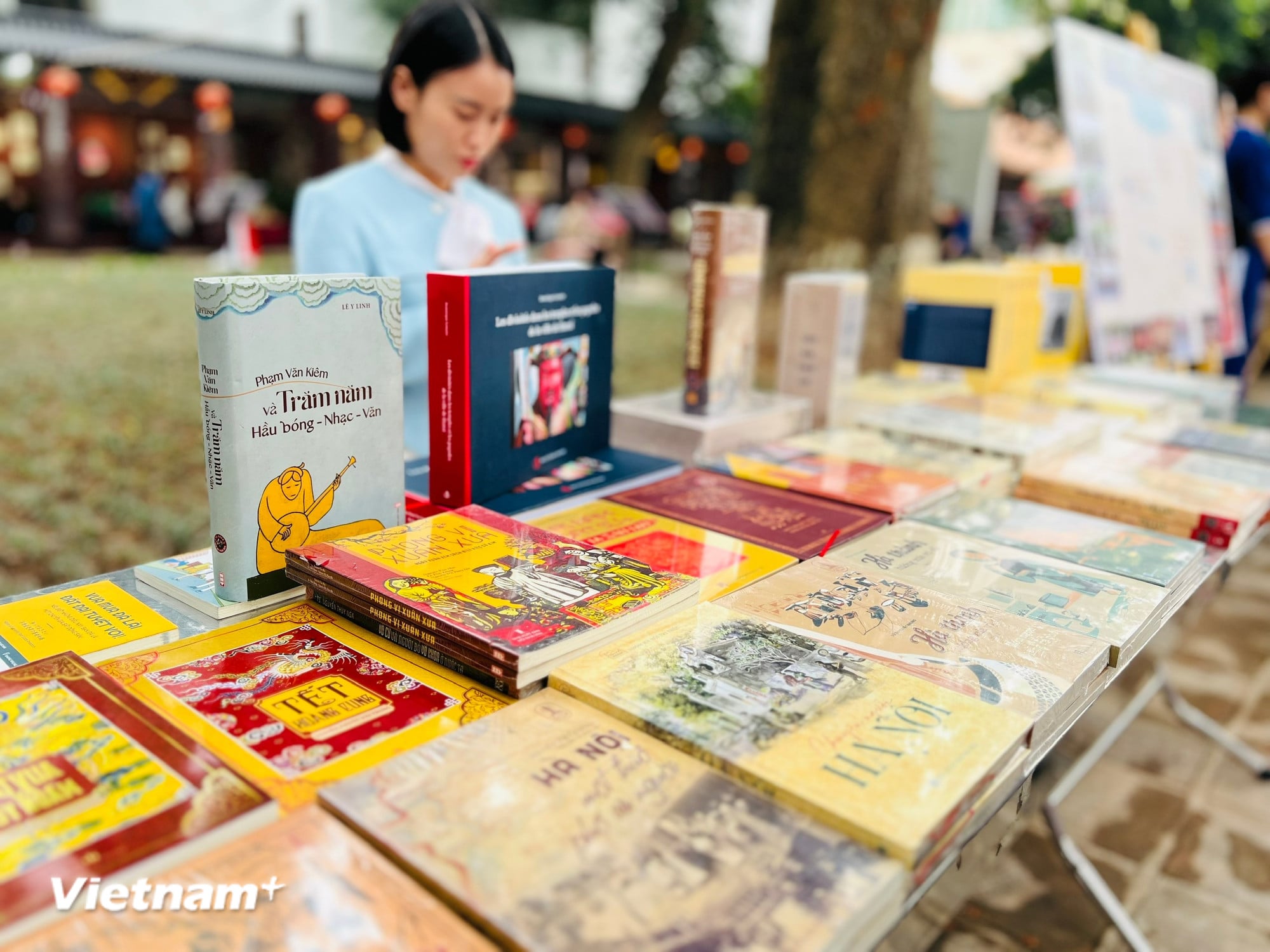
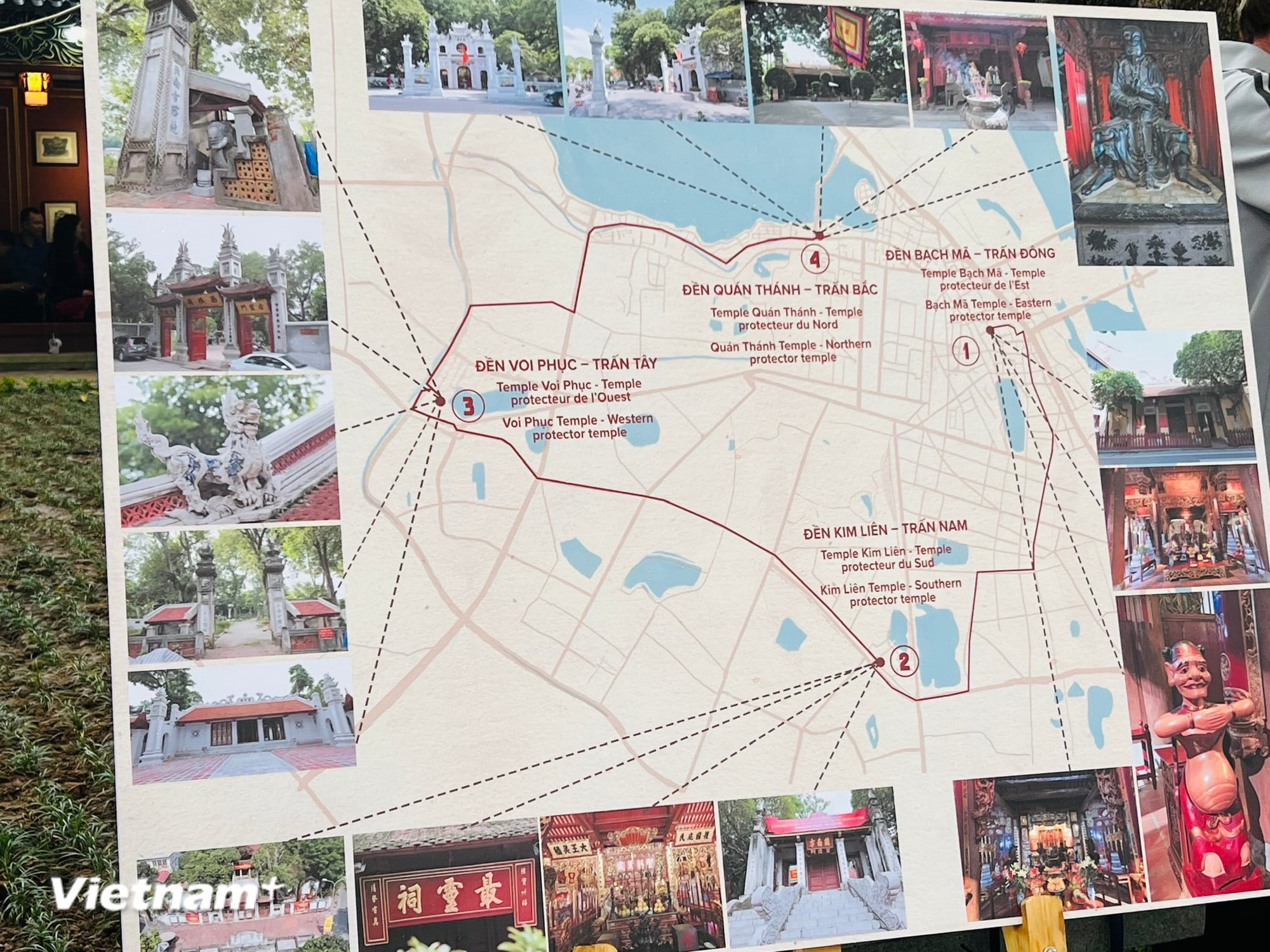
Hanoi's unique heritage in books and maps introducing the Project's experience journey at the event. (Photo: Mai Mai/Vietnam+)
Experts consider this an important step in bringing heritage knowledge closer to the public and tourists, turning visiting, learning and researching heritage into an interactive and flexible experience.
“We have selected 28 typical relics, divided into four heritage journeys associated with four traditional beliefs of the Vietnamese people including: Tu Tran, Mau Temple, Communal House of the Ancestors and Hanoi Pagoda. Each journey not only gathers a group of relics, but also tells a linked story, reflecting the spiritual structure and memories of the people of Hanoi past and present,” said Dr. Nguyen Thi Hiep.
According to Ambassador Olivier Brochet, a thorough research was carried out for each site in the four itineraries: scientific descriptions, ancient and modern photographic materials, authentic historical quotations, data from the EFEO archives and inventories. This set of documents was selected, processed, systematized, then digitized and integrated into a map based on geolocation. All are connected in an interactive digital system, easily accessible via QR codes and the H-Heritage heritage application.
More than just experiences…
This is an activity within the framework of the FEF-R Patrimoine project, sponsored by the French Ministry for Europe and Foreign Affairs (through the French Embassy and the French Institute in Vietnam - IFV), in coordination with the University of Social Sciences and Humanities - Vietnam National University, Hanoi (USSH - VNU), the French School of the Far East (EFEO) and the Francophone University Organization (AUF).
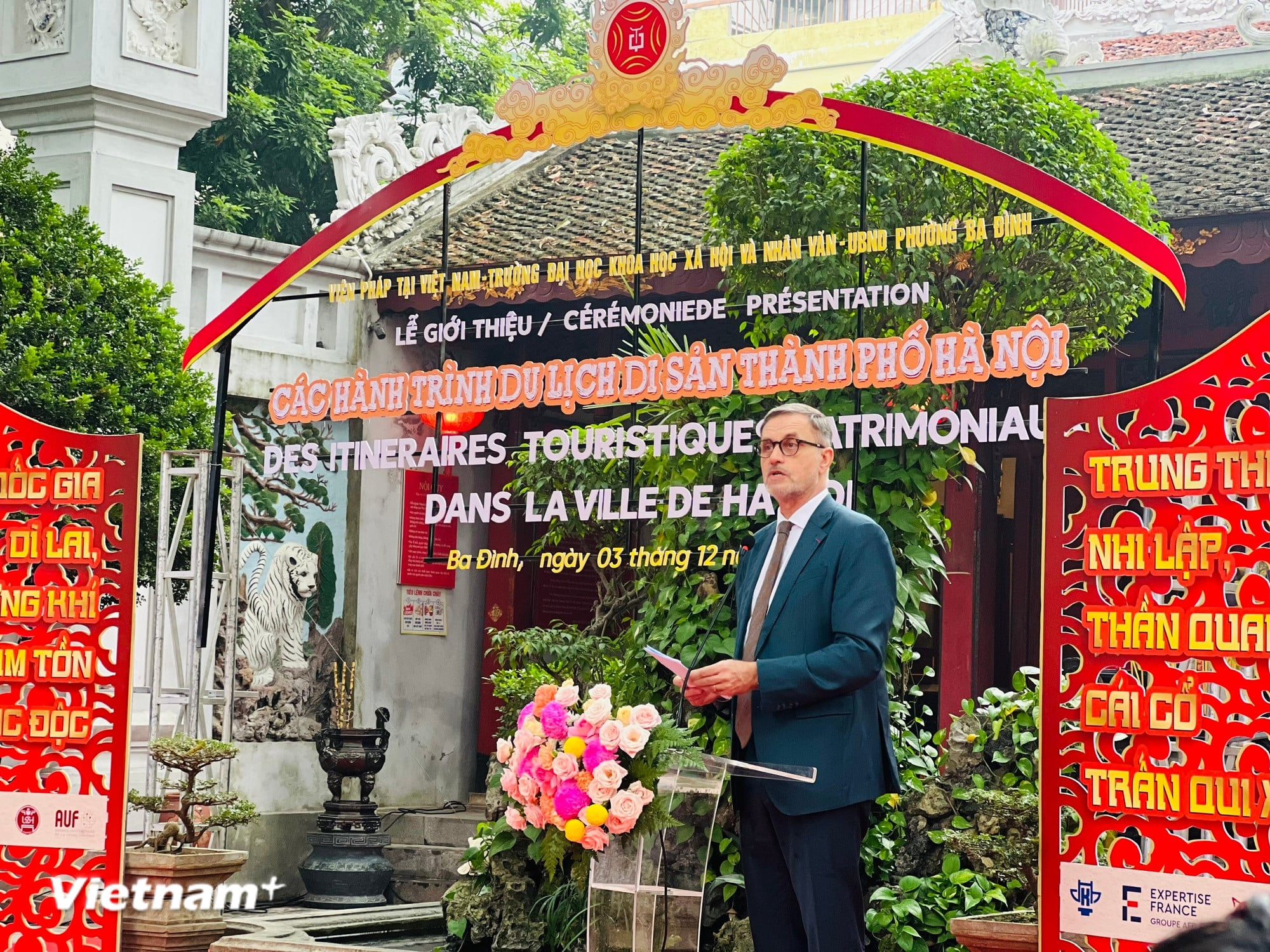
French Ambassador to Vietnam Olivier Brochet speaks at the event. (Photo: Mai Mai/Vietnam+)
As the central area of the Program, the leaders of Ba Dinh Ward said they have implemented many synchronous and effective solutions to preserve traditional historical and cultural values.
In particular, over the past year, French-Vietnamese research groups have been working tirelessly to record, analyze and introduce Hanoi's special heritages. Thanks to that, four thematic heritage itineraries have been born, including: Gods guarding the four directions of the ancient Thang Long-Hanoi citadel; Mother Goddess temples; Village communal houses worshiping the ancestors of traditional crafts; Buddhist worshiping establishments and religious spaces.
Ambassador Olivier Brochet stressed that these itineraries are not only for tourists. They are also an effective educational tool for schools, high schools and universities; a means of cultural communication for tour guides, museums and local authorities; and a valuable methodological model for researchers. The itineraries will help everyone see Hanoi from a new perspective - a historic yet vibrant capital, where tradition is interwoven with the challenges of modernity.
“Cultural heritage is a testament to who we were; and how we care for it today is a reflection of who we want to be in the future. This is a beautiful and promising journey of cooperation; reflecting the richness and strength of the France-Vietnam friendship,” said Ambassador Olivier Brochet./.
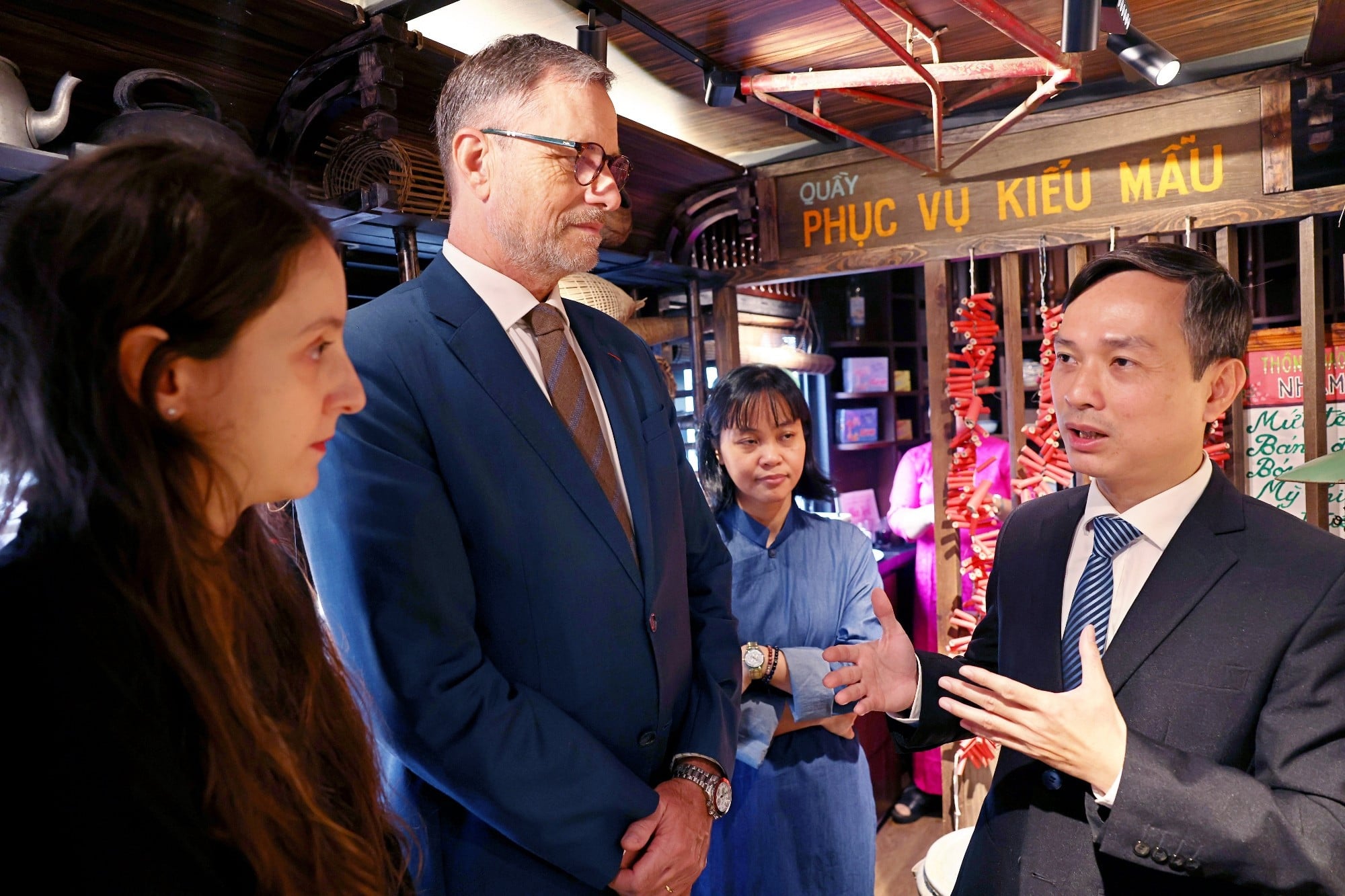
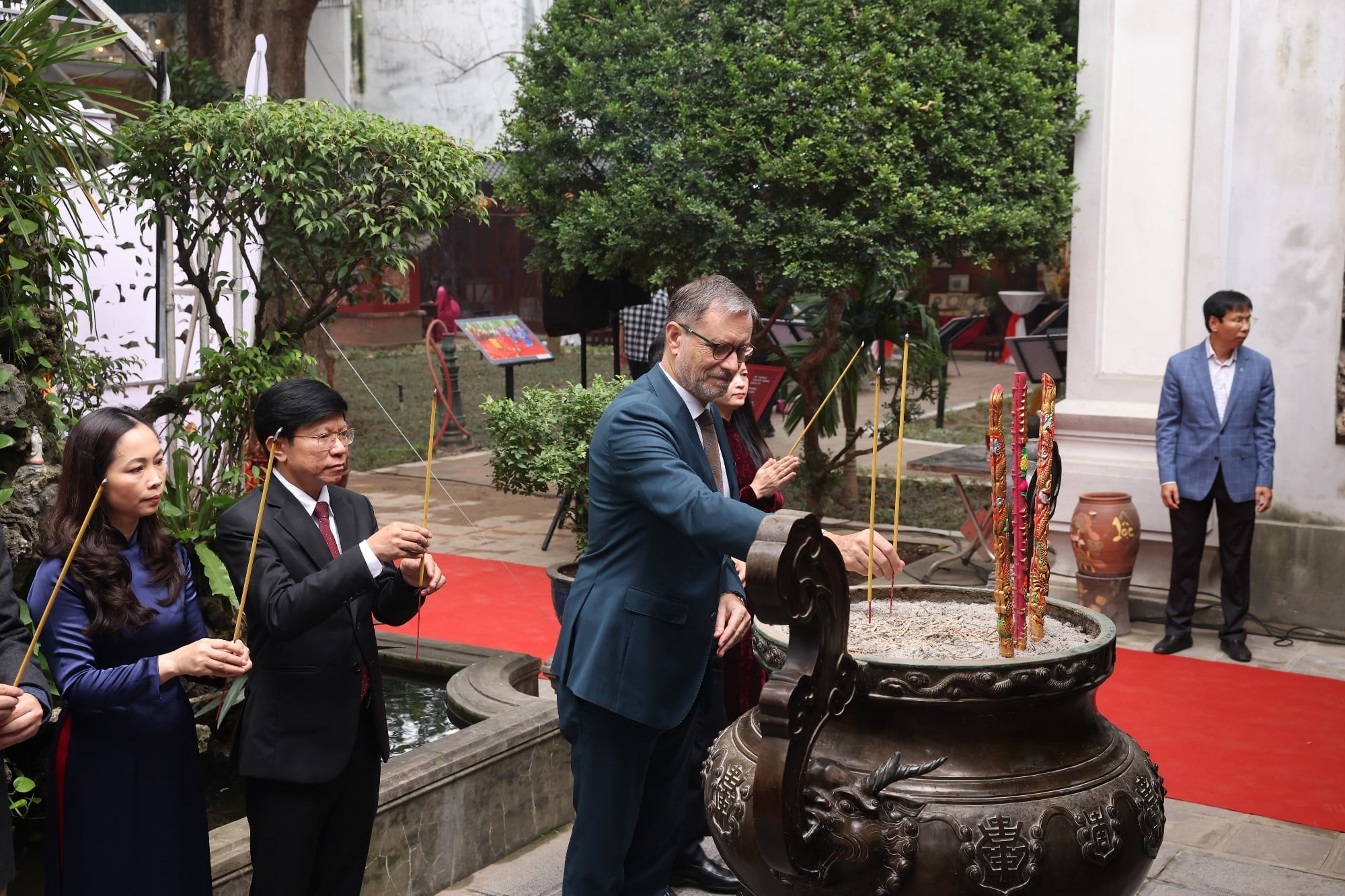
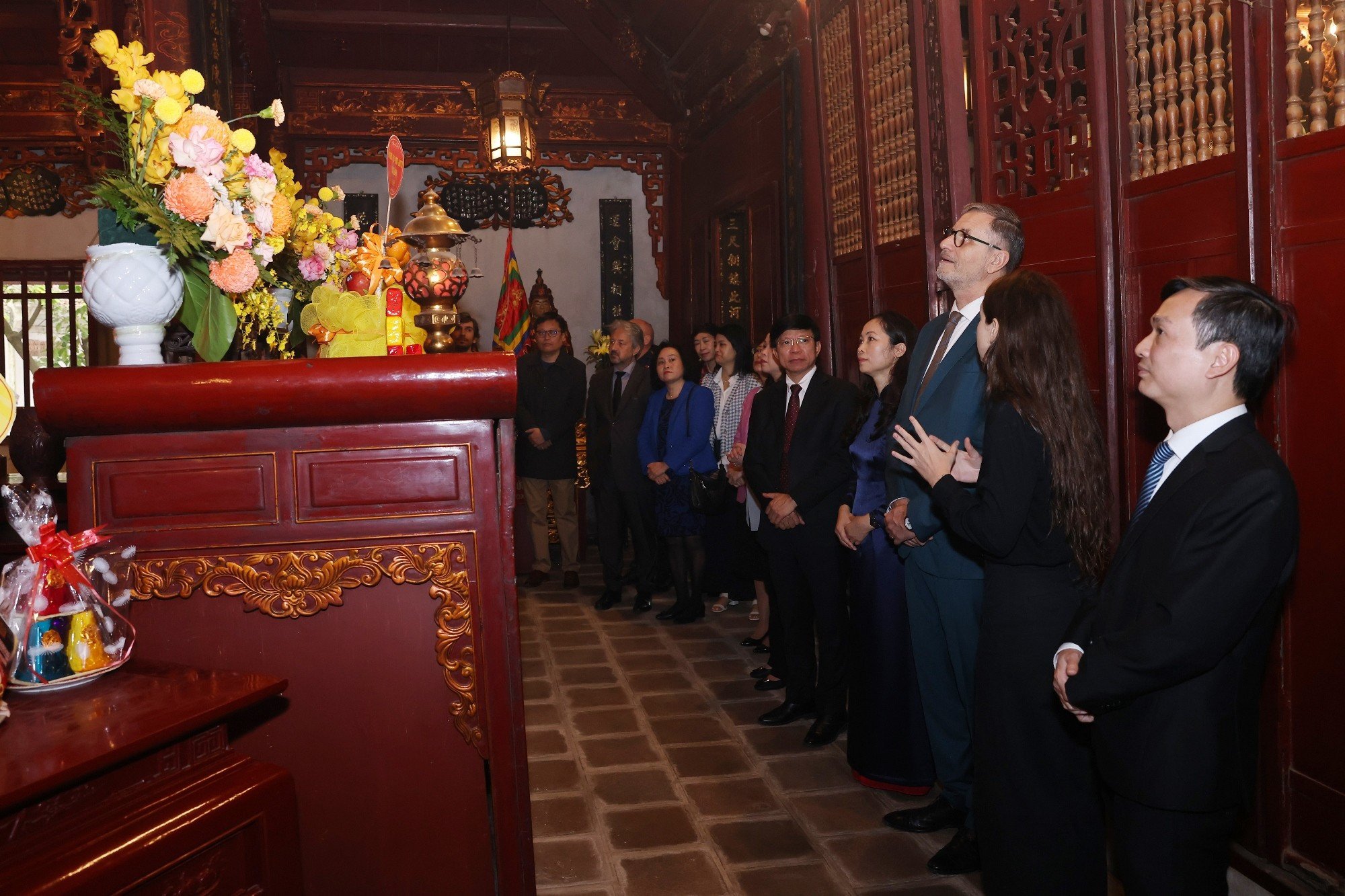
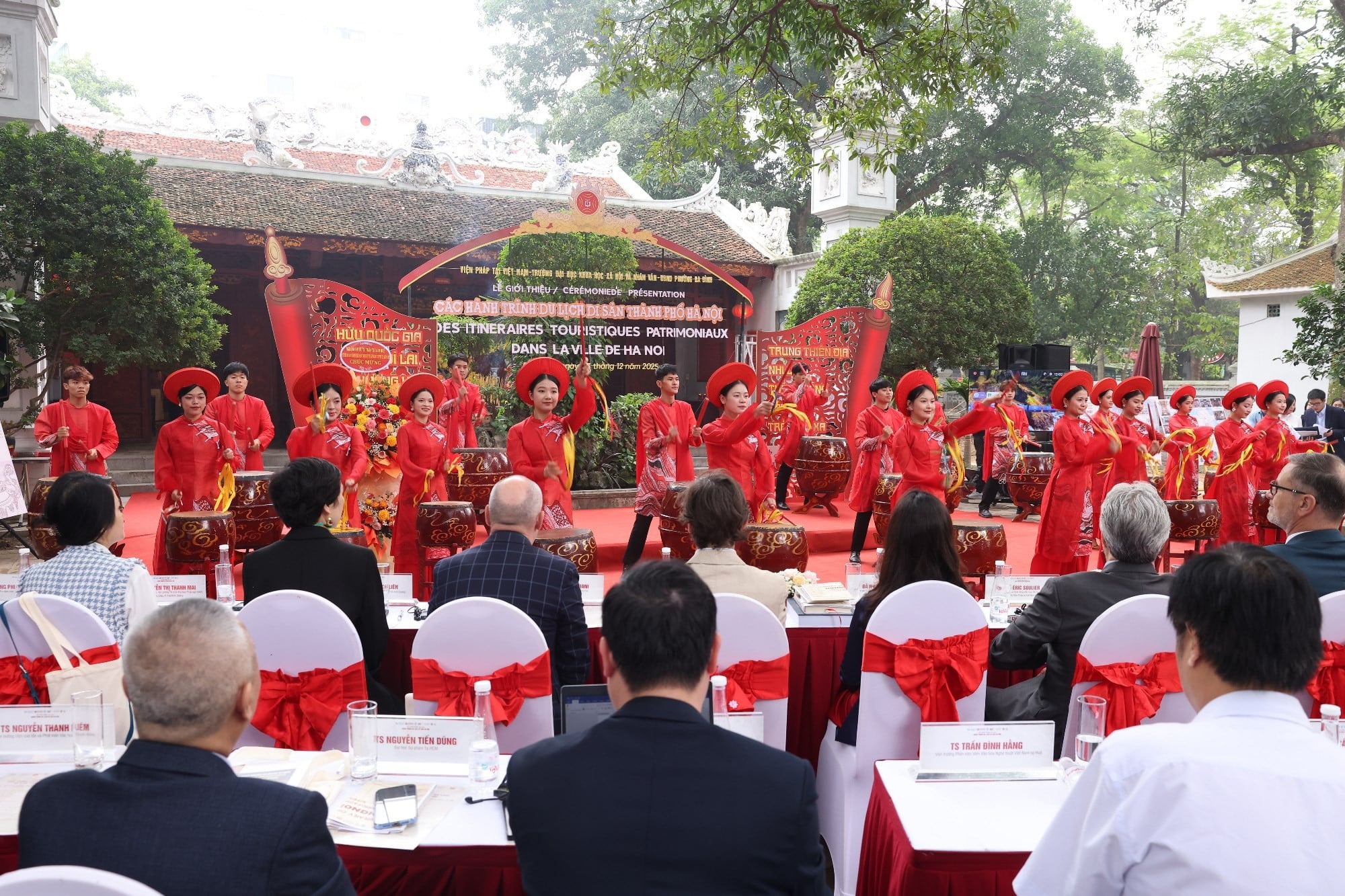
Ambassador Olivier Brochet participated in activities at the launching ceremony this morning at Quan Thanh Temple. (Photo: Mai Mai/Vietnam+)
Journey 1 “Thang Long Tu Tran” (Four Guardian Gods of the Citadel), visitors will explore four sacred temples: Bach Ma, Voi Phuc, Quan Thanh and Kim Lien, guarding the four directions East-West-South-North of Thang Long Citadel. The journey honors the sacred cultural identity and unique spiritual structure of Hanoi, which not only needs human protection but also needs the gods to ensure its well-being.
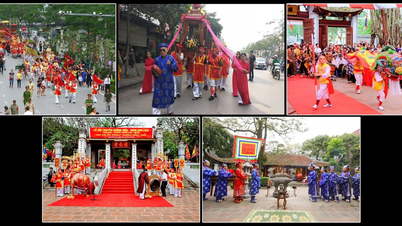
Journey 2 “Mother Goddess Temples” will connect eight temples, shrines of Mother Goddess Lieu Hanh and the Holy Mothers, representing the Three Palaces belief - an intangible cultural heritage recognized by UNESCO. The journey will explore the temples: Dong Ha, Vu Thach, Ba Kieu, Xuan Yen, Dau Temple, Vong Tien, Tay Ho Palace, and Long Bien Station Incense Tree. This unique belief of the Vietnamese people blends rituals, music, dances and the spirit of honoring the Mother.
The 3 "Communal Communal Houses of the Ancestors" journey will take visitors to explore the communal houses of the Ancestors of Hanoi such as: Kim Ngan (the ancestor of the goldsmith profession), Dong Lac (the ancestor of the ancient yem profession), Pha Truc Lam (the ancestor of the leather and footwear profession), Ha Vi communal house (the ancestor of the lacquer profession), Phuc Hau temple (the ancestor of the mirror-plating profession), Tu Thi communal house (the ancestor of the embroidery profession), Lo Ren communal house (the ancestor of the blacksmithing profession), Ngu Xa communal house (the ancestor of the bronze casting profession).
Journey 4 “Hanoi Pagodas,” are pagodas associated with the name of Monk An Thien (Phuc Dien) - one of the representative ancestors of Vietnamese Buddhism. From Bao Thien Pagoda, now only in memory, to Lien Tri, Ham Long and Lien Phai… The journey recreates the historical and spiritual flow of Thang Long, where memory, technology and faith meet, telling the story of loss - survival - regeneration and preservation of heritage.
(Vietnam+)
Source: https://www.vietnamplus.vn/danh-thuc-di-san-thu-do-ha-noi-voi-nhung-hanh-trinh-khac-biet-va-doc-dao-post1080762.vnp


![[Photo] Cat Ba - Green island paradise](/_next/image?url=https%3A%2F%2Fvphoto.vietnam.vn%2Fthumb%2F1200x675%2Fvietnam%2Fresource%2FIMAGE%2F2025%2F12%2F04%2F1764821844074_ndo_br_1-dcbthienduongxanh638-jpg.webp&w=3840&q=75)























![[VIMC 40 days of lightning speed] Da Nang Port: Unity - Lightning speed - Breakthrough to the finish line](https://vphoto.vietnam.vn/thumb/402x226/vietnam/resource/IMAGE/2025/12/04/1764833540882_cdn_4-12-25.jpeg)




































Comment (0)