

Budget revenue increased significantly
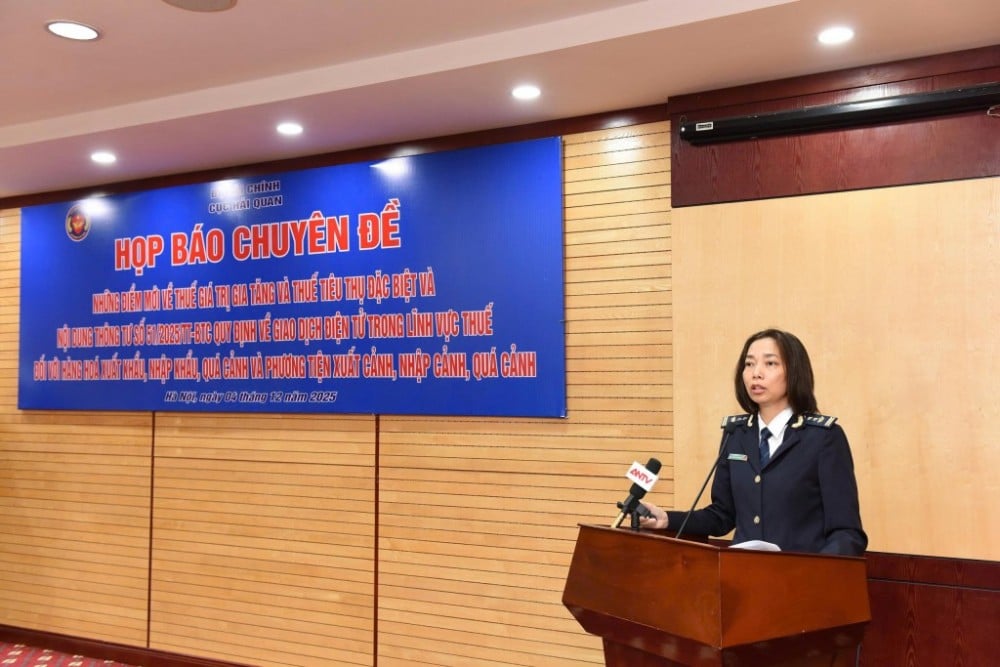
According to Ms. Nguyen Thi Khanh Huyen, from February 18, Decision No. 01/2025/QD-TTg took effect, ending the exemption of VAT for small-value goods sent via express delivery services. This is a very important adjustment of tax policy. Collecting VAT on small-value goods via express delivery has increased budget revenue, ensured fairness, prevented fraud and conformed to international practices.
“After 8 months of implementation, Customs has recorded many clear results, in particular, budget revenue has increased significantly. As of September 15, the amount of VAT collected from low-value goods sent via express delivery service was 1,035 billion VND, contributing to ensuring resources for the country,” said Ms. Nguyen Thi Khanh Huyen.
In addition, this new policy also ensures fairness in competition. If previously, small-scale imported goods were exempted from tax while domestically produced goods were subject to tax, now, tax collection has created a more equal playing field for domestic enterprises.
According to the Customs Department, a notable content is the expansion of the list of goods not subject to VAT, thereby helping businesses reduce legal risks and compliance costs.
Specifically, imported goods for financial leasing are allowed to be transported directly into duty-free zones without being subject to VAT. Exported products belonging to the group of resources and exploited minerals (raw or processed according to the Government 's List) are determined not to be subject to tax, in line with the policy of restricting the export of raw resources. In addition, the Law also legislates tax exemption cases such as: Movable assets within the import tax exemption limit; goods exchanged by border residents in the prescribed list; relics and antiques imported by competent authorities.
The previous 5% tax incentives have also been adjusted to 10% for groups of goods such as sugar and sugar production by-products, specialized equipment for teaching - research - experimentation, pre-processed rosin, unprocessed forest products...
“The law also clearly stipulates the principles for applying tax rates: Business establishments with many types of goods and services must declare according to each corresponding tax rate; if they cannot be distinguished, they must pay at the highest rate. This regulation aims to limit the situation of false declaration or under-declaration due to mistakes or abuse,” said a representative of the Customs Department.
Thus, according to the assessment of the Customs Department, the legalization and synchronization of regulations from July 1 will help businesses be more proactive in production and import-export plans; at the same time, create conditions for the Management Agency to strengthen supervision, apply technology in exchanging tax data and reduce administrative procedures.
Urgently improve the technology system

The Customs Department has issued Document No. 13103/CHQ-GSQL on the plan to implement the Customs Procedures System for Import and Export Goods Group 2 sent via Express Delivery Service (AVP-ECOM System). Accordingly, from August 1, it will be applied to express delivery businesses (including air, road, and rail).
According to the Customs Department, the application of AVP-ECOM in the management of small-value goods has helped increase transparency, shorten processing time and prevent VAT loss. The development and completion of the electronic customs declaration system has helped clear goods quickly and facilitated the management of daily goods declarations in large quantities; at the same time, it has not interrupted commercial activities.
In the coming time, the Customs authority will focus on completing information technology infrastructure, upgrading the system, and perfecting business processes so that tax declaration and payment will be more convenient, transparent, and accurate.
Regarding the special consumption tax group, the Special Consumption Tax Law No. 66/2025/QH15 (effective from January 1, 2026) has many notable changes such as: Removing the regulation that air conditioners with a capacity of 24,000 BTU or less are subject to special consumption tax, expanding the scope of goods not subject to tax such as processed export goods, re-imported goods returned by foreign countries, helicopters for rescue and training. The Law also adds cases of tax refund and deduction.
However, some items will be managed more strictly, such as sugary drinks with more than 5g/100ml are subject to special consumption tax; tobacco and alcohol will be subject to a higher tax rate mechanism and additional absolute tax will be added according to the roadmap. The new regulations also clarify the taxable objects such as: airplanes, helicopters, gliders; and stipulate that votive paper is a taxable commodity, except for votive paper that is children's toys and teaching aids.

The policy mechanism and legal documents of the Customs Authority will be amended and supplemented to meet the new organizational model, serve the goal of building a digital customs sector and implement a number of key Resolutions of the Politburo .
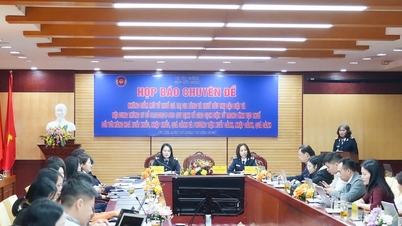
When there is a new policy, the Customs Department will organize information seminars for the press because this is an important channel to disseminate and propagate the new policy of the State Management Agency to the business community, helping businesses understand and properly implement regulations; at the same time, support the Customs Department in the process of performing its duties."
In recent years, countries in the European Union (EU) have abolished the VAT exemption for shipments of 22 euros or less. The United Kingdom (England, Scotland and Wales) also abolished the VAT exemption for imported goods with a total value of 135 pounds or less from 1/1/2021.
In Australia, the VAT exemption for goods valued at USD 666 or less was abolished; similarly, in Singapore, from January 1, 2023, the VAT exemption for low-value goods, especially in the e-commerce sector, was also abolished. From May 1, 2024, Thailand also collected VAT on all imported goods, regardless of value.
Source: https://baotintuc.vn/kinh-te/rut-ngan-thoi-gian-xu-ly-chong-that-thu-thue-gia-tri-gia-tang-20251204154428550.htm

![[Photo] Cat Ba - Green island paradise](/_next/image?url=https%3A%2F%2Fvphoto.vietnam.vn%2Fthumb%2F1200x675%2Fvietnam%2Fresource%2FIMAGE%2F2025%2F12%2F04%2F1764821844074_ndo_br_1-dcbthienduongxanh638-jpg.webp&w=3840&q=75)
























































![[VIMC 40 days of lightning speed] Da Nang Port: Unity - Lightning speed - Breakthrough to the finish line](https://vphoto.vietnam.vn/thumb/402x226/vietnam/resource/IMAGE/2025/12/04/1764833540882_cdn_4-12-25.jpeg)










































Comment (0)