

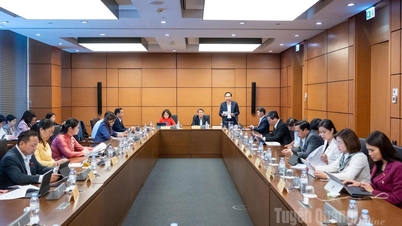
This afternoon, the National Assembly discussed in groups the investment policy for the National Target Program on new rural areas, sustainable poverty reduction, and socio-economic development in ethnic minority and mountainous areas by 2035.
The program is a consolidation of three national target programs: new rural construction; sustainable poverty reduction; and socio-economic development in ethnic minority and mountainous areas.
The post-merger program must ensure continuity.
This policy is expected to lay the foundation for a continuous, comprehensive and focused policy for ethnic minority and mountainous areas in the next 10 years. However, delegate Cao Thi Xuan ( Thanh Hoa delegation) emphasized concerns about the feasibility of the program when the resources for implementation are still too limited.
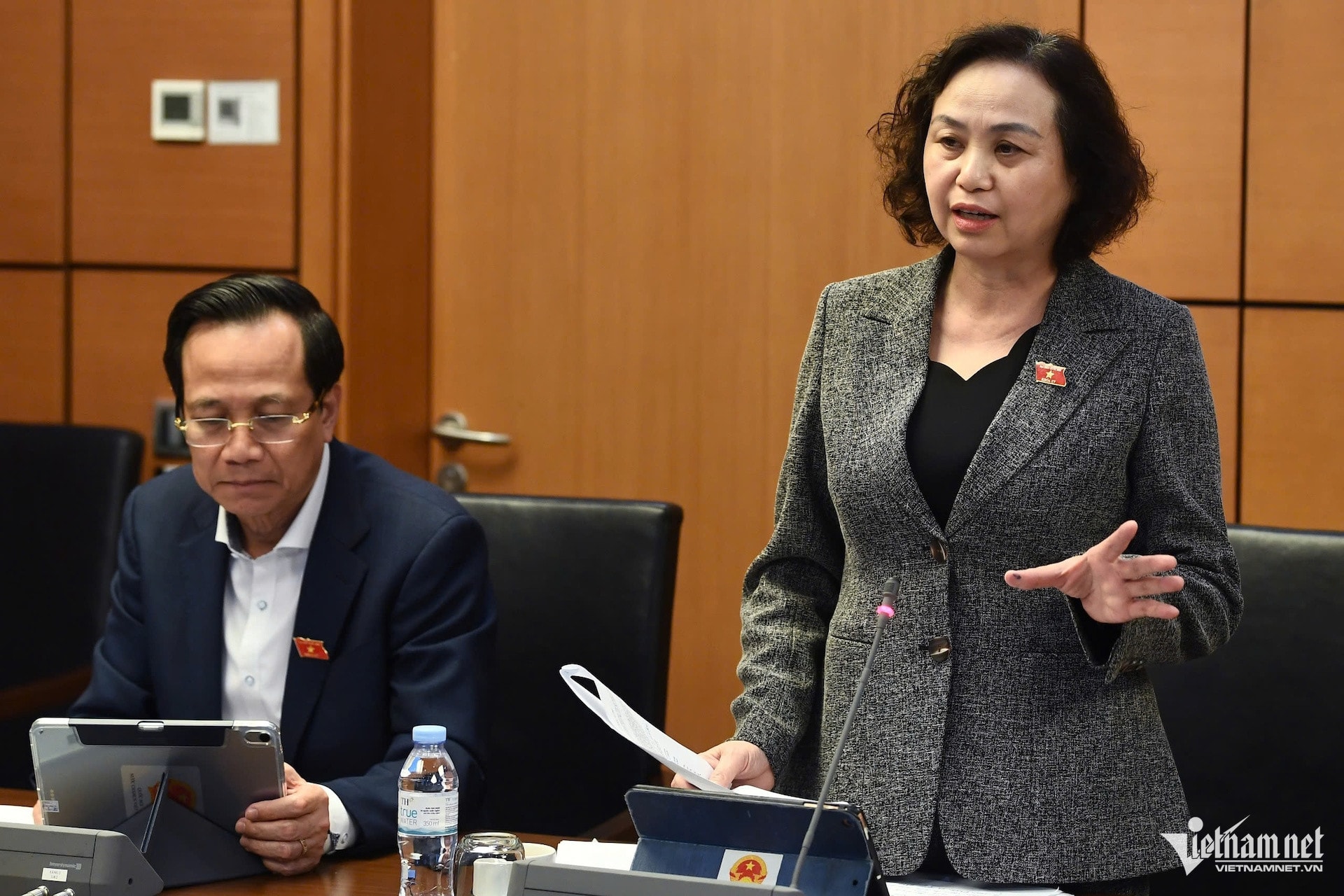
“The program implementation period is 10 years, from 2026 to 2035. The total estimated capital is 2.8 million billion VND for 10 years, 500 trillion VND for the first 5 years, however, in the immediate future, only 100 trillion VND can be allocated for all 3 programs in 5 years" - delegate Cao Thi Xuan cited the report and asked about the level of compatibility between goals and resources.
According to the delegate, the goal is very ambitious but the resources are too thin. “With such a large goal and only 100 trillion VND in resources, it is necessary to review very carefully to ensure feasibility. This is a public investment program, if it is spread out, not focused, and does not have enough money, it will easily lead to waste.”
Delegates highly agreed with the National Assembly Standing Committee's policy of merging into one program. However, the post-merger program must ensure the inheritance, continuity, multi-objective, focused, key points and consistency of all three old programs.
The Government's submission and the review report clearly stated: when integrated, there are 2 main components. Component 1 is used for the whole country, with 10 tasks. Component 2 prioritizes the development of ethnic minority and mountainous areas (special groups, 5 tasks).
However, during the review, the agency requested a thorough review to clearly identify what is inherited from the 3 old programs, what is new policy, and what is integrated content.
In Notice No. 4655 of the National Assembly Standing Committee dated November 27, it is clearly stated: Agree to assign one agency to be the focal point and program owner, clarify the responsibilities of the program owner agency and clearly assign the agency in charge of each component.
Emphasizing that the priority areas and main focus of the program are ethnic minority and mountainous areas, delegates suggested that it is extremely important and necessary to clearly define the position, role and participation of the Ministry of Ethnic Minorities and Religions in implementing the program.
"I propose that the Ministry of Ethnic Minorities and Religions preside over component 2, the Ministry of Agriculture and Environment preside over component 1, and the overall program owner be a single ministry as agreed," said delegate Cao Thi Xuan.
According to Ms. Xuan, the Ministry of Agriculture and Environment has not clearly accepted the conclusion of the National Assembly Standing Committee in the submission. She requested the Government to accept the opinion of the National Assembly Standing Committee in Notice No. 4665 and have a satisfactory explanation for not implementing the conclusion of the National Assembly Standing Committee.
"I suggest that the Drafting Committee seriously absorb the conclusions of the National Assembly Standing Committee, the verification reports of the Ethnic Council and the National Assembly agencies to present them before the National Assembly votes to approve this program," emphasized delegate Cao Thi Xuan.
Proposal to diversify capital sources
Regarding the resource mobilization mechanism, Thanh Hoa province delegates expressed concern that of the 100 trillion VND expected for the first 5 years, the state budget only accounts for 8%, while localities must contribute up to 33%. The localities implementing this program are mountainous provinces, so this regulation will create difficulties for localities. Mobilizing 28-30% from people and businesses is very difficult to implement.

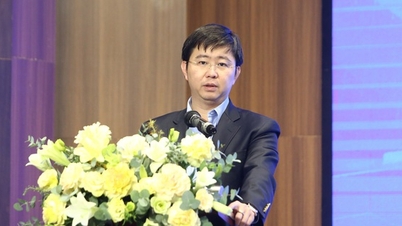
Agreeing with the opinion of delegate Cao Thi Xuan, delegate Mai Van Hai (Thanh Hoa) said that many mountainous provinces have limited budget conditions, so mobilizing local capital will be very difficult. The problem is how to make the capital source meet the implementation of the major goals set out in the program.
Delegate Mai Van Hai proposed the need to diversify capital sources, not only relying on the state budget but also mobilizing from economic sectors, enterprises, banks, and people.
Must resolve the specific differences between ethnic minority and mountainous areas
Speaking at the group, delegate Nguyen Huu Thong (Lam Dong) said: The three national target programs for the 2021-2025 period all aim at sustainable development goals, but the core nature of each program has clear differences.
The new rural development program focuses on standardizing infrastructure and public services in rural areas in general, with a universal criteria system, aiming for even development among regions.
The sustainable poverty reduction program focuses on removing bottlenecks in livelihoods, employment, and ensuring social security for poor households nationwide.
The socio-economic development program for ethnic minority and mountainous areas is of a completely unique nature: it addresses long-standing historical issues, accumulated over many generations, associated with harsh natural conditions, lack of synchronous infrastructure, different production practices, wide development gaps, and the need to preserve culture and maintain border security. This is the only program that directly addresses the “poor core”, “difficult core” and “weak core” of the country.
Because of their different nature, the implementation mechanism, beneficiaries, investment methods and policy approaches of each program cannot be identical.
Therefore, when implementing the integration policy, the biggest challenge is how to ensure the specificity, continuity and focus of the ethnic policy, not allowing the specific goals to be diluted into the general goals.
Source: https://hanoimoi.vn/su-tham-gia-cua-bo-dan-toc-va-ton-giao-trong-chuong-trinh-muc-tieu-quoc-gia-la-het-suc-quan-trong-725606.html
![[Photo] Cat Ba - Green island paradise](/_next/image?url=https%3A%2F%2Fvphoto.vietnam.vn%2Fthumb%2F1200x675%2Fvietnam%2Fresource%2FIMAGE%2F2025%2F12%2F04%2F1764821844074_ndo_br_1-dcbthienduongxanh638-jpg.webp&w=3840&q=75)



































![[VIMC 40 days of lightning speed] Da Nang Port: Unity - Lightning speed - Breakthrough to the finish line](https://vphoto.vietnam.vn/thumb/402x226/vietnam/resource/IMAGE/2025/12/04/1764833540882_cdn_4-12-25.jpeg)


































Comment (0)