

The event also sets out a clear legal framework and investment orientation to mobilize resources to develop national energy infrastructure, creating new momentum for growth.
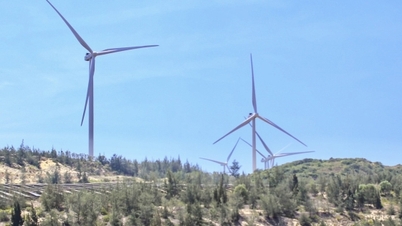
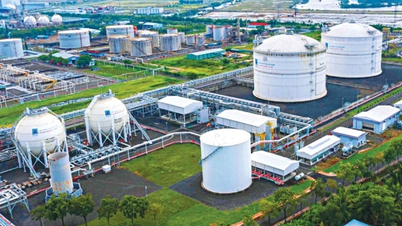
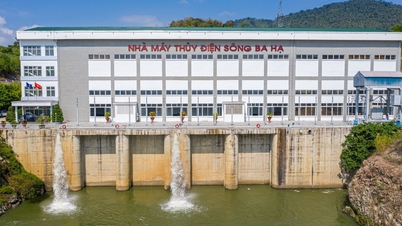
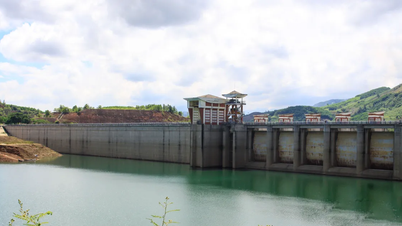
Decision No. 2634/QD-TTg takes effect immediately from the date of issuance with a list of 32 power source projects (including 21 thermal power plants; 9 hydropower plants; 2 offshore wind power plants), along with 7 LNG (liquefied natural gas) storage projects, 7 gas-electricity project chains, a series of power line and transformer station projects to release capacity and increase transmission, 1 upgrade and expansion project at Dung Quat Oil Refinery and 3 renewable energy industrial - service center projects in the South Central - Southern regions...
Decision No. 2634/QD-TTg is a strategic lever for socio -economic development. When the energy foundation is consolidated with new power sources, LNG warehouses ensuring gas, and a strong transmission system, Vietnam can confidently accelerate industrialization, develop processing, manufacturing, logistics and large-scale manufacturing industries. A stable and diverse energy infrastructure is a prerequisite for maintaining high growth rates, attracting investment, and ensuring a stable supply chain.
With abundant and reasonably distributed energy sources, people's lives also benefit: Stable electricity - gas - fuel helps reduce shortages and load imbalances; daily life, agricultural production, small-scale industry, services - urban areas all have conditions to develop. In particular, the addition of many energy sources, from thermal power, hydropower to offshore wind power and LNG power, contributes to diversifying the power source structure, increasing the safety and flexibility of the system.
Not only that, the list also opens up opportunities for the development of renewable energy, supporting industries, equipment and service support industries; contributing to job creation and promoting local economic development.
To promote the above orientation effectively, a clear and synchronous action roadmap is needed.
Firstly, it is necessary to mobilize resources, both public and private. The State needs to have preferential and transparent policies; encourage private enterprises and foreign investment to participate in project implementation; reduce budget pressure, and speed up construction progress.
Second, developing supporting industries, from equipment and material production to services, will enhance the domestic value chain, reduce imports, and increase the localization rate. Along with that, it is necessary to focus on developing modern technical and technological human resources.
Third, inter-sectoral and inter-local planning and coordination need to be carried out closely, openly and transparently, from land use planning, resettlement compensation, environment, traffic infrastructure, to urban development to avoid overlap and problems.
Fourth, develop clean hydropower, offshore wind power, and renewable energy in parallel, along with a modern transmission system, creating the foundation for a diverse, safe, and sustainable energy industry.
Equally important is the need for transparent supervision, clear resource allocation and high responsibility from ministries, branches, local authorities and investors so that projects are not only approved on paper, but are implemented "in reality", on schedule and with the right quality.
This is a great opportunity for Vietnam to ensure energy security, expand industrial and economic development, improve people's lives, and move towards a sustainable and modern energy system. The road ahead is certainly full of challenges, but the legal framework established by Decision No. 2634/QD-TTg can become a solid corridor for Vietnam to make a strong breakthrough, towards the goal of high growth, comprehensive and sustainable development.
Source: https://hanoimoi.vn/kien-tao-suc-bat-moi-cho-tang-truong-725699.html

![[Photo] 60th Anniversary of the Founding of the Vietnam Association of Photographic Artists](/_next/image?url=https%3A%2F%2Fvphoto.vietnam.vn%2Fthumb%2F1200x675%2Fvietnam%2Fresource%2FIMAGE%2F2025%2F12%2F05%2F1764935864512_a1-bnd-0841-9740-jpg.webp&w=3840&q=75)
![[Photo] National Assembly Chairman Tran Thanh Man attends the VinFuture 2025 Award Ceremony](/_next/image?url=https%3A%2F%2Fvphoto.vietnam.vn%2Fthumb%2F1200x675%2Fvietnam%2Fresource%2FIMAGE%2F2025%2F12%2F05%2F1764951162416_2628509768338816493-6995-jpg.webp&w=3840&q=75)














































































Comment (0)