

Operating two-level local government more effectively
After more than 2 years of implementing Resolution 98, it shows that the special mechanism has created an important driving force for the development of Ho Chi Minh City. However, the implementation process still has bottlenecks that cannot be resolved by current mechanisms.
Many projects have to wait for guidance documents, slowing down the progress of major projects, especially in the fields of land, public investment and public-private partnership. That raises the urgent need to "upgrade" Resolution 98 to create a strong enough legal corridor for the Ho Chi Minh City government.
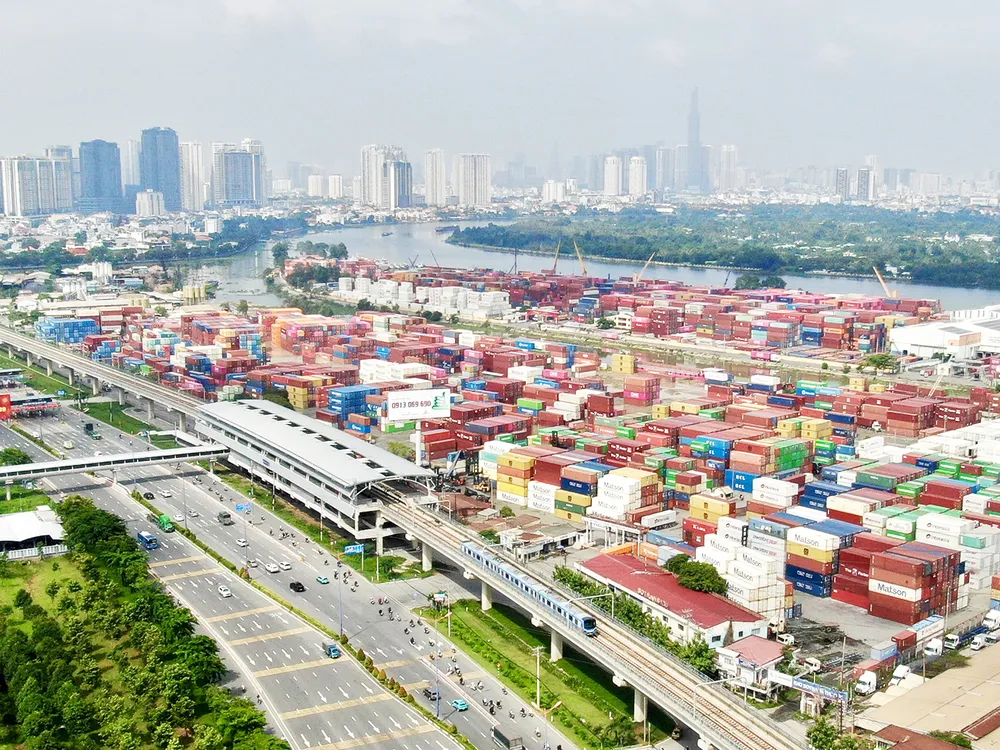
In the submission of the draft Resolution of the National Assembly amending and supplementing a number of articles of Resolution 98, the Government emphasized the need to amend Resolution 98 in the direction of expanding the rights of Ho Chi Minh City, giving Ho Chi Minh City strong legal tools to proactively handle problems without having to "wait for opinions" as before. Strengthening decentralization and delegation of authority also helps increase the proactiveness, creativity and autonomy, self-responsibility of Ho Chi Minh City...
National Assembly Delegate (NAD) Nguyen Thi Le, former Chairwoman of the Ho Chi Minh City People's Council, analyzed that the proposed additional mechanisms and policies will "fill institutional gaps", helping Ho Chi Minh City have a more complete legal basis to implement long-awaited policies.
The bottlenecks and difficulties that have prevented Resolution 98 from fully operating are the basis for more clearly identifying the "institutional gaps" that need to be promptly filled, creating conditions for Ho Chi Minh City to properly promote its leading role in the new period.
According to National Assembly member Nguyen Thi Le, the revised and supplemented contents have gone straight to the bottlenecks that Ho Chi Minh City is facing, and will open up more "institutional space" for Ho Chi Minh City to act more quickly and flexibly. But that also requires the city to upgrade the capacity of the grassroots government apparatus. Because currently, there are still tasks assigned to the ward level but the authority and responsibility are unclear, leading to grassroots officials not daring to make decisions. Therefore, new powers must go hand in hand with innovation in operating methods, increasing the initiative of wards and communes associated with a transparent accountability mechanism.
National Assembly Delegate Nguyen Thi Hong Hanh, Director of the Ho Chi Minh City Department of Justice, expressed her opinion that the important point of the resolution amending and supplementing Resolution 98 is the spirit of "deep decentralization and high accountability".
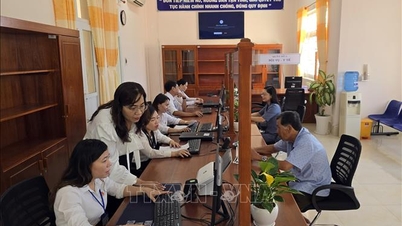
Accordingly, when the authority of the People's Committee of Ho Chi Minh City and the People's Council of Ho Chi Minh City is expanded, at the commune level, grassroots officials can boldly handle work, instead of having to transfer to higher levels for approval. This is a very important factor for the 2-level local government model to operate effectively, with a more compact apparatus but faster decision-making.
* National Assembly Delegate PHAM VAN HOA:
Special mechanism to promote the leading role
We all see the great potential for development and the expansion of population and area of Ho Chi Minh City after the merger, so the current legal framework is no longer commensurate with reality. The Government proposes to amend and supplement Resolution 98 to create conditions for wider urban development.
Ho Chi Minh City's special role as the national economic locomotive, and in the future, it will be built to become an international financial center, so a special mechanism is needed to realize this goal.
* NA DEPUTY DEPARTMENT TRAN ANH TUAN:
Loosen regulations to attract investors
Ho Chi Minh City has now expanded its development space, so it is necessary to review, adjust, and loosen conditions to attract strategic investors to remote areas or to core technology industries and industries with high added value such as artificial intelligence, semiconductor chips, etc.
Similarly, to attract investment in the health, education, culture and sports sectors under the public-private partnership model, there must be attractive mechanisms and policies.
For example, in the field of culture and sports, investors must be allowed to exploit commercial activities and the state must supervise at a moderate level. This means that there must be mechanisms and policies to create conditions for investors to exploit and enjoy profits when investing in such projects.
Substantive decentralization, simplified procedures
According to Dr. Nguyen Thi Thien Tri, Ho Chi Minh City University of Law, Ho Chi Minh City has new development space, requiring a wide enough and flexible enough institution to manage a diverse urban area with the development orientation of "1 center - 3 regions - 1 special zone".
The draft resolution amending and supplementing Resolution 98 has many provisions in line with the roadmap to increase decentralization for Ho Chi Minh City, especially in attracting strategic investors and orientation for building the Ho Chi Minh City Free Trade Zone, policy tools that a large city like Ho Chi Minh City needs to develop strongly.
Dr. Nguyen Thi Thien Tri also said that deep decentralization is only truly valuable when the city applies it effectively, transparently and maintains the stability and continuity of policies. Especially in the context of administrative reorganization, reconciling differences in culture, population and policies between regions will be a big challenge for the government's management capacity.
Further analysis, National Assembly Deputy Do Duc Hien also commented that after the arrangement, Ho Chi Minh City will have more space for development, requiring mechanisms and policies to promote the potential and strengths of each region and each field, especially the resonance in general policies for the city to develop faster and more sustainably.
One of the clear priorities is the mechanism for Ho Chi Minh City to better exploit land funds from the TOD model (urban development oriented towards public transport development). The draft resolution amending and supplementing Resolution 98 also continues to promote decentralization and delegation of power so that Ho Chi Minh City can be more proactive in performing related work, without being dependent on central agencies.
Meanwhile, MSc. Vu Son, Institute for Regional Development Studies, Ho Chi Minh City University of Economics, said that being given greater authority in selecting strategic investors and managing land funds helps Ho Chi Minh City restructure the investment ecosystem in a modern direction, strongly attracting industries with high added value such as high technology, specialized healthcare, finance and logistics.
According to Master Vu Son, additional mechanisms and policies not only remove difficulties but also open up opportunities for Ho Chi Minh City to "make timely and priority decisions", creating development momentum for many years to come.
Expressing her agreement, National Assembly Deputy Nguyen Thi Hong Hanh assessed that the contents of the draft resolution amending and supplementing Resolution 98 not only open up new institutional space, but also carry the message that Ho Chi Minh City does not ask for more money, only asks for a strong enough mechanism to fulfill its leading role well.
However, National Assembly Deputy Nguyen Thi Hong Hanh also suggested that expanding authority must increase transparency and post-audit requirements, in order to help the apparatus operate flexibly while still ensuring discipline and tight control of power. This is an important principle when implementing special mechanisms in the largest urban area in the country.
According to the Ho Chi Minh City People's Committee, many key projects in the area have been delayed due to waiting for appraisal, adjustment or inter-sectoral agreement, especially in compensation - site clearance, land allocation, adjustment of zoning plans or detailed plans.
Even the handover of defense land or forest land for projects must go through many steps, leading to a waste of time in investment preparation.
If amended and supplemented, the mechanisms and policies on decentralization and delegation of power to the People's Council and the People's Committee of Ho Chi Minh City will help resolve many issues right at the local level, significantly shortening waiting time, especially for large-scale infrastructure projects such as Ring Road 3, Ring Road 4 or TOD areas associated with metro lines.
This creates conditions for Ho Chi Minh City to speed up progress, proactively allocate resources and quickly deploy projects to serve the people.
Source: https://www.sggp.org.vn/sua-doi-bo-sung-mot-so-dieu-nghi-quyet-98-them-co-che-tang-quyen-chu-dong-cho-tphcm-post826989.html


![[Photo] 60th Anniversary of the Founding of the Vietnam Association of Photographic Artists](/_next/image?url=https%3A%2F%2Fvphoto.vietnam.vn%2Fthumb%2F1200x675%2Fvietnam%2Fresource%2FIMAGE%2F2025%2F12%2F05%2F1764935864512_a1-bnd-0841-9740-jpg.webp&w=3840&q=75)

![[Photo] National Assembly Chairman Tran Thanh Man attends the VinFuture 2025 Award Ceremony](/_next/image?url=https%3A%2F%2Fvphoto.vietnam.vn%2Fthumb%2F1200x675%2Fvietnam%2Fresource%2FIMAGE%2F2025%2F12%2F05%2F1764951162416_2628509768338816493-6995-jpg.webp&w=3840&q=75)



















































































Comment (0)