

December 11, 1993 marked a significant milestone in Vietnam's cultural integration process when the Complex of Monuments of the Hue Imperial City was officially inscribed by UNESCO as a World Cultural Heritage site at the 17th session of the World Heritage Committee held in Cartagena (Colombia).
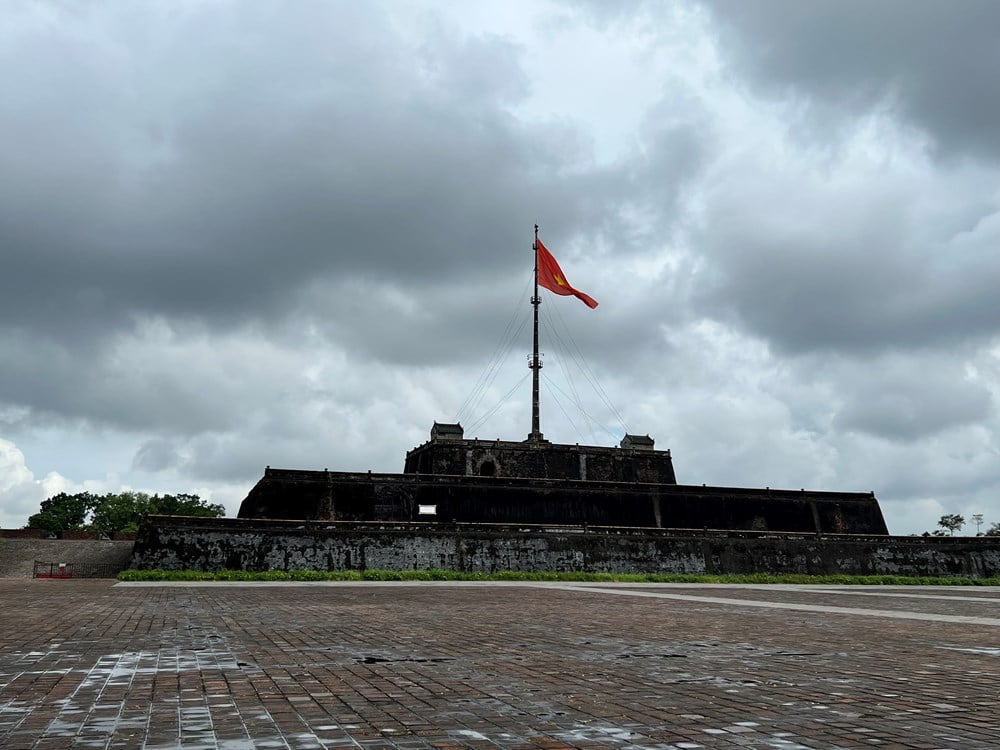
The Complex of Monuments of the Hue Imperial City is the first tangible cultural heritage site in Vietnam to be inscribed by UNESCO as a World Cultural Heritage site. Photo: Tuan Dong
Outstanding global values
According to the UNESCO inscription (1993), the Hue Imperial City Complex was recognized for meeting criteria (iv) and (vi) of the 1972 Convention on the Protection of World Cultural and Natural Heritage.
UNESCO emphasizes that Hue is a prime example of an Eastern capital , harmoniously combining Confucian philosophy, natural landscapes, imperial architecture, and urban structure along the Perfume River and Ngu Mountain.
In its 1993 assessment report, UNESCO affirmed: “Hue exemplifies a unique and harmonious blend of architecture and landscape, reflecting the aesthetic and philosophical thinking of Vietnamese culture during the monarchical period.” (Source: UNESCO, World Heritage Committee Report, 1993 )
After the war, the complex of historical sites faced the serious risk of deterioration. UNESCO itself acknowledged in its Periodic Reporting for Asia-Pacific (2003) that Hue is one of the most remarkably restored heritage sites in Asia , thanks to “devotion and systematic conservation programs spanning many decades.” (Source: UNESCO - Periodic Reporting for Asia-Pacific, 2003 )
Professor Yukio Nishimura , a renowned Japanese expert in architectural conservation, commented at the Vietnam-Japan Conservation Cooperation Workshop in Hue in 2019: "Hue is a prime example of historical urban conservation based on the philosophy of harmony between architectural elements and the natural environment." (Source: Vietnam-Japan Heritage Conservation Workshop, Japan International Cooperation Agency (JICA), 2019 )
Challenges in heritage conservation
Following its recognition by UNESCO, the Vietnamese government implemented numerous special programs aimed at restoring and preserving Hue's heritage. Among these, the Hue Imperial City Conservation and Restoration Project (1996-2010) and subsequent expansions have invested trillions of Vietnamese dong in the restoration of the citadel, palaces, temples, and tombs.
According to the Hue Imperial Citadel Conservation Center, by 2024, nearly 170 architectural works of varying sizes had been restored to different levels, giving a new look to iconic structures such as Ngo Mon Gate, The Mieu Temple, Thai Hoa Palace, Gia Long Mausoleum, and Minh Mang Mausoleum…
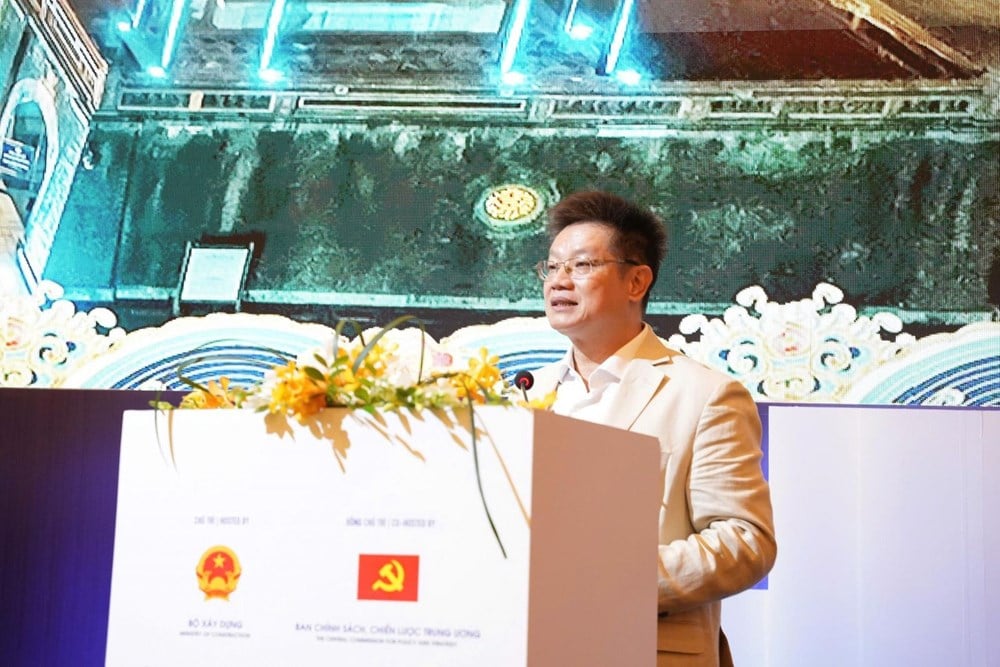
Mr. Phan Thanh Hai - Director of the Department of Culture and Sports of Hue City. Photo: Tuan Dong
Mr. Phan Thanh Hai - Director of the Department of Culture and Sports of Hue City (statement in 2023): “Hue has taken solid steps in heritage restoration, but the biggest challenge remains ensuring the authenticity and vitality of the relics in the context of urban development.”
In the context of climate change, Hue faces the risk of water leakage, foundation erosion, and damage to wooden materials. In its 2014 monitoring report, UNESCO recommended that Vietnam strengthen the application of technology, map natural disaster risks, and develop more in-depth periodic monitoring procedures for ancient wooden structures.
Furthermore, the trend of mass tourism is creating pressure on "destination overcrowding." Before the pandemic, Hue welcomed over 5 million visitors per year , creating opportunities for economic development but also putting significant pressure on the space of its historical sites.
Dr. Hoang Van Dat (Ho Chi Minh City University of Architecture) analyzed in the Vietnam Architecture Magazine: "The challenge for Hue today is not just preserving individual relics, but preserving the entire landscape - culture - living environment associated with the heritage."
Thanks to the long-term support of UNESCO, international organizations such as JICA (Japan), KOICA (Korea), GIZ (Germany), and many international scientists, Hue has built up leading expert groups in the preservation of imperial architecture and the restoration of traditional materials.
Aiming to become a distinctive festival city of Vietnam.
Along with conservation, Hue is promoting a heritage-culture-creativity model , aiming to become a distinctive festival city of Vietnam. The Hue Festival, organized by Hue City in coordination with the Ministry of Culture, Sports and Tourism since 2000, has become an annual international cultural event, contributing to promoting the image of Hue's heritage to the world.
According to the development orientation outlined in Resolution 54-NQ/TW (2019) of the Politburo on building and developing Thua Thien Hue province (now Hue City) until 2030, with a vision to 2045, Hue is identified as a "unique cultural and tourism center of the country and the region" , with the core value axis being the royal palace heritage.
In its message to Vietnam on the occasion of the 30th anniversary of the recognition of Hue as a World Heritage Site (2023), UNESCO also emphasized: “The ancient capital of Hue is an asset of outstanding global value, but it is also a living heritage with its local community as the main custodians of its values.” (Source: UNESCO Vietnam, Message commemorating the 30th anniversary of Hue's recognition, 2023 )
The development orientation for tourism in Hue City in the coming years will focus on cultural and ecological values, building experiences based on rituals, court music, traditional crafts, the Perfume River landscape, and the Nguyen Dynasty's tombs...
Thirty-two years after its UNESCO inscription, the Hue Imperial Citadel complex has demonstrated a rare resilience in the history of world heritage sites. From a heritage site once seriously threatened, Hue has become a model for preserving and promoting cultural values, defining national identity, and showcasing the image of Vietnam to the world.
Source: https://baovanhoa.vn/van-hoa/quan-the-di-tich-co-do-hue-32-nam-la-di-san-van-hoa-the-gioi-187409.html


![[Photo] Closing Ceremony of the 10th Session of the 15th National Assembly](/_next/image?url=https%3A%2F%2Fvphoto.vietnam.vn%2Fthumb%2F1200x675%2Fvietnam%2Fresource%2FIMAGE%2F2025%2F12%2F11%2F1765448959967_image-1437-jpg.webp&w=3840&q=75)

![[Photo] Prime Minister Pham Minh Chinh holds a phone call with the CEO of Russia's Rosatom Corporation.](/_next/image?url=https%3A%2F%2Fvphoto.vietnam.vn%2Fthumb%2F1200x675%2Fvietnam%2Fresource%2FIMAGE%2F2025%2F12%2F11%2F1765464552365_dsc-5295-jpg.webp&w=3840&q=75)




































![[OFFICIAL] MISA GROUP ANNOUNCES ITS PIONEERING BRAND POSITIONING IN BUILDING AGENTIC AI FOR BUSINESSES, HOUSEHOLDS, AND THE GOVERNMENT](https://vphoto.vietnam.vn/thumb/402x226/vietnam/resource/IMAGE/2025/12/11/1765444754256_agentic-ai_postfb-scaled.png)









































Comment (0)