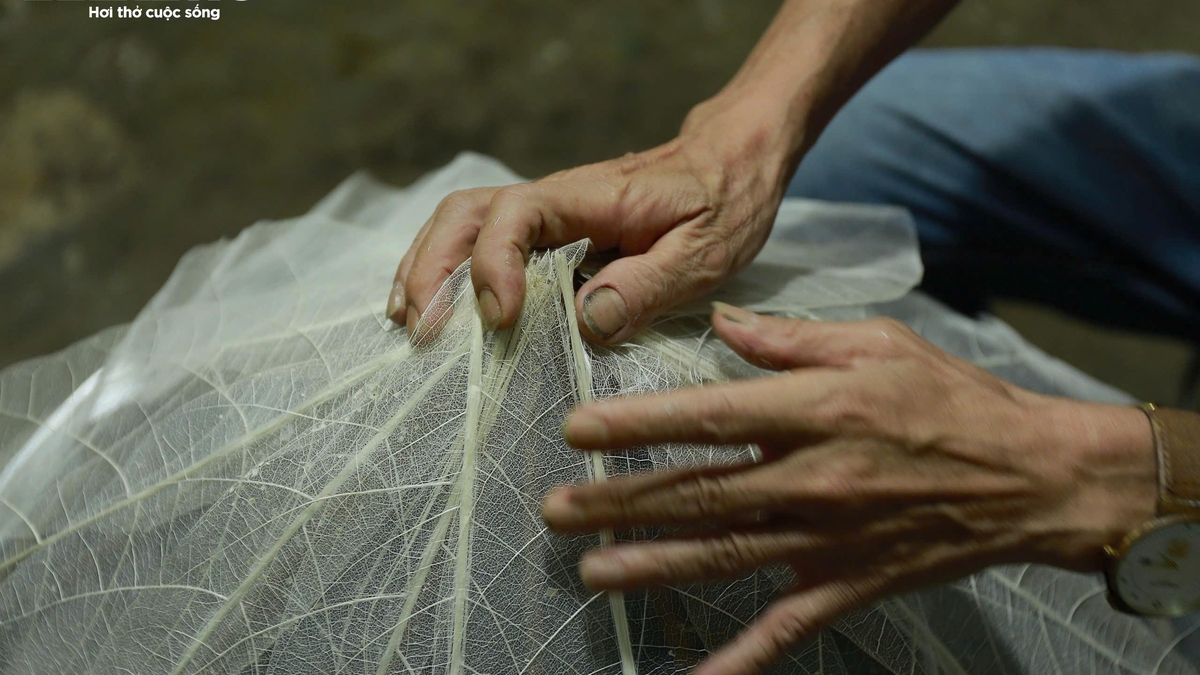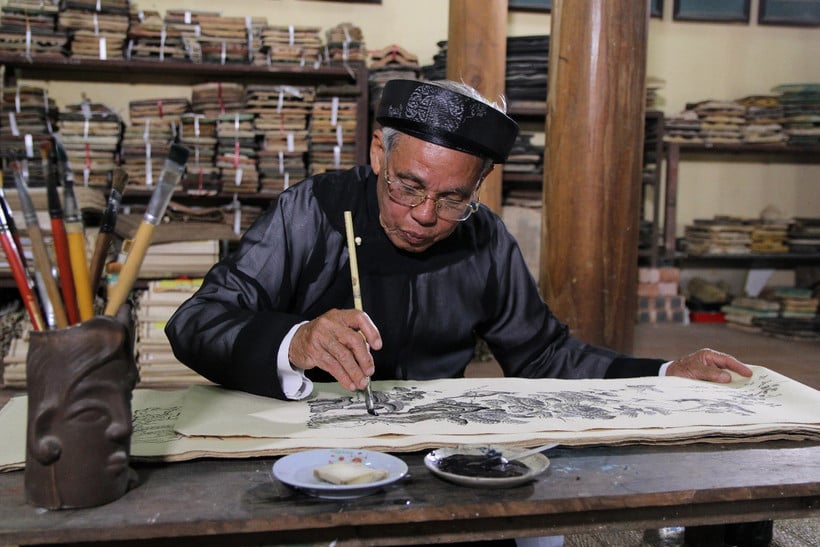
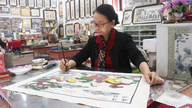
Artist Nguyen Dang Che is creating Dong Ho folk paintings.
On December 9th, in New Delhi, India (4:08 PM Hanoi time), the 20th session of the Intergovernmental Committee of the 2003 Convention on the Protection of Intangible Cultural Heritage of UNESCO adopted a decision to inscribe the Dong Ho folk painting craft on the List of Intangible Cultural Heritage in Need of Urgent Safeguarding.
Mentioning the craft of Dong Ho folk painting evokes in Vietnamese people the atmosphere of Tet (Lunar New Year), rural markets, and the vibrant cultural activities of the Northern Delta countryside, which are vividly reflected and become characteristic features of this painting style.
The craft of making Dong Ho folk paintings in Dong Khe neighborhood, Thuan Thanh ward, Bac Ninh province, originated approximately 500 years ago. The community practicing this craft has created paintings with unique characteristics in terms of subject matter, printing techniques, colors, and graphics using woodblock printing. The themes of the paintings often include devotional paintings, celebratory paintings, historical paintings, paintings depicting daily life, and landscape paintings, associated with the custom of hanging these paintings during the Lunar New Year, Mid-Autumn Festival, ancestor worship, and deity worship.
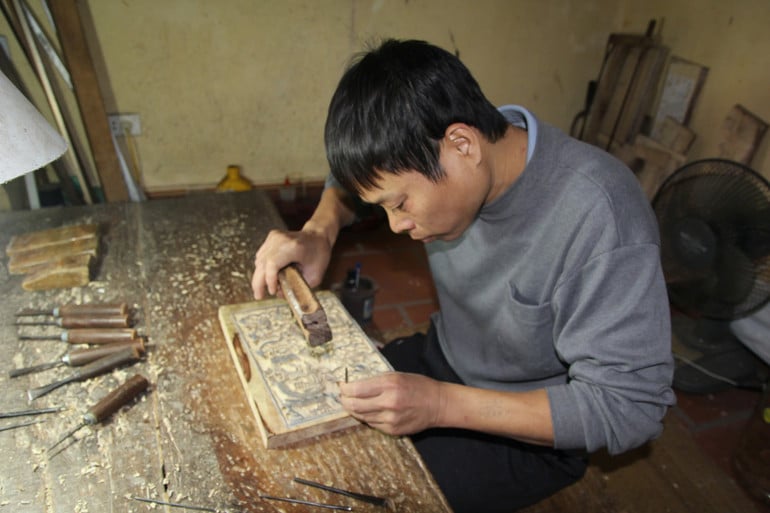
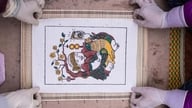
Woodblock printing artisan.
The entire process of creating the design, carving the printing blocks, preparing the colors, and printing the artwork is done by hand. The design is drawn with a brush and ink on traditional paper and carved onto a wooden block. The colors are made from natural ingredients: blue from indigo leaves, red from ochre, yellow from pagoda tree flowers and gardenia fruit, white from weathered scallop powder, and black from bamboo leaf ash and sticky rice straw. The artwork is printed face down using five basic colors on dó paper that has been coated with a layer of lacquer. The colors are printed according to the principle of red first, followed by blue, yellow, and white. The black outline is printed last to complete the artwork.
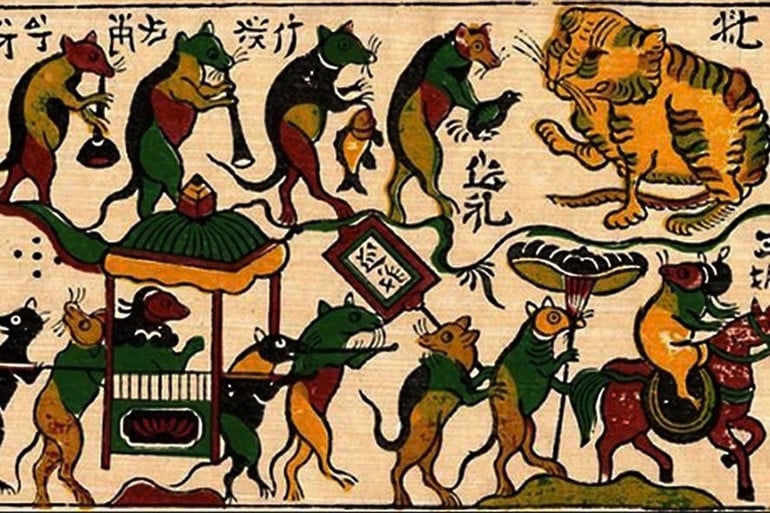
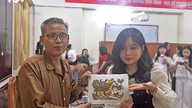
Painting "The Mouse Wedding".
After 1945, the craft of making Dong Ho folk paintings faced the risk of extinction, as there were no buyers. Therefore, families switched to making votive paper goods. Currently, only two families in Dong Ho village still make these paintings: the Nguyen Huu family and the Nguyen Dang family, with three dedicated families remaining committed to the craft.
Changes in lifestyle, consumer demand, and societal and technological advancements have led to a decrease in the demand for Dong Ho paintings as home decorations during Tet (Lunar New Year). The number of people practicing this craft is also smaller than it used to be.
Dong Ho paintings are no longer widely sold as they once were; now they are mainly souvenirs, or seen at community cultural events where organizers invite artisans to perform or purchase painting boards, colors, and paper to offer hands-on experience services.
Local communities, artisans, and management agencies have made numerous efforts to restore and revive this traditional art form.
According to the Intergovernmental Committee of the 2003 Convention on the Protection of Intangible Cultural Heritage, the nomination dossier for the Dong Ho folk painting craft of Vietnam meets the criteria for inscription on the List of Intangible Cultural Heritage in Need of Urgent Safeguarding, specifically:
1. Dong Ho folk paintings are closely associated with important festivals such as Lunar New Year and Mid-Autumn Festival, as well as ancestral and deity worship rituals. Today, only a few families continue to maintain this craft, passing on knowledge and skills within the family and to apprentices through direct instruction and hands-on training. Some stages, such as drawing patterns and carving printing plates, require specialized training and years of accumulated experience. The woodblock prints are considered family heirlooms, passed down through many generations.
2. The number of skilled artisans has decreased sharply (according to nomination records, only a few families still maintain the craft), due to the younger generation's lack of interest, the difficulty in securing a livelihood from the craft, and the declining demand for woodblock prints during traditional festivals. The number of highly skilled and dedicated individuals pursuing the craft is too small to sustain its transmission and production, therefore the craft urgently needs protection.
3. The protection plan outlines seven objectives, including: opening training classes, inventorying heritage, designing patterns, diversifying markets, improving access to raw materials, and providing protective equipment for artisans. The proposed activities are feasible, aligned with the objectives, and sustainable, while placing the community at the center.
4. The records demonstrate the active participation of the community, particularly the families involved in the craft, throughout the entire documentation process, through inventory activities and public events.
5. The heritage has been included in the Inventory of Intangible Cultural Heritage, which is regularly updated with the participation of the community.
Attending the 20th session of the Intergovernmental Committee of the 2003 Convention on the Protection of Intangible Cultural Heritage of UNESCO, members of the Vietnamese delegation all assessed this as an opportunity to restore and develop the craft of Dong Ho painting.
Deputy Minister of Culture, Sports and Tourism Hoang Dao Cuong, head of the Vietnamese delegation attending the session, said that this demonstrates the international community's high appreciation for the unique, historical values and profound humanistic significance of Vietnamese folk paintings, which have been closely associated with Vietnamese cultural life for hundreds of years, and is also a timely recognition of a heritage facing a high risk of disappearing.
The Deputy Minister also affirmed that Vietnamese government agencies will continue to pay attention to and support localities and heritage-owning communities in protecting intangible heritage so that the heritage is not only protected but also transmitted and its vitality sustainably promoted.
Mr. Mai Son, Standing Committee Member of the Provincial Party Committee and Permanent Vice Chairman of the People's Committee of Bac Ninh province, said that at the moment the session considered inscribing the Dong Ho folk painting craft, the entire community of heritage custodians and many people of Bac Ninh province attentively followed and were extremely excited when the Dong Ho folk painting craft was officially inscribed on the UNESCO List of Intangible Cultural Heritage in Need of Urgent Safeguard.
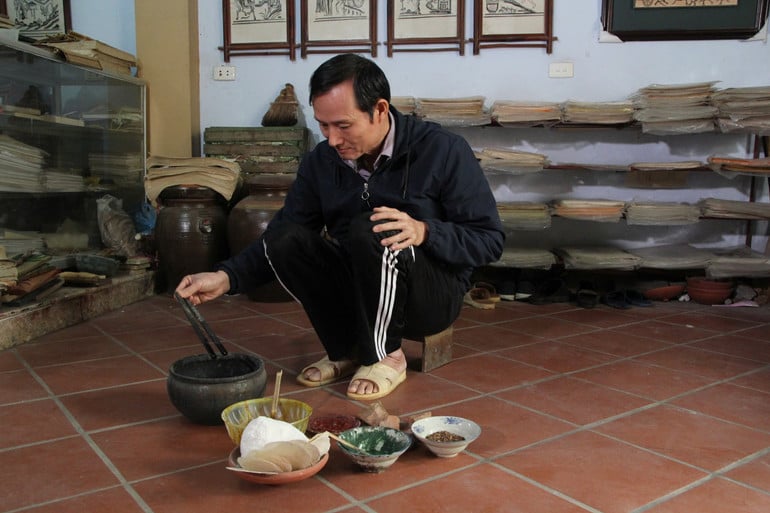
The paints used in Dong Ho paintings are of natural origin.
Mr. Mai Son emphasized that Dong Ho folk paintings demonstrate sophisticated knowledge and woodblock printing techniques, with natural colors, vividly reflecting the life, customs, and aspirations of the Vietnamese people. This recognition has great significance for the heritage community in particular and for the people of Bac Ninh in general. He affirmed that Bac Ninh province is committed to seriously implementing the plan to protect this important heritage.
You may also like
When cultural diplomacy illuminates heritage.From the painting village along the Duong River to a global heritage site, the journey of Dong Ho painting demonstrates the prominent role of cultural diplomacy in integrating national essence into the mainstream of human culture. The UNESCO inscription of the Dong Ho folk painting craft will create an important foundation for Vietnam in general and Bac Ninh province in particular to continue implementing comprehensive measures for the urgent and long-term protection of this heritage in accordance with UNESCO's recommendations; mobilizing diverse resources; strengthening education and training for the younger generation; and linking preservation with the promotion of heritage values in contemporary life and sustainable socio-economic development.
Ambassador Nguyen Thi Van Anh, Head of the Permanent Mission of Vietnam to UNESCO, stated that this event not only contributes to honoring the traditional cultural values of Vietnam within the treasure trove of human civilization's heritage, but also serves as vivid evidence of UNESCO and the international community's appreciation for Vietnam's contributions to protecting cultural diversity and promoting sustainable development. The event is even more significant in the context of Vietnam and UNESCO looking forward to 2026 with rich and distinctive activities commemorating the 50th anniversary of Vietnam's membership in UNESCO (1976–2026).
The success of the nomination dossier for "Dong Ho Folk Painting Craft" is the result of persistent efforts, meticulous preparation, and close coordination between the Dong Ho folk painting community, the Bac Ninh provincial government, the Ministry of Culture, Sports and Tourism, heritage experts, and the active coordination and collaboration of the Vietnam National UNESCO Committee throughout the dossier's development, completion, and advocacy. The dossier was highly praised for its quality and persuasiveness, clearly demonstrating Vietnam's strong commitment to heritage preservation, ensuring continuity and authenticity, while emphasizing the participation and central role of the community – the creators, preservers, and transmitters of the craft.
In the coming period, one of the important tasks for the preservation and restoration of Dong Ho folk painting is to promote the image of the "Dong Ho folk painting" heritage in particular and Vietnamese cultural heritage in general to international friends, thereby making a positive contribution to the world's common efforts in protecting the intangible cultural heritage of humanity.
LINH KHÁNH - KHẢI HOÀN
Source: https://nhandan.vn/co-hoi-khoi-phuc-di-san-nghe-lam-tranh-dong-ho-post929487.html




![[Photo] Prime Minister Le Minh Hung presides over the thematic session on promoting science and technology development and innovation.](https://vphoto.vietnam.vn/thumb/1200x675/vietnam/resource/IMAGE/2026/06/23/1782207872934_ndo_br_dsc-1724-jpg.webp)