

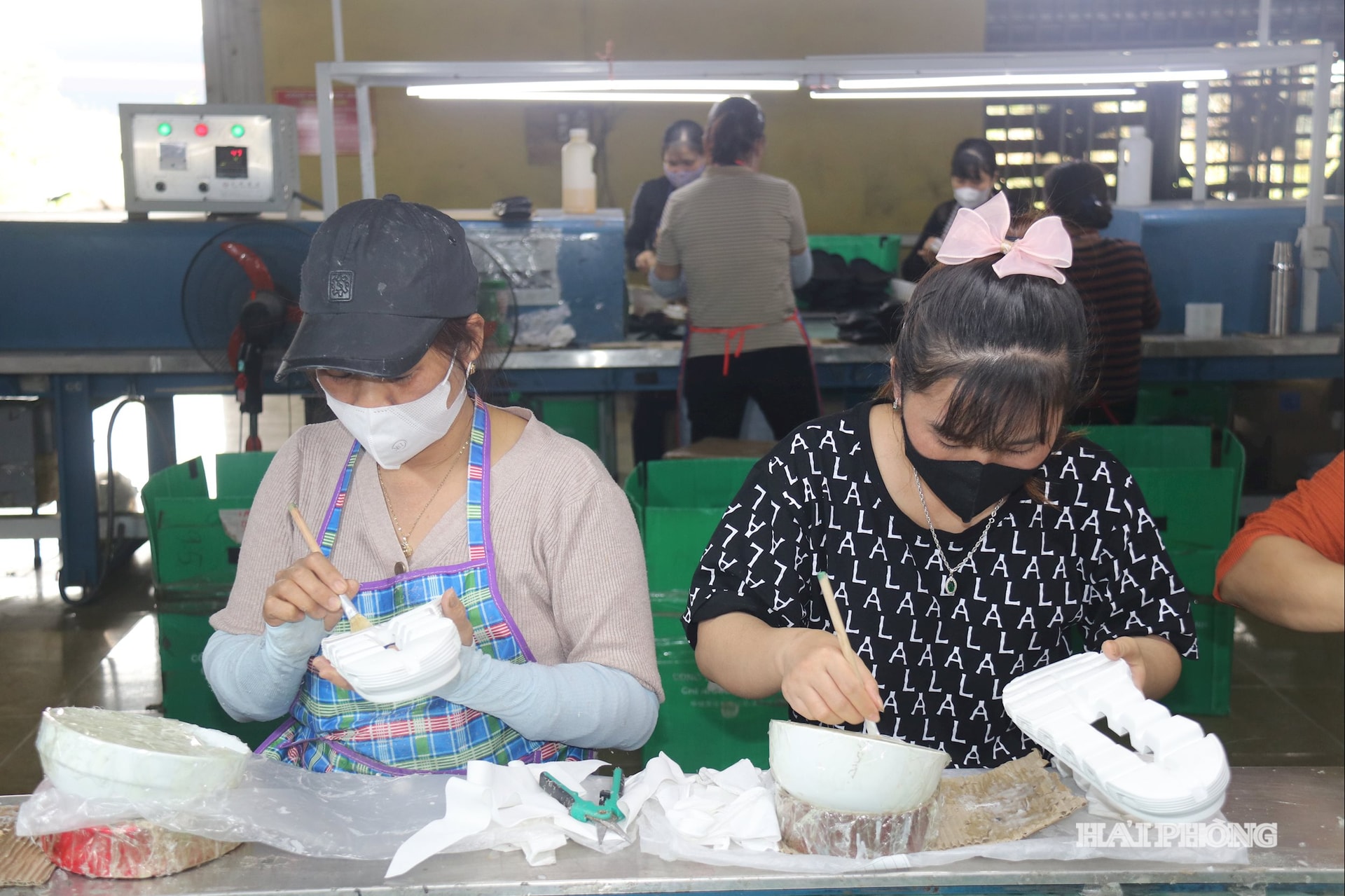
A bustling pace of production.
Visiting Hoang Dieu leather shoe-making village at the end of the year, we clearly saw the vibrant and bustling atmosphere of work through the rhythmic cutting and shaping of machines, the sound of hammers, and the smell of fresh leather… reflecting the strong vitality of this traditional craft village, which is over 500 years old.
More than a month ago, the shoe factory of Hoang Dieu Leather Shoe Cooperative in Phong Lam village became busier than usual due to the upcoming Tet holiday. Mr. Le Hoang Ha, the cooperative's director, said that the unit supplies 300,000 pairs of shoes to the market each year, with production increasing by 20% from October to December of the lunar calendar compared to previous months. The Hoang Dieu Leather Shoe Cooperative is currently providing stable employment for over 30 workers with an average income of 10 million VND per person per month.
The Hoang Dieu leather shoe-making village currently has nearly 300 leather shoe-making establishments with a scale of 15 to over 30 regular workers and about 200 establishments with fewer than 15 workers. The village is attracting approximately 4,500 workers and operates year-round.
Towards the end of the year, orders from wholesale markets and retailers nationwide surge. Shoe-making households have to mobilize all available workers and work overtime to meet deadlines. In some places, work continues from early morning until late at night, with the sound of machinery almost non-stop.
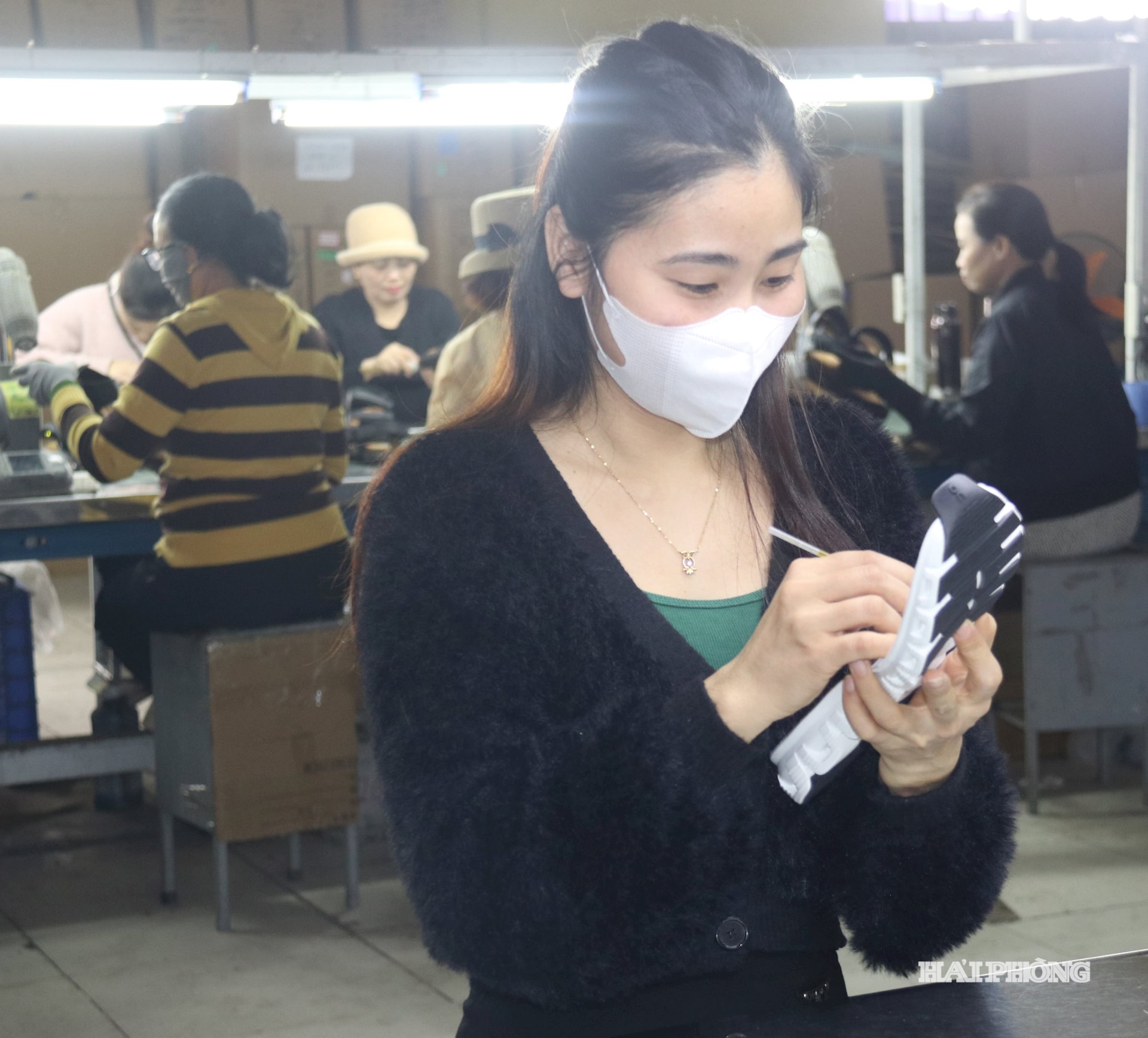
In the workshops, the work is clearly divided: some cut, some sew the shoe uppers, some shape the toes, some glue the soles, and some finish the shoes. The shoes and sandals are formed on an assembly line and meticulously inspected before packaging. Notably, the designs for Tet (Lunar New Year) are more diverse, ranging from men's leather dress shoes, loafers, leather sandals, and children's shoes… Competitive prices and consistent quality mean that Hoang Dieu products are widely consumed in many provinces and cities throughout the country.
Mr. Do The Ngoc, Vice Chairman of the Gia Phuc Commune People's Committee, said that the quality of leather shoes and sandals here is very durable, fashionable , and affordable. Some pairs cost only 150,000 - 200,000 VND and can last for two seasons. Those priced at 300,000 - 400,000 VND per pair are high-end, very durable, and beautiful. Families owning large workshops can earn hundreds of millions to billions of VND annually.
The vitality of traditional craft villages
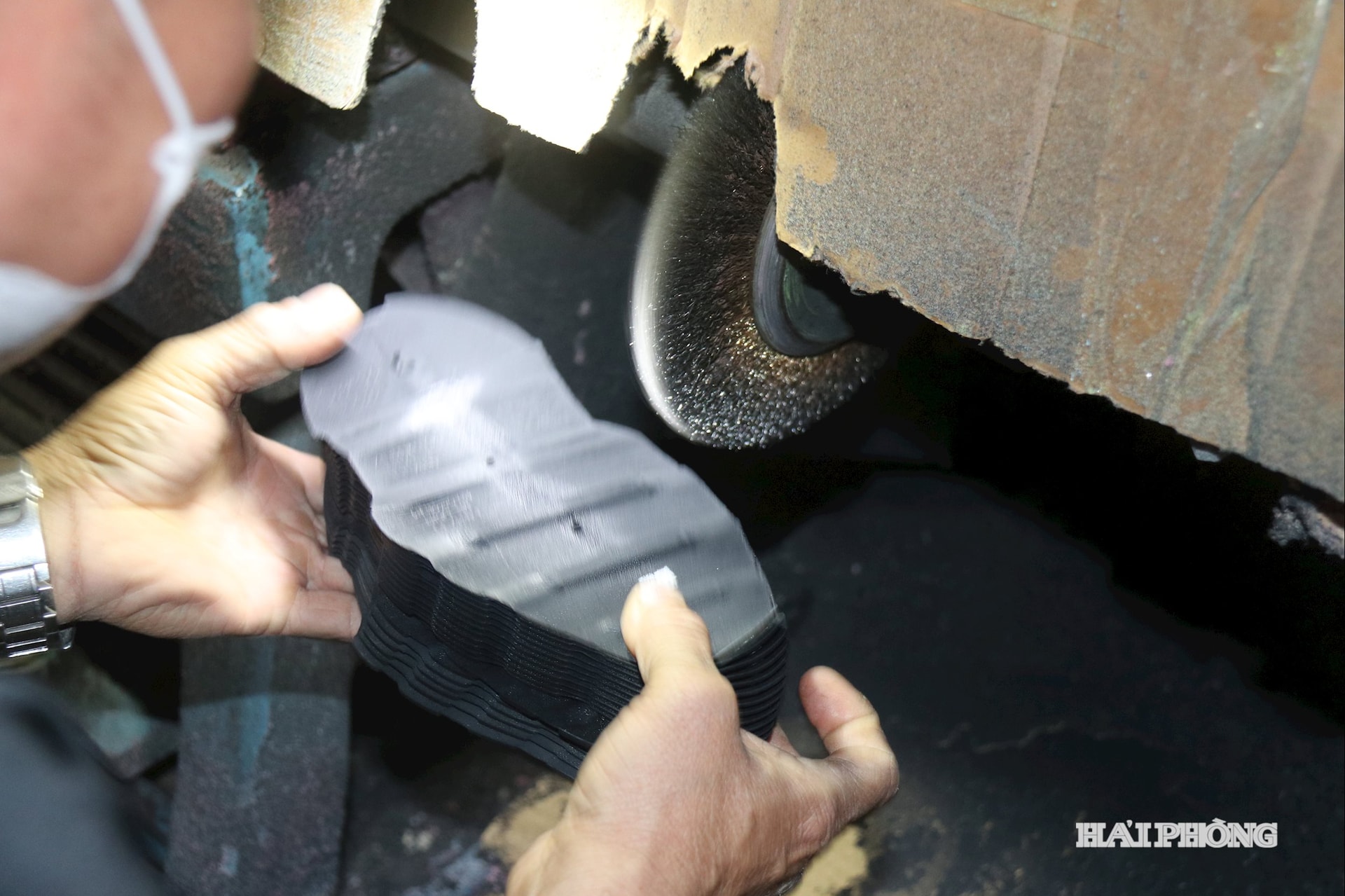
Fortunately, the traditional Hoang Dieu leather shoe-making village is thriving as generations continue the craft, unlike many other traditional villages that are declining. The number of households engaged in the craft is constantly expanding.
For decades, amidst socio -economic upheavals, the Hoang Dieu leather shoemaking craft seemed on the verge of extinction. Many skilled artisans left their hometown for the city to make a living, and the sounds of machines and leather-cutting knives gradually faded from the village. It wasn't until the 1990s, when the domestic footwear market expanded, that some households persevered in reviving the craft. They boldly sent their children to the South to learn the trade, bringing back new techniques to combine with traditional experience. Step by step, the Hoang Dieu leather shoemaking craft was revived.
Thanks to the combined efforts of the community and local authorities, in 2005, Hoang Dieu leather shoemaking was recognized as a traditional craft village. This is an important milestone that affirms the cultural and economic value of the craft, while also opening up new development opportunities for the people.
Previously, the entire shoemaking process, from cutting leather, sewing, shaping, gluing soles, and applying glue, was done entirely by hand. A skilled craftsman could only complete a few dozen pairs of shoes a day, resulting in unstable income. In recent years, many workshops have invested in specialized cutting and sewing machines, heat presses, and modern shaping machines. As a result, productivity has increased many times over, with some households producing hundreds of pairs of shoes per day.
Besides its economic value, the leather shoemaking industry also provides a stable income for many local workers, especially women and middle-aged people, without having to leave their hometowns to find work. Many households say that thanks to the leather shoemaking industry, their children have received a full education, their families have built new houses, and they have been able to buy means of transportation.
Despite its thriving development, the Hoàng Diệu leather shoe-making village, with a history spanning over 500 years, still faces numerous challenges. The most concerning is the environmental impact of the production process. Mr. Trần Huy Hào, head of Trúc Lâm village, stated that the tanning process, the use of adhesives, and the handling of waste materials, if not properly controlled, will affect air and water quality. Currently, waste from leather shoes is only collected manually and lacks a standardized treatment system.
For the sustainable development of traditional craft villages, a coordinated effort from the people, businesses, and government is needed. Registering collective trademarks, standardizing production processes, supporting technological innovation, training young workers, and promoting trade are crucial solutions. Alongside these are requirements for compliance with environmental protection regulations and improving product quality to target higher-end segments, rather than simply competing on price.
MINH NGUYENSource: https://baohaiphong.vn/lang-nghe-giay-da-hoang-dieu-vao-vu-tet-529295.html

![[Photo] Prime Minister Pham Minh Chinh holds a phone call with the CEO of Russia's Rosatom Corporation.](/_next/image?url=https%3A%2F%2Fvphoto.vietnam.vn%2Fthumb%2F1200x675%2Fvietnam%2Fresource%2FIMAGE%2F2025%2F12%2F11%2F1765464552365_dsc-5295-jpg.webp&w=3840&q=75)


![[Photo] Closing Ceremony of the 10th Session of the 15th National Assembly](/_next/image?url=https%3A%2F%2Fvphoto.vietnam.vn%2Fthumb%2F1200x675%2Fvietnam%2Fresource%2FIMAGE%2F2025%2F12%2F11%2F1765448959967_image-1437-jpg.webp&w=3840&q=75)








![[Infographic] Preventing students from making their own firecrackers: 7 things parents need to know](https://vphoto.vietnam.vn/thumb/402x226/vietnam/resource/IMAGE/2025/12/11/1765466656703_img_0320_20251211183542.jpeg)

































![[OFFICIAL] MISA GROUP ANNOUNCES ITS PIONEERING BRAND POSITIONING IN BUILDING AGENTIC AI FOR BUSINESSES, HOUSEHOLDS, AND THE GOVERNMENT](https://vphoto.vietnam.vn/thumb/402x226/vietnam/resource/IMAGE/2025/12/11/1765444754256_agentic-ai_postfb-scaled.png)













































Comment (0)