In Bon B'Dơng, Ta Dung commune, the sound of the M'buot instrument resonates in the small house of Meritorious Artisan H'Grao, blending with the rhythm of the vast forest and the endless flow of Ma culture, contributing to the connection between present life and generations past. Having dedicated over 70 years to traditional musical instruments, H'Grao's name is not only associated with the M'buot sound; she is also proficient in many other Ma ethnic instruments such as the T'ron, t'rông, and gongs, and knows nearly 100 ancient folk songs.
Her simple, poignant voice, along with her M'buot dialect, has resonated at numerous cultural events both within and outside the province, becoming a cultural symbol of the Ma people in the Ta Dung region. For her enduring contributions to performing and teaching indigenous culture over many decades, in 2019, Ms. H'Grao was awarded the title of Outstanding Artisan by the President of Vietnam for her excellent achievements in preserving and promoting the ethnic cultural heritage.
Despite being over 80 years old, Mrs. H'Grao still regularly uses traditional Ma ethnic musical instruments and diligently teaches the younger generation about M'buot music, folk songs, and traditional musical performance art... in order to preserve the cultural identity of the Ma people for future generations. "Preserving heritage is not just about preserving the music and songs, but about preserving the essence, about continuing the tradition so that our descendants understand and cherish their roots," emphasized Meritorious Artisan H'Grao.
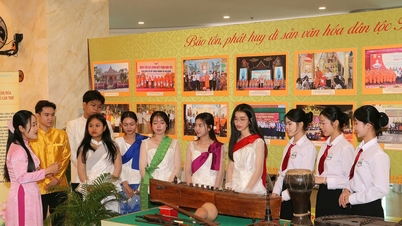
In Dong Gia Nghia ward, hundreds of artifacts related to the life of the Ma ethnic group are proudly displayed at the Traditional Musical Instruments Exhibition House of the Ma people, built on the "Sounds from the Earth" tourist route within the UNESCO Dak Nong Global Geopark. Each artifact, such as gongs, horns, gourd-shaped trumpets, ancient jars, baskets, and traditional costumes, contains the imprint of time and a unique identity, vividly reflecting the working life, beliefs, and soul of the Ma people. Thanks to its unique and diverse cultural identity, the exhibition house has quickly become an attractive destination, drawing a large number of domestic and international tourists.
To acquire the large and diverse collection of artifacts displayed and preserved today, Mr. K'Tông, a Ma ethnic minority member from Dong Gia Nghia ward, has tirelessly traveled throughout the villages, meeting with many families to collect them. For him, each artifact is a story, a trace of time that needs to be preserved so that future generations can understand the cultural traditions of his ethnic group. “Artifacts are like memories, reflecting the formation and development, the unique traditional cultural identities of the Ma people. Therefore, I strive to collect and preserve them, hoping that future generations will see, hear, and be proud of their ethnic culture,” Mr. K'Tông shared.
Along with the exhibition space for traditional musical instruments, a model of a traditional stilt house has also been restored in Bon N'Jrieng, helping visitors better understand the distinctive living space of the Ma ethnic community. During festivals, the sound of gongs resonates around the traditional stilt house; Ma boys and girls in traditional costumes sing folk songs all night long around the crackling campfire, creating a sense of unity reminiscent of ancient traditional villages. Beyond just tourism, this place now serves as a "cultural school" for the younger generation of the Ma people to learn about their roots, cultivate pride, and develop an awareness of preserving their ethnic cultural heritage.
Chairman of the People's Committee of Dong Gia Nghia Ward, Thach Canh Tinh, said: Besides the investment and support from the State, the Ma people are always conscious and actively preserve and pass on their traditional culture to future generations, so that their ethnic identity will endure forever. From preserving to promoting its value, the Ma people are gradually transforming their heritage into a livelihood, turning their ethnic cultural memories into unique tourism products, contributing to improving their lives through their own cultural identity.
According to the leaders of the Lam Dong Department of Culture, Sports and Tourism, the province has implemented many practical programs and projects to preserve and promote the traditional cultural values of ethnic minorities in the area, achieving many important results. The traditional culture of the Ma ethnic group in the western part of the province has also received timely attention.
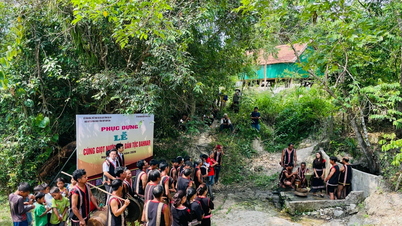
The province has honored artisans who have made significant contributions to preserving heritage; supported the establishment of cooperatives for brocade weaving and rice wine making; supported the restoration of traditional rituals and the organization of ethnic cultural festivals; and included the heritage sites of the Ma people in the experiential tour system of the UNESCO Dak Nong Global Geopark. Notably, in 2024, the Ma people's Forest God Worship Ceremony (Yang Brê) was recognized by the Ministry of Culture, Sports and Tourism as a National Intangible Cultural Heritage, opening up opportunities to promote the heritage and link it with the development of sustainable cultural and ecotourism.
REVIVAL, ROYAL SUN
Source: https://baolamdong.vn/gin-giu-ban-sac-dan-toc-ma-409718.html









































































Comment (0)