

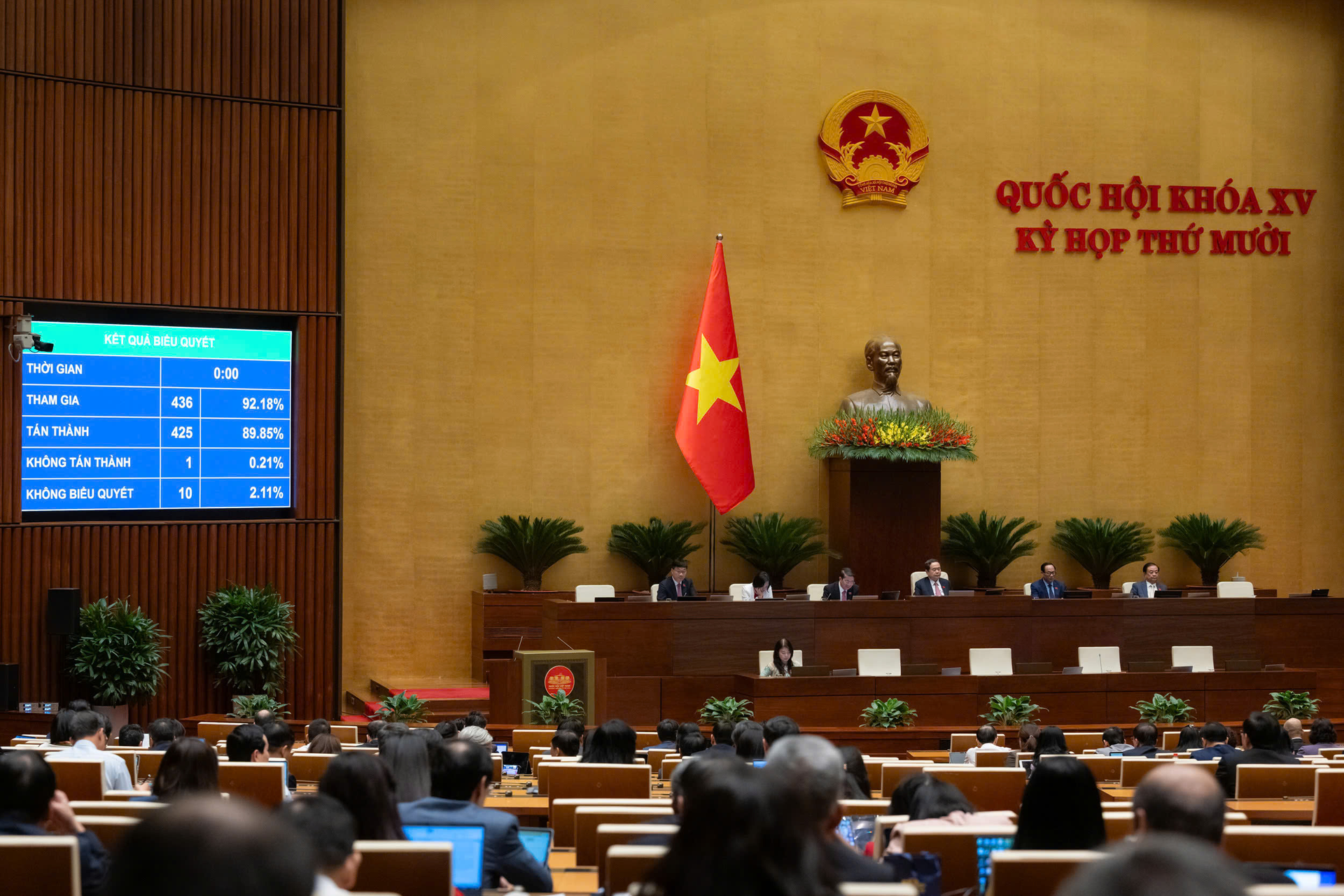
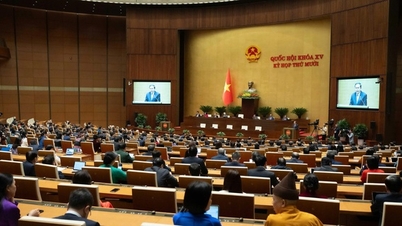
On December 11th, the National Assembly passed the Law on Bankruptcy and Recovery with 425 votes in favor, representing 89.85% of the total number of National Assembly delegates.
The law, comprising 88 articles and effective from March 1, 2026, stipulates the principles, procedures, and processes for resolving cases of business and cooperative/cooperative union rehabilitation and bankruptcy; the duties and powers of those conducting rehabilitation and bankruptcy procedures; and the rights and obligations of those participating in rehabilitation and bankruptcy procedures.
The Law on Rehabilitation and Bankruptcy applies when resolving cases of business and cooperative rehabilitation and bankruptcy; in cases where this Law does not provide for a specific provision, the provisions of relevant laws shall apply. The provisions on rehabilitation procedures and simplified rehabilitation procedures in this Law do not apply to credit institutions, insurance companies, or reinsurance companies.

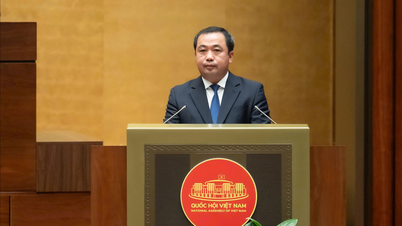
In the report on the acceptance, revision, and explanation of the draft Law, National Assembly Standing Committee member Phan Van Mai stated that the National Assembly Standing Committee accepts and revises the name of the Law to "Law on Bankruptcy and Recovery" in accordance with the majority opinion of National Assembly deputies.
Regarding the case where the state budget guarantees bankruptcy costs and advances bankruptcy costs (Article 20), practical experience in resolving bankruptcy cases at the People's Courts shows that bankruptcy costs when guaranteed by the state budget are not significant. Furthermore, the 2014 Bankruptcy Law (current law) stipulates that advance bankruptcy costs are not required (exemption) for cases where the applicant requesting bankruptcy proceedings is an employee, a trade union, or where the enterprise or cooperative no longer has assets. However, the 2014 Bankruptcy Law does not specify the funding source to guarantee advance bankruptcy costs in these exempted cases, leading to a bottleneck in resolving bankruptcy cases due to the lack of funds to cover bankruptcy costs.
Therefore, to address practical difficulties in determining the source of payment for bankruptcy costs in cases where advance payment of bankruptcy costs is not required (exemption), Clause 3 of Article 20 of the draft Law has been revised to ensure that advance payment of bankruptcy costs will be guaranteed by the state budget in cases where the applicant requesting bankruptcy proceedings is an employee, trade union, tax authority, social insurance agency, or in cases where the enterprise or cooperative no longer has assets (or has assets but cannot liquidate or recover them, or has assets but not enough to pay advance bankruptcy costs). In this case, the advance payment of bankruptcy costs will be immediately reimbursed to the state budget upon sale of the enterprise's or cooperative's assets.
According to VNASource: https://baohaiphong.vn/ngan-sach-nha-nuoc-bao-dam-chi-phi-pha-san-voi-mot-so-truong-hop-529281.html
![[Photo] Closing Ceremony of the 10th Session of the 15th National Assembly](/_next/image?url=https%3A%2F%2Fvphoto.vietnam.vn%2Fthumb%2F1200x675%2Fvietnam%2Fresource%2FIMAGE%2F2025%2F12%2F11%2F1765448959967_image-1437-jpg.webp&w=3840&q=75)


















































![[OFFICIAL] MISA GROUP ANNOUNCES ITS PIONEERING BRAND POSITIONING IN BUILDING AGENTIC AI FOR BUSINESSES, HOUSEHOLDS, AND THE GOVERNMENT](https://vphoto.vietnam.vn/thumb/402x226/vietnam/resource/IMAGE/2025/12/11/1765444754256_agentic-ai_postfb-scaled.png)












































Comment (0)