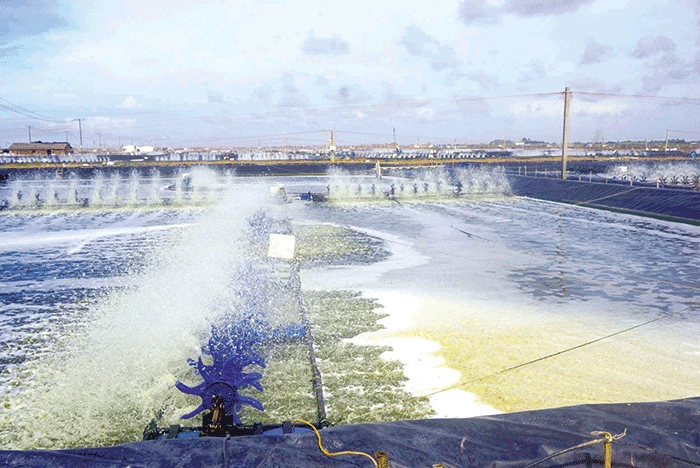
Only by developing large-scale shrimp farming or through cooperation among small-scale shrimp farmers can we meet international standards.
The challenge is at a high level.
Besides the issues of taxes in the US market and competition with cheaper shrimp from other countries, according to Mr. Ho Quoc Luc, Chairman of the Board of Directors of Sao Ta Food Joint Stock Company, the shrimp industry also faces regulations on traceability and international certification. Regarding traceability, Mr. Luc said it is a common requirement of all markets, but the process of issuing shrimp farming facility codes in Vietnam is still too slow, causing considerable difficulties for businesses in proving and convincing customers about their ability to control their raw materials.
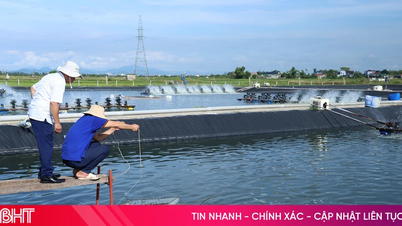
For example, in the EU market (including the UK), although we have many advantages such as: tariff preferences (through free trade agreements), high- level processing standards, and competitive prices, the growth rate in this market in recent years has not been as expected. One of the reasons is that the amount of Vietnamese shrimp certified under ASC standards is still limited. Specifically for the high-end segment, most markets now accept ASC standards, so only shrimp farms that meet ASC standards can easily penetrate this segment. Meanwhile, the area of shrimp farms meeting ASC standards nationwide is currently very low, mainly because most farmers are small-scale, making it difficult to pursue ASC standards due to the significant increase in assessment costs.
For large shrimp markets like the EU, major distribution systems require quality control throughout the value chain. This includes ensuring that shrimp hatcheries and feed suppliers meet standards such as ASC, BAP, and ISO. Furthermore, from 2026, the EU may extend the Border Carbon Adjustment Mechanism (CBAM) to include seafood. This means that shrimp products entering Europe that wish to benefit from preferential tariffs must meet carbon emission criteria throughout the entire value chain and not harm the ecosystem. Meanwhile, Japan , the second largest shrimp market, continues to inspect all shrimp shipments from Vietnam with stringent residue criteria. Additionally, Japan is beginning to implement animal welfare standards, requiring farming practices that do not stress aquatic life.



For the US market, while more lenient, it's a hub for cheap shrimp from many sources around the world, especially India, Ecuador, and Indonesia, limiting Vietnamese shrimp consumption due to price competition. The Canadian market prioritizes post-market inspection; they inspect a company's products on supermarket shelves, and if they fail the inspection, the company's products circulating in Canada will be recalled and returned to Vietnam, posing a risk not only to individual batches but to the entire shipment. Meanwhile, the two relatively large emerging markets of South Korea and Australia focus on shrimp disease inspections, which are quite common in the Mekong Delta, making it very difficult for Vietnamese businesses.
Helping shrimp overcome challenges
Given this situation, according to businesses, the entire industry must strive to accelerate action programs that are synchronized, practical, and have concrete effects, such as disseminating information, inspecting, and decisively and thoroughly preventing the use of prohibited products in shrimp farming, especially banned antibiotics, starting now and maintaining this in the long term. Replanning farming areas and investing in infrastructure; reorganizing shrimp farming production on a farm and cooperative scale to meet market standards so that products can be sold in large systems at good prices, creating a breakthrough foundation for the quality, reputation, and brand of Vietnamese shrimp. Mr. Luc added: "In the long term, the processing advantage will no longer exist because other countries are also investing heavily in processing, so the shrimp industry needs feasible solutions to reduce production costs to increase competitiveness."
The challenges facing the shrimp industry are clear and at their highest level. Therefore, to overcome these challenges, Vietnamese shrimp must first be clean, internationally certified, and easily traceable. In other words, only when we improve the cost of farmed shrimp, strictly control the residue of banned substances, strengthen the issuance of farm codes, and rapidly increase the area of farms meeting international standards (ASC, BAP, etc.) will Vietnam's market share in major markets increase, and the industry's position will become stronger.
To achieve this, it is necessary to effectively control the input products used in shrimp farming; to develop cooperative programs and establish large, standardized farms that facilitate traceability, ease of implementation, and international certification to convince high-end consumers to accept higher prices. When the area of shrimp farms meeting ASC standards reaches hundreds of thousands of hectares, Vietnamese shrimp will certainly dominate the high-end shrimp market segment in various markets, significantly contributing to the goal of elevating the status of Vietnamese shrimp.
Quality and standards are always necessary and valuable, and each market has different requirements for quality and standards. This is an inevitable aspect of the market, so there's no need to debate it. What's important here is that the path from quality to standards is a journey that requires not only determination and perseverance, but also a change in mindset and awareness to shift from agricultural production to agricultural economics. Only an agricultural economic mindset can help farmers and managers alike recognize the immense value of quality and standards, leading to adjustments in good production practices and the creation of certified products that meet the increasingly high demands of the consumer market.


Text and photos: HOANG NHA
Source: https://baocantho.com.vn/thach-thuc-tu-chat-va-chuan--a188116.html