

- 41 individuals and organizations were commended for their significant contributions to social work.
- Honoring 30 outstanding individuals in social work.
Staff at the Provincial Social Welfare Center bear many heavy responsibilities. They receive and care for orphans, disabled children, children from disadvantaged backgrounds, and elderly people who are alone and without support – these are unfortunate and vulnerable individuals in society. Their work cannot be done superficially or half-heartedly; each person treats these children as their own, acting as both mother and caregiver, aiming to help them grow into good citizens. For the elderly, the staff act as children and grandchildren, caring for their mothers, grandfathers, and grandmothers, finding joy in their well-being and service.
The staff here begin their work at 4 a.m., and their working hours depend on the workload and the health conditions of the patients they care for. Beyond simply feeding them spoonfuls, assisting with personal hygiene, and bathing, they also act as "psychological experts," engaging in conversations and listening to their stories, anxieties, and incomplete memories. They are constantly caught up in this relentless, arduous work, yet they never give up or complain.
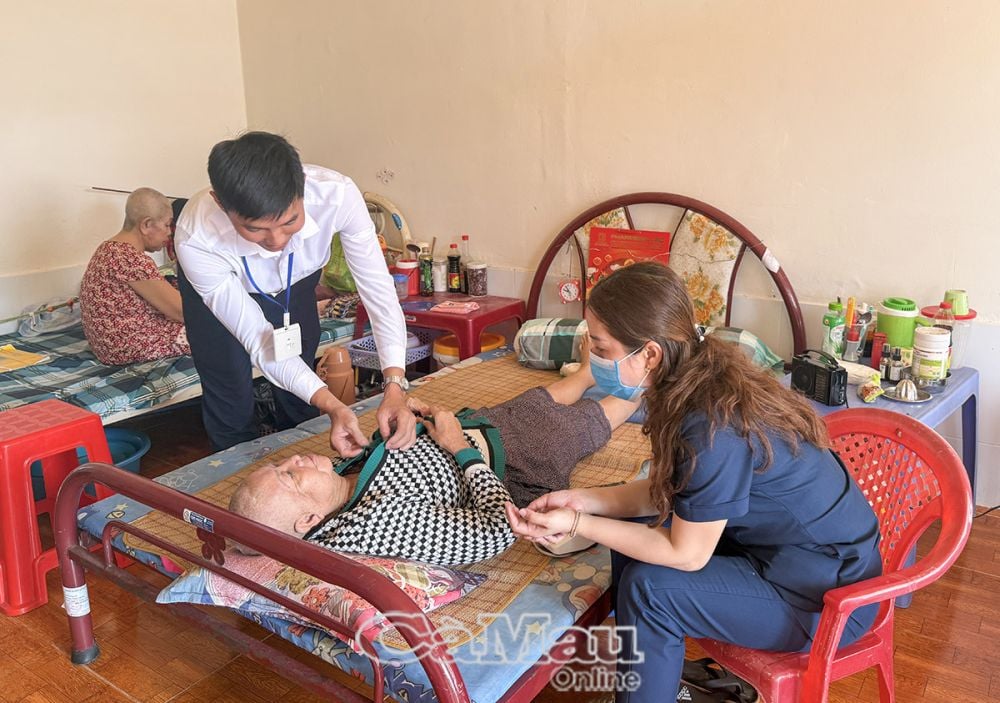
Social workers take turns caring for the elderly.
Mr. Duong Van An, an employee at the Provincial Social Welfare Center, has been dedicated to this work for five years, yet his smile has never faded. He simply believes that his own cheerfulness will transmit positive energy to those around him. Mr. An shared: “The elderly here suffer from many chronic illnesses, including urinary difficulties. Some of the children have congenital disabilities and cannot care for themselves. They all need me and my colleagues. Seeing their circumstances and feeling compassion, each day of care creates a special bond. The center also has a special group of people: war invalids, wives and children of martyrs, and Vietnamese Heroic Mothers… they have all contributed and sacrificed for the independence and freedom of the country. These are people we must be grateful to, upholding the principle of remembering our roots.”
Having been an orphan cared for by the Center, Nguyen Kieu My, upon reaching adulthood, strived in her studies and returned to dedicate herself to the place that had nurtured her. Currently, she works at the Provincial Social Welfare Center. Ms. My shared: “The work process has been challenging, but thanks to the solidarity of my colleagues here, I have never felt sad or discouraged. We understand that elderly people suffer from many chronic illnesses, leading to unpredictable changes in their psychology and physiology, while severely disabled children also face numerous problems. Eating, resting, hygiene… must follow a schedule, requiring social workers to have caregiving skills and an understanding of the psychology of the individuals to connect with them.” According to her, working here requires training and experience, as well as strong teamwork and mutual support among colleagues.
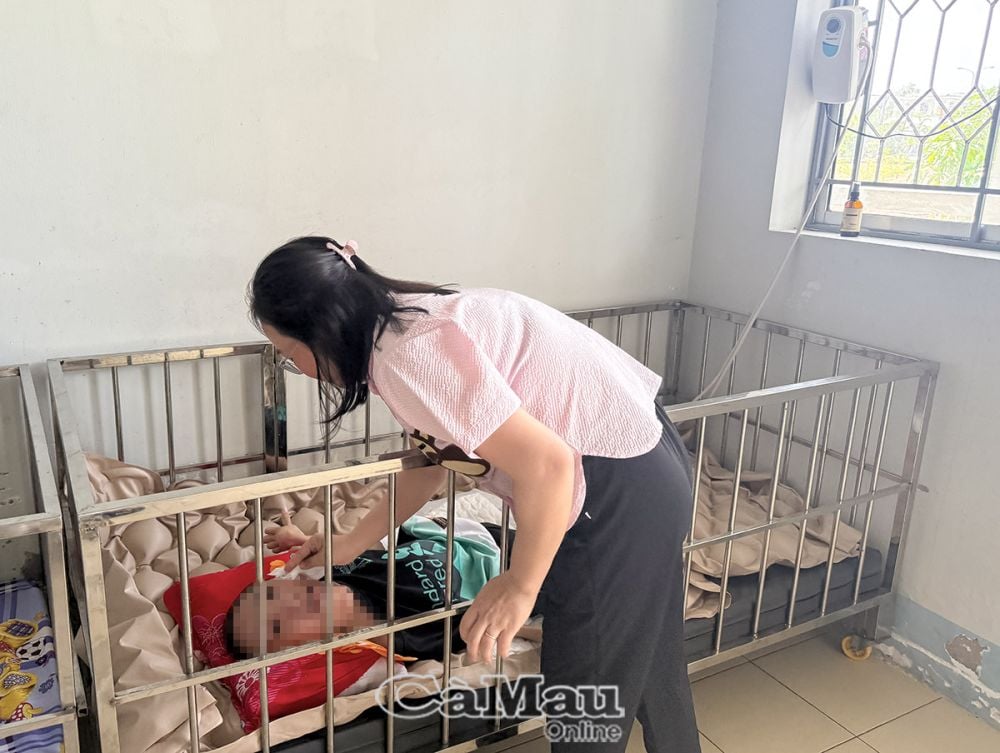
Besides the elderly, children with disabilities are also among those cared for at the center.
The Provincial Social Welfare Center is a public service unit funded by the State. Staff here receive salaries according to regulations, plus additional special allowances as stipulated in resolutions issued by the Provincial People's Council to motivate and encourage them to perform their duties well. Besides the policies and benefits supported by the Party and the State, the Center's leadership also pays close attention to its staff. Mr. Nguyen Van Tan, Deputy Director of the Provincial Social Welfare Center, said: "We have developed policies such as improving the quality of meals for our staff, giving bonuses on holidays and Tet (Lunar New Year)... In addition, we have established regulations on leave and leave bonuses so that our staff can arrange their family affairs and work with peace of mind."
Regarding the succession of personnel, Mr. Tan explained: "We mainly train ourselves. Many of our colleagues here have only finished high school, so we create opportunities for them to work while studying Social Work at universities in Dong Thap and Ho Chi Minh City... They work very hard, juggling work and study, and some even have families while striving to improve their skills to get a permanent position. Training is difficult, but retaining people is even harder; in reality, many have given up due to the pressure. This is a pressing issue, but it's understandable, because we struggle to care for our own family members, let alone those with such special circumstances."
Besides the Provincial Social Protection Center, other social assistance facilities in the province, such as addiction treatment centers, mental health facilities, and related units, all have personnel assigned to social work, as the number of people in difficult circumstances is constantly increasing. Compared to the increasing workload and pressure each day, the current social work workforce is too small. The goal of Ca Mau province by 2030 is to strengthen social work at all levels and in all sectors, in accordance with the socio -economic development conditions of each stage. Therefore, it is essential to create a stronger workforce, not only in terms of professional quality but also with the dedication and commitment to this seemingly simple but very demanding profession.
Lam Khanh
Source: https://baocamau.vn/tham-lang-nghe-cong-tac-xa-hoi-a38349.html





















































































Comment (0)