

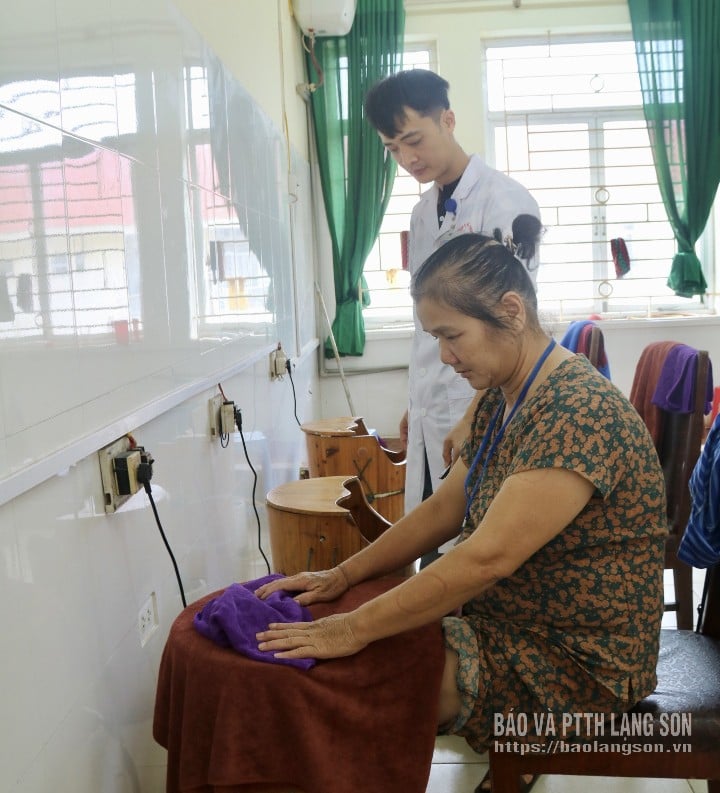
On November 21, 2025, the Intensive Care and Toxicology Department of the Provincial General Hospital admitted a 60-year-old patient presenting with fatigue, mild shortness of breath, jaundice, epigastric pain, and dark red urine. A few days prior, due to constipation, the patient had self-medicated by buying herbal remedies from the market and drinking a cup of herbal tea as recommended by the seller. Immediately afterward, abnormal symptoms appeared and rapidly worsened. Examination revealed hemolytic anemia due to herbal poisoning, acute liver failure with hematuria, and required blood transfusions and intravenous fluids. Further investigation revealed the patient had used the leaves of the *Lộc Mại* plant – a wild plant traditionally used to treat constipation but with toxicity if used in large doses. This was also the second case admitted to the department due to *Lộc Mại* leaf poisoning.
The case of the patient above serves as a clear warning about the dangers of self-medicating with herbs and plants. In fact, in recent years, medical facilities in the area have received many cases of poisoning due to accidentally ingesting or self-medicating with various forest plants, ranging from digestive disorders and liver and kidney damage to severe complications requiring emergency treatment.
According to Dr. Nguyen Thanh Do, Deputy Head of the Intensive Care and Toxicology Department at the Provincial General Hospital, from 2024 to the present, the department has received nearly 20 cases of poisoning related to the self-administration of forest plants, medicinal herbs, or other herbal remedies of unknown toxicity. Among these, many patients were admitted in critical condition, with some cases experiencing acute liver failure, acute kidney failure, cardiac arrhythmias, altered consciousness, and even life-threatening situations. Approximately 5 of these cases required intensive care treatment, including hemodialysis and multi-organ support.
“Through treating cases of poisoning, we have observed that people often make several common mistakes. Firstly, they trust anecdotal evidence without verification, using leaves, roots, and tubers based on advice without knowing the toxicity or safe dosage. Secondly, they confuse harmless and poisonous plants because many types have similar appearances, especially when people pick them themselves in the forest or buy them from unlicensed sources. Thirdly, they use excessive doses or combine many types of herbs, brewing them into concentrated decoctions, leading to interactions and increased toxicity. Finally, many people self-treat at home when symptoms appear, only going to the hospital when their condition has worsened,” added Dr. Nguyen Thanh Do.
For a long time, in many remote villages of the province, many people have been accustomed to using various types of forest leaves to treat illnesses and care for wounds. Many believe that herbal medicine, being of natural origin, is "harmless," and that even if it doesn't cure the illness, it won't cause harm. However, reality shows that alongside plants with medicinal properties, many contain potent toxins that can damage the liver and kidneys, or even threaten life if used incorrectly.
With over 30 years of experience in gathering and preparing medicinal herbs, Ms. Hua Thi Phon from Son Hong Hamlet, Ky Lua Ward, shared: "There are so many forest plants, and their names vary from region to region. Some look similar but have vastly different uses. Some plants can be used in moderation as medicine, but excessive use can be toxic. People who don't know, just hearing about it and picking indiscriminately, can easily make mistakes. Even I, having spent many years in the forest, have to carefully examine the leaves, stems, sap, and smell before daring to pick them. It's very dangerous for people without expertise to use forest medicine on their own; they might even end up making their illness worse."
To prevent the risk of poisoning from herbal remedies, the health sector advises people to be especially cautious when using medicinal plants: absolutely do not use plants, leaves, or roots of unknown name, origin, or whose toxicity has not been verified; do not arbitrarily pick wild plants to drink or apply without professional knowledge; do not trust anecdotal information or personal experience; if you need to use them, consult a traditional medicine doctor or pharmacist for safe guidance.
For people with chronic diseases, doctors advise against discontinuing prescribed medication to switch to herbal remedies, as any change or combination of medications requires professional medical guidance. If, after using herbal remedies, unusual symptoms such as nausea, vomiting, abdominal pain, jaundice, fatigue, dizziness, or shortness of breath appear, people should immediately go to the nearest medical facility for examination, emergency care, and timely treatment to avoid serious complications.
The self-medication with forest plants or traditional herbal remedies carries more risks than people realize, especially since the toxicity of many plant species has not been fully identified. Therefore, everyone needs to be vigilant, follow professional guidance, and not use herbal remedies without a doctor's advice. This is the most practical way to protect your own health, your family's health, and the community's health from the risk of poisoning from forest plants.
Source: https://baolangson.vn/than-trong-voi-cay-thuoc-rung-5067075.html

![[Image] A night of light, many layers of message](https://vphoto.vietnam.vn/thumb/1200x675/vietnam/resource/IMAGE/2026/03/10/1773158812907_hoa-nhac9-jpg.webp)










































































Comment (0)