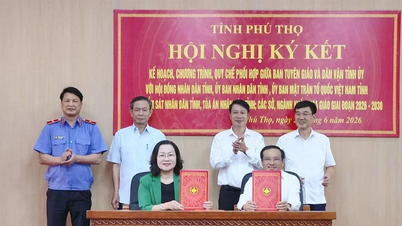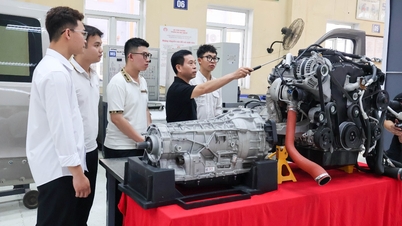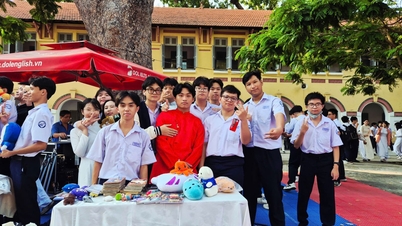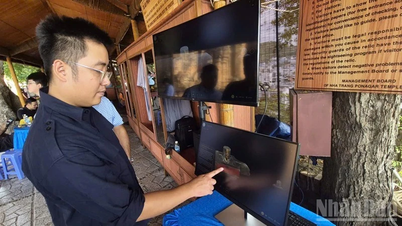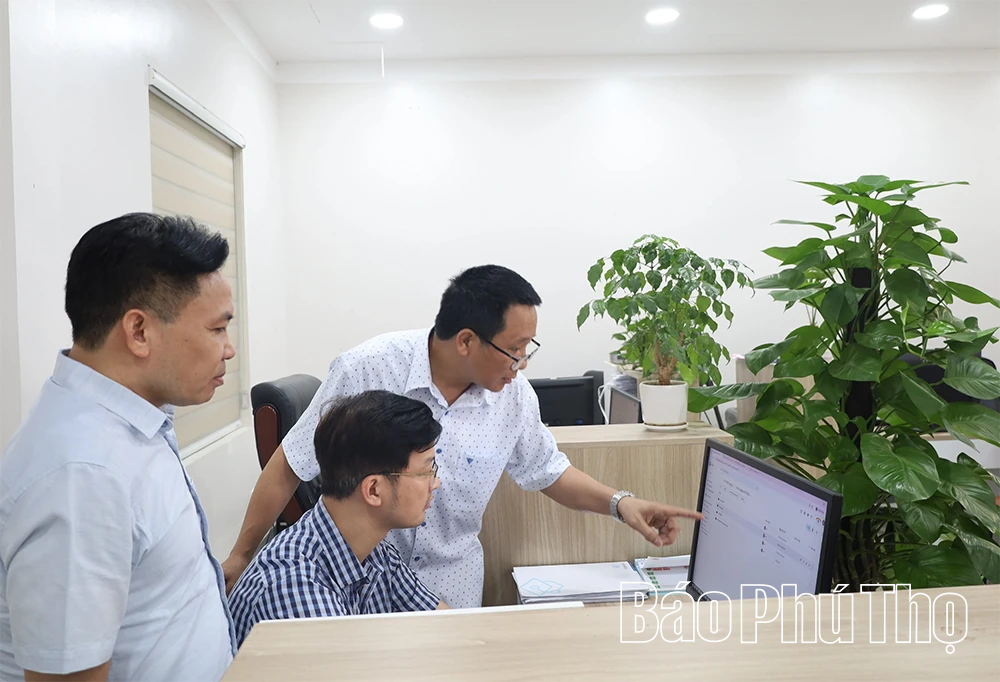
Officials at the Department of Education and Training are applying digital technology in performing their duties.
The Department of Education and Training's plan to implement learning on the "Digital Literacy Platform" demonstrates its determination to deepen digital transformation, starting with the management staff, teachers, and employees of the education sector. Technology is only truly effective when users possess sufficient knowledge and skills to utilize and apply it in practice.
According to the plan, by the end of 2026, 100% of officials, civil servants, and employees throughout the education sector will be equipped with knowledge of digital transformation, proficient in using the "Digital Literacy Platform" and digital services to support management and teaching. This is not only a target regarding participation rate but also demonstrates the determination to build an education workforce ready to adapt to the demands of the digital age.
The six core topics included in the training program – from fundamental knowledge of digital transformation, digital data mining, digital communication, digital content creation to information security and problem-solving using technology – are all geared towards developing essential competencies for each staff member and teacher in the new context.
A key aspect of the plan is its emphasis on universal access, ensuring that all staff and teachers have the opportunity to access digital knowledge. Educational institutions are required to provide favorable conditions in terms of technical infrastructure, time, and learning environment so that 100% of staff, teachers, and employees can fully participate in the program. Simultaneously, self-study and professional development are encouraged to become a regular movement throughout the entire sector.
A key highlight of the plan is the emphasis on the exemplary role of the leadership team. Administrators must not only participate in training but also proactively apply digital technology in school management and administration, considering the enhancement of digital capabilities as a regular task.
Learning outcomes on the "Digital Literacy Platform" will be updated, monitored, and used as a basis for evaluating the quality of staff and teachers annually. This mechanism creates motivation and also serves as a measure of the readiness for digital transformation of each individual and unit.


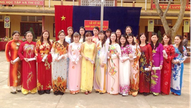
When leaders change their mindset, boldly innovate management methods, and effectively utilize technology, digital transformation will no longer be a slogan but become concrete actions in every professional activity. Behind the plan to cultivate digital skills lies a larger goal: building a synchronized digital education ecosystem. In that ecosystem, teachers master technology, administrators operate on a digital platform, data is effectively utilized, professional activities are digitized, and students have access to modern learning methods.
The Department of Education and Training assigns the Science , Technology and Information Division as the focal point to coordinate with training institutions and technology companies to organize courses and introduce suitable digital platforms and tools, thereby creating conditions for the education staff to continuously improve their capabilities in the ever-changing digital environment.
This is a long-term approach, not only meeting immediate needs but also preparing human resources for the goal by 2030, when the entire sector aims for a workforce of digitally competent officials and teachers suitable for their job positions and meeting the requirements of comprehensive digital transformation.
When each teacher becomes a proficient digital citizen, they will continue to inspire students to develop digital thinking, digital skills, and creativity – core competencies of the future workforce.
At Van Co Secondary School (Nong Trang Ward), after completing digital skills training courses, 100% of teachers proactively developed electronic lesson plans, used classroom management software, and organized online tests and assessments. Many lessons were conducted with the support of electronic lesson plans, illustrative videos, and interactive tools, increasing visual engagement and improving teaching quality.
According to Principal Nguyen Thieu Uyen: "The application of technology in teaching has become an essential requirement for every teacher. The school clearly identifies enhancing the digital skills of its staff as a key step in effectively implementing digital transformation in education. Therefore, we always create opportunities for teachers to learn, share experiences, and utilize digital platforms to support teaching. Through practical implementation, lessons have become more engaging, students actively participate, and simultaneously develop habits of self-learning, information searching, and using technology safely and effectively."
Alongside enhancing teachers' capacity, the education sector places special emphasis on popularizing digital skills among students. To date, 100% of students in the province have been equipped with digital skills for learning, research, and creativity, as well as skills for safe learning and social interaction in the digital environment. Digital skills education programs are developed according to the guidelines of the Ministry of Education and Training, ensuring suitability for each educational level and target group. Teaching content is integrated into the main curriculum and educational activities, with a focus on technology usage skills, safe online interaction skills, and initial exposure to artificial intelligence.
Tran Thi Thao My, a student in class 8C at Hac Tri Secondary School (Viet Tri ward), shared: "Besides classroom lessons, I spend time studying and researching on the Internet to expand my knowledge. Thanks to the guidance of my teachers in searching for information to support my studies, and the skills they provided for safe internet use, I know how to search, select, and effectively use materials in the digital environment."
![Exam Questions and Answers for the 2026 National High School Graduation Exam in Physics [Hints]](https://vphoto.vietnam.vn/thumb/192x108/vietnam/resource/IMAGE/2026/06/12/1781231854009_de-thi-dap-an-mon-vat-ly-tot-nghiep-thpt-2026-nongnghiep-093136.jpeg)


"Digital literacy for the masses" is opening a new chapter: a journey to popularize digital knowledge, bridge the technology gap, and build a modern education system where no one is left behind on the path to development.
Hanh Thuy
Source: https://baophutho.vn/thap-sang-binh-dan-hoc-vu-so-256022.htm

![[Photo] General Secretary and President To Lam receives Palestinian Ambassador Saadi Salama](https://vphoto.vietnam.vn/thumb/1200x675/vietnam/resource/IMAGE/2026/06/25/1782365384740_a1-bnd-9423-8322-jpg.webp)

![[Photo] General Secretary and President To Lam attends the 13th National Congress of the Ho Chi Minh Communist Youth Union](https://vphoto.vietnam.vn/thumb/1200x675/vietnam/resource/IMAGE/2026/06/25/1782356968989_ndo_br_1-jpg.webp)
![[Image] Schools organize meetings and introduce teaching models to students admitted to grade 10.](https://vphoto.vietnam.vn/thumb/1200x675/vietnam/resource/IMAGE/2026/06/25/1782368077271_ndo_br_z7970052192242-1ec8daeb77a6eed1a4e9f58c564ddd3e-jpg.webp)