

President Joe Biden has decided to "break the barrier" and provide weapons to Ukraine. However, blows cannot be dealt with in words alone; Ukraine still lacks many missiles to realize its attack plans. It is highly likely that Biden's approval will only complicate the situation rather than change the course of the conflict.
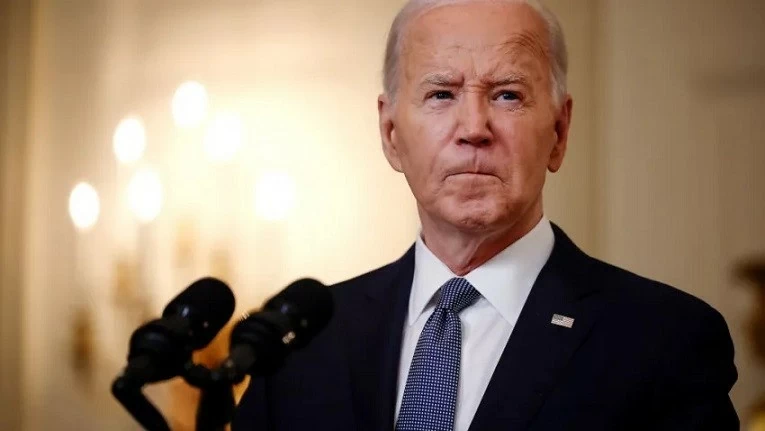 |
| President Joe Biden has for the first time authorized Ukraine to use long-range missiles supplied by the United States. (Source: AP) |
That's not enough for Ukraine.
US officials say President Joe Biden has for the first time authorized Ukraine to use US-supplied long-range missiles to strike inside Russian territory.
Initially, this weapon will be used against Russian and North Korean forces to protect Ukrainian forces in the Kursk region of western Russia.
Biden's decision represents a major shift in U.S. policy. This choice has divided Biden's advisors, and his change comes two months before President-elect Donald Trump takes office.
U.S. officials said that allowing Ukraine to use long-range missiles, known as the Tactical Missile System (ATACMS), was in response to Russia's surprise decision to send North Korean troops into the conflict.
Ukrainian President Volodymyr Zelensky did not confirm whether the US authorized the use of long-range missiles for attack, but hinted on November 17 that what would be more important than lifting restrictions would be the number of missiles used to attack Russia.
According to Axios, the White House's decision to allow Ukraine to attack Russian territory with US long-range missiles only applies to the Kursk province, and is seen as a US response to North Korean military involvement in the conflict. |
"The blows cannot be delivered with words, but with missiles," Zelensky said in a speech on November 17.
President Biden began easing restrictions on the use of U.S.-supplied weapons on Russian soil after Moscow launched a cross-border attack in May on Kharkiv.
To help Ukraine defend Kharkiv, Biden authorized the use of the High Mobility Artillery Rocket System (HIMARS), which has a range of approximately 50 miles (80.5 km), against Russian forces across the border. However, Biden did not authorize Ukraine to use the ATACMS, which has a longer range of over 300 km, to defend Kharkiv.
Although U.S. officials have stated that they do not expect this authorization to fundamentally alter the course of the conflict, one of the goals of this policy change is to send a message to North Korea that its forces are vulnerable and that it should not send more troops.
According to U.S. officials, although the Ukrainian military may have used ATACMS missiles for the first time against Russian and North Korean forces threatening their forces in Kursk, Biden may allow Ukraine to use this long-range weapon elsewhere as well.
Some U.S. officials fear that Ukraine's use of long-range missiles launched across the border could provoke Russian President Vladimir Putin to retaliate with force against the U.S. and its coalition partners. However, other officials argue that those concerns have been exaggerated.
The Russian military is preparing to launch a major offensive with approximately 50,000 troops, including North Korean soldiers, against Ukrainian strongholds in Kursk with the goal of retaking all Russian territory that Ukraine seized in August.
Ukraine could use ATACMS missiles to strike Russian and North Korean troop concentrations, critical military equipment, logistical facilities, ammunition depots, and supply lines deep inside Russia. Doing so could help Ukraine reduce the effectiveness of an attack carried out by Russia and North Korea.
It needs to be done sooner.
Whether or not to equip Ukraine with the ATACMS long-range missile defense system has been a particularly sensitive topic since the conflict erupted in February 2022. Some Pentagon officials oppose providing this weapon to Ukraine because they believe the U.S. military has limited supplies. Some White House officials fear that Putin will escalate the conflict if the U.S. transfers missiles to Ukraine.
However, those who advocate a harderline stance toward Moscow argue that the decision to allow Ukraine to attack Russian territory with long-range missiles could change the course of the conflict and give Ukraine an advantage.
| "Ukraine's use of long-range missiles to attack our territory would mean that the United States and its satellite states are directly involved in the war against Russia, as well as a fundamental change in the nature of the conflict. In this case, Russia's response would be appropriate and tangible," Russian Foreign Ministry spokeswoman Maria Zakharova warned on November 18. |
President Zelensky has long sought permission from the U.S. and its coalition partners to use long-range missiles to strike Russian territory. The British and French militaries have supplied Ukraine with a limited number of Storm Shadow/SCALP missiles, which have a range of approximately 155 miles—shorter than the U.S. missile system—and have voiced support for Zelensky's request.
Nevertheless, Biden has historically adopted a more risk-averse approach than his British and French counterparts. On November 17, some Republican lawmakers praised President Biden's recent move to allow Ukraine to use long-range missiles but said it came too late.
Michael R. Turner, chairman of the House Intelligence Committee, said in a statement: "For months, I have been urging President Biden to lift these restrictions. President Biden should have heeded President Zelensky's call sooner."
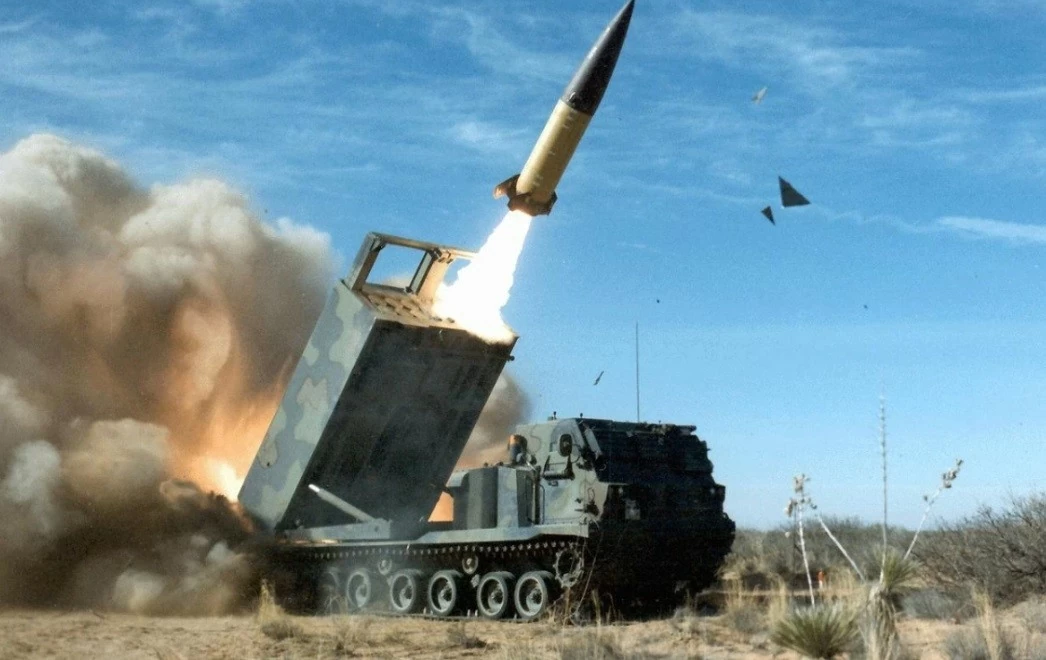 |
| A US ATACMS complex. (Photo: Reuters). |
A message to North Korea
U.S. officials said Biden was persuaded to make the change partly because of Russia's bold decision to send North Korean troops to Ukraine's front lines. Additionally, Biden was influenced by concerns that Russian offensive forces could overwhelm Ukrainian troops in Kursk if they were not allowed to defend themselves with long-range weapons.
Furthermore, U.S. officials also believe that Biden has identified potential benefits – Ukraine could achieve some valuable objectives, and the U.S. could send a message to North Korea that it will pay a higher price than the risks of escalation.
Biden faced a similar dilemma a year ago when U.S. intelligence agencies learned that North Korea would supply Russia with long-range ballistic missiles. At that time, Biden agreed to provide several hundred ATACMS missiles to Ukraine.
This missile helped supplement the limited supply of Storm Shadow and SCALP missiles that Ukraine received from Britain and France.
Since then, Ukraine has used many of these missiles in a coordinated offensive operation targeting Russian military objectives. Therefore, it is unclear how many missiles Ukraine still has in its arsenal for use in the Kursk region.
Source: https://baoquocte.vn/cai-gat-dau-muon-man-cua-tong-thong-biden-voi-ukraine-thay-doi-cuc-dien-hay-them-dau-vao-lua-294185.html

![[Photo] General Secretary and President To Lam presides over a meeting on assessing national development resources.](https://vphoto.vietnam.vn/thumb/1200x675/vietnam/resource/IMAGE/2026/05/20/1779253785852_a1-bnd-2943-8519-jpg.webp)
![[Photo] National Assembly Chairman Tran Thanh Man working with the Standing Committee of the Economic and Financial Committee](https://vphoto.vietnam.vn/thumb/1200x675/vietnam/resource/IMAGE/2026/05/20/1779249584387_ndo_br_1-jpg.webp)



















































![[Workers' Month 2026] Spreading love on the Vinh - Dong Hoi frontline: Nearly 1 billion VND spent on caring for the lives of workers.](https://vphoto.vietnam.vn/thumb/402x226/vietnam/resource/IMAGE/2026/05/20/1779237885217_img_8650.jpeg)












































Comment (0)