

Advertising revenue has been declining steadily and is plummeting.
According to data from the Ministry of Information and Communications , Vietnam has 64 local television stations, 2 national stations, 5 television broadcasting units, and 1 digital television station.
Currently, the economic activities of radio and television stations are facing many difficulties. Specifically, in the first six months of 2023, advertising revenue of television stations nationwide decreased by 30-50% compared to the same period last year. This decline has also led to many negative consequences.
According to information from Viettel , short videos are becoming a popular content trend on social media, with a staggering 97% of internet users watching short videos.
The average time each person spends watching short videos on TikTok each day is 46 minutes. Clearly, fans of traditional television are increasingly shifting to watching on OTT platforms, YouTube, and other social media networks.
Traditional television's primary revenue source relies heavily on advertising. However, with changes in consumer viewing habits, this revenue stream is declining over time. Advertising appears to have shifted from traditional television to social media platforms, where short videos are gaining significant traction.

In the first six months of 2023, advertising revenue for television stations nationwide decreased by 30-50% compared to the same period of the previous year.
Referring to the current challenges, Mr. Pham Manh Hung, Deputy General Director of the Voice of Vietnam (VOV), said that competition among media organizations to attract readers and online advertising market share leads to significant pressure to use advanced technology to provide the best user experience and increase advertising revenue. The cost of deploying and maintaining new technology systems places a major financial burden on media organizations.
"Furthermore, press management agencies have not yet issued policies to encourage telecommunications companies to support press agencies with infrastructure and transmission line rental costs," said Mr. Pham Manh Hung.
Regarding human resources, Mr. Pham Manh Hung shared that currently, media organizations in general are lacking technology experts with in-depth skills and knowledge in the field of communication. The training and adaptability of current staff to new technologies may slow down the transformation process and create difficulties in effectively utilizing resources.
As the leading media outlet of Hanoi, Hanoi Radio and Television (HTV) is also facing numerous challenges and difficulties. Mr. Nguyen Kim Trung, General Director and Editor-in-Chief of HTV, stated that in the 10 years from 2011 to 2021, the station lost a significant number of viewers and no longer ranked among the top 10 television stations and channels with the highest ratings in Vietnam, according to Kantar Media data. Advertising revenue has continuously declined and has plummeted since 2016.
The most important program genres in radio and television, such as news, music, entertainment, sports, and movies, lack a single program that leaves a lasting impression.
"The technical infrastructure of a broadcasting unit plays a crucial role, but in Hanoi, it's a system that could collapse at any time because it's patched up and outdated. Even today, the station's staff still use computers running Windows 95, which have been in use for nearly 30 years," Mr. Nguyen Kim Trung stated, describing the current situation.
Change or cease to exist
In this challenging context, Mr. Nguyen Kim Trung shared that since 2022, Hanoi Radio and Television Station has implemented a thorough reform program with very specific goals set by the Party Committee, Editorial Board, and staff: to help the station overcome the crisis, gradually develop, and regain its position.
"Hanoi Radio and Television Station has put itself in a mindset of radical change, creating immense pressure for innovation, a mindset of 'Change or not exist,' because the station believes that if it only exists as an agency within the city's administrative system without real activity and a genuine audience, then that is not the necessary existence for a traditional media organization like the Radio and Television Station ," Mr. Nguyen Kim Trung emphasized.
According to Mr. Nguyen Kim Trung, the guiding principle in innovation is to make the public the target of content creation and technology the driving force for change.
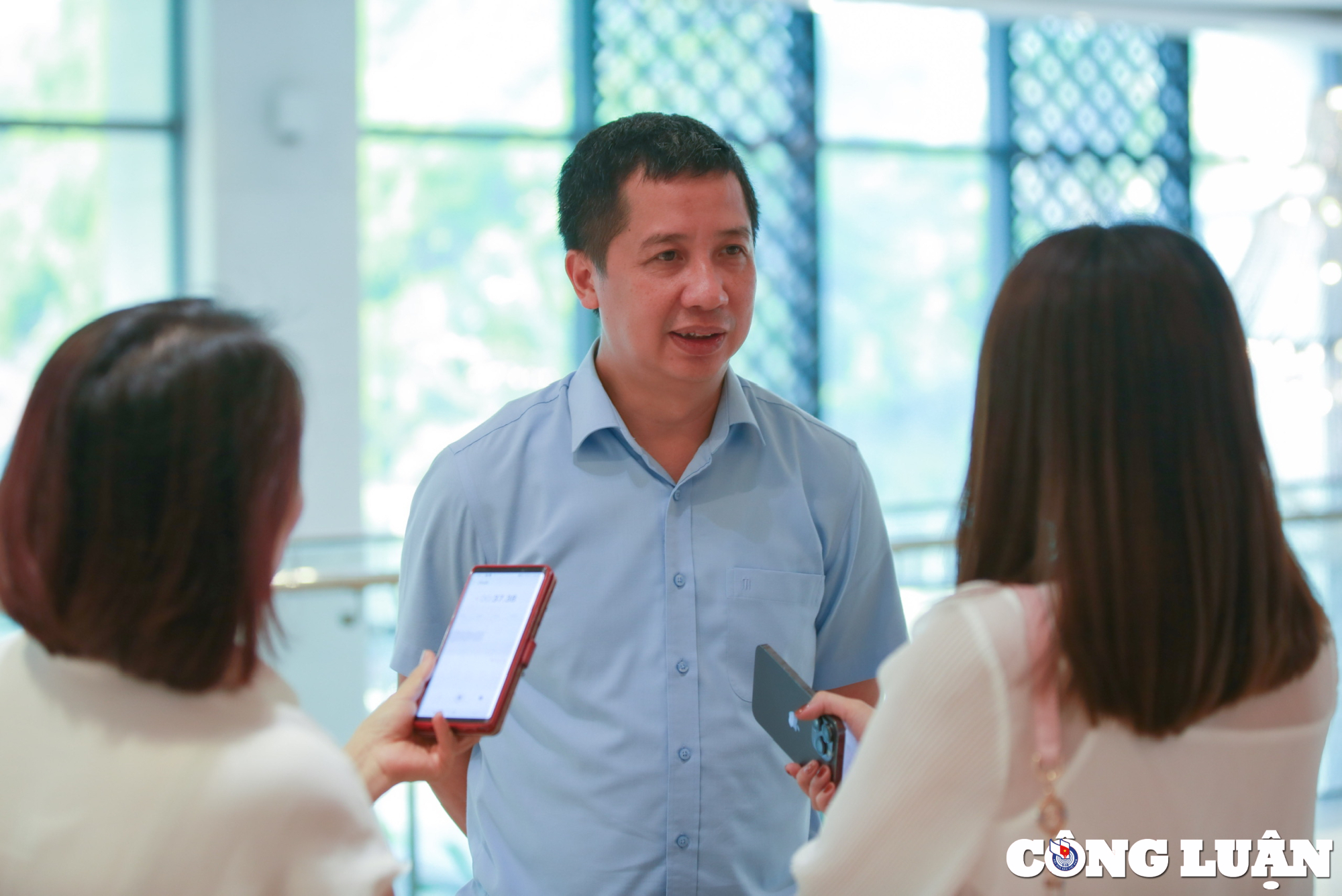
Mr. Nguyen Kim Trung stated that in the coming period, difficulties and challenges still lie ahead, but Hanoi Radio and Television Station remains steadfast on its path in the arduous journey of reform, a challenge not only Hanoi Radio and Television Station but also many other media organizations are facing. (Photo: Son Hai)
"We are implementing digital transformation in a substantive way, starting from the most basic activities, accelerating the formation of a modern multimedia communication complex for the capital city. We are applying appropriate elements of modern business management methods to the management of our operations. In particular, patience, perseverance, and the willingness to face potential challenges during the innovation process are extremely important," said the General Director of Hanoi Radio and Television Station.
In 2023, after much effort and dedication from the staff and reporters of Hanoi Radio and Television Station, significant initial progress was made. Program content is being renewed and improved in quality to meet the needs of the public and the requirements of propaganda in the new situation. The economic viability of journalism is being strengthened, with total revenue in 2023 estimated to grow by 26% compared to 2022 and by 53% compared to 2021.
As of December 31, 2023, according to measurements by Kantar Media Vietnam, HANOI 1 channel has once again become one of the top 10 most-watched television channels in the Hanoi area.
In the coming period, difficulties and challenges still lie ahead. According to Mr. Nguyen Kim Trung, in order for press agencies in general and radio and television stations in particular to overcome obstacles and stand firm in their revolutionary journalistic mission, it is necessary to promptly assess the actual results of the implementation of the press planning and make timely adjustments to create a suitable framework and space for the development of press agencies.
Policies supporting the press in the current context need to be implemented quickly, especially legal policies related to commissioning political propaganda campaigns from media outlets.
"We think that the station's story may have some similarities with many other media organizations across the country. We believe that sharing operational experiences, especially in the process of changing and adapting to new situations, among media organizations is extremely necessary."
"The attention of the Party and the State, the genuine concern of the governing bodies, along with the decisive actions of the press agencies themselves, we believe that these are the key and most important conditions for our press agencies to overcome difficulties and continue to contribute to the development of the country," Mr. Nguyen Kim Trung stated.
Hoang Anh
Source


![[Photo] General Secretary and President To Lam presides over a working session with the Central Policy and Strategy Committee on the development of the materials industry.](https://vphoto.vietnam.vn/thumb/1200x675/vietnam/resource/IMAGE/2026/05/21/1779359935432_a3-bnd-3129-1412-jpg.webp)















































































Comment (0)